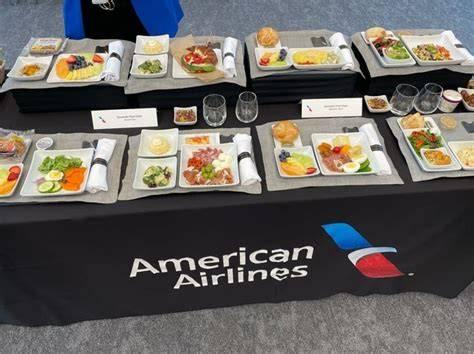
American Airlines is bringing fresh food back to First Class on some of its shortest and busiest domestic routes. Starting this month, travelers flying between Chicago O’Hare International Airport (ORD) and either John F. Kennedy International Airport (JFK) or LaGuardia Airport (LGA) in New York can expect a new selection of “light bites” in the premium cabin, including smoked salmon, whipped burrata, and poached shrimp. The move fills a gap that has existed for years: an intermediate tier of catering tucked between the packaged snacks offered on the shortest hops and the full meals served on flights of roughly 900 miles (1,450 km) or more. For frequent flyers who have watched domestic premium cabins become increasingly austere since 2020, the change reads as a small but welcome restoration of a service that once defined American’s short-haul First Class experience.
What Exactly Is on American Airlines’ New First Class Menu?
According to the airline, the Light Bites program will debut on flights linking its Chicago hub with both New York airports. Passengers will be offered two fresh options on any given flight, with the rotation changing throughout the year so that repeat travelers do not encounter the same pairing week after week. Unlike American’s standard First Class meals, these dishes cannot be preordered and will be available only onboard, a constraint that places a premium on choosing quickly once the cabin crew begins the service.
Behind those two daily choices sits a much deeper roster. American has outlined six potential breakfast dishes and eight lunch or dinner selections, a bench of options that gives the airline considerable flexibility to keep the menu feeling fresh. Breakfast leans bright and produce-forward: smoked salmon, tropical chia overnight oats, prosciutto and melon, a fruit and cheese plate, prosciutto and brie, and an apple cinnamon chia pudding. The later-day lineup shifts toward heartier eating, with curry chicken salad, a Thai noodle salad, a turkey and Gouda sandwich, whipped burrata, poached shrimp with noodle salad, a mezze plate, blackened chicken, and a grilled vegetable wrap. The breadth is notable precisely because only a fraction of it will ever appear on a single flight; the list functions as a rotating pool rather than a promise of abundance on any one departure.

Raphael Girardoni Frames Light Bites as an Elevated Chicago–New York Experience
American’s Vice President of Culinary Strategy and Operations, Raphael Girardoni, positioned the new offering as a direct response to the expectations of the airline’s most demanding passengers. “We want to exceed the expectations of even our most discerning customers, and this new, more substantial menu offering is designed to do just that,” he said, describing the change as an elevated experience on a popular route. The phrasing matters. American is not pitching Light Bites as a cost-conscious compromise but as a deliberate upgrade aimed at travelers who notice the difference between a bag of pretzels and a composed plate of chilled shrimp.
The initiative also fits into a broader catering push that has been building across the network. American has expanded Pecan Lodge barbecue offerings on eligible departures from Dallas/Fort Worth International Airport (DFW), refreshed its Main Cabin snacks, and enhanced Flagship Dining facilities at Los Angeles. Read together, these moves suggest a carrier treating food as a competitive lever rather than an afterthought, particularly in the premium cabins where loyalty is won or lost.
How American Airlines’ Domestic First Class Meals Have Changed Since 2015
The new service is, in many ways, a homecoming. In April 2015, American announced improved domestic First Class catering that replaced snack baskets with plated selections on flights of 700–899 miles (1,130–1,450 km), including charcuterie, hummus with pita bread, and fruit and cheese, served alongside warm nuts. By 2019, the airline maintained a clear three-tier structure: packaged snacks on the shortest flights, plated snacks on intermediate services, and full meals from approximately 900 miles (1,450 km). Longer flights received more elaborate service, and certain shorter routes qualified for full meals purely for competitive reasons.
Then came the pandemic. Catering was cut back sharply from 2020 onward, and packaged snacks became the default on shorter services. The plated snacks that had distinguished the 700–899-mile band largely vanished, and with them a tangible signal that First Class meant something more than extra legroom. The November 2026 return of fresh Light Bites on selected Chicago–New York flights is the first meaningful step back toward the pre-pandemic standard, though it remains deliberately narrow in scope.
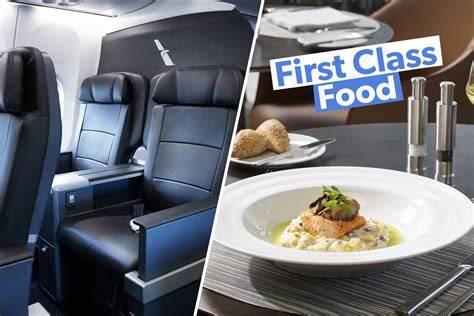
How American Airlines Compares With Delta, United, and Alaska
American’s light bites create a fresh point of differentiation. Delta Air Lines and United Airlines typically reserve full First Class meals for flights of at least 900 miles (1,450 km) and provide packaged snacks below that threshold, with some routes and departure times carved out as exceptions. On the 700–899-mile band, both carriers still default to snacks. American will now stand alone among the big three by offering a genuine intermediate tier, at least on the Chicago–New York corridor.
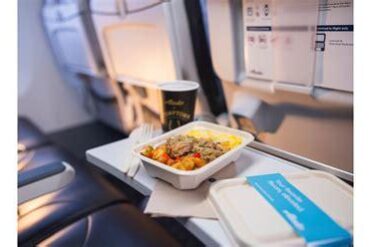
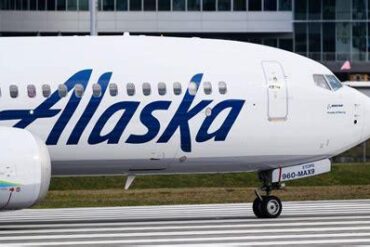
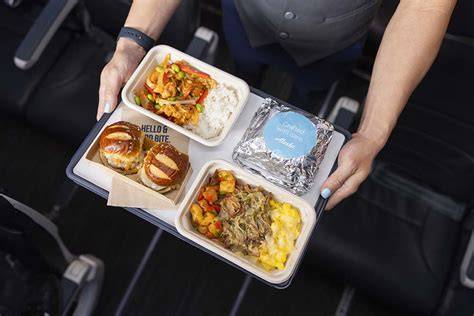
Alaska Airlines complicates the picture. Alaska offers freshly prepared First Class meals on flights as short as 670 miles (1,080 km), with Pacific Northwest-inspired menus that include strawberry burrata salad and lemon pesto gnocchi, and up to five dishes available for preorder. That preorder capability gives Alaska a practical edge over American’s onboard-only system: passengers can reserve their preferred dish days in advance, while American travelers discover their two options only once seated. Alaska also serves full meals throughout the 700–899-mile range, making it the most generous of the four carriers in this band.
Will American Airlines Expand Light Bites Beyond Chicago–New York?
The obvious question is scale. American could eventually extend Light Bites to other high-volume routes in the 700–899-mile range, such as Chicago–Dallas, Philadelphia–Orlando, or Miami–Nashville, all of which sit comfortably inside the mileage band where the service would apply. For passengers spending several hours in transit, a fresh meal can meaningfully reshape the premium experience, turning a routine connection into something closer to leisure travel.
Whether American restores the benefit across its full network or keeps it confined to selected competitive markets remains unresolved. The airline has framed the Chicago–New York launch as a debut rather than a destination, and the depth of the underlying menu, six breakfast options and eight lunch or dinner selections, hints at ambitions beyond a single corridor. What is clear is that the Light Bites label now marks a distinct tier in American’s domestic catering hierarchy, restoring a structure that existed before the pandemic and giving premium passengers one more reason to choose American for shorter journeys.