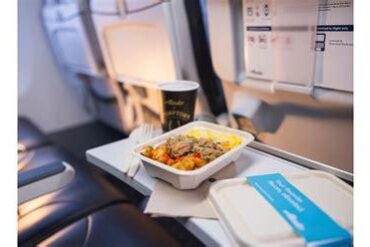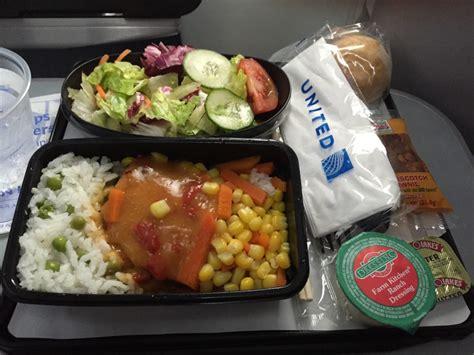
United Airlines is making a decisive shift in how it serves fresh food to economy class passengers, signaling a broader rethink of inflight dining across North America. Beginning March 1, 2026, United’s fresh economy meals and entrées will no longer be available for spontaneous onboard purchase. Instead, travelers will need to pre-order their meals in advance through the airline’s website or mobile app, a change designed to expand choice while sharply reducing waste.
This policy applies exclusively to United Economy passengers flying routes longer than 1,190 miles within the United States, Canada, Mexico, and the Caribbean. Snack boxes and beverages will remain available for purchase onboard, but fresh meals will become a planned decision rather than an impulse buy. The move reflects United’s belief that predictability, not abundance, is the future of economy-class dining.
The airline frames this as a win for passengers, operations, and sustainability. By knowing exactly what customers want before departure, United can load only the meals that will actually be eaten. That precision, multiplied across thousands of daily departures, reshapes how food moves through the airline’s ecosystem.
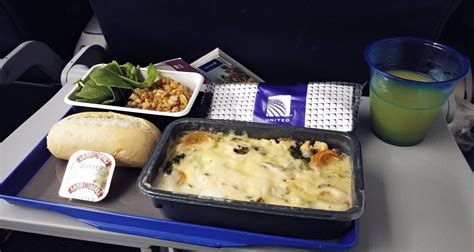
A Strategic Shift Toward Pre-Ordered Economy Dining
Under the new system, pre-ordering opens five days before departure and closes 24 hours prior to takeoff. Customers who have added their flight to the United mobile app will receive a notification when ordering becomes available, nudging them to make a choice well before boarding. The digital-first approach aligns with United’s broader investment in app-driven passenger services, from seat selection to same-day travel changes.
The airline emphasizes that pre-ordering unlocks a wider variety of meals than what could realistically be stocked for walk-up purchases. Rather than guessing demand, catering teams can prepare exact quantities, allowing more ambitious menu planning without the risk of large-scale waste. For passengers, this means better odds of getting their preferred option instead of settling for what happens to be left.
Cutting Food Waste by the Tonne, Not the Tray
United estimates the program will prevent more than 100,000 pounds of unused food from being sent to landfills every year. That figure is not cosmetic. Airline catering waste has long been an uncomfortable byproduct of inflight service, driven by uncertainty and regulatory constraints that limit food reuse.
By loading only meals that have been explicitly ordered, United dramatically tightens the supply chain. The environmental impact goes beyond trash reduction. Every uneaten meal still requires fuel to carry it, refrigeration to preserve it, and labor to manage it. Eliminating excess translates directly into lower aircraft weight, which in turn reduces fuel burn and carbon emissions across the network. On a single flight, the difference is marginal. Across a year of operations, it becomes meaningful.
Lessons Learned From Premium Cabins
This economy-class overhaul did not emerge in isolation. United points to its 2021 rollout of meal pre-ordering for premium customers, which delivered a nearly 40 percent increase in customer satisfaction on domestic flights. That data offered a clear signal: passengers value certainty and choice more than the illusion of abundance.
Aaron McMillan, United’s Managing Director of Hospitality Programs, has framed the initiative as part of a broader quality push rather than a cost-cutting exercise. The airline’s stated focus is on quality, consistency, and customer choice, an implicit acknowledgment that economy dining has often struggled to deliver all three at once.
January Menu Highlights Signal Broader Ambitions
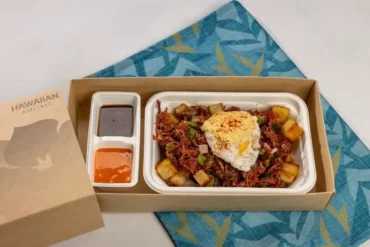
Even before the March transition, United has previewed the direction of its menus. January selections include a mix of comfort food and lighter options such as the Steakhouse Burger, Tacos Al Pastor, a Fresh Cheese & Fruit Tray, and Everything Bagel Dots. These items reflect a deliberate attempt to move beyond the generic sandwiches that have long defined short-haul economy meals.
Looking ahead, United plans to expand offerings further, including premium beverage options available exclusively through pre-order by summer. Tying higher-end products to advance selection encourages planning while allowing the airline to test new items without operational risk.
Operational Efficiency From Kitchen to Cabin
For catering partners, pre-ordering transforms guesswork into logistics. Knowing precise quantities simplifies food preparation, loading, and quality control at airports across the network. Fewer last-minute substitutions mean fewer disappointed customers and smoother turnarounds on the ground.
The operational benefits ripple outward. Reduced complexity lowers costs, improves reliability, and frees cabin crew to focus on service rather than inventory management. In an industry where minutes matter and margins are thin, these incremental gains add up quickly.
A Broader Industry Trend Takes Shape
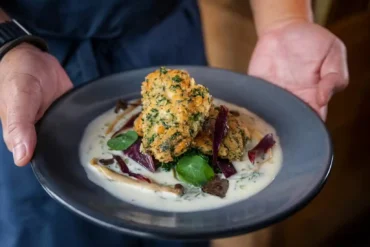
United is not alone in rethinking inflight dining. American Airlines has also announced upgrades in 2026, introducing Texas barbecue selections in partnership with Pecan Lodge as part of its centennial celebrations. While those offerings are limited to first class on select routes from Dallas/Fort Worth to New York, they underscore a shared industry belief that food remains a powerful differentiator.
The contrast is telling. American is using regional identity to elevate premium cabins, while United is applying data and sustainability principles to improve the economy experience at scale. Both approaches reflect airlines competing not just on price and schedule, but on how thoughtfully they feed their passengers.
What This Means for United Economy Travelers
For travelers, the message is simple but important: planning ahead becomes essential. Those who pre-order gain access to fresher meals, broader choices, and a higher likelihood of satisfaction. Those who do not will still have snacks and drinks, but the era of deciding on a hot meal at 35,000 feet is ending on longer United routes.
This shift marks a quiet but significant evolution in economy-class service. By treating food as a premeditated choice rather than an afterthought, United is betting that intention beats improvisation, and that a lighter aircraft, a cleaner supply chain, and a happier passenger can all coexist on the same flight.