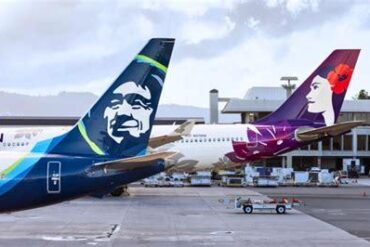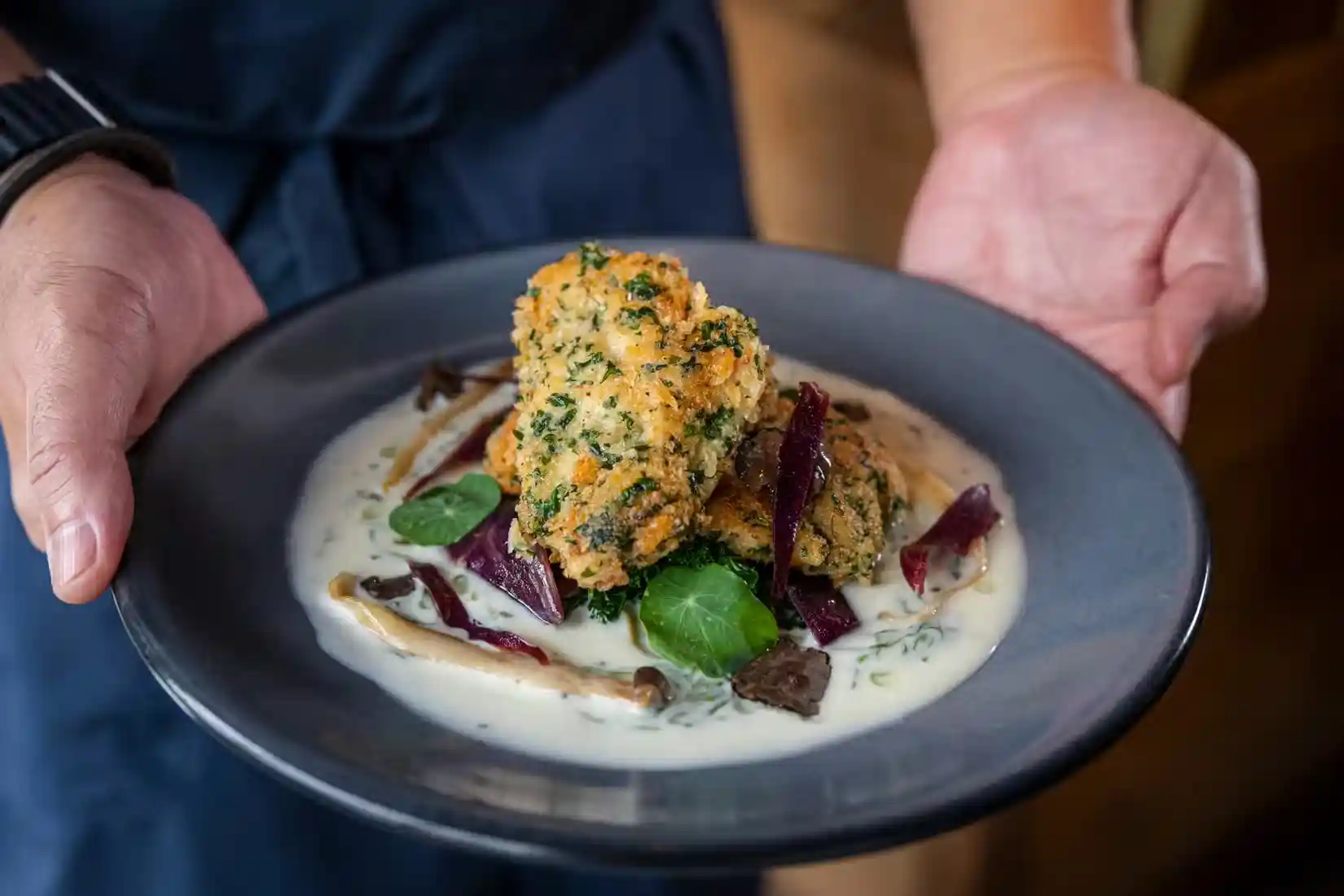
Alaska Airlines is not merely refreshing a menu. It is reshaping how Hawaiian Airlines expresses identity at 35,000 feet. Following Alaska Air Group’s acquisition of Hawaiian Airlines in 2024, the focus has shifted from integration to elevation. Dining, often the most visceral part of premium air travel, has become the proving ground. With the appointment of Hawaiʻi-born Chef Dell Valdez as Executive Chef, the airline is signaling that its future will taste unmistakably like home.
The strategy is deliberate. Long-haul international Business Class is the first stage of the rollout, targeting travelers flying between Honolulu and major destinations in Japan and Oceania. Domestic First Class enhancements will follow later in the year. This phased approach reflects Alaska’s broader premium strategy: refine the flagship product on international routes, then cascade improvements across the network.
Chef Dell Valdez brings more than culinary credentials. As the force behind restaurants such as Vein in Kakaʻako, Dell’s Kitchen & Bakery, and Mio PASTALOGY, his cooking has long explored the interplay between island ingredients and global technique. Now, that philosophy moves into the aircraft cabin, transforming the galley into a cultural ambassador.
A Hawaiian Restaurant in the Sky
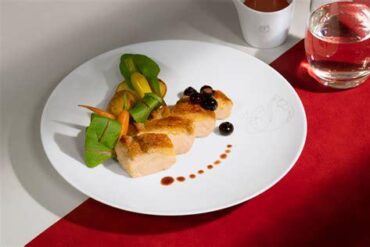
International Business Class passengers are the first to experience the transformation. The new entrées balance richness and restraint, anchoring global techniques in Pacific flavors. Braised short rib arrives tender and deeply savory, paired with scallion ginger risotto and seasonal vegetables that nod to both Italian and Asian influences. Asian braised beef with saffron rice pilaf adds aromatic complexity, while roasted chicken with shiso beurre blanc layers French sauce craft over distinctly Japanese herbal notes. Herb-roasted pork loin accompanied by soy kabocha squash purée brings earthy sweetness and umami into harmony.
The opening service is rounded out with thoughtfully composed salads such as green apple maple cider and hearts of palm, adding brightness and textural contrast. These are not decorative side plates. They function as palate calibrators, preparing passengers for multi-course indulgence without fatigue.
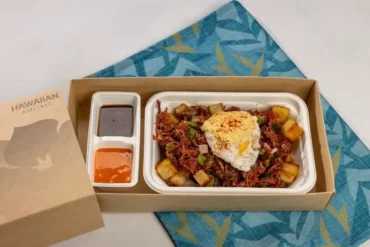
The second service shifts into comfort territory without abandoning sophistication. Thick-cut sweet bread French toast, topped with berries and lilikoi syrup, evokes island breakfasts while delivering premium presentation. A tamagoyaki omelet folded around roasted peppers and kale reinforces the cross-Pacific narrative. More substantial options, including a kalbi-grilled chicken sandwich and roasted miso eggplant parmesan, bridge familiarity and innovation. The menus feel curated rather than assembled.
Chef Valdez has emphasized warmth and belonging as guiding principles. That ethos translates directly into plating decisions and ingredient sourcing. Hawaiian hospitality has always been tactile and emotional; now it is edible.
Culinary Identity as Competitive Strategy
Airline mergers often dilute identity. Alaska Air Group has chosen the opposite path. Hawaiian Airlines remains a distinct brand, and that distinction must be felt, not simply marketed. Food plays an outsized role in that differentiation. A seat may resemble a competitor’s; a dish rooted in Hawaiʻi’s culinary heritage does not.
Modern Hawaiian cuisine is inherently pluralistic. It draws from Polynesian, Japanese, Filipino, Chinese, Portuguese, and American traditions. Chef Valdez’s menus mirror that layered history. The presence of soy, shiso, kalbi, and miso alongside beurre blanc and risotto is not fusion for novelty’s sake. It reflects the lived reality of the islands. In an aviation market where premium cabins increasingly converge in hardware, flavor becomes a strategic asset.
This is particularly relevant as Alaska expands its international footprint. The combined carrier now serves more than 140 destinations across North America, Latin America, Asia, and the Pacific. European service is planned for April 2026, and Hawaiian Airlines is scheduled to join the oneworld alliance, further embedding it within the global premium travel ecosystem. A cohesive culinary identity strengthens that positioning.
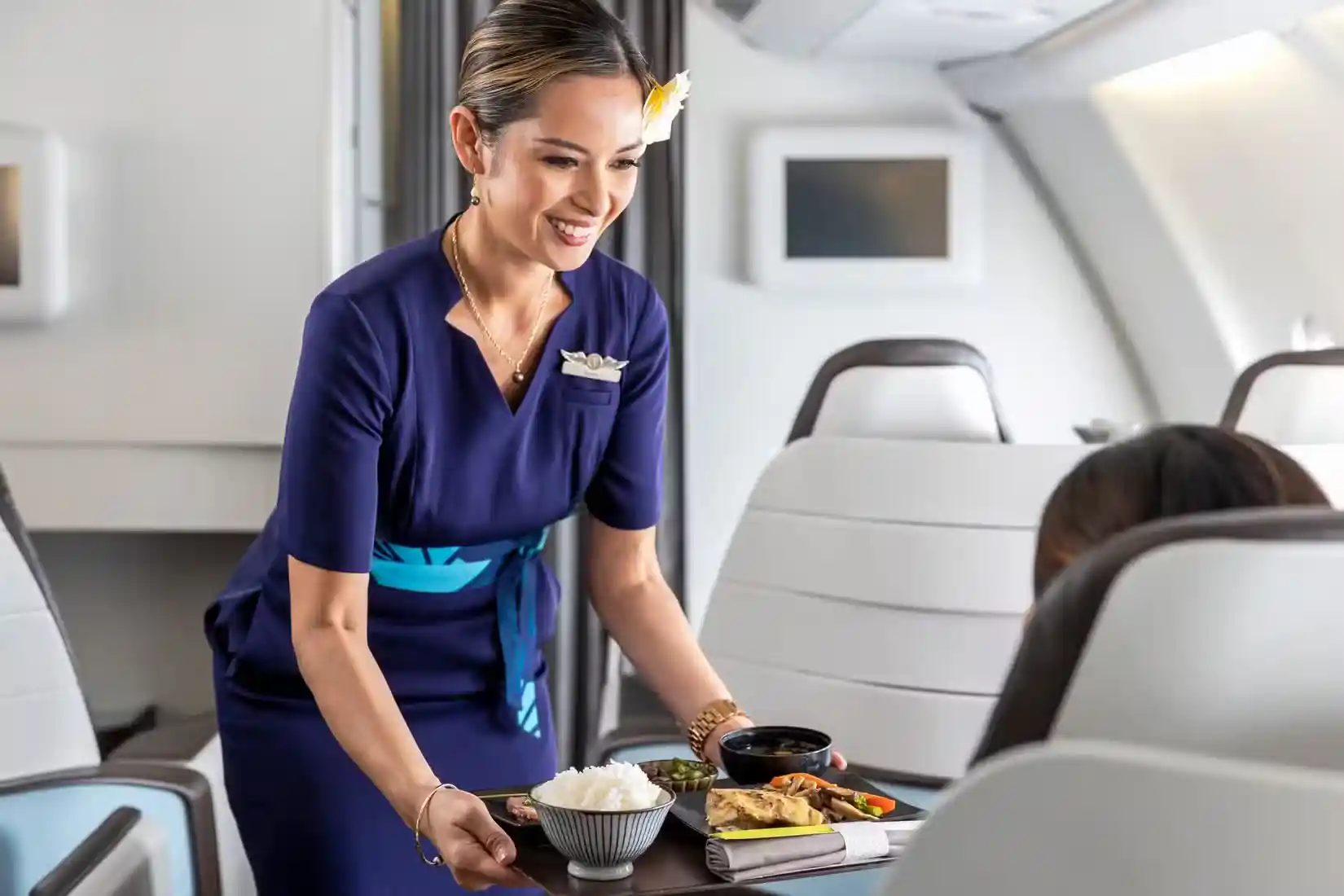
Technology Meets Taste: The New Pre-Order Platform
The overhaul extends beyond recipes. Beginning in May, Hawaiian Airlines will introduce a new First Class pre-order meal program. Guests will be able to review the full menu and select their preferred entrée between two weeks and 20 hours before departure through the airline’s website or mobile app.
This feature, long appreciated by Alaska Airlines passengers, addresses one of premium travel’s most persistent irritations: uncertainty. Running out of a preferred dish erodes the perception of exclusivity. By guaranteeing availability, the airline reinforces control and personalization. Dietary preferences can be accommodated more seamlessly, and waste can be reduced through improved forecasting.
Pre-order technology may sound procedural, but its psychological impact is significant. Choice signals respect. When passengers feel seen, satisfaction rises. Alaska’s decision to extend this capability to Hawaiian’s First Class is as strategic as any recipe refinement.
The Kahu‘ewai Hawai‘i Investment Plan
These changes form part of the broader Kahu‘ewai Hawai‘i Investment Plan, a multi-year initiative focused on elevating the end-to-end experience. Dining is the most visible component, but it sits alongside cabin upgrades and service refinements. The objective is clear: maintain Hawaiian Airlines as Hawaiʻi’s hometown carrier while benefiting from Alaska’s operational scale.
The timing aligns with a period of transformation. Alaska’s 2024 acquisition of Hawaiian expanded its reach across the Pacific and solidified its competitive stance along the U.S. West Coast. The networks complement each other. Alaska dominates mainland connectivity; Hawaiian contributes deep island roots and established international routes. Preserving Hawaiian’s cultural resonance is essential to unlocking the merger’s long-term value.
Food, in this context, is not ancillary. It is symbolic. A thoughtfully constructed plate can communicate heritage more effectively than any press release.
Redefining Premium Expectations Across the Pacific
For passengers, the immediate benefits are tangible. International Business Class guests encounter refined menus now. Domestic First Class travelers will see expanded options later this year. The pre-order platform introduces predictability and personalization. Together, these elements modernize the premium experience without erasing Hawaiian’s emotional core.
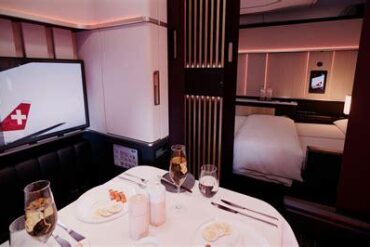
The aviation industry is intensely competitive in the premium segment. Carriers invest heavily in lie-flat seats, privacy doors, and lounge upgrades. Yet dining remains one of the few sensory touchpoints that can still surprise. Aroma, texture, flavor—these linger long after landing. Alaska Airlines appears to understand that reimagining Hawaiian’s First Class dining is not about extravagance alone. It is about narrative coherence.
As Hawaiian Airlines prepares to join oneworld and Alaska extends its global ambitions, the message is consistent. Premium travel should feel curated, culturally grounded, and intelligently designed. In this new chapter, the aircraft cabin becomes more than a mode of transport. It becomes a moving restaurant, a stage for island storytelling, and a competitive differentiator in the evolving world of international aviation.