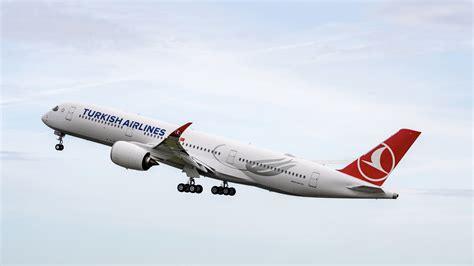
Turkish Airlines Changes Sydney Route Through Singapore
Turkish Airlines is reshaping its Australia network with a major schedule adjustment that brings the carrier closer to its long-term goal of launching ultra-long-haul flights. Starting from October 26, the airline will replace its current Istanbul (IST)–Sydney (SYD) routing via Kuala Lumpur (KUL) with a new one-stop service through Singapore Changi Airport (SIN).
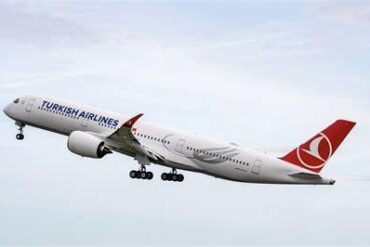
The change applies to the airline’s five weekly Sydney flights, operated by the Airbus A350-900, and will align Sydney operations with Turkish Airlines’ existing Melbourne service. By strengthening its presence in Singapore, the carrier is creating a more consistent connection between Australia, Europe, and its global network.
The updated service will operate as TK022 from Istanbul to Singapore before continuing to Sydney. The outbound flight departs Istanbul at 3:20 PM, arrives in Singapore at 6:50 AM, and continues to Sydney at 8:30 AM, landing at 7:25 PM. The return journey operates as TK023, departing Sydney at 9:35 PM and connecting through Singapore before arriving in Istanbul at 11:10 AM.
Singapore Becomes Turkish Airlines’ Australian Gateway
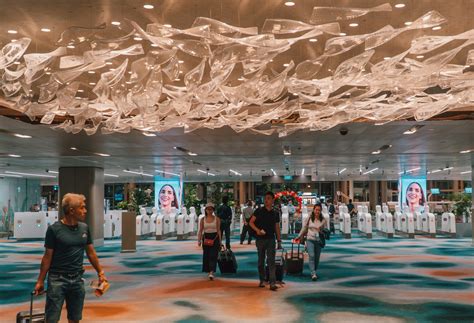
The decision to move Sydney flights through Singapore represents a strategic increase in Turkish Airlines’ operations at Changi Airport. The airline’s presence at the Asian hub will grow from 17 weekly flights to 22 weekly flights, including its existing services between Istanbul and Singapore.
Singapore offers Turkish Airlines several advantages. As a major aviation hub and a member of the Star Alliance network, Changi provides convenient connections for passengers traveling throughout Southeast Asia and Australia. The airport also strengthens Turkish Airlines’ ability to compete with Middle Eastern carriers that currently dominate many Europe-Australia travel markets.
For passengers, the new routing provides another option for connecting Australia with Europe through Istanbul. Turkish Airlines has built one of the world’s largest international networks, allowing travelers to continue onward to destinations across Europe, Africa, and beyond.
Airbus A350-1000 Could Unlock Nonstop Istanbul-Sydney Flights
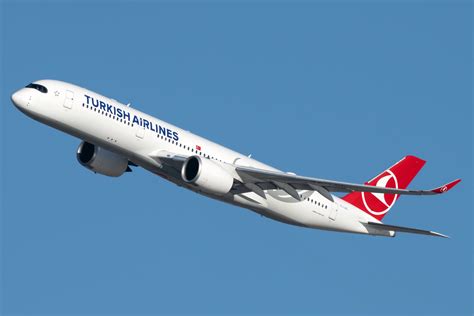
Although the Singapore routing improves the current operation, Turkish Airlines has much bigger ambitions. The airline has indicated that the arrival of the Airbus A350-1000 could allow it to introduce nonstop flights between Istanbul and Sydney.
A direct Istanbul-Sydney service would become one of the world’s longest commercial flights, potentially approaching 22 hours of total travel capability depending on aircraft performance, winds, and operational conditions. The ultra-long-range A350-1000 is designed for exactly this type of mission, offering additional fuel capacity, greater range, and improved passenger comfort compared with existing wide-body aircraft.
If successful, nonstop flights between Turkey and Australia could significantly change the competitive landscape. Turkish Airlines has been granted permission to operate up to 35 weekly flights between Turkey and Australia, giving it substantial room for future growth compared with many competitors.
The airline’s Istanbul hub also provides a unique advantage. Turkish Airlines serves approximately 125 airports across Europe and around 65 destinations in Africa, creating strong one-stop connections for Australian travelers heading toward regions that may not be efficiently served by other carriers.
Turkish Airlines Expands Its Vision for Australia and Beyond
Australia has become an increasingly important market for Turkish Airlines. The carrier launched its first Australian service to Sydney in 2024 and later introduced flights to Melbourne. While Sydney and Melbourne remain the immediate focus, Turkish Airlines has also explored potential expansion to other cities, including Perth and Brisbane.
The airline has even considered future services to Auckland, New Zealand, potentially using Singapore as an intermediate stop before eventually evaluating nonstop possibilities. Currently, Australia has several direct European connections, while New Zealand still lacks a nonstop link to Europe.
Turkish Airlines’ growth strategy is supported by its massive fleet and international reach. With more than 500 aircraft and membership in the Star Alliance since 2008, the carrier has become one of the most globally connected airlines in the world.
The move from Kuala Lumpur to Singapore may appear like a small schedule adjustment, but it reflects a much larger strategy. Turkish Airlines is positioning itself for the next generation of long-distance travel, where aircraft like the A350-1000 could make previously difficult routes between Europe and Australia commercially realistic.
The introduction of a potential Istanbul-Sydney nonstop flight would not only create a new travel option but could also establish Turkish Airlines as a major player in the ultra-long-haul market.