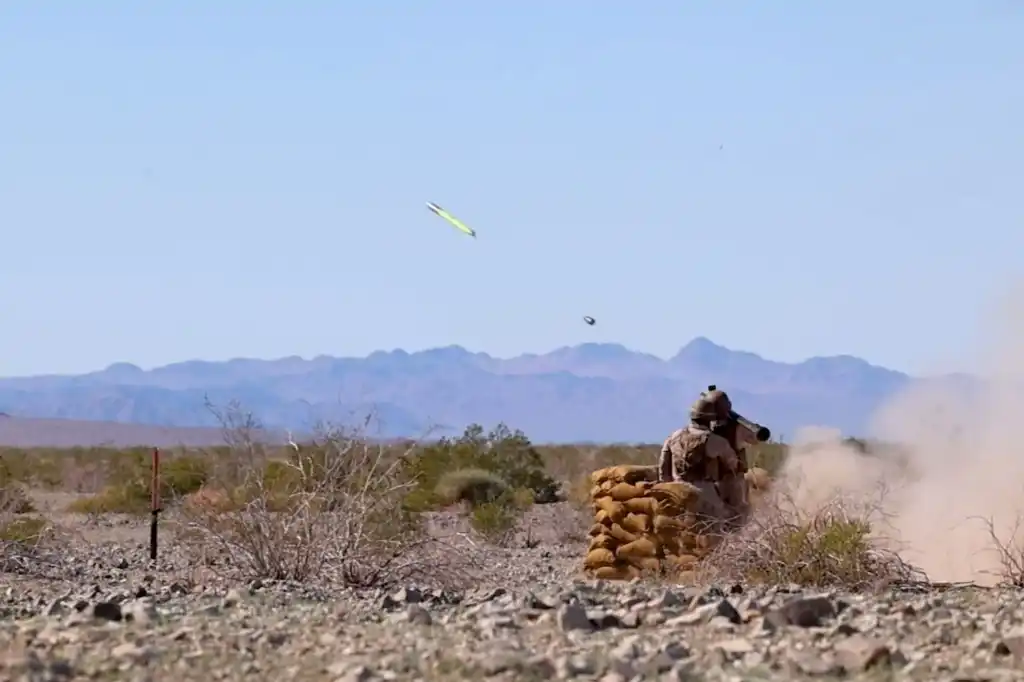
The U.S. Army has taken a meaningful step toward modernizing its short-range air defense arsenal, as Raytheon, an RTX business, confirmed the successful completion of a new ballistic test of the Next Generation Short Range Interceptor (NGSRI). Conducted on February 2, 2026, at Raytheon’s facilities in Tucson, Arizona, the self-funded test reinforces the Army’s push to replace the aging FIM-92 Stinger amid a rapidly changing low-altitude threat environment dominated by drones, loitering munitions, and small unmanned aerial systems.
The test was not a ceremonial checkpoint. It was designed to validate core performance parameters that directly affect battlefield survivability, particularly the interceptor’s ability to detect, track, and engage small drone targets while remaining compatible with a shoulder-fired launcher. According to Raytheon, the data gathered will feed directly into upcoming flight test demonstrations, marking a transition from component validation to integrated system maturity.
This latest milestone underscores a broader strategic reality: the Stinger, long a symbol of man-portable air defense effectiveness, is approaching the limits of what incremental upgrades can deliver. The Army’s requirement is no longer just a replacement missile, but a future-proof interceptor capable of operating in cluttered, low-altitude airspace where targets are cheap, numerous, and tactically disruptive.
Why the Stinger Era Is Ending
For decades, the Stinger missile set the benchmark for man-portable air defense systems (MANPADS). Its passive infrared, fire-and-forget design proved effective against helicopters and low-flying aircraft, and successive variants extended its relevance into the early drone era. Yet the modern battlefield has evolved faster than inventories can be refreshed.
Small unmanned aerial vehicles (UAVs) can now hover, maneuver unpredictably, and present extremely low thermal and radar signatures. Many are designed to overwhelm defenses through numbers rather than survivability. In this context, engagement windows shrink, reaction times compress, and traditional seekers face increasing discrimination challenges. The Army’s experience in recent conflicts has made clear that legacy systems struggle to maintain dominance in this environment without substantial redesign.
NGSRI is intended to answer that gap, not by marginally improving Stinger performance, but by redefining what a short-range interceptor must do in a drone-saturated battlespace.
Inside the February 2026 Ballistic Test
Raytheon confirmed that the February test focused on two critical areas: seeker performance against drone targets and launcher compatibility. While specific seeker architectures remain undisclosed, the emphasis on drone tracking strongly suggests advances in target discrimination, signal processing, and guidance responsiveness.
Unlike conventional aircraft, drones can be slow, can change direction abruptly, and often operate amid ground clutter. Successfully engaging them requires a seeker capable of maintaining lock despite low signatures and erratic kinematics. Validating this capability in a ballistic test environment is a prerequisite for confidence in live-fire scenarios.
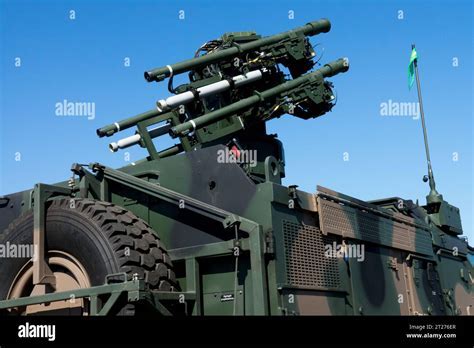
Equally important is launcher flexibility. Raytheon stated that NGSRI is designed for shoulder-fired use while also being adaptable for vehicle-mounted configurations. This dual-mode approach reflects operational reality. Short Range Air Defense (SHORAD) assets must protect both dismounted infantry and mechanized formations, often within the same engagement zone. A missile that transitions seamlessly between these roles offers commanders greater allocation flexibility and simplifies logistics.
Propulsion as a Combat Multiplier
One of the most technically revealing elements of Raytheon’s disclosures is its work with Northrop Grumman on Highly Loaded Grain (HLG) solid rocket motors. In 2025, the companies completed multiple successful tests of this propulsion technology, which promises longer burn time and higher energy output than conventional solid motors.
This design choice has direct tactical implications. At short range, time-to-intercept is everything. A longer, more energetic burn allows the missile to sustain acceleration, preserve maneuverability in the terminal phase, and better handle crossing or evasive targets. Against small UAVs that may attempt last-second course changes, retained endgame energy can mean the difference between a kill and a miss.
Extended burn profiles also support greater engagement range, potentially pushing NGSRI beyond the practical limits of existing MANPADS without increasing launcher weight beyond what infantry can reasonably carry.
Measuring Progress Against the Stinger Baseline
The Stinger remains a useful benchmark for understanding the ambition behind NGSRI. The FIM-92 Stinger reaches speeds of approximately Mach 2.2, with a missile length of 1.52 meters and a missile-only weight of 10.1 kilograms, rising to around 15.2 kilograms with its launcher. Depending on configuration, its engagement range spans roughly 4,800 meters, with engagement altitudes in the 3,000 to 3,800 meter class.
Later variants such as the FIM-92J introduced a proximity fuze to improve lethality against small aerial targets, acknowledging the drone challenge well before it became ubiquitous. Yet even these upgrades are constrained by an architecture conceived decades earlier, when low-altitude threats were fewer, larger, and more predictable.
NGSRI is positioned not just to exceed Stinger performance metrics, but to operate effectively in an entirely different threat density, where engagement opportunities are frequent and reaction times unforgiving.
Modularity, Manufacturing, and Strategic Scale
Beyond pure performance, Raytheon has highlighted modular system design and automated manufacturing as pillars of the NGSRI program. These industrial choices are not incidental. The global demand for air defense interceptors has surged, and production capacity has become a strategic variable in its own right.
Modularity allows for incremental upgrades to seekers, guidance logic, or propulsion without restarting the entire development cycle. Automated manufacturing, meanwhile, supports higher and more predictable output rates, reducing bottlenecks that can delay fielding or strain allied supply chains.
For a missile intended to be deployed widely across infantry units, vehicle platforms, and potentially allied forces, scalability is as important as sophistication.
A Layered Defense Philosophy
NGSRI is best understood as part of a layered air defense ecosystem. It fills the space between non-kinetic counter-UAS measures, such as jamming, and heavier SHORAD or ground-based air defense systems. Its value lies in immediacy. A man-portable interceptor provides organic, local protection, especially when networked with external sensors that can cue the shooter before a threat is visible to the naked eye.
In this role, NGSRI becomes a force multiplier. It denies adversaries the assumption that low-cost drones can operate with impunity at low altitude, forcing them to accept higher attrition or invest in more expensive platforms.
Strategic Implications Beyond the Army
The return of short-range air defense to center stage is not a U.S.-only phenomenon. Conflicts across Eastern Europe, the Middle East, and the Indo-Pacific have demonstrated that low-altitude threats are now routine rather than exceptional. If the U.S. Army successfully fields a Stinger replacement that is both more capable and manufacturable at scale, the effects will ripple outward.
Allied forces that rely on U.S.-supplied MANPADS stand to benefit from a system designed for modern threats rather than adapted to them. More broadly, effective short-range interception raises the cost of drone-centric tactics, narrowing the operational space for reconnaissance, harassment, and loitering munition campaigns.
In that sense, NGSRI is more than a missile program. It is a statement that the era of uncontested low-altitude airspace is over, and that even the smallest aerial intruders must now contend with a defense designed specifically to hunt them.