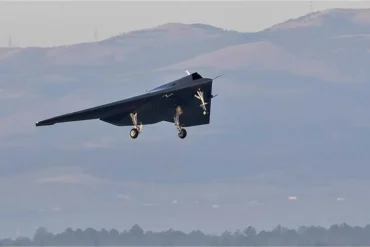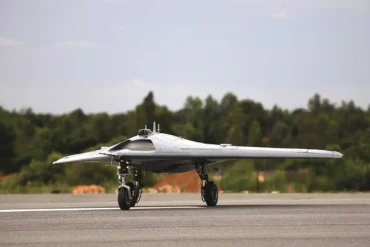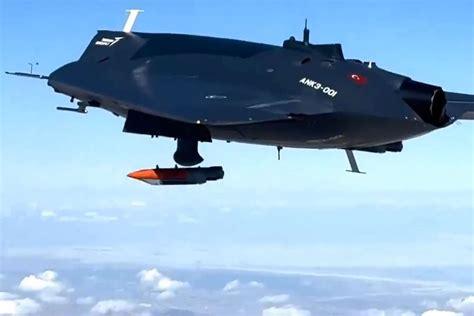
Türkiye is edging closer to a decisive transformation in its airpower doctrine as the Turkish Air Force prepares an initial procurement exceeding 50 ANKA III stealth unmanned combat aerial vehicles, marking a clear shift from experimental development to operational force-building. This anticipated order, expected during 2026, signals that Ankara no longer views the ANKA III as a technology demonstrator, but as a core combat asset designed for sustained use in future high-intensity conflicts. The scale of the planned acquisition alone places the programme in a different category from earlier unmanned efforts, implying deep integration into doctrine, basing, training, sustainment, and national command-and-control structures.
The timing is not accidental. Turkish Aerospace Industries is entering what its leadership has openly described as one of the most demanding industrial years in the country’s aerospace history. Multiple flagship programmes are converging simultaneously, and ANKA III is emerging as a centerpiece of Türkiye’s ambition to field a networked, survivable, and increasingly autonomous air combat ecosystem. Unlike earlier UCAV initiatives focused primarily on counterterrorism or permissive environments, ANKA III is explicitly oriented toward contested airspace, electromagnetic warfare, and coordinated operations alongside crewed fifth-generation fighters.
The aircraft’s journey from concept to procurement-ready platform reflects a deliberate acceleration strategy. With its configuration now frozen following a completed critical design review, the programme has crossed a crucial threshold. Design stability enables industrial planning, supplier commitments, and early production tooling, all of which are prerequisites for an order measured in dozens rather than single digits. More importantly, it locks in the aerodynamic, structural, and low-observable characteristics that define the platform’s combat relevance, shifting future development emphasis toward software, sensors, and mission systems rather than airframe redesign.
The Turkish Air Force’s intention to place such a sizeable initial order carries implications far beyond fleet size. It indicates confidence that ANKA III is mature enough to support routine operational tasking, not just limited evaluation. A fleet of over 50 airframes suggests continuous readiness cycles, rotational deployments, and the capacity to absorb attrition while maintaining operational tempo. In practical terms, this means ANKA III is being positioned as a persistent presence in air operations, not a niche capability reserved for special missions.
Recent flight-test activity reinforces this interpretation. By late 2025, ANKA III had completed dozens of system verification sorties, validating core autonomous flight-control functions. These tests are foundational rather than flashy, but they matter. Reliable autonomy at the flight-control level is the bedrock upon which higher-order behaviours are built, from adaptive routing and cooperative tasking to degraded-mode operations when datalinks are contested or disrupted. As the programme matures, analytical focus naturally shifts away from basic flight safety toward sortie generation rates, mission-system availability, and resilience under electronic attack.
The design freeze itself represents a pivotal management inflection point. Once frozen, major structural or interface changes become exceptional rather than routine, enabling tighter configuration control and predictable production quality. Turkish Aerospace Industries has confirmed that lessons learned from early prototypes were incorporated into the final configuration, while additional aircraft with the updated design are scheduled to fly during 2026. This overlap between late-stage prototyping and early production preparation is a calculated risk-management approach, compressing timelines while preserving opportunities to refine systems before serial output reaches full rate.
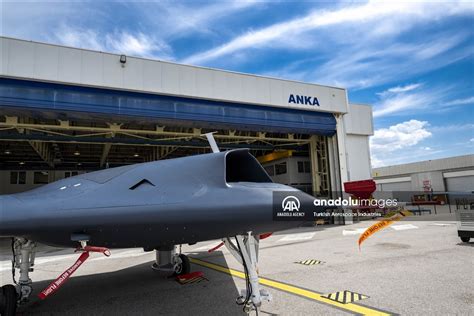
ANKA III’s development trajectory has been notably brisk by international UCAV standards. The programme progressed from initial power-up in early 2023 to taxi tests within weeks, culminating in a maiden flight by December of that year. That first flight included an automatic landing, underscoring that autonomy was not bolted on as an afterthought but embedded from the outset. This early emphasis on autonomous capability now underpins the aircraft’s suitability for complex missions, including coordinated operations with other unmanned platforms and manned aircraft.
Weapons integration offers perhaps the clearest indicator of ANKA III’s operational intent. The aircraft has already demonstrated the release of precision-guided munitions, validating store separation dynamics and mission-system timing. For a flying-wing UCAV designed around signature reduction, successful weapons release testing is particularly significant, as internal bay operations impose tight constraints on aerodynamics, thermal management, and system synchronization. While early demonstrations confirm baseline compatibility, the true test will come with reliable employment under manoeuvre, in contested electromagnetic environments, and as part of cooperative targeting chains.
The projected procurement scale reinforces the conclusion that ANKA III is intended for sustained combat use. A fleet exceeding 50 aircraft supports not only operational availability but also doctrinal experimentation at scale. It allows planners to test concepts such as distributed sensing, electronic attack saturation, and attritable force packages without risking scarce crewed assets. Even without publicly disclosed basing plans, such numbers imply integration into standing operational frameworks rather than ad hoc deployments.
Industrial posture is being shaped accordingly. Turkish Aerospace Industries has openly discussed adopting an “automotive-style” production philosophy for ANKA III, emphasizing repeatability, cost control, and throughput. This approach only makes sense when production volumes justify investment in streamlined processes and supply-chain optimization. At the same time, it places pressure on programme leadership to clearly define upgrade pathways, ensuring that capability growth can be introduced without fragmenting the fleet into incompatible sub-configurations.
Capability disclosures paint a picture of a deliberately balanced design. ANKA III is a jet-powered flying-wing UCAV with a maximum take-off weight of roughly 6.5 tonnes, endurance approaching 10 hours, and operational altitudes near 40,000 feet. Payload capacity is generally cited between 1.2 and 1.6 tonnes, depending on configuration, supported by internal weapon bays and optional external hardpoints. This architecture allows mission planners to trade payload mass against signature management, enabling low-observable penetration missions or higher payload flexibility in permissive environments.
Beyond strike, ANKA III is increasingly framed as a multi-role node within a broader combat network. Its mission-system architecture encompasses intelligence, surveillance, and reconnaissance through electro-optical, infrared, and radar payloads, alongside electronic warfare capabilities. Concepts for deploying air-launched unmanned systems further expand its role, positioning ANKA III as a coordinator and force multiplier rather than a single-purpose shooter.
Sensor integration plans underscore this trajectory. ASELSAN’s planned integration of the MURAD 100-A AESA radar represents a significant capability leap. Designed as a multi-role radar family, MURAD supports air-to-air surveillance, fire-control assistance, and advanced air-to-ground modes such as high-resolution synthetic aperture radar and ground moving target indication. Built around gallium nitride technology and digital beamforming, the radar enables agile beam steering and low-probability-of-intercept operation, critical attributes for a low-observable platform.
Integrating an AESA radar into a stealth UCAV is not without trade-offs. Active emissions inherently increase detectability, forcing careful management of when and how the radar is used. However, in a networked context, selective emissions and cooperative sensing allow ANKA III to balance situational awareness against survivability. The result is a platform capable of contributing meaningfully to the sensor picture without acting as a persistent beacon in contested airspace.
Propulsion strategy reflects a similarly pragmatic approach. The current ANKA III configuration relies on a foreign-supplied engine, reportedly of Ukrainian origin, which has enabled timely flight testing and development progress. In parallel, Türkiye is advancing its indigenous TF6000 turbofan programme through TEI, providing a long-term sovereign option. While no integration timeline has been announced, the existence of a domestic alternative enhances strategic autonomy and future growth potential. Programme leadership has emphasized that the priority remains fielding the single-engine ANKA III efficiently, rather than complicating early production with more ambitious twin-engine variants.
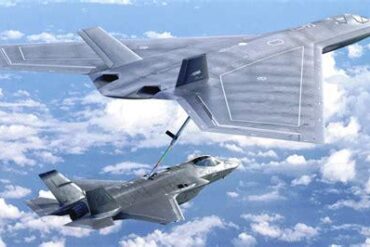
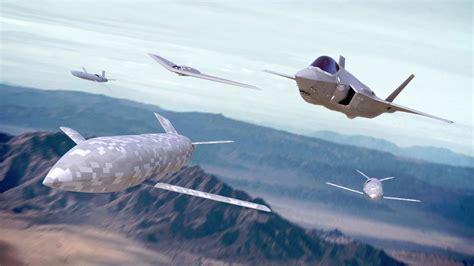
The strategic implications of fielding more than 50 ANKA III aircraft alongside the KAAN fifth-generation fighter are profound. At that scale, manned–unmanned teaming evolves from experimentation into doctrine. Rather than attaching a handful of UCAVs to crewed fighters on a case-by-case basis, the Turkish Air Force could field standing formations built around persistent unmanned elements. In this construct, KAAN functions increasingly as a mission command node, orchestrating sensors, electronic warfare effects, and weapons employment across a distributed network.
Such a force mix enables new operational approaches. ANKA III can provide distributed sensing, electronic attack, and strike mass, allowing crewed fighters to operate at greater standoff distances or penetrate defended airspace with reduced risk to pilots. From an adversary’s perspective, dozens of stealthy unmanned platforms complicate air-defense planning, forcing difficult choices about target prioritization and interceptor allocation. The cost asymmetry is deliberate: relatively attritable UCAVs can impose disproportionate defensive costs.
Sustained availability is another advantage of scale. A fleet of this size supports rotation, maintenance cycles, and surge capacity, mitigating one of the classic limitations of low-density, high-end air assets. It also enables prolonged operations without exhausting crews, a factor that becomes increasingly important in high-tempo scenarios.
The challenges, however, are non-trivial. Command-and-control resilience, secure datalinks, and clearly defined human–machine authority boundaries will determine whether the concept succeeds in practice. Network-centric warfare assumes persistent connectivity, yet modern battlefields are defined by jamming, cyber attack, and degraded communications. ANKA III’s value will ultimately depend on its ability to operate effectively under such conditions, whether through autonomous fallback modes, cooperative behaviour, or resilient networking architectures.
Rules of engagement for autonomous and semi-autonomous systems represent another critical dimension. As UCAVs gain greater independence in navigation and sensor management, defining the limits of machine decision-making becomes both an operational and political challenge. The Turkish Air Force’s approach to these issues will shape not only ANKA III’s employment but also its acceptability as a routine combat system.
If the anticipated order is placed in 2026, ANKA III will enter a new phase of scrutiny. Performance in flight tests and demonstrations will give way to assessments of production quality, mission-system reliability, and sustainment efficiency. Early production batches will reveal whether industrial processes can deliver consistent low-observable characteristics and software stability at scale. Integration into national and joint command-and-control networks will test the platform’s ability to contribute meaningfully to combined operations.
What distinguishes ANKA III from many earlier UCAV programmes is the coherence of its industrial, doctrinal, and strategic framing. Design freeze, production preparation, sensor integration, and force-structure planning are advancing in parallel, suggesting a deliberate effort to avoid the trap of fielding technically impressive but operationally marginal systems. Instead, ANKA III is being anchored within a mature framework where its success will be measured not by isolated performance metrics, but by its contribution to a resilient, networked, and adaptable air combat force.
As Türkiye approaches this procurement decision, the ANKA III programme stands at a crossroads. With an initial order exceeding 50 aircraft, it has the potential to redefine how the Turkish Air Force conducts air operations in contested environments. The transition from prototype to production will be unforgiving, but if executed effectively, it will mark a significant step toward a future in which unmanned systems are no longer auxiliaries, but indispensable pillars of national airpower.