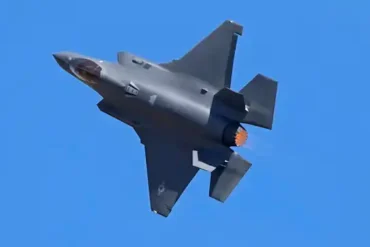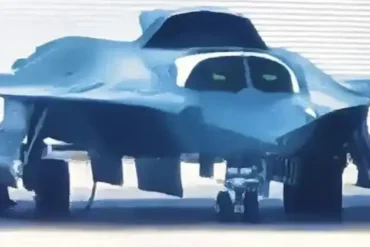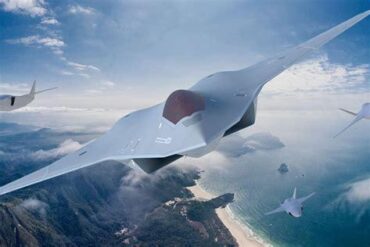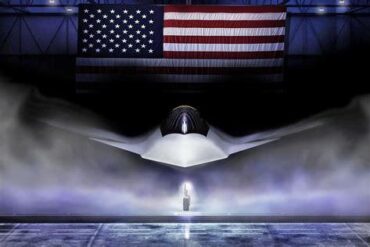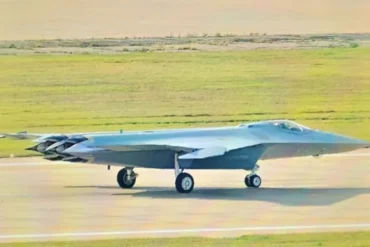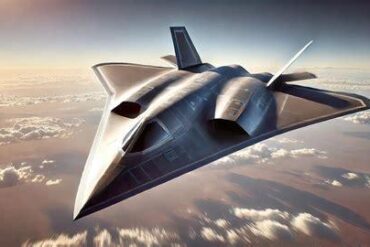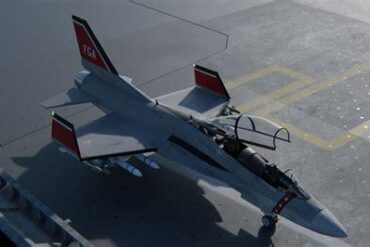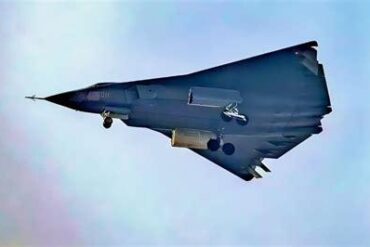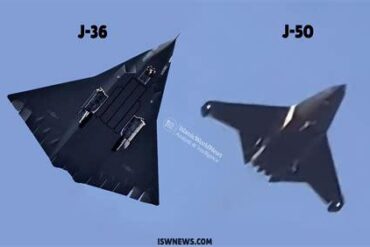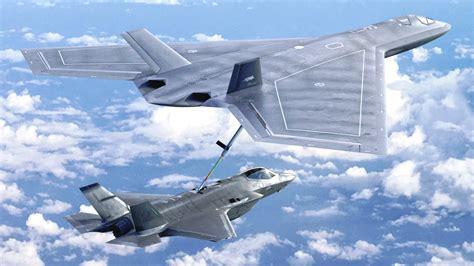
The F-47 sixth-generation fighter represents a decisive shift in how the United States Air Force envisions winning wars in the air. This is not a marginal upgrade or a simple replacement for legacy platforms. Instead, it is a calculated response to a radically evolving battlespace—one defined by immense geographic distances, advanced enemy defenses, and the growing fusion of artificial intelligence with combat operations. At its core, the F-47 aims to merge the stealth supremacy of the F-22 Raptor with the range and endurance traditionally associated with the F-15, while pushing far beyond both in adaptability and system integration.
For decades, American air dominance relied on a combination of technological superiority and operational experience. Yet the strategic environment has changed. Future conflicts, particularly in the Indo-Pacific, demand aircraft capable of traveling vast distances, operating with minimal support, and surviving inside highly contested airspace saturated with sensors, missiles, and electronic warfare systems. The F-47 is engineered precisely for that reality, offering a glimpse into a future where fighters act less like standalone weapons and more like airborne command hubs.
What makes the F-47 especially significant is its role as the centerpiece of a broader ecosystem. It is designed not just to fight, but to coordinate—linking manned aircraft, autonomous drones, satellites, and cyber assets into a seamless combat network. This evolution signals a departure from traditional dogfight-centric thinking toward a model where information dominance and coordinated strikes define victory.
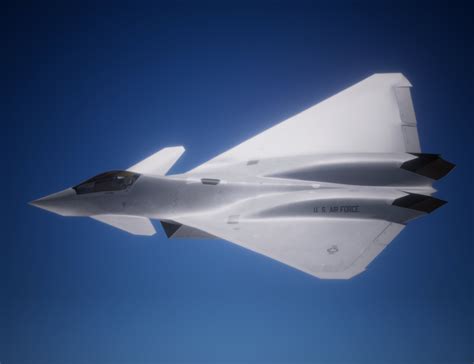
Why the F-47 Is Critical to Future Air Superiority
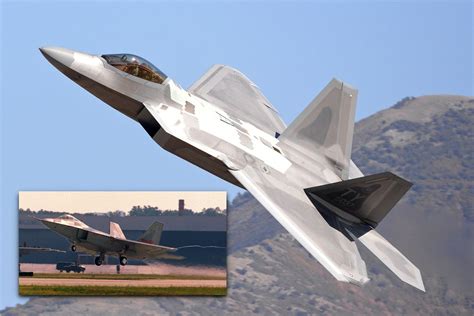
The urgency behind the F-47 program stems from a simple but uncomfortable truth: existing aircraft, even highly advanced ones, are no longer optimized for the next generation of warfare. The F-22 Raptor, widely regarded as the most capable air-superiority fighter ever built, excels in close-range engagements and stealth penetration. However, its limited range, aging fleet, and high maintenance demands constrain its effectiveness across the vast expanses of the Pacific theater.
Meanwhile, the F-35 Lightning II offers exceptional multirole flexibility, but it was not specifically designed to dominate high-end air combat against peer adversaries. As threats evolve—particularly from near-peer competitors investing heavily in integrated air defense systems, long-range missiles, and stealth detection technologies—the gap between current capabilities and future requirements continues to widen.
The F-47 addresses this gap directly. It is engineered to operate deeper into contested zones, remain on station longer, and maintain survivability against increasingly sophisticated detection systems. This combination of range, persistence, and stealth resilience is not just advantageous—it is essential for maintaining credible deterrence.
Equally important is the aircraft’s role in reinforcing strategic confidence. If adversaries believe U.S. forces cannot effectively project power into contested regions, deterrence weakens. The F-47 restores that balance by ensuring that American airpower remains both reachable and survivable, even in the most challenging environments.
F-22 Stealth Meets F-15 Range: A New Performance Benchmark
The defining promise of the F-47 lies in its ability to combine two historically separate strengths: extreme stealth and extended operational reach. The F-22 set the gold standard for low observability and air dominance, while the F-15 established itself as a long-range workhorse capable of carrying heavy payloads over great distances. The F-47 merges these attributes into a single platform—and then enhances them.
Reports suggest that the aircraft will feature a combat radius significantly exceeding fifth-generation fighters, alongside speeds surpassing Mach 2. These characteristics are not merely performance metrics; they fundamentally reshape operational possibilities. A longer range reduces reliance on vulnerable forward bases and aerial refueling, both of which are increasingly at risk in high-end conflicts.
Stealth, meanwhile, is expected to evolve beyond traditional radar cross-section reduction. The F-47 will likely incorporate advanced materials, adaptive signatures, and electronic warfare integration to remain undetectable across multiple sensing domains. In modern warfare, avoiding detection is no longer enough; platforms must also disrupt, deceive, and survive within a network of enemy sensors.
Beyond a Fighter: The F-47 as a Networked Combat Node
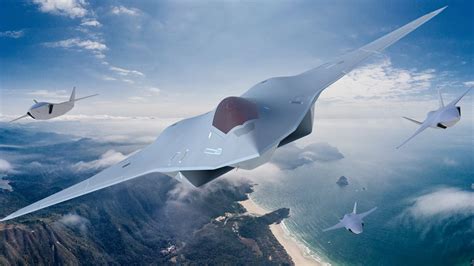
Perhaps the most transformative aspect of the F-47 is its role as a central node in a distributed combat network. Unlike earlier fighters, which primarily relied on onboard systems and pilot decision-making, the F-47 is designed to integrate seamlessly with a wider array of assets.
This includes:
- Autonomous drones acting as force multipliers, scouts, or decoys
- Advanced sensor networks providing real-time battlefield awareness
- AI-driven battle management systems assisting with rapid decision-making
- Secure communication links resilient against cyber and electronic attacks
Rather than operating alone, the F-47 will command and coordinate these elements, effectively multiplying its combat power. This approach reflects a broader shift toward manned-unmanned teaming, where human pilots oversee complex operations supported by autonomous systems.
The implications are profound. A single F-47 could control multiple drones, extend sensor coverage across hundreds of miles, and execute coordinated strikes with unprecedented precision. This transforms the aircraft from a tactical tool into a strategic asset.
Boeing’s Selection: A Strategic Industrial Shift
The decision to award Boeing the F-47 contract marked a significant turning point in the U.S. defense industry. For years, Lockheed Martin dominated the stealth fighter landscape with the F-22 and F-35 programs. Boeing’s selection disrupts that pattern, reintroducing competition at the highest level of fighter development.
From a strategic standpoint, this move ensures that multiple companies retain the capability to design and produce advanced combat aircraft. Concentrating all major programs under a single contractor would pose long-term risks, including reduced innovation and increased dependency. By choosing Boeing, the Air Force preserves a competitive industrial base, which is critical for sustaining technological leadership.
For Boeing, the stakes could not be higher. The company has faced challenges in recent years, including cost overruns and program delays in other sectors. The F-47 offers an opportunity to reestablish its reputation as a leader in advanced aerospace engineering—but it also demands flawless execution under intense scrutiny.
Development Timeline and Technological Foundations
Despite its complexity, the F-47 program is advancing at a notable pace. With the Engineering and Manufacturing Development contract awarded in March 2025, the Air Force has set an ambitious target for a first flight around 2028. This accelerated timeline suggests that much of the underlying technology has already been matured through earlier experimental programs.
Indeed, reports indicate that Next Generation Air Dominance (NGAD) demonstrators have been flying since at least 2020. These experimental aircraft likely tested critical elements such as propulsion systems, stealth configurations, and sensor integration. As a result, the F-47 is not being developed from scratch but rather built upon a foundation of proven concepts.
Still, significant challenges remain. Integrating advanced software, ensuring manufacturing scalability, and controlling costs will test Boeing’s capabilities. The complexity of a sixth-generation fighter extends far beyond hardware; it involves creating a cohesive system where sensors, weapons, and networks operate seamlessly.
Global Race for Sixth-Generation Air Power
The United States is not alone in pursuing next-generation air dominance. Several international programs are underway, each aiming to define the future of aerial warfare.
The Global Combat Air Program (GCAP), led by the United Kingdom, Italy, and Japan, targets operational deployment around 2035. Meanwhile, Europe’s Future Combat Air System (FCAS) seeks to integrate a new fighter with advanced drones, although it faces industrial and political challenges.
China’s efforts, though less transparent, are widely regarded as a serious contender. Analysts point to significant investments in stealth technology, long-range capabilities, and electronic warfare, all aligned with the principles guiding the F-47. Russia has also explored sixth-generation concepts, though its progress appears constrained by economic and industrial limitations.
This global competition underscores the importance of the F-47. It is not just about maintaining superiority—it is about ensuring that the United States remains ahead in a rapidly evolving technological race.
The F-22’s Extended Role as a Bridge Platform
While the F-47 promises transformative capabilities, the F-22 Raptor will continue to play a crucial role in the interim. With no immediate replacement ready, the Raptor is expected to remain in service well into the 2030s, acting as a bridge between fifth- and sixth-generation airpower.
This extended service life reflects both necessity and practicality. The F-22 still offers unmatched performance in certain scenarios, particularly in air-to-air combat. However, maintaining the fleet presents challenges, including aging components and limited upgrade potential.
Gradual retirement will likely occur as the F-47 enters service in meaningful numbers. Until then, the Air Force must balance sustaining existing capabilities with investing in future systems—a delicate but unavoidable transition.
A Strategic Reset for Air Combat
The F-47 ultimately represents more than a new aircraft. It embodies a strategic reset in how air combat is conceived and executed. By combining stealth, range, adaptability, and network integration, it addresses the full spectrum of challenges posed by modern warfare.
This is a platform designed not just to survive in contested environments, but to dominate them through coordination and information superiority. It reflects an understanding that future conflicts will be fought across multiple domains simultaneously, requiring seamless integration of air, space, cyber, and electronic warfare capabilities.
For Boeing, the program is a defining test. For the Air Force, it is a necessary evolution. And for the broader landscape of military aviation, the F-47 signals the arrival of a new era—one where the boundaries between aircraft, networks, and intelligence systems continue to blur.
In that sense, the F-47 does not merely change air combat. It redefines what air combat is.