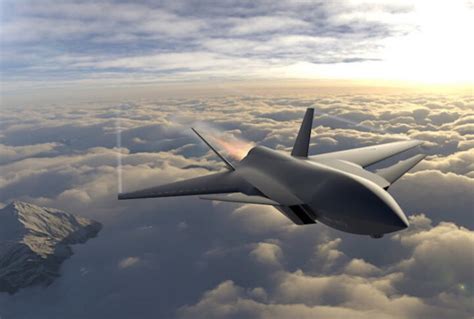
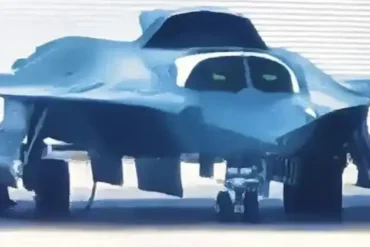
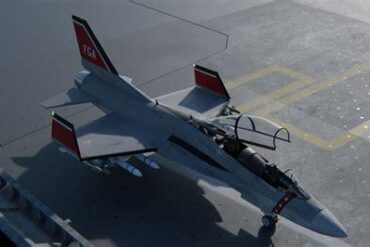
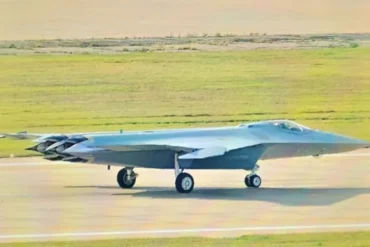
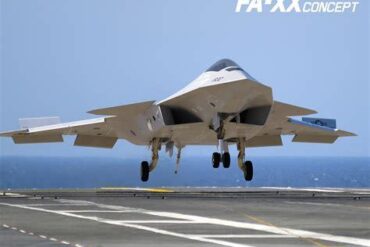
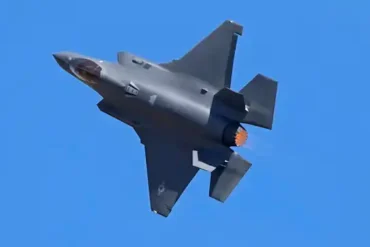
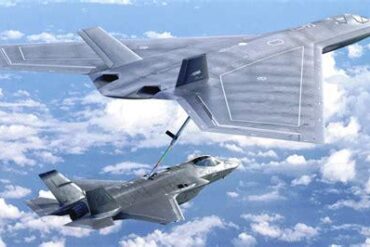
China’s emergence as a dominant force in next-generation military aviation is becoming increasingly evident. Recent analysis of imagery showing the Chengdu J-36 and Shenyang J-50 sixth-generation fighter jets has sparked global attention and concern. As reported by the South China Morning Post and cited by TASS, multiple defense analysts argue that China is now ahead of the West in the race to develop operational sixth-generation combat aircraft, an arena traditionally dominated by the United States and its allies.
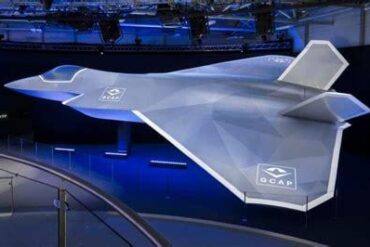
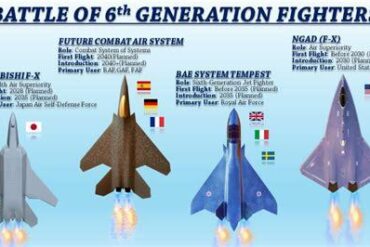
The implications of this lead are significant. If the visual and technical assessments are accurate, Beijing could deploy next-gen fighters before 2030, outpacing both the U.S. Next Generation Air Dominance (NGAD) initiative and Europe’s collaborative Global Combat Air Programme (GCAP).
Strategic Implications of Beijing’s Sixth-Gen Lead
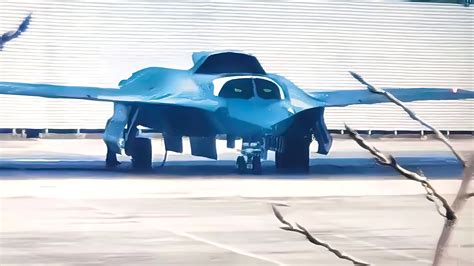
Malcolm Davis, a senior defense analyst at the Australian Strategic Policy Institute, points out that China’s flight testing of two separate sixth-generation platforms — the J-36 and J-50 — signals rapid technological maturation. This dual-development approach is in stark contrast with the more centralized and slower-paced Western programs. While NGAD in the U.S. and GCAP in Europe are expected to deliver airframes by the mid-2030s, China appears to be accelerating toward an earlier entry into service.
If Beijing succeeds in fielding sixth-gen fighters within the decade, it will reshape the balance of power in the Indo-Pacific and globally, giving the People’s Liberation Army Air Force (PLAAF) technological superiority in stealth, speed, and sensor integration. These advancements would dramatically enhance China’s capacity to project power and deter U.S. and allied forces from operating freely in contested regions such as the South China Sea or Taiwan Strait.
Technical Characteristics: A Closer Look at J-36 and J-50
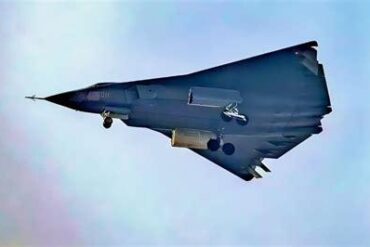
Photos of the Chengdu J-36 reveal an aircraft with clear sixth-generation traits. According to defense researcher Peter Layton from the Griffith Asia Institute, the J-36 displays a dorsal air intake, suggesting a possible tri-engine configuration. This architectural feature points to the aircraft being a large, long-range stealth strike platform — likely optimized for strategic deep-penetration missions.
Other observed features of the J-36 include:
- Three distinct internal armament bays, signaling a focus on maintaining stealth during varied mission profiles.
- A broad delta-wing planform, potentially improving lift and high-altitude performance.
- Advanced radar-absorbing material coatings visible in infrared imagery, suggesting serious efforts in electromagnetic stealth.
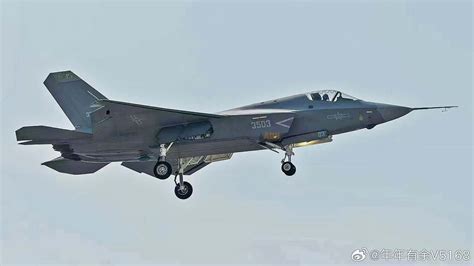
While the J-36 may be oriented toward strike capabilities, the Shenyang J-50 — a sibling in this technological leap — appears to be designed as a multirole or air superiority platform, potentially integrating directed-energy weapons, loyal wingman drone control, and advanced AI-driven combat support systems.
The bifurcation of design roles between the J-36 and J-50 reflects a mature strategic doctrine: strike and superiority separated for mission optimization, yet unified through a networked combat ecosystem.
Why the West May Be Falling Behind
The contrast between China’s aggressive timelines and the West’s more methodical approach is stark. The U.S. NGAD program remains heavily classified, with only vague hints about flight testing or prototype status. Europe’s GCAP, a collaboration between the UK, Japan, and Italy, is in its early conceptual phases, with demonstrator flights not expected before 2027–2028.
Part of China’s advantage may lie in its industrial structure. While U.S. and European projects must navigate complex procurement processes, political oversight, and multinational coordination, China’s centralized planning system allows for rapid prototyping and iterative testing. Moreover, China’s state-run aviation giants — namely AVIC (Aviation Industry Corporation of China) — are tightly integrated with military planning and are able to bypass regulatory friction seen in Western democracies.
A Shift in Global Air Superiority Doctrine
Sixth-generation aircraft are not merely improved versions of fifth-gen fighters like the F-35 or J-20. They represent a paradigm shift in aerial warfare, emphasizing a fusion of stealth, hypersonic speed, persistent ISR (intelligence, surveillance, reconnaissance), man-machine teaming, and electronic warfare dominance.
China’s potential first-mover advantage will not just give it an edge in direct engagements but could alter military doctrines globally. A sixth-gen PLAAF capable of deploying airframes that can:
- Coordinate swarms of loyal wingmen drones
- Operate with near-autonomous decision-making
- Evade even the most advanced air defense networks
- Launch long-range precision strikes from deep inside contested zones
would make it exponentially more difficult for the U.S. or NATO forces to operate near the first island chain or project power in Eurasia without unacceptable risk.
The Intelligence Behind the Imagery
Open-source intelligence (OSINT) has played a crucial role in uncovering China’s sixth-gen advances. Satellite imagery, runway activity, and close analysis of publicly available photos have allowed experts to piece together significant insights.
The J-36’s tri-engine configuration and armament bays were not announced officially; they were deduced by independent analysts studying high-resolution aerial imagery. Similarly, behavioral analysis of flight testing patterns and support logistics at key PLA airbases — such as those near Chengdu and Shenyang — give further credence to the notion that these aircraft are well into development.
China appears to be selectively leaking information or allowing limited access to imagery, perhaps as a strategic signaling tool. These hints are meant to communicate capability without offering adversaries full technical specifications.
Geopolitical Reactions and Strategic Calculations
The West is not blind to these developments. The Pentagon has already accelerated AI and autonomous warfare integration as a direct response. Meanwhile, the GCAP consortium has increased its coordination tempo, promising faster development cycles and the incorporation of modular, upgradable systems.
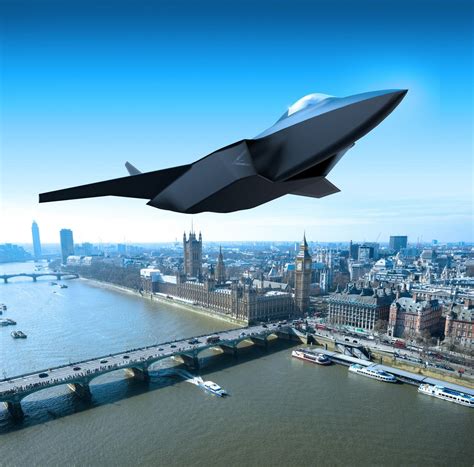
Japan’s inclusion in GCAP represents a strategic pivot for Tokyo, which is now treating sixth-gen development as a cornerstone of its national defense posture. Similarly, the UK has declared that its sixth-gen Tempest jet will be in the air by 2035, though this is still five years later than China’s potential timeline.
What remains unclear is whether these Western projects will opt for capability parity or overmatch. If the West’s sixth-gen jets do not exceed China’s in maneuverability, stealth, data fusion, or survivability, the strategic cost of being second may be permanent dominance loss in air combat.
Conclusion: A Technological Tipping Point
As of mid-2025, the data indicates that China has taken a decisive lead in sixth-generation fighter development, with the J-36 and J-50 offering tangible proof of advanced design, flight capability, and likely deployment within the decade. This progress is not just symbolic — it is strategic.
While Western nations continue to build through international cooperation and long-term planning, China’s accelerated and secretive approach has delivered results visible even from space. If Beijing achieves IOC (initial operational capability) by 2029, as forecast by Malcolm Davis, it will redraw the global aerospace balance.
This potential shift underscores the urgency for the U.S. and its allies to both match and surpass Chinese advancements — not only in hardware but also in systems integration, combat doctrine, and electronic warfare. The sixth-generation battlefield is not in the future; it is already taking shape above Asia’s skies.