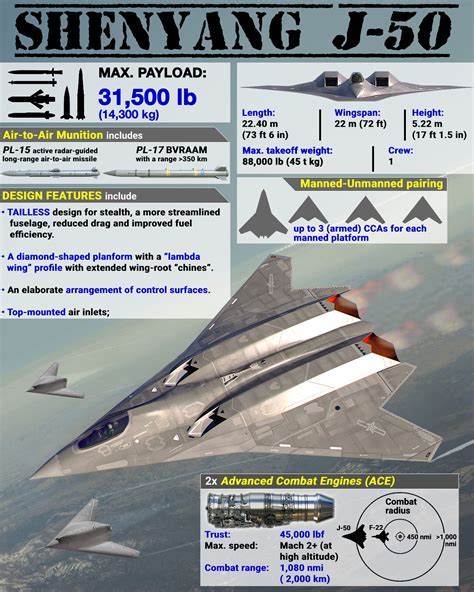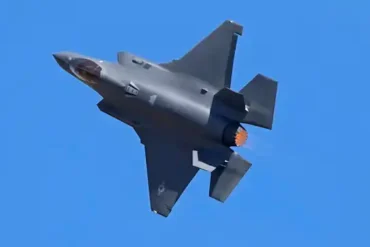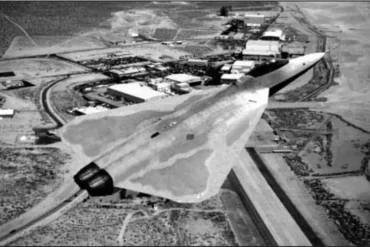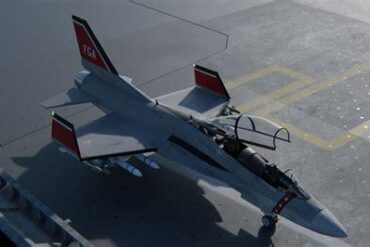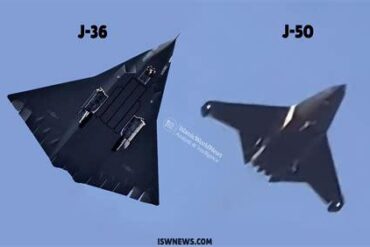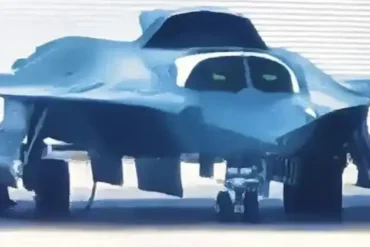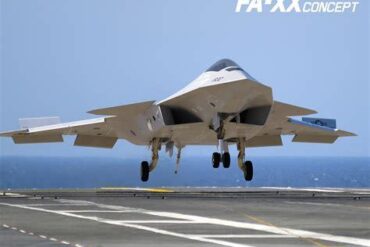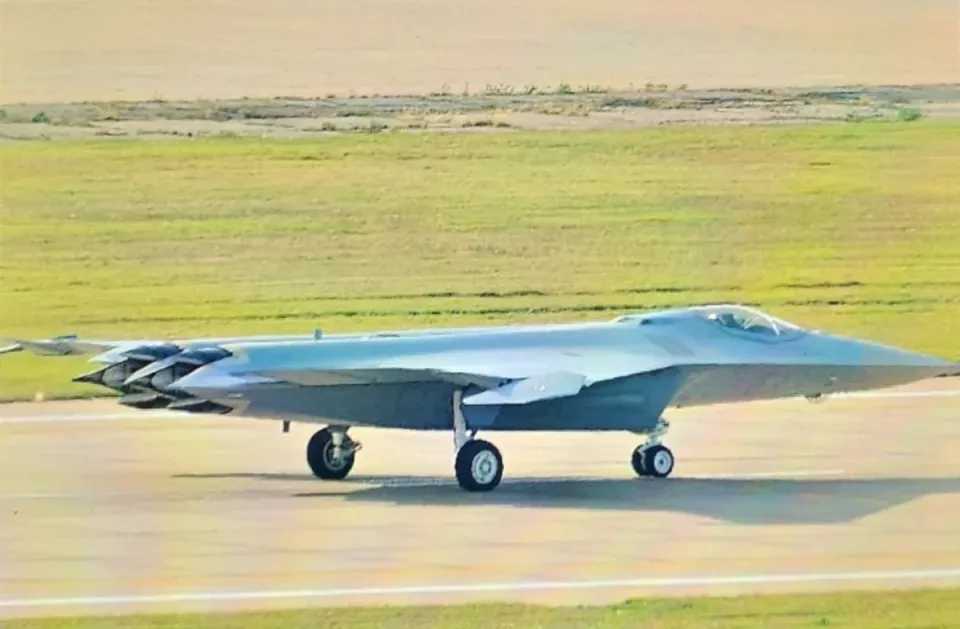
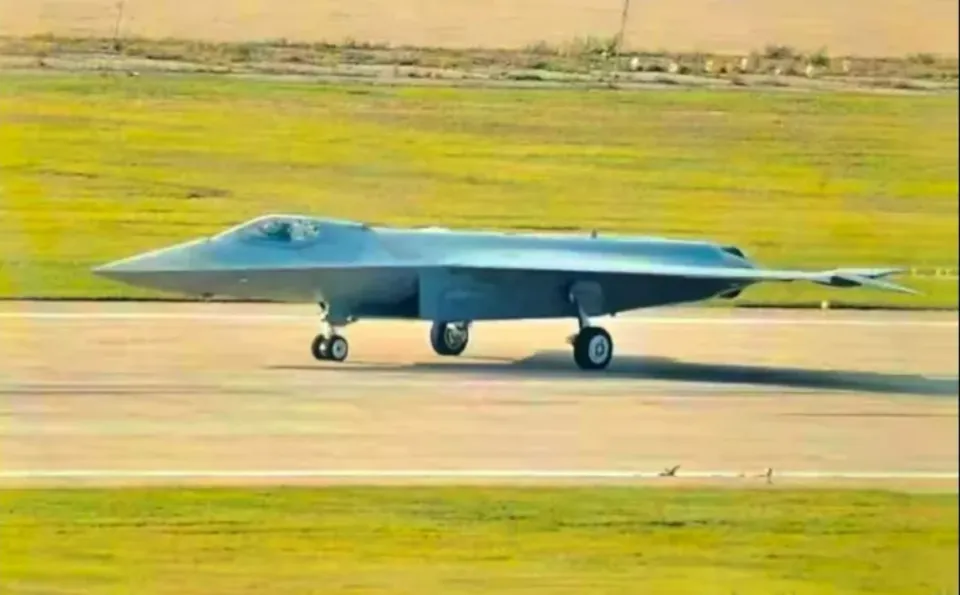
China’s unveiling of the J-50 sixth-generation fighter jet has set off alarm bells across global defense circles. This mysterious aircraft, shrouded in secrecy until recently, has now been revealed through leaked photographs showing a sleek, tailless design on a Chinese runway. Defense experts suggest that this fighter could be a game-changing platform capable of challenging, or even surpassing, the current generation of Western aircraft such as France’s Dassault Rafale and the United States’ F-35 Lightning II.
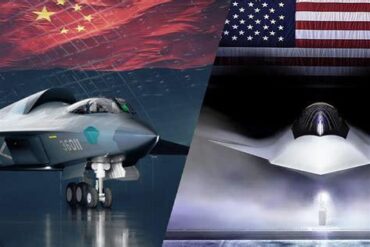
The appearance of the J-50 underscores a rapidly escalating technological arms race between the United States and China. Both nations are locked in competition to dominate the skies with their respective sixth-generation platforms, each seeking to secure air superiority for the next three decades.
Tailless Design And The Science Of Invisibility
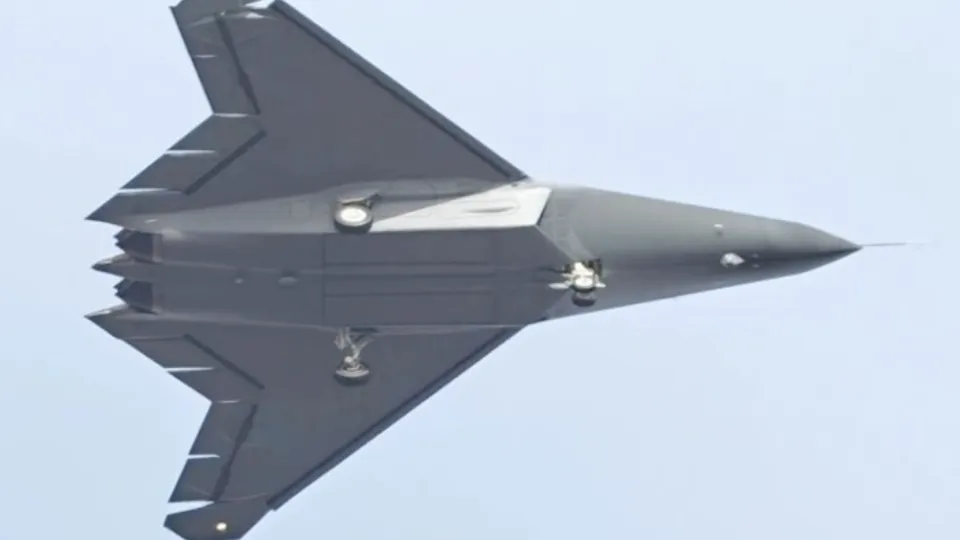
The tailless configuration of the J-50 is perhaps its most striking feature. Unlike traditional fighters that rely on vertical stabilizers for stability and maneuverability, the J-50 employs an advanced aerodynamic frame combined with artificial intelligence-driven flight controls to maintain stability. This not only enhances stealth by reducing radar cross-section but also allows for higher agility in air combat.
Earlier prototypes were spotted with a nose-mounted air data boom, used primarily for testing aerodynamic performance. The absence of this feature in the most recent sightings suggests that the data collection and navigation systems have been fully integrated into the aircraft’s sensor fusion architecture. This move mirrors the developmental path of the J-20, which also transitioned from external to embedded sensor systems as it matured.
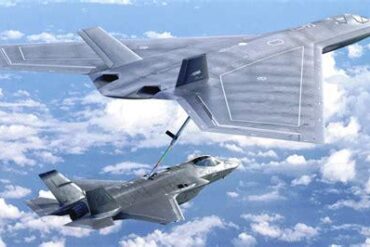
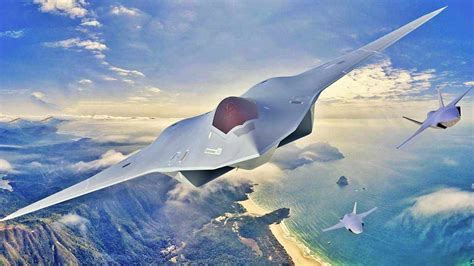
The smooth canopy design further reduces radar reflections while providing the pilot with a seamless field of vision. Analysts highlight the possibility of a two-seat variant that could serve as a mothership for unmanned drones, combining manned and unmanned capabilities into a single combat package.
Advanced Sensors And AI Integration
At the heart of the J-50’s design lies its AI-driven warfare system. Unlike previous-generation fighters, which rely heavily on pilot input, the J-50 is expected to leverage machine learning algorithms that process vast amounts of sensor data in real-time. This enables instantaneous threat detection, predictive targeting, and battlefield coordination far beyond human capacity.
Chinese engineers appear to be focusing heavily on centric warfare capabilities, ensuring that the J-50 functions not just as a fighter jet, but as a command-and-control hub in the sky. With AI support, the jet could direct swarms of drones, missile barrages, and electronic warfare strikes, creating a multi-layered offensive shield that is difficult for adversaries to penetrate.
Powering The Beast: The WS-15 Engine Upgrade
One of the critical components of the J-50 is believed to be an upgraded version of the WS-15 high-thrust turbofan engine. The WS-15 has long been touted as China’s answer to America’s F135 engine that powers the F-35. If reports hold true, the enhanced WS-15 could give the J-50 supercruise capabilities—sustained supersonic speeds without afterburners—providing both fuel efficiency and tactical superiority.
The thrust-to-weight ratio of this engine is rumored to exceed 10:1, allowing the aircraft to carry heavier payloads without sacrificing maneuverability. This positions the J-50 not only for air dominance missions but also for deep penetration strikes, electronic warfare operations, and cooperative missions with drones.
Single-Seat Air Dominance Vs. Dual-Seat Drone Command
Military analysts predict that two main variants of the J-50 could enter production. The single-seat model will likely focus on traditional air superiority roles, engaging enemy fighters directly with long-range missiles and close-combat maneuvers. The dual-seat model, however, introduces a different concept—one pilot focusing on flying and combat while the other operates as a drone commander, directing unmanned aircraft into the fight.
Such a configuration would create an integrated manned-unmanned combat force, giving China unprecedented flexibility in air battles. By deploying drones as loyal wingmen, the J-50 could multiply its effectiveness without exposing additional pilots to risk.
J-50 Versus Rafale And F-35: A Generational Leap
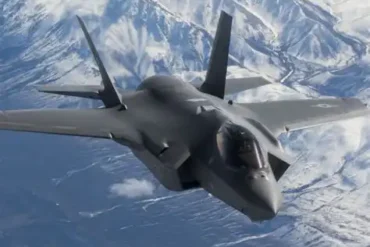
When placed against Western counterparts like the Dassault Rafale and the F-35 Lightning II, the J-50 represents a generational leap in technology. While the Rafale remains a formidable 4.5-generation multirole fighter and the F-35 dominates as a 5th-generation stealth platform, the J-50 incorporates features that position it firmly within the sixth-generation category.
Key differentiators include:
- Tailless stealth design with reduced radar visibility
- AI-powered combat systems capable of independent decision-making
- Drone integration via potential dual-seat variant
- Supercruise capability with advanced WS-15 engines
- Sensor fusion and electronic warfare superiority
These advancements could render traditional stealth features of the F-35 less effective, as the J-50 may rely more on electronic dominance and AI coordination than passive stealth alone.
The Geopolitical Race: China’s J-50 Vs. America’s NGAD
The United States has placed heavy emphasis on its Next Generation Air Dominance (NGAD) program, with the goal of introducing the F-47 sixth-generation fighter by 2028. Washington’s timeline suggests urgency in countering China’s accelerated pace. By contrast, Beijing has remained publicly quiet, though frequent leaks and sightings indicate that prototypes are being tested more aggressively.
This dynamic raises an important question: Is China ahead in the sixth-generation race? While the U.S. enjoys an edge in combat-tested experience and global partnerships, China’s rapid prototyping and AI-first approach may allow it to field an operational sixth-generation fighter sooner than expected.
Strategic Implications For The Indo-Pacific
The arrival of the J-50 has direct implications for the Indo-Pacific security architecture. Should Beijing successfully field this aircraft in large numbers, it could shift the balance of air power across the South China Sea, Taiwan Strait, and beyond. For regional actors like Japan, South Korea, and India, the J-50 poses an immediate challenge, as their current fleets would face difficulties countering a tailless, AI-empowered stealth fighter.
Moreover, China’s ability to potentially export a downgraded J-50 version to allied states underlines the possibility of a broader proliferation of sixth-generation technology outside Western influence.
Expert Opinions On The J-50’s Future
According to Chinese defense analyst Song Zhongping, the current J-50 model spotted is likely the second prototype (002), representing a more refined stage of development compared to the earlier version (001). Aviation analyst Fu Qianshao adds that the single-seat model will dominate in air superiority missions, while the potential two-seat variant will provide command capabilities for drone operations.
Western experts, however, caution that while the J-50 looks advanced on paper, much will depend on its production scalability, maintenance infrastructure, and combat readiness. Without sufficient real-world testing and large-scale deployment, the fighter’s true effectiveness remains speculative.
Conclusion: A Silent But Rapid March Toward The Future
The Chinese J-50 sixth-generation fighter jet represents more than just an aircraft—it is a statement of intent. Its tailless stealth frame, AI-powered combat systems, and potential to integrate unmanned platforms signal a radical rethinking of aerial warfare. While the F-35 and Rafale remain formidable assets in today’s skies, the J-50 pushes the conversation into tomorrow’s battlefield.
As the world waits for an official unveiling, one thing is clear: the J-50 is not merely about matching Western capabilities; it is about outpacing them. The race for sixth-generation air dominance has begun, and China’s bold strides suggest that the future of combat aviation may emerge first from the East.