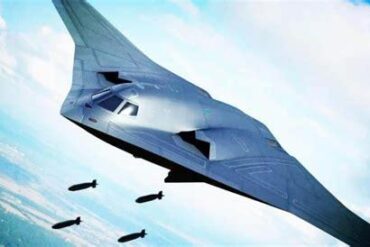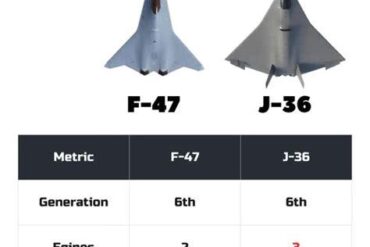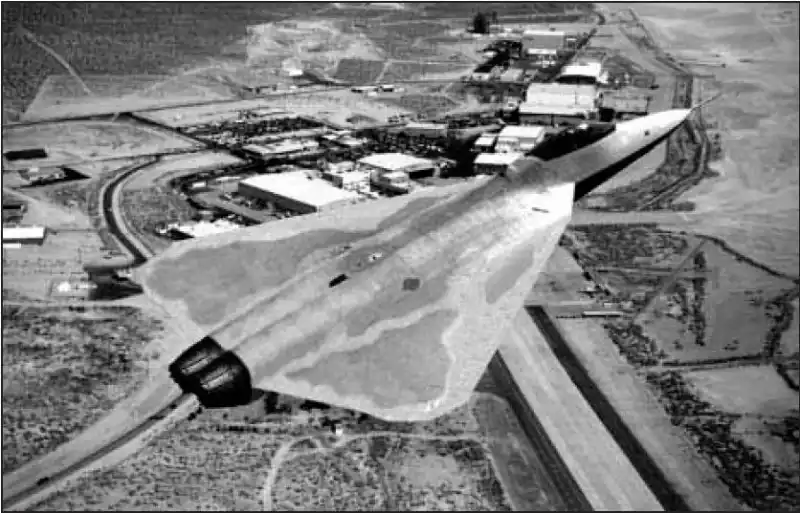
The Lockheed Martin X-44 MANTA—Multi-Axis, No-Tail Aircraft—stands as a defiant ghost of what could have been a revolutionary chapter in military aviation. First proposed in 1999, the X-44 MANTA was not merely an evolution of the F-22 Raptor but a bold reimagination of aerial dominance, pushing stealth, agility, and aerodynamics into a new realm. Though it never soared through the skies, its design philosophy has left an indelible mark that echoes in today’s 6th-generation fighter programs.
A Radical Departure: The Birth of the X-44 MANTA
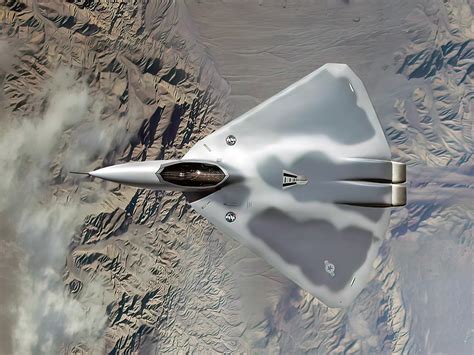
In the waning years of the Cold War, the U.S. aerospace industry entered an era of quiet upheaval. While platforms like the F-22 Raptor and F-117 Nighthawk became legends in stealth warfare, engineers at Lockheed Martin’s Skunk Works and NASA were already envisioning what would come next. The X-44 was to be an aircraft with no tail fins, rudders, or elevators—only a sleek delta-winged fuselage powered by pure 3D thrust vectoring.
By removing vertical and horizontal stabilizers, the MANTA would not only minimize radar cross-section but also reduce drag and structural weight. This meant higher fuel efficiency, longer range, and lower maintenance complexity—all without sacrificing maneuverability.
Engineering a Tailless Beast: How the MANTA Was Meant to Fly
At the core of the X-44’s audacious concept was its full reliance on thrust vectoring—using jet exhaust angles to control pitch, yaw, and roll. The aircraft would have likely reused the Pratt & Whitney F119 engines from the F-22 Raptor, but with custom nozzles capable of 3D directional control. These engines would give the X-44 a theoretical maximum speed near Mach 2 and an operational ceiling of 49,000 feet.
Its broad delta wing was more than a stealthy silhouette; it was a functional fuel tank, enabling a projected combat radius of nearly 2,000 miles—a 50% increase over the F-22. That extended range would allow the X-44 to strike deeper and loiter longer over contested zones.
Weaponry would remain internal, preserving radar invisibility. The fighter would carry AIM-120 AMRAAM and AIM-9 Sidewinder missiles in enclosed bays, potentially even directed-energy weapons in future variants.
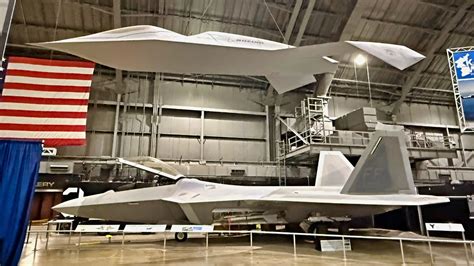
Digital Brains for a Revolutionary Bird
Controlling a tailless aircraft through thrust vectoring alone was not merely a mechanical puzzle—it was a software challenge of unprecedented complexity. Engineers needed advanced flight control systems that could constantly monitor and adjust the aircraft’s attitude in real time.
This required redundant, fail-safe algorithms to manage thousands of variables—fuel flow, temperature, engine vector angles, and airflow patterns—without traditional stabilizers as a fallback. Though such software architectures are commonplace today in fly-by-wire systems, they were still in their adolescence in the late 1990s.
The Message: What the MANTA Was Trying to Say
If the MANTA had taken flight, it would have demonstrated a bold vision: that aerodynamic rules were meant to be rewritten, not merely obeyed. It would have proven that stealth and agility were not mutually exclusive and that full-thrust control could replace decades of reliance on mechanical surfaces.
For air forces around the world, the MANTA’s message was unmistakable:
- Radar evasion is not just a feature—it’s a shape.
- Range is a weapon. Fuel capacity directly determines how far you can dominate.
- Maneuverability is no longer bound by physical appendages.
- Software defines survivability. The plane’s intelligence can matter more than its metal.
The MANTA was telling the world that the next frontier of air combat wouldn’t look like anything that had come before.
Why It Never Flew: The Political and Strategic Vacuum
Despite the innovation embedded in every conceptual line of the X-44, its wings were clipped not by physics, but by politics. In 2000, less than a year after its designation, the program was shelved. Post-Cold War defense budgets were shrinking, and the Pentagon’s priorities shifted from air superiority to multi-role versatility, giving rise to the F-35 Joint Strike Fighter.
The lack of a near-peer threat meant radical designs like the X-44 were shelved as luxuries. It wasn’t that the engineering obstacles were insurmountable. It was that geopolitical urgency had disappeared, leaving visionary projects like MANTA to die on the drawing board.
The Phantom Influence: How the X-44 Lives On
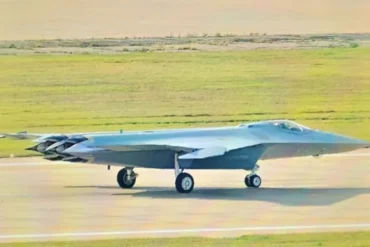
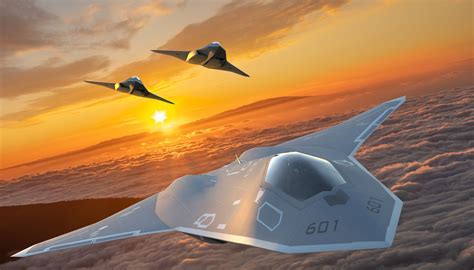
Though grounded, the X-44 MANTA’s spirit infiltrated future programs—most notably, the Next Generation Air Dominance (NGAD) initiative. Concepts revealed so far show tailless, blended-wing-body configurations, echoing the X-44’s fundamental design language.
The emphasis on distributed propulsion, adaptive engines, and broad-spectrum stealth are all extensions of ideas born from the MANTA. The NGAD’s potential for autonomous flight control, data fusion, and drone swarming represent the digital maturity the MANTA needed—but arrived two decades too late.
Parallel Ghosts: The X-44A and the Evolution of MANTA
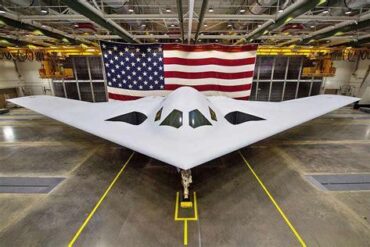
In a curious twist, Lockheed Martin would later reuse the “X-44” designation in the X-44A, a stealthy unmanned tech demonstrator with a similar tailless, blended-wing shape. Unlike the manned MANTA, the X-44A was designed for autonomous stealth UAV missions, foreshadowing platforms like the RQ-180 and B-21 Raider.
While there is no direct lineage between the two programs, it is likely they shared research insights within Lockheed’s Skunk Works ecosystem. Both aircraft represented a single, clear philosophy: control the sky by becoming invisible, adaptable, and nontraditional.

Lessons in What Might Have Been
The X-44 MANTA’s greatest contribution may be its role as a catalyst of possibility. It forced aerospace engineers to confront the limits of convention, proving that revolutionary ideas can become tomorrow’s standards—if only the timing aligns.
Air forces worldwide now race toward sixth-generation fighters, many borrowing the same principles once seen as radical in the X-44. China’s J-20, Russia’s Su-75 Checkmate, and Europe’s Future Combat Air System (FCAS) are exploring similar tailless, stealth-optimized configurations.
But the message remains uniquely American in its origin: bold, unapologetic, and ahead of its time.
Conclusion: MANTA’s Unfinished Business
The X-44 MANTA never touched the skies, but its ideological flight continues to ascend. It challenged norms, dared engineers to think differently, and etched a stealthy silhouette into the minds of future designers. For every air force on Earth, the MANTA still has a message: radical innovation is not optional—it is inevitable.
The X-44’s legacy is not one of failure, but of premature brilliance. It reminds us that the future of air combat does not belong to those who follow the rules—it belongs to those who rewrite them.