The United States Air Force is facing a sobering assessment about its future ability to fight and win a high-intensity conflict with China. A new report from the Mitchell Institute for Aerospace Studies argues that the service’s planned purchases of the B-21 Raider stealth bomber and the F-47 sixth-generation fighter are not large enough to sustain the kind of continuous, punishing air campaign required in a war over Taiwan. The warning is blunt: current force plans emphasize affordability and program stability at the expense of wartime credibility against a peer adversary with depth, resilience, and sophisticated defenses.
At the heart of the concern is the nature of modern warfare in the Indo-Pacific. China’s strategy relies on layered integrated air defense systems, long-range missiles, hardened bases, and geographic scale to create what the report calls “protected rear areas.” These sanctuaries would allow Chinese forces to regenerate combat power, relocate launchers, and maintain command and control even under attack. According to the study’s authors, Heather Penney and retired Colonel Mark A. Gunzinger, episodic strikes are not enough. Denying sanctuary requires persistent presence inside contested airspace, day after day, under fire.
The Air Force’s current plans do not fully align with that reality. Official procurement targets call for at least 100 B-21 bombers and roughly 185 F-47 fighters, numbers designed primarily to replace aging fleets like the B-1B Lancer and F-22 Raptor. On paper, those figures appear substantial. In practice, the report argues, they would yield far fewer aircraft actually available for sustained combat operations once training, maintenance, attrition, and nuclear deterrence commitments are factored in.
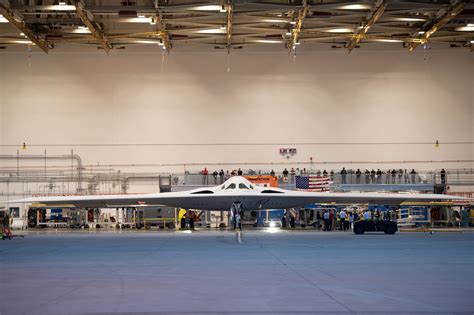
The B-21 Raider and the Limits of a 100-Bomber Fleet
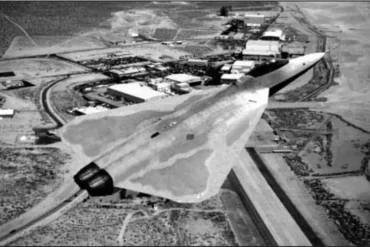
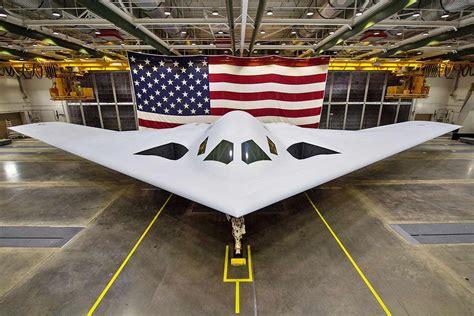
The B-21 Raider is widely regarded as the most important U.S. combat aircraft program of the coming decades. Developed by Northrop Grumman under the Long Range Strike Bomber initiative, it is designed from the outset to penetrate advanced air defenses rather than rely on stand-off weapons launched from afar. Its flying-wing design builds on the legacy of the B-2 Spirit, but with improved low-observable shaping, modern materials, and an open-architecture avionics system intended to evolve over time.
With an estimated range approaching 12,000 kilometers and an internal payload in the 12–13 ton class, the B-21 is optimized for repeated deep strikes against high-value targets. Its mission set spans conventional and nuclear roles, including delivery of the B61 gravity bomb, the Long Range Stand Off (LRSO) nuclear cruise missile, precision weapons like JDAM and JASSM, and even the GBU-57 Massive Ordnance Penetrator for deeply buried facilities. This combination of endurance, stealth, and payload makes the Raider uniquely suited to sustained operations against a vast, defended landmass.
The Mitchell Institute report argues that a fleet capped near 100 aircraft simply cannot generate the sortie rates required for a prolonged Indo-Pacific war. Some bombers would remain tied to nuclear deterrence, others would be in maintenance, and a portion would inevitably be lost or damaged in combat. The result is a force sized for selective strikes, not for maintaining relentless pressure across multiple target sets simultaneously.
F-47 and the Challenge of Sustained Air Superiority
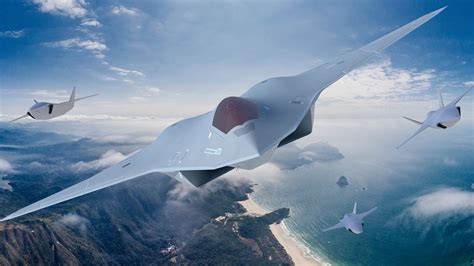
The same logic applies to the F-47, the crewed centerpiece of the Air Force’s Next Generation Air Dominance (NGAD) program. Intended to replace the F-22, the F-47 is designed for long range, high speed, and deep penetration in heavily contested environments. While many details remain classified, Air Force officials have confirmed a combat radius exceeding 1,000 nautical miles and speeds above Mach 2, characteristics tailored for the vast distances of the Pacific theater.
More than a traditional fighter, the F-47 is envisioned as a command and sensing hub within a broader family of systems that includes uncrewed collaborative combat aircraft. It would escort bombers, suppress enemy air defenses, hunt high-value targets, and knit together distributed forces through secure networking. This role demands persistence and numbers, not just exquisite capability.
The report estimates that around 300 F-47s would be required to maintain credible air superiority during a major conflict with China. Current plans fall well short of that mark. As with bombers, fighters are continuously pulled into other missions, from homeland defense to global presence operations, leaving fewer available for a single, sustained theater fight.
Stand-Off Weapons Versus Stand-In Forces
A central theme of the analysis is skepticism toward an overreliance on stand-off strike systems, including long-range hypersonic weapons. These systems are often presented as a way to avoid the risks of penetrating defended airspace. Penney and Gunzinger argue that this logic is incomplete. Stand-off kill chains depend on vulnerable sensors, complex networks, and limited inventories of extremely expensive munitions.
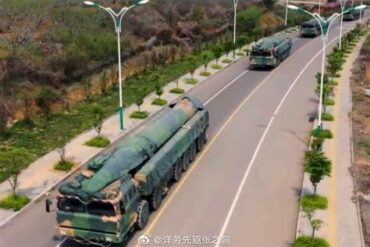
The report highlights the U.S. Army’s Dark Eagle Long Range Hypersonic Weapon, which carries a price tag of more than $40 million per missile. A handful of strikes can quickly consume billions of dollars while producing fewer effects than a single bomber sortie carrying multiple weapons. Penetrating aircraft, by contrast, can loiter, retask in real time, and service numerous targets in one mission, all while forcing the adversary to react.
Stand-in forces also change the geometry of the fight. Operating inside contested airspace allows aircraft to strike air bases, command nodes, logistics hubs, and missile launch infrastructure at the source. This compresses decision cycles and degrades the enemy’s ability to coordinate and sustain operations, something stand-off attacks alone struggle to achieve.
Bridging the Gap Before the 2030s
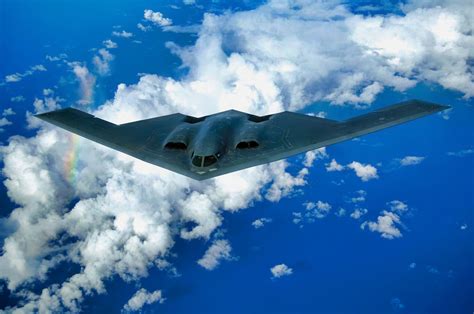
Recognizing that expanding B-21 and F-47 production will take time, the report recommends interim measures. One is to halt the retirement of the remaining B-2 Spirit bombers, which still provide valuable penetrating capability. Another is to increase procurement of the F-35 Lightning II, whose AN/APG-81 AESA radar and fused sensor suite already offer a level of situational awareness and targeting precision unmatched by legacy fighters.
While the F-35 lacks the range and payload of a bomber, its ability to operate in contested environments and share data across the force makes it a critical enabler for near-term deterrence. In sufficient numbers, it can help mitigate the shortfall until next-generation systems mature.
Deterrence, History, and the Cost of Sanctuary
The report draws on historical precedent to underscore its warning. Conflicts where adversaries retained protected sanctuaries, from Korea and Vietnam to more limited modern campaigns, tended to drag on as opponents regenerated forces and adapted. Wars that systematically targeted industrial capacity, logistics, and command structures, by contrast, often ended sooner by denying the enemy room to recover.
A visible commitment to larger fleets of penetrating bombers and fighters would send a powerful signal to Beijing. It would demonstrate that the United States intends to hold critical assets at risk throughout a conflict, not just at the edges. Such a posture could strengthen deterrence by undermining any assumption that a war over Taiwan could be fought while keeping the Chinese mainland largely insulated from sustained attack.
For allies and partners, expanded B-21 and F-47 fleets would reinforce confidence in long-term U.S. commitment to the Indo-Pacific. For competitors, it would clarify that future conflicts will not be limited to maritime skirmishes or brief missile exchanges, but could involve prolonged, high-intensity air campaigns aimed at the foundations of military power itself.
The Mitchell Institute’s conclusion is uncomfortable but clear. Without a significant increase in planned bomber and fighter buys, the Air Force risks entering the most consequential conflict of the century with forces optimized for restraint rather than victory. In a war defined by scale, distance, and endurance, numbers still matter, and credibility is built not on intentions, but on sustained combat power.