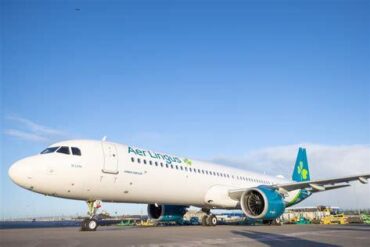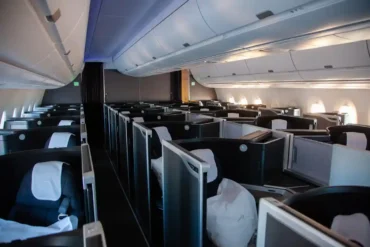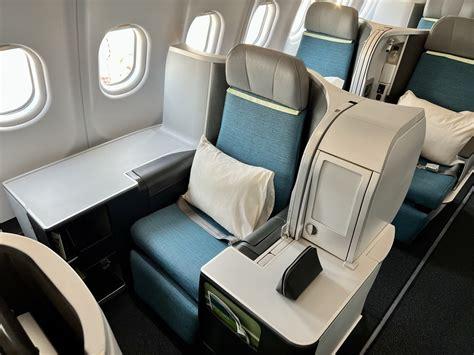
Aer Lingus has built a reputation as one of Europe’s most interesting long-haul narrowbody operators, using the Airbus A321LR and Airbus A321XLR to connect Ireland with smaller North American markets that would not normally support widebody operations. However, the Irish flag carrier has quietly created another advantage from these aircraft: passengers flying short European routes can sometimes experience a genuine long-haul cabin, including lie-flat business class seats, on flights lasting only a few hours.
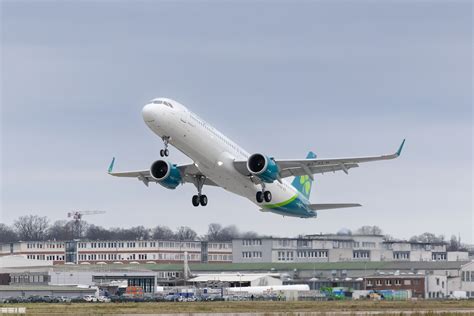
The airline’s decision is driven by practicality as much as passenger experience. Long-range narrowbody aircraft are valuable assets because they allow airlines to serve thinner transatlantic markets efficiently. But when these aircraft are not crossing the Atlantic, they still need to generate revenue. Aer Lingus has found a smart solution by deploying some of its long-range Airbus aircraft on European routes, giving travelers access to a premium cabin normally associated with much longer journeys.
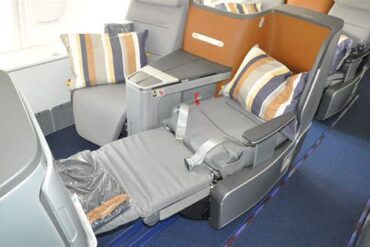
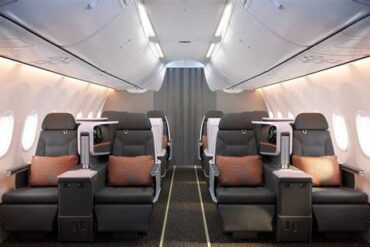
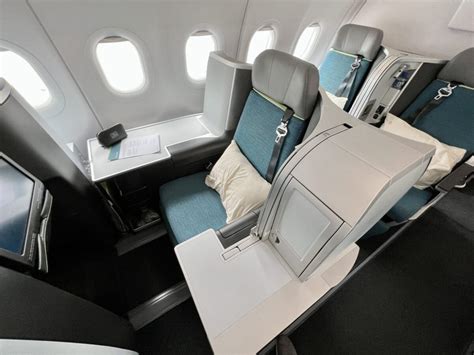
While most European short-haul business class products are simply economy seats with the middle seat blocked, Aer Lingus’ long-range Airbus fleet offers something completely different. The aircraft feature Thompson Aero Vantage lie-flat seats, a product designed for international flights and also used on the airline’s widebody Airbus A330 fleet.
Aer Lingus’ A321LR and A321XLR Fleet Creates a Unique European Flying Experience
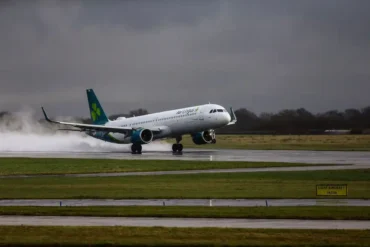
Aer Lingus currently operates a fleet of 14 long-range Airbus A321 aircraft, consisting of eight A321LRs and six A321XLRs. These aircraft have transformed the airline’s network strategy by allowing it to launch routes to destinations such as Hartford, Pittsburgh, Indianapolis, and other cities that may not generate enough demand for larger widebody aircraft.
The Airbus A321LR and A321XLR belong to the same extended-range aircraft family but offer slightly different capabilities. The A321XLR provides additional range, increased payload capacity, and more cargo capability, making it especially useful for challenging transatlantic missions. The A321LR, meanwhile, remains highly capable and can handle many routes that do not require the additional range.
Both aircraft are powered by the CFM International LEAP-1A engine, one of the most advanced powerplants available for single-aisle aircraft. Their fuel efficiency and long-range capability have allowed Aer Lingus to expand internationally while maintaining the lower operating costs of a narrowbody aircraft.
Inside the cabin, the passenger experience is almost identical between the two aircraft types. Both feature a two-class configuration with 16 business class seats and 168 economy seats, creating a total capacity of 184 passengers.
The main difference is that the newer A321XLR features the Airbus Airspace cabin design, including larger overhead bins, updated lighting systems, and refreshed interior panels. The A321LR uses an earlier-generation Airbus A320-family cabin, although the overall passenger experience remains very similar.
Lie-Flat Business Class Seats Appear on European Routes This Summer
The most surprising aspect of Aer Lingus’ long-range narrowbody fleet is not its transatlantic capability but its European deployment. During the summer schedule, some A321LR and A321XLR aircraft operate short European routes from Dublin to destinations including Paris Charles de Gaulle, Amsterdam, Oslo, Manchester, Venice, and Munich.
The aircraft also appear on selected services from Shannon to Paris and London Heathrow.
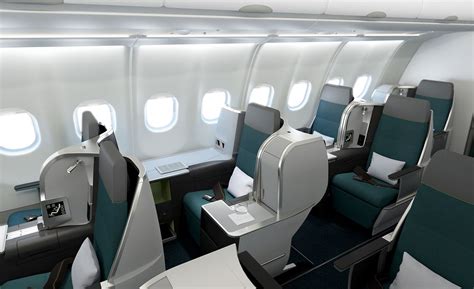
For passengers booking these flights, the aircraft type can make a dramatic difference. A typical Aer Lingus European flight operated by an Airbus A320 or A320neo features a traditional short-haul cabin. Economy passengers receive standard seating without seatback entertainment, while premium passengers experience AerSpace, which is essentially an economy seat with the middle seat left empty.
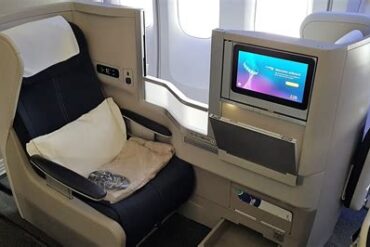
However, when the same route is operated by an A321LR or A321XLR, passengers receive a significantly upgraded product. Economy travelers benefit from more comfortable seating, seatback entertainment systems, and a cabin designed for much longer journeys. Business class passengers receive the biggest upgrade: a seat capable of transforming into a fully flat bed.
This creates a rare situation where travelers can enjoy an international-style business class seat on flights of only two or three hours.
Aer Lingus AerSpace Becomes More Valuable on Long-Range Airbus Aircraft
Aer Lingus markets its intra-European premium product under the AerSpace name. On most European flights, AerSpace represents a premium economy-style experience rather than a traditional business class cabin.
On Airbus A320-200 and A320neo aircraft, AerSpace passengers receive a blocked middle seat, priority services, lounge access, additional baggage benefits, flexible ticket conditions, and complimentary refreshments. However, the physical seat itself remains identical to economy seating.
The long-range A321LR and A321XLR aircraft change that equation completely.
Although Aer Lingus still sells these seats under the AerSpace branding, all 16 business class seats on these aircraft are available as premium seats. Passengers receive access to a genuine international business class seat without paying a separate premium specifically for the long-range aircraft.
This creates a hidden opportunity for travelers who know how to search aircraft schedules carefully. A European flight that appears ordinary on the booking page could actually provide a premium cabin experience normally reserved for overnight international routes.
For Aer Lingus, this arrangement also makes economic sense. The airline earns more revenue from premium seats while improving aircraft utilization. Instead of leaving expensive long-range aircraft parked between transatlantic missions, the airline keeps them flying and generating income.
Why Short-Haul Lie-Flat Seats Are Rare in Europe
European airlines have traditionally taken a different approach to regional business class compared with airlines in other parts of the world.
Most European carriers use the so-called Eurobusiness configuration, where business class passengers sit in the same economy seats but with the middle seat blocked. Airlines can adjust the size of the business class cabin depending on demand by moving curtains between economy and premium sections.
This approach is efficient because European flights are usually short, with many journeys lasting less than three hours. Airlines often prioritize flexibility and cost control rather than installing larger premium seats.
However, other regions have taken a different path. Airlines in North America, Australia, and parts of Asia often use wider recliner seats for regional business class. Some Asian carriers even offer lie-flat seats on shorter international routes.
Europe has relatively few examples of narrowbody aircraft offering true premium seating. Turkish Airlines has introduced recliner-style seats on some narrowbody aircraft, while Eurowings operates Airbus A320neo aircraft with dedicated recliner seating.
The trend suggests that airlines are increasingly exploring ways to differentiate their premium products. As competition grows, a better seat can become a powerful marketing advantage, even on shorter routes.
Aer Lingus Is Not Alone: Other Airlines Flying Lie-Flat Narrowbodies
Aer Lingus is one of several European airlines using long-range narrowbody aircraft to provide enhanced passenger experiences.
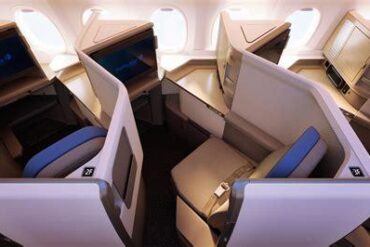
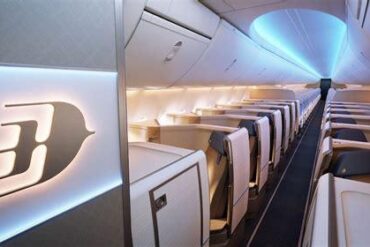
ITA Airways operates Airbus A321LR aircraft equipped with Stelia Opera SA reverse-herringbone lie-flat seats. These aircraft include direct aisle access in business class and a separate premium economy cabin with recliner seats. They are mainly used on routes to Africa and the Middle East but also appear on European services such as Paris, Amsterdam, Madrid, Barcelona, and London Heathrow.
TAP Air Portugal also operates Airbus A321LR aircraft with Thompson Aero Vantage seats. These aircraft frequently appear on routes from Lisbon to major European destinations including London Heathrow, Frankfurt, Madrid, Amsterdam, Barcelona, Paris Orly, and Munich.
TAP’s situation is slightly more complicated because the airline also operates standard Airbus A321neo aircraft. Passengers must carefully check the aircraft type or seat map before booking because the premium experience depends entirely on the aircraft assigned to the flight.
Other airlines operating long-range Airbus narrowbodies include Iberia, Icelandair, Scandinavian Airlines, and Wizz Air, although their cabin layouts and operational strategies differ significantly.
The Hidden Advantage of Long-Range Narrowbody Aircraft
The arrival of aircraft such as the Airbus A321LR and A321XLR is changing how airlines think about premium travel. These aircraft are not simply smaller replacements for widebodies; they allow airlines to create flexible networks while introducing premium products on routes that previously could not justify larger aircraft.
For passengers, this creates a unique opportunity. A short European journey can sometimes include a seat that converts into a fully flat bed, international-style entertainment systems, and a cabin designed for long-distance travel.
For Aer Lingus, the strategy represents a clever balance between efficiency and customer experience. The airline can use its long-range aircraft where they matter most while avoiding wasted ground time between missions.
As more airlines adopt long-range narrowbody aircraft, travelers may increasingly find premium cabins appearing in unexpected places. The future of European short-haul flying may not only be about faster connections and lower fares, but also about discovering a surprisingly luxurious seat waiting on a flight that looks completely ordinary.