In commercial aviation, comfort has always followed aircraft size. Widebodies meant space, privacy, and the holy grail of premium travel: a fully lie-flat bed. Narrowbodies meant compromises. That old rulebook is being quietly shredded. By 2026, some of the most intriguing lie-flat business class experiences in the sky are no longer found on twin-aisle jets, but aboard the Boeing 737 MAX, an aircraft once synonymous with short-haul efficiency rather than indulgence.
This shift is not cosmetic. Airlines are deploying these cabins with intent, pricing them strategically, and discovering that travelers are increasingly willing to pay real money for long-haul comfort on smaller aircraft. The result is a new premium battlefield where routes, seat design, brand strength, and scarcity collide to determine what it truly costs to fly lie-flat on the 737 MAX.
The pricing story behind these seats reveals far more than ticket numbers. It exposes how airlines are redefining value, rethinking fleet economics, and reshaping passenger expectations in a post-widebody world.
Singapore Airlines, flydubai, and Copa Airlines sit at the center of this transformation. Each approaches the Boeing 737 MAX from a different strategic angle, and each prices its lie-flat product in ways that reflect not only distance, but ambition.
Why Lie-Flat Seats on a Narrowbody Suddenly Make Sense
The Boeing 737 MAX is not pretending to be a long-haul aircraft. What it offers instead is efficiency paired with range, allowing airlines to operate thinner routes without the cost penalty of a widebody. The addition of true lie-flat business class seats turns that efficiency into a revenue engine.
Premium travelers are no longer judging comfort solely by aircraft type. What matters is whether the seat goes flat, whether privacy exists, and whether the experience aligns with the ticket price. On flights between three and eight hours, particularly overnight or business-heavy sectors, these factors matter more than cabin width.
This is where the MAX excels. By installing a small number of high-end seats, airlines create scarcity. Scarcity supports pricing. And pricing, when paired with a recognizable premium brand, becomes sustainable.
Inside the Lie-Flat Cabins Redefining the 737 MAX
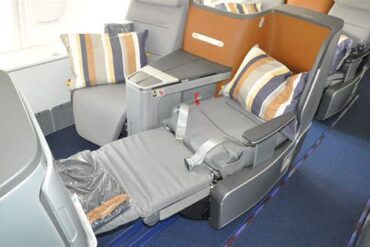
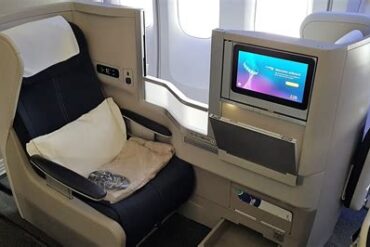
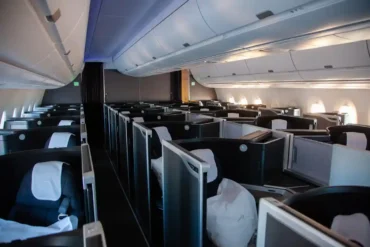
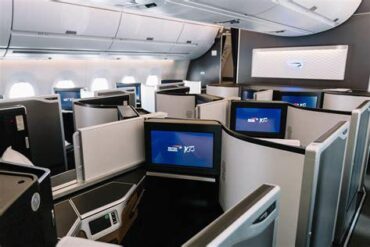
Singapore Airlines offers the most restrained interpretation of narrowbody luxury. Its Boeing 737 MAX 8 fleet features a 10-seat business class cabin arranged primarily in a 2-2 configuration, punctuated by rare 1-1 throne seats. These are not enclosed suites. They are fully flat beds designed for consistency rather than spectacle.
The appeal lies in precision. Seat padding, recline geometry, and cabin finishes mirror the airline’s widebody business class philosophy. This is a bed first and a statement second.
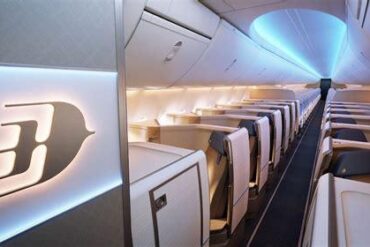
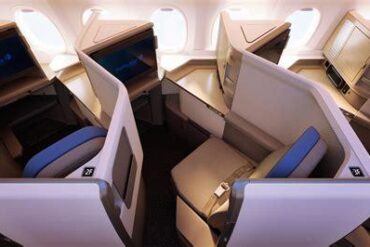
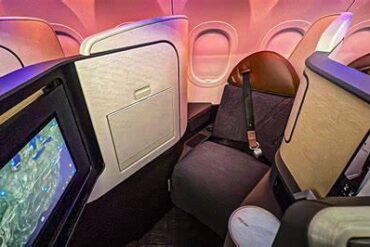
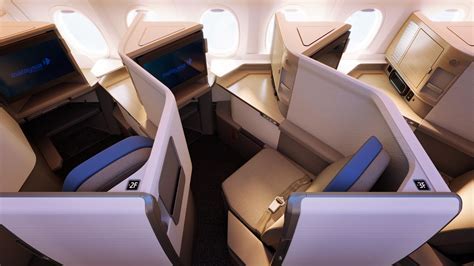
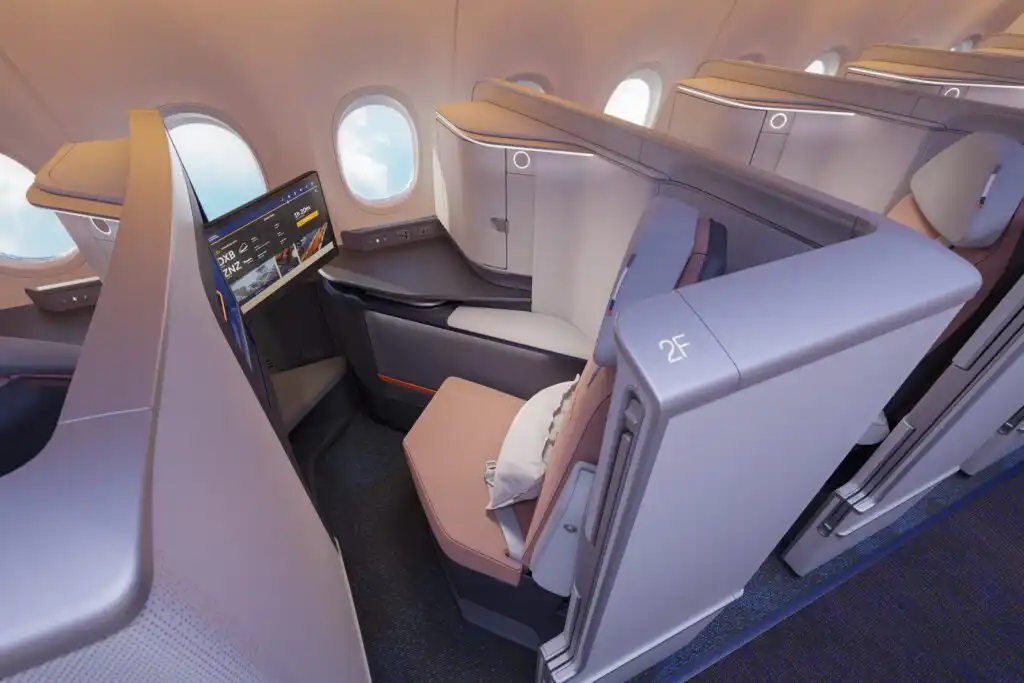
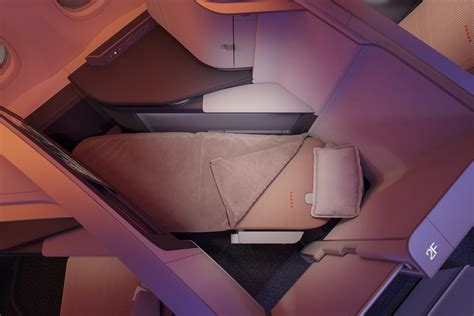
flydubai takes a dramatically different path. Its Boeing 737 MAX cabins are unapologetically ambitious, featuring staggered layouts and, on select aircraft, fully enclosed business class suites with privacy doors. Every passenger enjoys direct aisle access, a detail that fundamentally changes how these seats are perceived and priced.
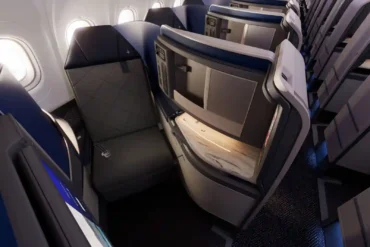
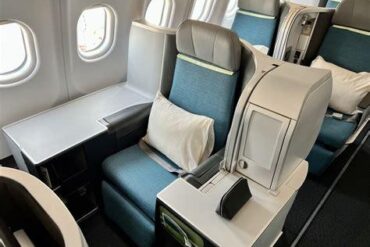
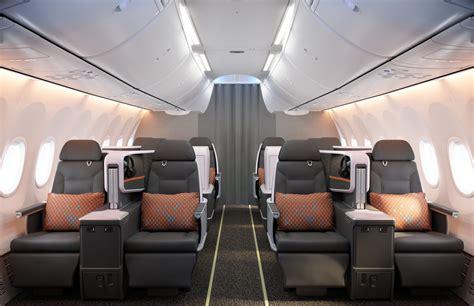
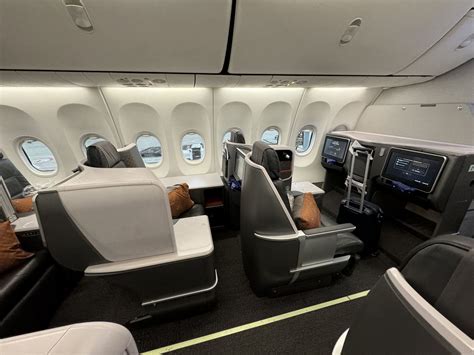
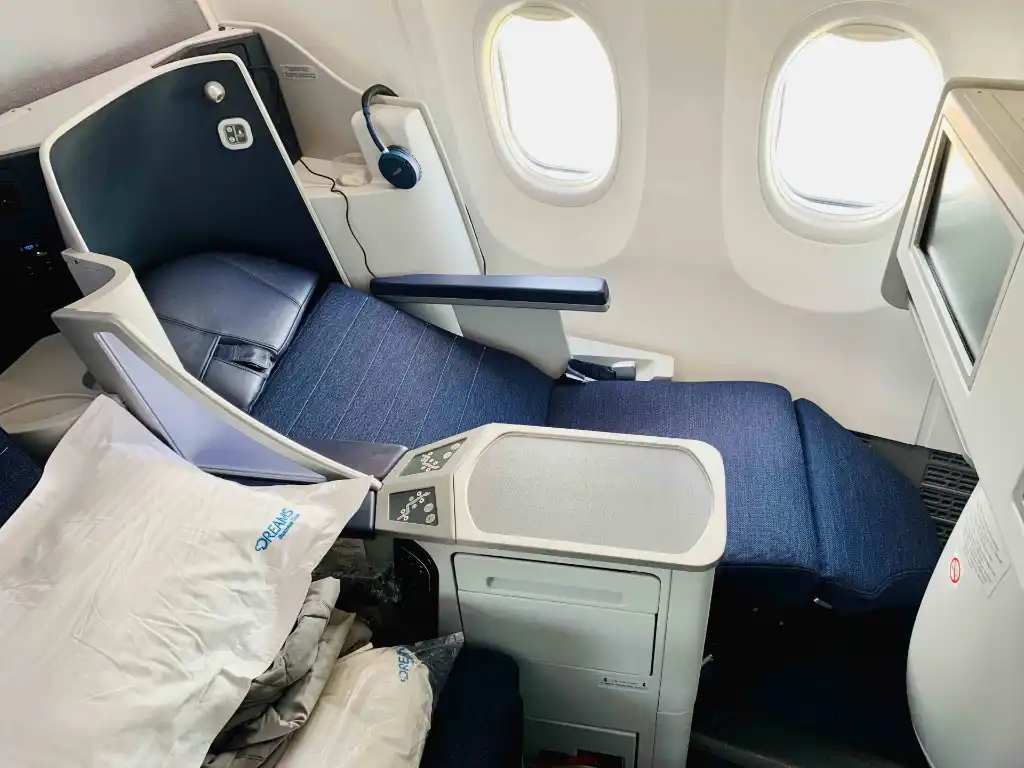
Copa Airlines lands between these extremes. Its Boeing 737 MAX 9 aircraft feature 16 lie-flat “Dreams Business Class” seats in a 2-2 layout using the Collins Diamond platform. There are no doors and no throne seats. What Copa sells instead is range-driven comfort on routes where alternatives are limited.
How Routes Shape the Price of Narrowbody Luxury
Singapore Airlines uses its MAX fleet as a premium regional workhorse from Changi International Airport. Routes like Singapore to Kuala Lumpur are short, frequent, and intensely competitive. In these markets, lie-flat seats are not about sleep. They are about delivering a uniform premium experience regardless of aircraft size.
This consistency matters to corporate travelers connecting onward to long-haul flights. The lie-flat seat becomes a promise that the premium journey starts immediately, not after a fleet change.
flydubai’s route strategy is hub-centric. Dubai International Airport feeds traffic from across the Middle East, South Asia, and parts of Europe. The airline uses lie-flat MAX aircraft on routes where flight times stretch beyond three hours and premium competition is fierce. In these corridors, the presence of a bed and a door transforms a regional flight into a credible long-haul alternative.
Copa Airlines deploys the 737 MAX 9 on genuinely long missions from Panama City, including deep South American routes such as Buenos Aires. These flights are long enough for sleep to matter and narrow enough in demand that a widebody would be inefficient. Here, lie-flat seating is not a luxury add-on. It is the core value proposition.
What It Costs to Fly Singapore Airlines Lie-Flat Business Class in 2026
Singapore Airlines prices its narrowbody lie-flat seats with brand confidence. For 2026, roundtrip business class fares typically begin around $750, climbing to approximately $1,150 on longer regional sectors. These prices may appear modest compared to intercontinental business class, but the premium over economy is substantial.
High-demand leisure destinations such as Phuket often command the strongest premiums, especially during peak travel periods. Shorter routes like Kuala Lumpur and Penang remain more accessible, reflecting intense competition and high frequency.
Award availability introduces another layer of variability. KrisFlyer redemptions can dip as low as 40,000 miles on select dates, but surge pricing can push those numbers far higher. What remains consistent is the airline’s refusal to discount the product as a casual upgrade. This is sold as real business class, not a temporary indulgence.
Flydubai’s Pricing Strategy: From Bargain Luxury to Premium Power Play
flydubai’s pricing spectrum is the widest of the three carriers. On off-peak regional routes, roundtrip lie-flat fares can appear near $980, an astonishing figure for a fully flat seat, and in some cases, a private suite.
These prices reflect tactical discounting designed to stimulate demand on routes where premium uptake remains elastic. The value proposition is compelling: a bed, privacy, lounge access, and generous baggage allowances at a price that undercuts many competitors’ recliner seats.
On longer and higher-yield routes, particularly to parts of Europe, pricing escalates rapidly. Return fares exceeding $3,500 are not uncommon, placing flydubai squarely in long-haul business class territory. At these levels, passengers are paying for scarcity, nonstop convenience, and a surprisingly refined onboard experience.
Copa Airlines and the Cost of Long-Haul Comfort on a Narrowbody
Copa Airlines positions its lie-flat MAX product as a necessity rather than an experiment. Promotional fares can start around $1,024, while fully flexible tickets climb to approximately $2,319, depending on route and season.
Flights such as Panama City to Los Angeles often price higher due to strong premium demand and limited competition. The small cabin size amplifies scarcity, ensuring that even discounted fares retain a sense of exclusivity.
Passengers receive long-haul-style benefits, including two checked bags and priority services. On routes deep into South America, the value proposition becomes clearer. The alternative is often a recliner seat on a similar-duration flight. In that context, the price premium feels rational rather than extravagant.
How These Prices Compare to Traditional Narrowbody Business Class
The presence of a lie-flat bed fundamentally reshapes pricing logic. Traditional narrowbody business class, typically featuring cradle or recliner seats, struggles to command sustained premiums beyond schedule convenience and loyalty incentives.
Lie-flat seats change that equation. They introduce sleep, privacy, and a psychological association with long-haul travel. Even when aisle access is limited, the presence of a bed anchors value in a way recliners cannot.
This explains why flydubai’s suite-equipped MAX aircraft command the highest premiums, while Singapore Airlines and Copa rely more heavily on brand trust and route necessity to justify pricing.
The Economics Behind the Seats
From an airline perspective, these cabins are about yield, not volume. A handful of lie-flat seats can generate disproportionate revenue while keeping operating costs in check. Fuel burn remains low, crew requirements stay minimal, and aircraft utilization remains high.
For passengers, the equation is personal. Some will see these fares as indulgent. Others will view them as efficient investments in comfort, productivity, and rest. The market response so far suggests the latter group is growing.
The Bottom Line on Flying Lie-Flat on the 737 MAX
By 2026, lie-flat business class on the Boeing 737 MAX is no longer a novelty. It is a defined product category with clear pricing logic and rising demand. Expect to pay anywhere from $750 to over $3,500 roundtrip, depending on airline, route, and season.
These seats are not replacing widebody luxury. They are redefining what premium means on shorter and thinner routes. As more airlines observe the revenue potential, the narrowbody cabin will continue its quiet transformation.
The widebody no longer owns comfort. The bed has escaped the aisle count, and once passengers experience it, there is no easy way back.