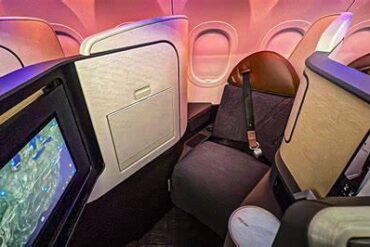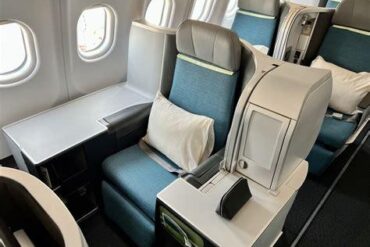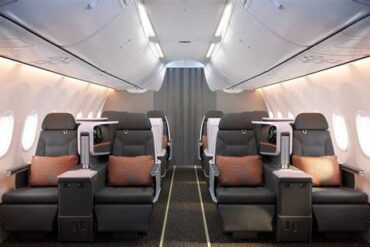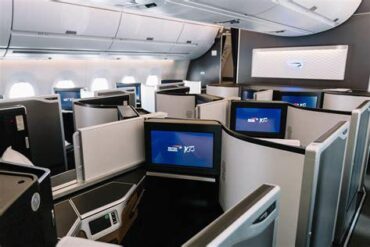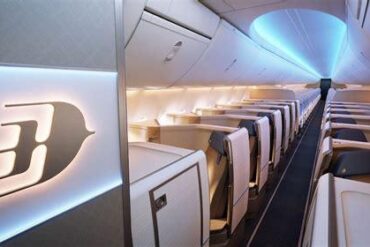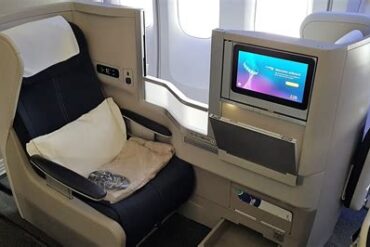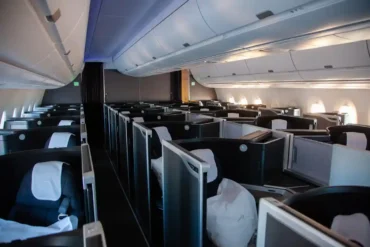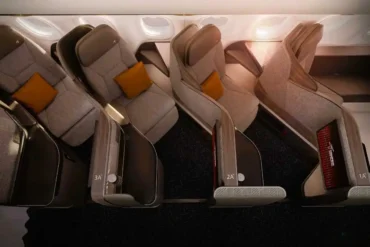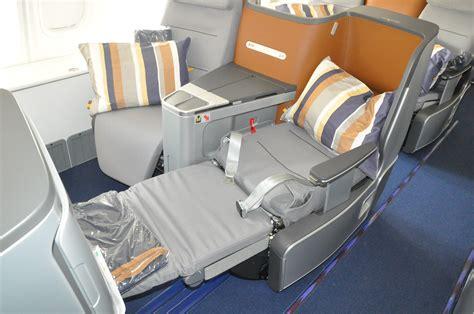
The evolution of premium air travel has followed a curious trajectory. Once upon a jet-age time, “business class” meant a slightly wider seat, a sturdier fork, and the vague promise of not being elbowed during meal service. Then came the great cabin renaissance: privacy shells, direct aisle access, doors, and the now-iconic lie-flat seat—a feature once reserved for intercontinental widebody flagships. Yet aviation, being an industry that delights in engineering paradoxes, has compressed that widebody luxury into the slender fuselage of the narrowbody aircraft.
Today, single-aisle jets are crossing oceans, stitching continents together, and doing so while offering fully horizontal sleep surfaces. The physics of fitting beds into tubes designed for short hops is non-trivial, but airlines—motivated by premium revenue and passenger expectation—have made the improbable routine.
The Rise of Lie-Flat Business Class on Narrowbody Jets
The conceptual spark ignited with the Boeing 757-200, an aircraft whose range flirted with long-haul missions despite its narrow frame. Airlines realized that if passengers were expected to endure overnight transatlantic crossings on a single-aisle jet, comfort could not remain an afterthought.
Continental Airlines led the charge in 2010, installing early generations of fully flat seats on its 757 fleet. Those aircraft later migrated into United Airlines’ operation, carrying forward the same premium DNA. This retrofit marked a philosophical shift: aircraft size no longer dictated seat sophistication.
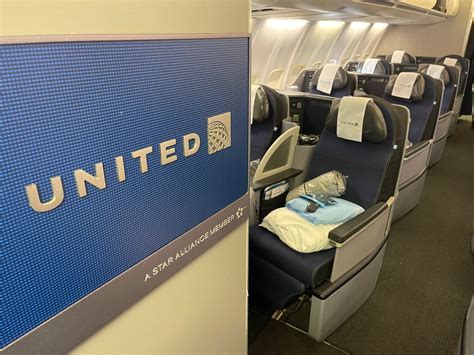
As demand for premium transcontinental travel surged—New York to Los Angeles, Boston to San Francisco—US carriers doubled down. The narrowbody became a premium battlefield.
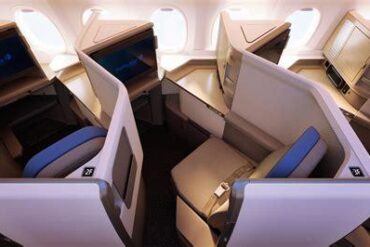
Seat manufacturers adapted quickly. Products like the Collins Aerospace Diamond and Thompson Vantage were engineered to solve spatial puzzles unique to single-aisle cabins. Designers experimented with herringbone and reverse herringbone layouts—angled configurations that maximize privacy while preserving aisle access. On a widebody, these seats sprawl luxuriously; on a narrowbody, they become precision-fit furniture, like origami engineered in carbon fiber and leather.
North America: The Experimental Laboratory of Premium Narrowbodies
The United States remains the most mature ecosystem for lie-flat narrowbody deployment, driven largely by lucrative coast-to-coast corporate travel.
United Airlines continues to operate Boeing 757-200 aircraft equipped with Polaris lie-flat seats, arranged in a dense but fully horizontal configuration. These aircraft serve both premium transcontinental routes and select transatlantic services, proving that passenger willingness to pay for sleep transcends aircraft size.
Delta Air Lines mirrors this strategy with its Delta One-configured 757-200s, also featuring Collins Diamond seats. Though Delta has scaled back narrowbody Europe flying, its premium transcontinental service remains a core use case—where schedule frequency beats aircraft size.
American Airlines took a different route, investing heavily in the Airbus A321T (Transcontinental). These aircraft combine Flagship Business lie-flat seats with an even rarer feature on narrowbodies: a small Flagship First cabin. The result feels less like a single-aisle jet and more like a boutique widebody experience squeezed into a slimmer tube.
JetBlue disrupted the market with Mint, installing Thompson Vantage seats on A321 aircraft. Later iterations—particularly on the A321LR—introduced the VantageSOLO, offering private suites with doors in some rows. This blurred the psychological boundary between business and first class.
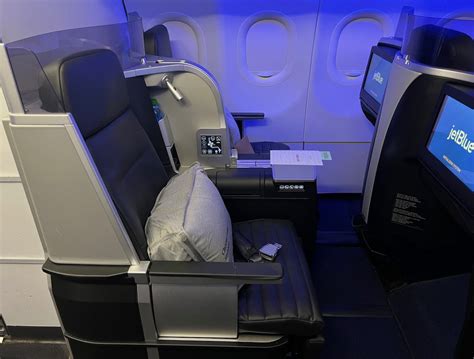
Fleet renewal is accelerating the trend. American’s incoming A321XLR fleet will introduce Collins Aurora suites, while United’s future A321neo and XLR aircraft are expected to feature next-generation lie-flat products such as Elevate Altitude. Delta plans similar upgrades with Safran VUE seats, though certification delays have slowed entry into service.
Outside the US, Copa Airlines stands alone in the Americas, offering lie-flat Dreams Business Class on Boeing 737 MAX 9 aircraft—an unusual but competitive product for long Central and South American routes.
Europe: Transatlantic Specialists and Boutique Operators
Across the Atlantic, the deployment philosophy shifts. European carriers rarely install lie-flats for intra-Europe flying, where flight times are short and yields thinner. Instead, they focus on transatlantic and long-thin routes.
No airline embodies this niche better than La Compagnie, the all-business-class boutique carrier. Operating Airbus A321neo aircraft exclusively configured with Collins Diamond lie-flat seats, it connects cities like Paris and Milan to Newark. The absence of economy class transforms the narrowbody into a flying private club.
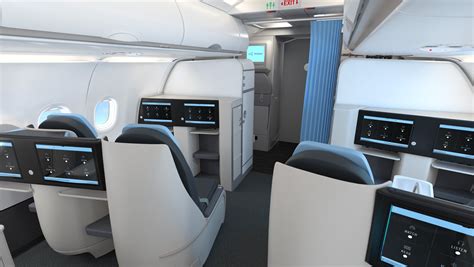
Legacy carriers have followed with more hybrid models. TAP Air Portugal uses Airbus A321LR aircraft on routes linking Lisbon and Porto with North America, Brazil, and Africa. Its Thompson Vantage seats provide direct aisle access—critical on overnight sectors where sleep quality defines product value.
Aer Lingus and Scandinavian Airlines (SAS) deploy similar A321LR configurations across the North Atlantic. These aircraft enable airlines to profitably serve secondary cities—markets too thin for widebodies but too long for recliner seats.
Iberia, as the launch operator of the Airbus A321XLR, pushed the envelope further with the Thompson VantageSOLO, delivering single-suite privacy on routes once dominated by twin-aisle jets.
Meanwhile, ITA Airways opted for the Stelia Opera reverse herringbone seat on its A321neo fleet, deploying them across medium-haul missions to the Middle East and Africa—regions where premium demand remains strong even outside intercontinental sectors.
Middle East and Central Asia: Premium Density Meets Range Ambition
The Middle East aviation sphere—where luxury is competitive currency—has embraced lie-flat narrowbodies with enthusiasm.
Qatar Airways operates Airbus A320 aircraft in two configurations: one with standard recliners and another featuring Collins Diamond lie-flat seats. Even on shorter regional sectors, the airline maintains a premium standard aligned with its global brand.
Etihad Airways has taken delivery of Airbus A321LR aircraft equipped with Stelia Opera seats, including enhanced front-row suites marketed as first class. This tiered premium approach reflects Gulf carriers’ appetite for segmentation—even within a narrow fuselage.
Gulf Air outfits its A321neo fleet with Collins Diamond seats, reinforcing Bahrain’s positioning as a premium transit hub despite its smaller scale.
Then there’s flydubai, an intriguing hybrid. Though positioned as a low-cost carrier, it offers lie-flat Thompson Vantage seats on Boeing 737 MAX and 737-800 aircraft. Its partnership with Emirates allows seamless premium connectivity—effectively extending Emirates’ luxury ecosystem onto narrowbodies.
Saudia also deploys lie-flat seats on select Airbus A320 aircraft, underscoring how competitive regional prestige has elevated baseline expectations.
In Central Asia, Air Astana stands alone, installing Thompson Vantage seats on Airbus A321LR aircraft serving Europe and Asia. The product rivals Western carriers, signaling Kazakhstan’s ambition to function as a premium transit bridge.
South Asia and the Indian Subcontinent
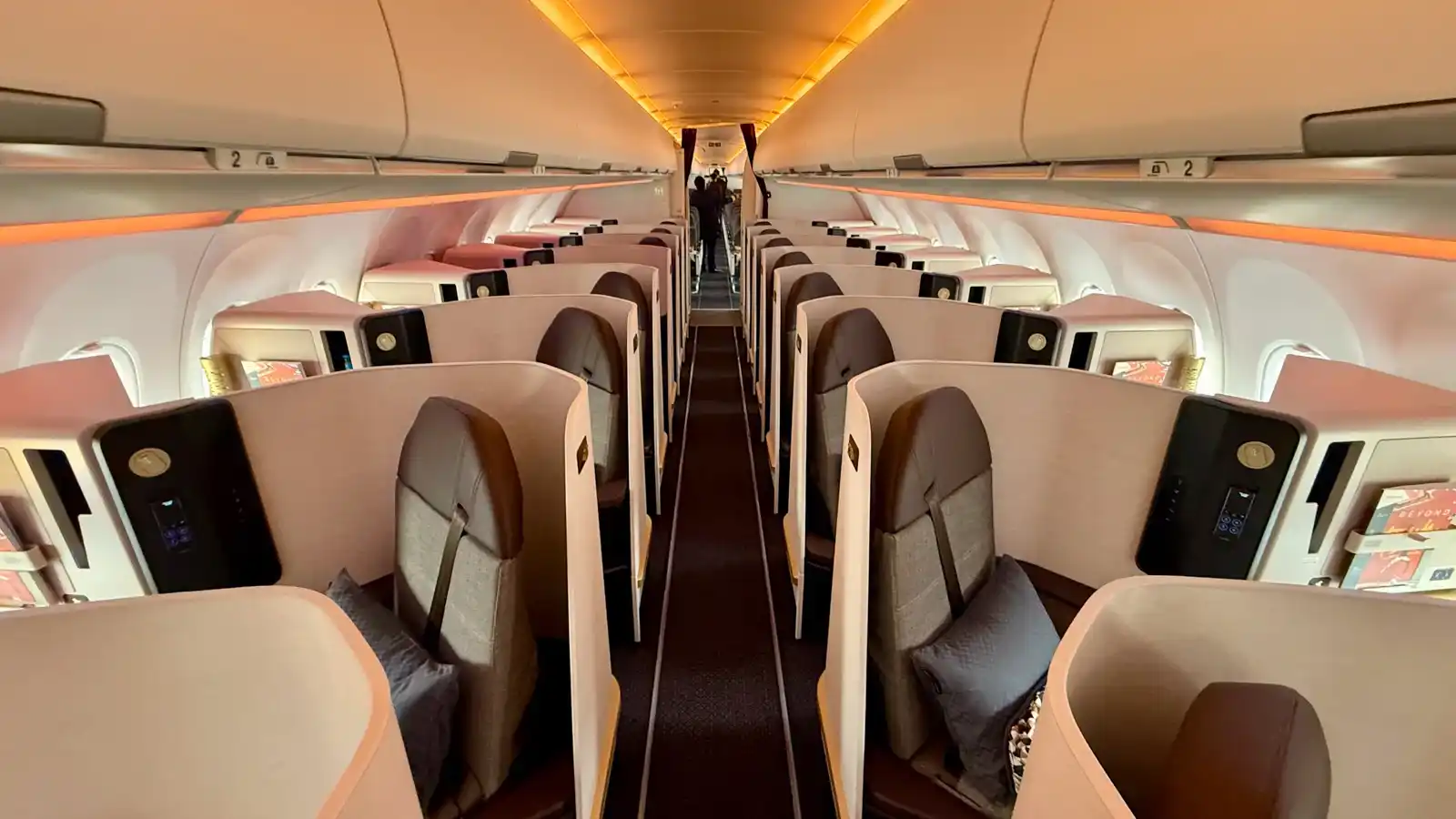
India’s premium narrowbody story is shaped by consolidation. Aircraft formerly operated by Vistara now fly under Air India, equipped with Collins Diamond lie-flat seats on Airbus A321neo jets. These aircraft operate longer domestic trunk routes and medium-haul international sectors where premium demand is rising alongside economic growth.
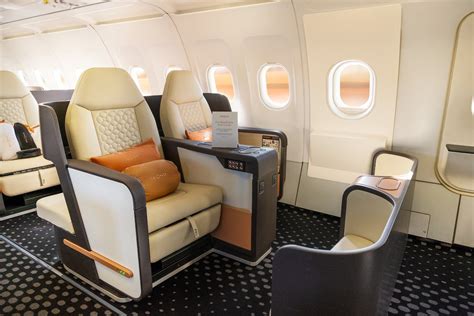
The Maldives-based boutique airline BeOnd takes a more radical approach. Its Airbus A319 and A321 aircraft feature all-business-class cabins with custom lie-flat seats arranged four-abreast. The concept targets luxury leisure travelers heading to resort destinations, where the vacation experience begins at boarding.
East Asia: Competitive Markets, Elevated Standards
East Asia’s aviation markets are ruthlessly competitive, and product differentiation often decides corporate contracts.
Starlux Airlines, Taiwan’s newest premium carrier, installs Collins Diamond lie-flat seats on its Airbus A321neo fleet. The cabin design mirrors widebody aesthetics—muted lighting, sculpted shells, and refined finishes.
China Airlines opted for the Stelia Elysium seat, a forward-facing lie-flat arranged four-abreast. While denser than herringbone layouts, it balances comfort with capacity on regional long-haul missions.
Korean Air also equips its A321neo fleet with Collins Diamond seats, ensuring product consistency across aircraft types—a key factor for brand perception.
EVA Air, notably, does not yet offer lie-flat seats on narrowbodies, though future A321neo deliveries are expected to introduce upgraded cabins, reflecting regional competitive pressure.
Southeast Asia: Premium Expectations on Regional Missions
Southeast Asia’s geography—archipelagos, financial hubs, tourism corridors—creates fertile ground for premium narrowbody deployment.
Singapore Airlines, frequently ranked among the world’s best carriers, installs Thompson Vantage lie-flat seats on its Boeing 737 MAX 8 fleet. These aircraft operate regional routes where widebody deployment would be inefficient yet passenger expectations remain sky-high.
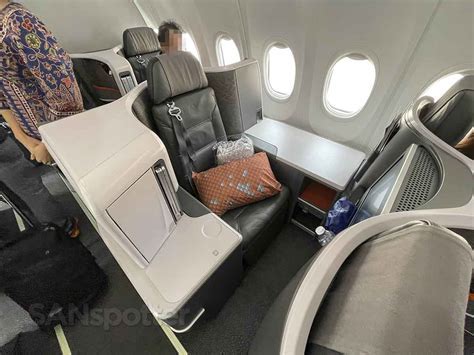
Philippine Airlines similarly outfits select Airbus A321neo aircraft with Collins Diamond seats, serving both regional and medium-haul markets with a competitive premium offering.
Across Asia, even when lie-flats are absent, business class recliners tend to be more spacious than Western equivalents. Cultural expectations around hospitality and service density elevate the baseline product.
Seat Engineering: Designing Beds for Tubes
Installing lie-flat seats in a narrowbody is less interior design and more spatial mathematics. Every inch matters.
Common configurations include:
- Herringbone (1-1): Seats angle toward the aisle
- Reverse herringbone (1-1): Seats angle toward the window
- Staggered layouts: Alternating privacy levels
- Parallel 2-2: Denser but space-efficient
Manufacturers tailor seat length, shell curvature, and footwell geometry to avoid claustrophobic sleep spaces. On a widebody, feet slide under the seat ahead with ease; on a narrowbody, that same motion requires architectural ingenuity.
The result is a cabin that feels simultaneously compact and luxurious—a contradiction resolved through design.
Why Airlines Are Investing in Lie-Flat Narrowbodies
Several forces drive this expansion.
Long-range narrowbody aircraft like the Airbus A321LR and XLR have unlocked routes once impossible without widebodies. Airlines can now connect secondary cities across oceans with lower operating costs.
Premium revenue plays an outsized role. A handful of lie-flat seats can generate disproportionate profit, especially on overnight flights where sleep quality commands price premiums.
There’s also competitive signaling. Offering lie-flats communicates brand seriousness. In markets where corporate contracts hinge on comfort, the absence of beds can disqualify an airline entirely.
The Passenger Experience: Does Size Still Matter?
From a traveler’s perspective, the experience gap between narrowbody and widebody lie-flat seats has narrowed dramatically.
Privacy doors, direct aisle access, wireless charging, and large entertainment screens now appear on single-aisle jets. Noise levels and aisle traffic remain higher than on twin-aisles, but sleep quality is often comparable.
The psychological adjustment—boarding a small aircraft yet turning left into a bed—remains delightfully disorienting.
The Future: Suites, Doors, and Ultra-Long Thin Routes
The next frontier involves suite-style doors, already appearing on aircraft like JetBlue’s Mint and future A321XLR products. As certification hurdles clear, expect more airlines to introduce fully enclosed business class on narrowbodies.
Range expansion will further blur aircraft categories. Routes once requiring Boeing 787s may soon be flown by A321XLRs with 20–30 lie-flat suites, optimizing both economics and frequency.
In aviation’s constant negotiation between physics and comfort, the narrowbody lie-flat seat represents a small miracle: a full night’s sleep engineered inside a metal cylinder barely wider than a city bus.
The fuselage may be narrow, but the ambition is anything but.