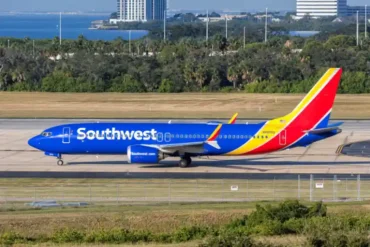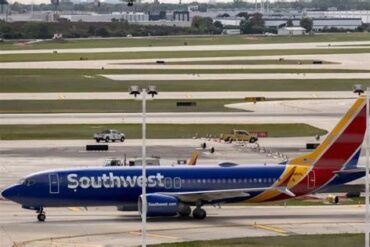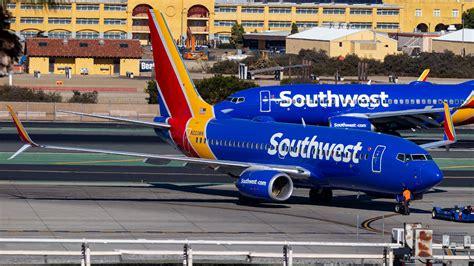
Southwest Airlines is reshaping parts of its domestic network as it enters a period of strategic adjustment. While the airline continues to maintain one of the largest schedules in the United States, a closer look at its August 2025 and August 2026 schedules reveals that 17 routes from its five busiest airports have disappeared. The changes reflect shifting passenger demand, operational priorities, and the carrier’s ongoing effort to optimize its network.
In August 2026, Southwest is expected to operate an average of 3,817 daily flights, representing a modest increase of around 1% compared with the same period a year earlier. Growth has mainly come from the airline’s domestic operation, which has expanded by approximately 2%, while international flying has declined by about 5%.
Southwest’s largest hubs and focus cities remain central to these changes. Its five busiest airports — Denver International Airport (DEN), Harry Reid International Airport (LAS) in Las Vegas, Chicago Midway International Airport (MDW), Baltimore/Washington International Thurgood Marshall Airport (BWI), and Nashville International Airport (BNA) — account for more than half of the carrier’s total operations.
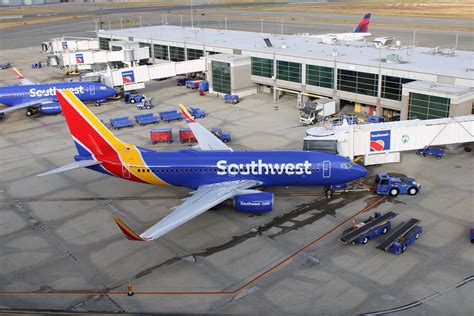
Southwest Removes 17 Routes From Major Airports
The airline network analysis compares Southwest’s available routes in August 2025 with those scheduled for August 2026. The result shows that several airport pairs have been removed, including some routes that ended months earlier and others that were eliminated as part of broader airport strategy changes.
A number of cancellations involve Chicago O’Hare International Airport (ORD) and Washington Dulles International Airport (IAD). Southwest discontinued service at these airports in 2026 as it focused operations around nearby airports such as Midway and Baltimore. Although these changes are connected to a wider consolidation strategy, they still represent routes that are no longer available compared with the previous year.
From Denver International Airport, Southwest removed service to Charlotte, Greenville/Spartanburg, Washington Dulles, and Chicago O’Hare. The Denver network remains one of the airline’s largest, but the adjustments indicate that Southwest is prioritizing markets with stronger demand patterns and better aircraft utilization.
Las Vegas also saw multiple route reductions. The airline ended flights to Albany, Minneapolis, Chicago O’Hare, and Rochester, New York. Some seasonal routes are expected to return later, but they will not operate during the peak August 2026 schedule.
Seasonal Routes And Network Adjustments
Not every removed route represents a permanent withdrawal. Five of the 17 routes are expected to return later in the year, often with limited seasonal service. Southwest’s schedule planning frequently changes according to passenger demand, weather patterns, and seasonal travel trends.
For example, Chicago Midway to Tucson was removed from the August 2026 schedule after operating through June. However, Southwest plans to restore the route in October when Arizona’s cooler temperatures typically increase leisure demand.
Similarly, flights between Denver and Charlotte, Las Vegas and Albany, Las Vegas and Rochester, and Chicago Midway and Montego Bay are among the routes expected to return later.
This approach allows Southwest to avoid operating flights during weaker demand periods while still maintaining market presence during profitable travel seasons.
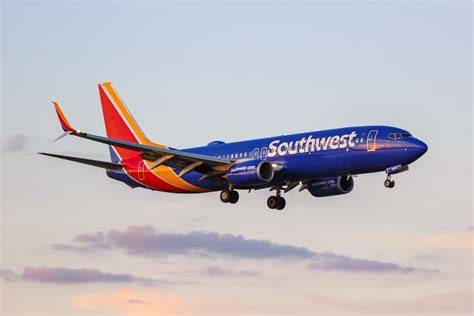
Why Southwest Ended The Baltimore To Jackson Route
One of the more notable cancellations was the long-running connection between Baltimore/Washington International Airport and Jackson-Medgar Wiley Evers International Airport (JAN) in Mississippi.
Southwest first launched the route in 1997 when it entered the Mississippi market. However, performance remained weak over time. According to US Department of Transportation data, Southwest carried more than 1.7 million round-trip passengers between BWI and JAN during its first operating period, but the route achieved only a 59.8% average load factor.
The route eventually disappeared in 2014 before returning in 2021. However, the second attempt produced similar challenges. Between 2021 and 2025, the average seat occupancy rate reached only 61.8%, with 2025 performance falling to approximately 54.6%.
Low passenger demand and limited connecting traffic made the route difficult to justify. Only around one-quarter of passengers connected through Southwest’s network, meaning the flight depended heavily on local demand rather than serving as a strong connecting opportunity.
After years of weak performance, Southwest again removed BWI-JAN from its schedule.
Southwest Adds 19 New Routes Despite Cuts
Although Southwest eliminated 17 routes from its five busiest airports, the airline also introduced 19 new airport connections during the same period. The changes show that Southwest is not simply shrinking its network but instead reallocating aircraft capacity toward markets with stronger potential.
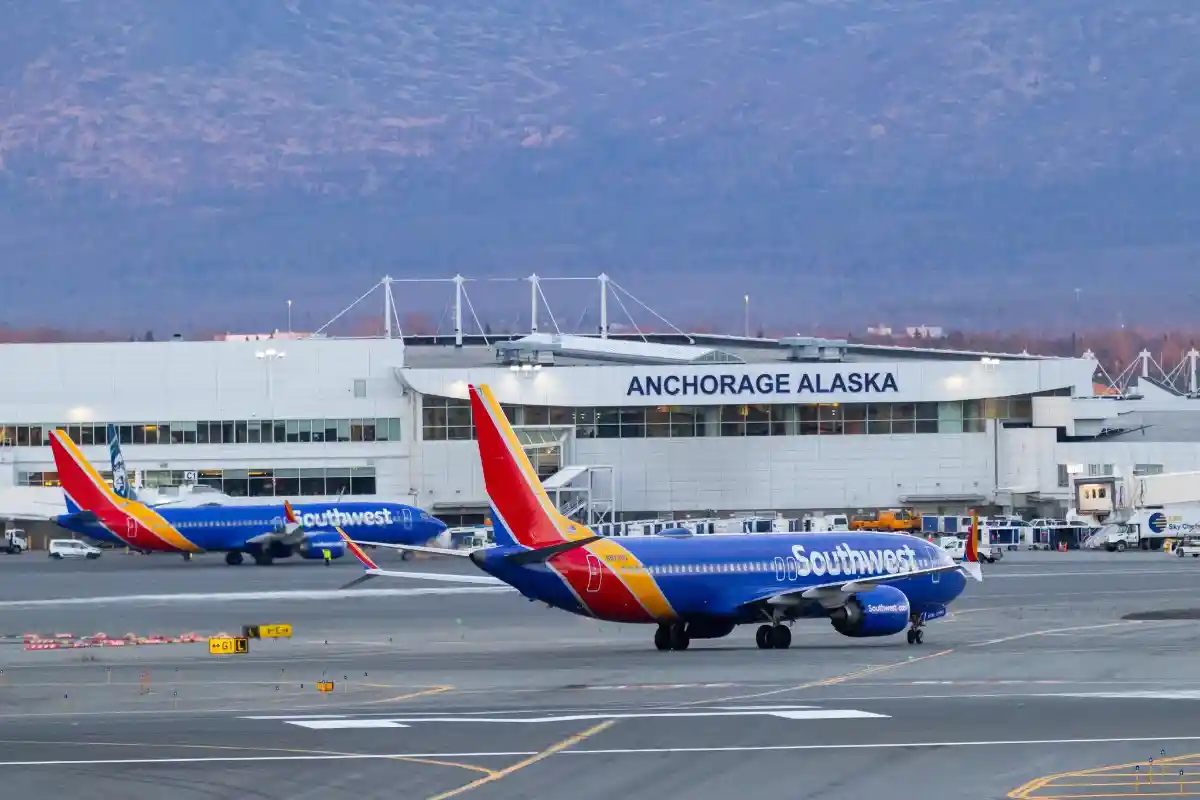
One of the biggest additions was Anchorage International Airport (ANC), which became a new destination for Southwest. The airline launched flights from both Denver and Las Vegas in May 2026, expanding its presence into Alaska.
Other additions include routes such as Baltimore to Oklahoma City, Baltimore to Pensacola, and Denver to Destin-Fort Walton Beach. However, some of these services were limited seasonal operations, including Saturday-only flights during the summer period.
Because Southwest’s published schedule only extends into early 2027, it remains uncertain whether every new route will become a permanent part of the network.
A More Focused Southwest Network
Southwest’s latest route changes highlight how airlines continuously adjust their networks based on profitability, passenger demand, and operational efficiency. The removal of 17 routes does not necessarily indicate a major contraction. Instead, it demonstrates a shift toward markets that provide stronger returns.
The airline continues to maintain a massive domestic footprint, supported by thousands of daily flights and a strong presence at major airports. By removing weaker-performing routes and adding new opportunities, Southwest is attempting to create a more efficient network while adapting to changing travel patterns.
For passengers, these changes mean fewer nonstop options in certain city pairs but potentially stronger service levels in markets where Southwest sees greater long-term demand. The airline’s strategy shows that even one of America’s largest carriers must continually adjust its route map to remain competitive.