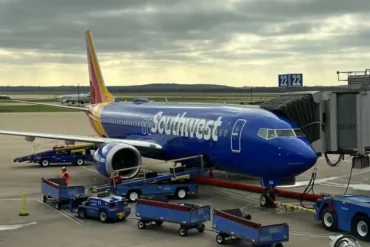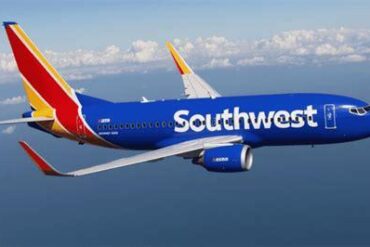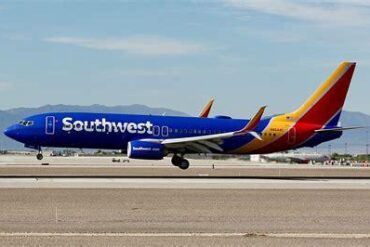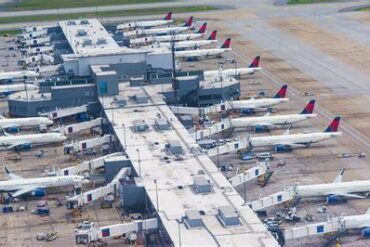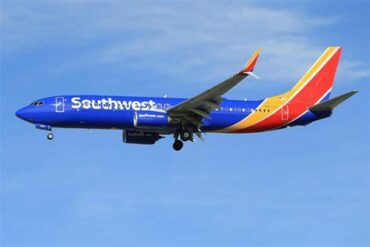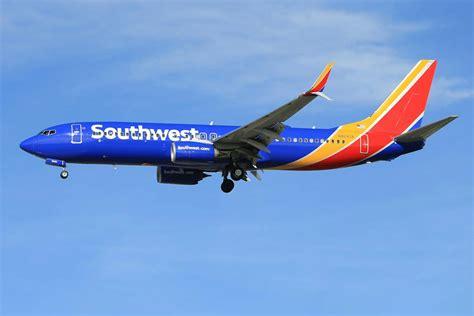
Southwest Airlines has significantly reduced its presence at Hartsfield-Jackson Atlanta International Airport (ATL), removing 17 routes from its network since March 2025. The cuts represent a notable retreat from one of the most important aviation markets in the United States, particularly because Atlanta remains the world’s busiest airport by passenger traffic. While Southwest continues to rank among the largest airlines operating at ATL, its network is now considerably smaller than it was only a few years ago.
The scale of the change becomes clearer when passenger numbers are considered. According to U.S. Department of Transportation data, Southwest carried approximately 4.8 million passengers to and from Atlanta in 2025, with an average load factor of 73.2%. That was a substantial decline from 2024, when the airline transported more than 7.7 million passengers at a 75% load factor. The reduction suggests that Southwest’s Atlanta strategy has been reshaped by weaker demand and the need to deploy aircraft where they can generate stronger returns.
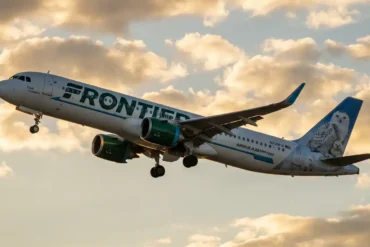
Atlanta has always been an unusual market for Southwest. The airline is famous for its enormous Boeing 737 fleet and extensive point-to-point network, but it faces an exceptionally powerful competitor at ATL in Delta Air Lines, the airport’s hometown carrier. Southwest has also faced growing competition from Frontier Airlines, another low-cost operator that has established a substantial presence in Atlanta. That combination makes it difficult for Southwest to command the same level of market share it enjoys at several of its other major bases.
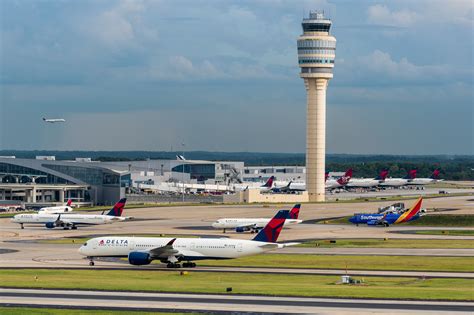
Southwest Airlines Has Cut 17 Atlanta Routes
The 17 discontinued Southwest routes represent connections to 18 airports, covering a network footprint of roughly 8,410 miles. Rather than simply eliminating capacity, Southwest has increasingly focused its resources on other parts of its network, with some Atlanta flying effectively shifting toward Nashville International Airport (BNA). The move reflects a broader effort to concentrate aircraft and crews in markets where Southwest sees better opportunities.
Despite the cuts, Southwest has not disappeared from Atlanta. Cirium data still places the airline third among carriers at Hartsfield-Jackson, behind Delta and Frontier. In 2025, Delta accounted for an extraordinary 81.8 million passengers at the airport, while Frontier handled approximately 5.2 million and Southwest carried 4.8 million. American Airlines, United Airlines and JetBlue Airways were all significantly smaller at ATL.
The latest reductions included Southwest’s services to New York LaGuardia Airport (LGA) and Raleigh-Durham International Airport (RDU), with final departures occurring in March 2026. Atlanta–Fort Lauderdale-Hollywood International Airport (FLL) was the only other Southwest route from Atlanta to be removed during 2026. These latest changes followed a much broader series of reductions that gradually reshaped the carrier’s Atlanta network.
The 17 Destinations Removed From Southwest’s Atlanta Network
Southwest’s complete list of canceled Atlanta routes includes New York LaGuardia, Raleigh-Durham, Fort Lauderdale, Jacksonville, Miami, Philadelphia, Milwaukee, Louisville, Cleveland, Jackson, Greenville, Richmond, Fort Myers, Sarasota, Memphis, West Palm Beach, and Omaha.
The list is significant because several of these destinations are major business and leisure markets. Miami, Fort Lauderdale, Philadelphia, LaGuardia and Jacksonville, for example, represent highly recognizable travel corridors with substantial year-round demand. Southwest’s withdrawal does not mean travelers have lost these connections from Atlanta altogether, because Delta and other competitors continue to operate many of them. Instead, Southwest is surrendering its share of those markets.
The change is particularly striking on Atlanta’s busiest domestic routes. Among the airport’s top 10 domestic markets, Southwest now remains on only Orlando, Denver and Las Vegas. It previously participated in several additional high-volume markets, but competitors continue to dominate much of the remaining traffic. Delta and Frontier, in particular, operate across all 10 of Atlanta’s busiest domestic routes.
Southwest’s Atlanta Passenger Numbers Have Fallen Sharply
Southwest’s Atlanta performance shows why the airline may have decided that a smaller network makes more financial sense. Its passenger totals rose strongly after the pandemic, reaching 7.6 million passengers in 2022 and then climbing further to 8.4 million in 2023. However, the load factor weakened substantially, falling from a healthy 81.7% in 2022 to 74.8% in 2023.
The decline continued in 2024, when Southwest carried around 7.7 million passengers with a 75.6% load factor. In 2025, passenger volume plunged to 4.8 million and the load factor fell to 73.2%. For an airline operating a large number of flights in an intensely competitive airport, consistently filling fewer seats can make marginal routes increasingly difficult to justify.
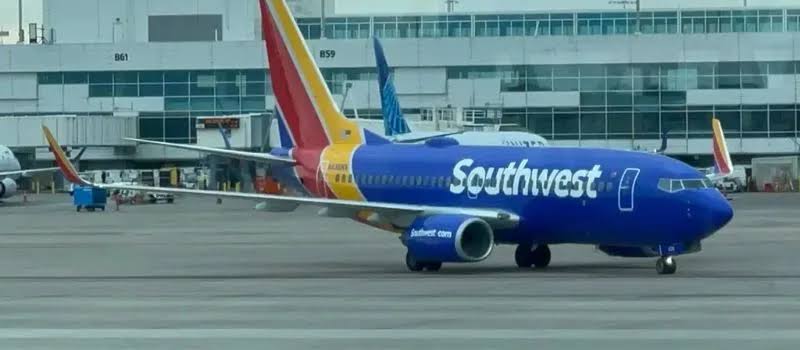
A load factor around 80% is commonly viewed as a healthy benchmark for major airlines, although the exact level required for profitability varies considerably depending on fares, aircraft costs, fuel prices and other factors. Southwest’s Atlanta operation exceeded 80% only once after the pandemic, in 2022. The subsequent decline provides an important clue about why the airline has progressively trimmed its schedule.
Atlanta Is No Longer a Major Growth Market for Southwest
The Atlanta reductions should not be interpreted as a retreat from the entire Southeast. Southwest still maintains bases in cities including Nashville, Orlando, Baltimore, Chicago, Dallas, Denver, Houston, Las Vegas, Los Angeles, Phoenix and Atlanta. Denver remains the airline’s largest base, with more than 40 gates and more than 170 daily departures.
Atlanta is therefore a very different proposition. Southwest operates in a market where Delta possesses enormous scale, brand recognition and connectivity, while Frontier offers an aggressive low-cost alternative. With passenger volumes and load factors moving in the wrong direction, Southwest has increasingly strong reasons to place its aircraft elsewhere.
For travelers, the most visible consequence is that 17 Southwest routes have disappeared from Atlanta, even though the airport itself remains one of the most connected aviation hubs in the world. Southwest still serves important destinations such as Orlando, Denver and Las Vegas from ATL, but its Atlanta network is now more selective.
The cuts ultimately demonstrate that even the world’s busiest airport cannot guarantee success for every airline. Atlanta offers enormous passenger demand, but it also offers extraordinary competition. Southwest’s decision to remove these 17 routes shows the carrier is prioritizing network efficiency, aircraft utilization and stronger-performing markets rather than maintaining routes simply because Atlanta is one of the biggest airports in global aviation.