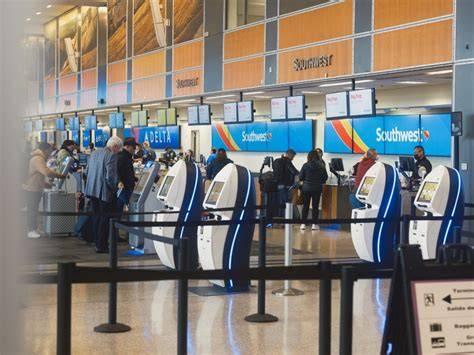
Southwest Airlines suffered a nationwide computer systems outage on Friday, October 9, 2026, forcing airport employees to check baggage and process passengers manually as the carrier worked to restore normal operations. The disruption affected check-in and boarding systems across its network, creating long lines at airports, delaying departures, and frustrating travelers during the busy morning travel period. Although the airline restored its systems approximately two hours after the initial problems emerged, the operational consequences continued throughout the day, highlighting how dependent modern airlines are on interconnected technology.
The incident began shortly after 8:00 AM Eastern Time, when passengers started experiencing difficulties accessing boarding passes through Southwest’s mobile application. Airport employees also lost access to the computerized tools normally used to check in travelers, process baggage, and manage boarding procedures. At several airports, staff had little choice but to revert to manual processes while technicians investigated the failure. Southwest subsequently confirmed that its systems were back online at approximately 10:15 AM ET, but restoring the software did not immediately resolve the backlog of delayed flights and disrupted airport operations.
Southwest Airlines Passengers Face Long Lines During Nationwide IT Outage
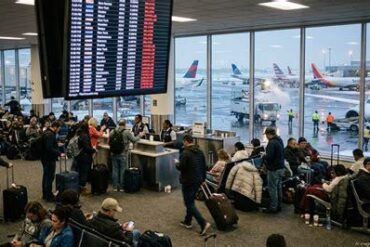
The outage quickly became visible at major Southwest airports across the United States. At Dallas Love Field (DAL), one of the airline’s most important operating bases, passengers reported difficulties printing boarding passes and scanning mobile boarding credentials. Long lines reportedly extended toward the airport’s exterior as travelers waited for employees to process them without the usual automated systems. The disruption was particularly significant at an airport where Southwest operates a substantial share of passenger traffic, making the carrier’s ability to maintain efficient check-in and boarding procedures essential to daily operations.
At Denver International Airport (DEN), passengers also reported disruption as gate employees communicated the situation to waiting travelers. According to accounts cited by the Denver Gazette, staff announced that Southwest aircraft on the ground nationwide were being held. Such a response illustrates how a passenger-processing failure can extend beyond the counters and boarding gates where the original problem becomes apparent. When employees cannot reliably verify passenger information or complete standard departure procedures, aircraft may remain on the ground even when they are otherwise ready to depart.
Manual processing can keep some operations moving, but it is slower and more labor-intensive than normal electronic procedures. Gate agents must follow appropriate verification and security requirements while working around unavailable digital tools, and baggage handling can become more complicated when systems cannot transmit or retrieve the necessary information. These additional steps increase pressure on airport employees, particularly when long lines form and departure times approach. Even after computer systems return to service, staff must still work through waiting passengers, reconcile disrupted departures, and coordinate with other teams to restore the normal operating schedule.
Amadeus Technology Provider Identified as the Source of the Disruption
Southwest identified Amadeus, a major travel technology provider, as the source of the interruption affecting its passenger-processing operations. The company has played an important role in Southwest’s reservation and departure infrastructure since the airline introduced the Altéa Passenger Service System for international flights in 2014 and expanded its use to domestic operations in 2017. The platform supports essential airline functions, including reservations, flight inventory management, passenger check-in, boarding, baggage processing, and automated rebooking during disruptions.
Amadeus subsequently attributed the incident to an unidentified third-party technology provider. The company did not publicly identify the precise component responsible for the failure in the supplied account, leaving questions about the technical cause unresolved. It said its teams acted immediately and worked closely with the provider to restore normal operations, while apologizing to Southwest passengers for the inconvenience. This distinction matters because identifying the platform through which a disruption occurs does not necessarily establish which underlying component failed or why its safeguards did not prevent the interruption.
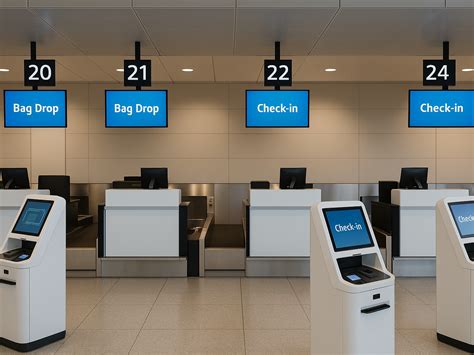
The incident demonstrates the operational risks associated with complex technology supply chains. Airlines depend on numerous interconnected systems, and a problem involving one external provider can affect services used by thousands of employees and passengers. Even when the airline’s own infrastructure remains functional, its ability to process travelers may be limited if a critical external service becomes unavailable. For Southwest, the challenge is therefore not simply to maintain its internal computers, but also to ensure that essential passenger-facing operations can continue when a supplier experiences a failure.
More Than 1,500 Southwest Flights Delayed as Disruption Spreads
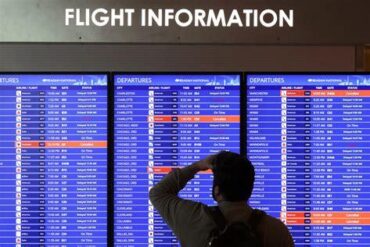
The initial outage had a substantial effect on Southwest’s flight schedule. By the time the airline reported its systems restored at approximately 10:15 AM ET, more than 900 flights had been delayed and 43 had been canceled, according to the figures provided in the reference material. However, the impact continued to grow as the day progressed. FlightAware data cited at approximately 5:00 PM ET showed that more than 1,500 Southwest flights had been delayed, representing roughly one-third of the airline’s flights up to that point.
The difference between the morning figures and the later total illustrates why the operational consequences of a technology failure can persist long after the original problem has been corrected. Airlines organize their schedules around tightly coordinated aircraft rotations, crew assignments, gate availability, and passenger connections. A delayed departure can affect the next flight assigned to the same aircraft, while crews may face scheduling constraints that prevent them from operating subsequent services as planned. Airports must also accommodate aircraft arriving outside their expected windows, adding pressure to gates and ground-handling resources.
The scale of the disruption does not mean that every delayed flight was directly affected by the original outage in the same way. Some delays can arise from the immediate inability to process passengers, while others occur later as aircraft and crews fall out of position. Nevertheless, the rising total shows how a relatively short technical interruption can produce consequences lasting many hours across a large airline network.
Southwest’s History of Technology Failures Raises Reliability Questions
Friday’s outage was not an isolated event in Southwest’s operational history. In July 2016, a network router malfunction combined with failures in backup systems disrupted the airline’s operations. Contemporary reporting by Wired indicated that the incident ultimately contributed to more than 2,300 flight cancellations over four days. Employees were again forced to process passengers manually, making the similarities with the October 2026 disruption particularly notable.
Further problems emerged in June 2021, when separate failures involving weather data and network connectivity disrupted operations on consecutive days. The second incident reportedly resulted in approximately 500 cancellations and more than 1,300 delays. In April 2023, a vendor-supplied firewall failure interrupted access to operational data, prompting Southwest to request a nationwide departure ground stop. More than 2,100 flights were delayed during that disruption.
The most damaging operational crisis occurred during the December 2022 holiday season. Winter Storm Elliott severely disrupted flight operations across the United States, but Southwest struggled to recover its aircraft and crew schedules as the weather improved. Its operational systems could not effectively manage the scale of the disruption, contributing to approximately 16,900 cancellations and leaving more than two million passengers stranded or otherwise affected by the breakdown. The US Department of Transportation subsequently said Southwest provided more than $600 million in passenger refunds and reimbursements. In December 2023, the department also assessed a record $140 million civil penalty, with payment provisions amended in December 2025 to recognize subsequent operational improvements.
These events involved different technical and operational failures, so they should not be treated as evidence that every outage has the same underlying cause. However, they reveal a recurring vulnerability: a localized technology failure can spread rapidly through an airline’s wider operation when systems, staffing, and recovery procedures cannot absorb the disruption. That makes redundancy, contingency planning, and rapid recovery capabilities just as important as the reliability of individual software platforms.
Can Southwest’s Technology Modernization Prevent Another Outage?
Southwest has invested heavily in operational improvements since the December 2022 meltdown. Its March 2023 resilience plan prioritized upgraded crew-scheduling software, better tools for optimizing operational recovery, and improved communication systems for employees. By December 2025, the Department of Transportation had acknowledged that the airline had invested more than $1 billion in operational improvements, including over $112 million in its Network Operations Control function. These initiatives have contributed to measurable progress in punctuality and flight completion, although they cannot guarantee that future technology failures will be avoided.
Another major initiative involves Southwest’s expanded partnership with Amazon Web Services (AWS), announced in June 2026. The airline plans to transition from a largely on-premises technology environment toward a cloud-based, AI-enabled architecture by 2028. More than 2,700 developers were already using AWS tools to accelerate software development and modernize Southwest.com, building on a cloud partnership first announced in March 2023. The broader effort is intended to improve scalability, reliability, and operational efficiency while giving the airline greater flexibility to develop and maintain its digital services.
However, moving more workloads to the cloud does not automatically eliminate the risk of failures involving third-party suppliers. Southwest’s internal modernization program and its dependence on external passenger-service technology address related but distinct challenges. A more flexible cloud environment may improve how the airline develops and operates its own systems, but it cannot by itself guarantee uninterrupted access to every external platform on which passenger processing depends.
Southwest will therefore need to consider how essential services can continue during supplier outages, whether alternative processing arrangements can be activated quickly, and how employees can switch to contingency procedures without creating additional delays or confusion. The objective is not necessarily to eliminate every technical failure, which is unrealistic in a complex digital environment, but to limit how far a failure spreads and how long it affects passengers.
What the October 2026 Outage Means for Southwest Passengers
Friday’s disruption exposed the gap between restoring a computer system and restoring an airline’s full operation. Southwest resolved the immediate technology problem in roughly two hours, yet the accumulated delays continued to affect departures throughout the day. For passengers, the practical consequences included longer airport queues, uncertainty about boarding, and a greater risk of missed connections or changed travel plans.
The incident also raises a broader question about resilience in commercial aviation. Digital platforms allow airlines to handle enormous volumes of reservations, baggage, check-ins, and boarding transactions efficiently, but their importance makes reliable backup procedures essential. When those systems fail, employees need the training, tools, and operational flexibility to keep essential services moving while protecting passenger safety and maintaining required checks.
Southwest’s investments in cloud infrastructure and operational recovery may strengthen its ability to manage future disruptions, but the latest outage shows why modernization must include supplier resilience and practical fallback procedures. The airline has made progress since its 2022 operational crisis, yet its latest nationwide interruption demonstrates that technology reliability remains a critical part of operational reliability. For Southwest, the next measure of progress will be not only how quickly it restores a failed system, but also how effectively it prevents a similar failure from disrupting hundreds of flights and thousands of travelers.