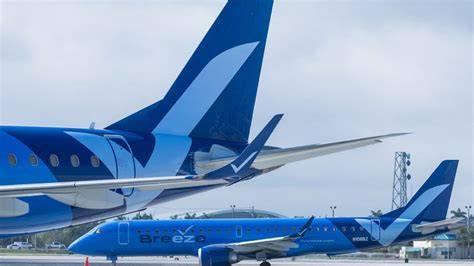
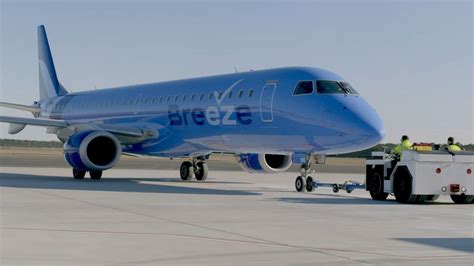
Alaska Airlines is testing a new way to strengthen its East Coast network without immediately adding more aircraft, routes, or bases. The carrier has quietly begun selling selected Breeze Airways flights, creating a limited interline relationship that could eventually help Alaska reach smaller cities beyond the destinations it serves with its own aircraft.
The arrangement is still extremely narrow. Alaska has confirmed that it has an interline agreement with Breeze, but the initial experiment involves only selected Breeze itineraries touching Charleston, Las Vegas, and Raleigh-Durham. Customers purchasing eligible Breeze flights through Alaska can earn Atmos Rewards points, giving Alaska’s loyalty program a foothold on routes that fall outside its traditional network.
At first glance, the partnership may look like the beginning of a larger East Coast expansion. In practice, however, it is better understood as a distribution and loyalty experiment. Alaska is testing whether its customers will use its website and loyalty program to purchase flights operated by an airline with a very different network strategy.
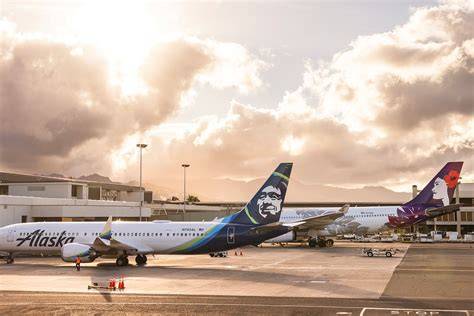
Alaska Airlines Begins a Limited Breeze Airways Test
Alaska’s partner information now identifies eligible Breeze flights sold directly by Alaska or Hawaiian Airlines as capable of earning Atmos Rewards points when the ticket is issued under the appropriate Alaska ticket stock. The early test covers selected Breeze services available through Alaska’s booking system.
The important detail is what the arrangement does not provide. Customers cannot currently combine Alaska and Breeze flights into a single connecting itinerary. Atmos Rewards members can earn points on eligible Breeze purchases, but they cannot redeem Atmos points for Breeze flights under the current setup. There are also no reciprocal elite-status benefits.
That makes this substantially different from the conventional airline partnerships travelers are accustomed to. A typical interline arrangement can allow airlines to issue one ticket covering multiple carriers, making it easier to connect between networks and providing a framework for handling baggage and disrupted journeys. The Alaska-Breeze test does not yet offer that level of integration.
The limited structure makes sense as a low-risk trial. Alaska can place Breeze flights in front of its customers without committing to a deeper commercial relationship, while Breeze gains another sales channel. For Alaska, the test also provides a way to measure demand for destinations it does not operate itself.
There are still practical differences between the Breeze fares displayed through Alaska and those sold directly by Breeze. Fare descriptions, seat options, baggage rules, and cancellation policies may not always be presented in exactly the same way. That reinforces the idea that this is an early-stage experiment rather than a finished network partnership.
Alaska’s East Coast Network Has a Major Gap
The reason the experiment is interesting becomes clearer when Alaska’s network is viewed geographically. Alaska has developed a substantial transcontinental operation, with more than 70 daily nonstop flights between six West Coast cities and 11 East Coast airports. But those flights largely serve a specific purpose: moving passengers between the two sides of the country.
Alaska can connect an East Coast traveler with Seattle, Los Angeles, San Francisco, San Diego, and other major western markets. What it generally cannot do is take that same traveler from one secondary East Coast city to another.
That limitation is partly a consequence of Alaska’s history. The airline developed from its Pacific Northwest roots into a major West Coast carrier, and its network remains heavily concentrated around that geography. Its East Coast presence has expanded, but the structure remains fundamentally West Coast-oriented.
A traveler flying Alaska from Raleigh-Durham, for example, can reach Seattle or San Diego nonstop. But Alaska does not operate an extensive web of short- and medium-haul routes linking Raleigh with Charleston, Providence, Hartford, Norfolk, or other secondary markets.
That is precisely the space Breeze Airways has targeted.
Breeze Airways Could Fill Alaska’s Secondary-City Gap
Breeze has built its network around point-to-point flying, particularly routes between underserved cities that historically lacked nonstop service. Rather than relying on a small number of massive connecting hubs, Breeze has sought demand in markets where travelers may otherwise have needed a connection through Atlanta, Charlotte, Washington, Dallas, or another major airport.
That approach makes Breeze an intriguing potential complement to Alaska. The two airlines are not trying to solve exactly the same network problem.
Alaska brings strong transcontinental connectivity, major West Coast bases, a growing loyalty ecosystem, and relationships with other large carriers. Breeze brings a growing collection of secondary-city routes that Alaska would have little reason to operate with its own fleet.
Raleigh-Durham International Airport demonstrates the potential particularly well. Breeze began building its presence there in 2023 with eight destinations and subsequently expanded dramatically. By May of this year, Breeze had reached 40 destinations from RDU, making it the airport’s largest airline by destination count.
Alaska already serves Raleigh-Durham with transcontinental routes from Seattle and San Diego. In theory, that creates an interesting combination: Alaska could bring customers into Raleigh from the West Coast, while Breeze could provide access to numerous eastern destinations that Alaska does not serve.
The challenge is turning that theoretical network into something passengers can actually use.
Why the Breeze Partnership May Remain Small
The biggest obstacle is that Breeze’s network is not designed primarily around connecting traffic. Many of its routes target local leisure demand and operate only a few times per week. Some newer Raleigh routes, for instance, have schedules of only two or three weekly flights.
That can be valuable for nonstop travelers, but it creates limitations for a traditional connecting airline. A customer connecting between two carriers needs convenient schedules, multiple departure options, and enough frequency to recover from delays or cancellations. A route operating twice a week cannot provide the same flexibility as a route operating several times each day.
Alaska also already has a powerful East Coast connectivity option through American Airlines and the oneworld alliance. Alaska and American provide reciprocal loyalty benefits and codeshare connectivity, while American’s network reaches major East Coast hubs including Charlotte, Philadelphia, Miami, and Washington.
That relationship reduces the urgency for Alaska to find another major network carrier covering the eastern United States.
The situation also makes JetBlue an interesting theoretical alternative. JetBlue has traditionally been strong in New York and Boston and has a network structure that could complement Alaska’s transcontinental operation. However, JetBlue is now closely aligned with United Airlines through the Blue Sky partnership, including loyalty and other commercial benefits.
Breeze therefore occupies a different position. It is not a replacement for American, nor does it currently have the scale required to function like a traditional major connecting partner.
Alaska May Be Testing a New Loyalty Strategy
The most important element of the arrangement may ultimately be Atmos Rewards, rather than the flights themselves.
Alaska has been placing increasing emphasis on making its loyalty program useful across a broader range of travel. Allowing members to earn points on selected Breeze flights gives Alaska another opportunity to keep customers within its ecosystem even when Alaska does not operate the aircraft.
That creates a relatively inexpensive experiment. Alaska does not need to open stations, deploy crews, or acquire aircraft to test demand for dozens of additional East Coast markets. If customers respond positively, the airline could potentially expand the relationship.
For Breeze, the benefit is equally straightforward. Selling flights through Alaska gives its services additional exposure to travelers who may already be searching Alaska’s website for flights. It also places Breeze in front of customers who may value loyalty earnings when choosing between otherwise similar nonstop options.

The East Coast Fix Is Still a Work in Progress
For now, calling Breeze an extension of Alaska’s East Coast network would be premature. The airlines cannot yet combine their flights into a single itinerary, Breeze is not reciprocally selling Alaska flights, Atmos points cannot be redeemed for Breeze travel, and elite benefits remain separate.
Still, the experiment addresses a genuine strategic issue for Alaska. Its East Coast presence is meaningful when the destination is the West Coast, but much less useful when travelers want to move around the eastern half of the country.
Breeze offers a potential solution without requiring Alaska to build an entirely new network. Whether that solution becomes significant will depend on whether the two airlines eventually add connecting itineraries, broaden the list of airports, introduce reciprocal benefits, or expand loyalty integration.
For now, Alaska is taking the smallest possible step. But if the test demonstrates that customers value access to Breeze’s secondary-city network, this quiet partnership could become a useful piece of Alaska’s broader effort to evolve from a predominantly West Coast carrier into a more geographically flexible airline.