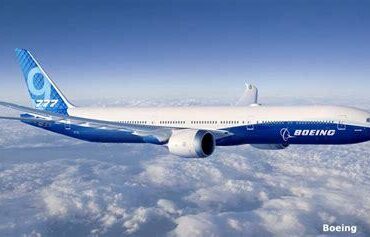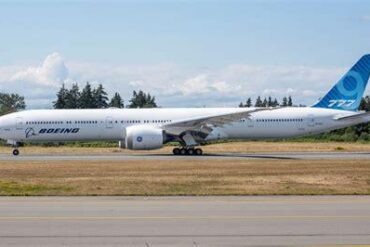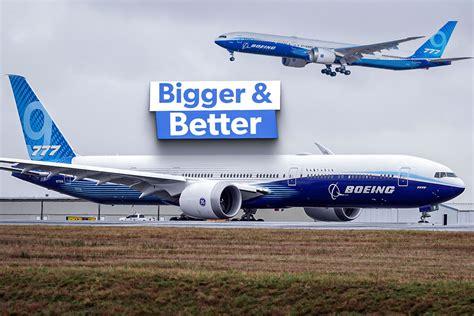
Thirteen years after Boeing launched the 777X, the aircraft has become a striking example of how a technically ambitious commercial jet can become trapped between engineering progress, regulatory scrutiny, production timing, and the relentless economics of delay. The program was announced with enormous expectations in 2013, when Boeing presented the new widebody as the successor to the highly successful 777 family and secured 259 orders at launch. Today, however, the 777X is still waiting for certification, while some aircraft built years ago are sitting unused at Boeing’s Everett facility.
The most extraordinary consequence of that delay is what happened to WH007, the seventh 777-9 produced. The aircraft never entered airline service. It never completed a passenger flight. In fact, it never even became a finished production aircraft. After sitting at Boeing’s Everett site for years, the airframe was ultimately dismantled because bringing it up to the latest required configuration was apparently judged less practical than abandoning it.
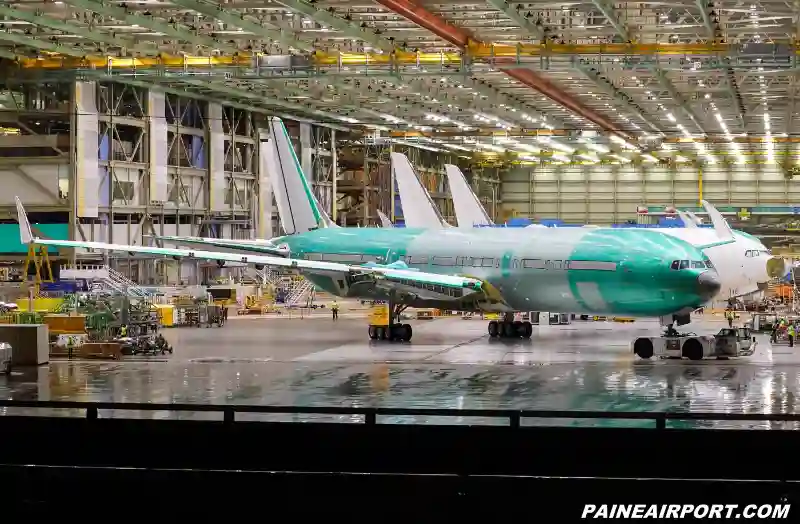
That decision illustrates a much larger problem. Boeing has reportedly produced around 30 777X airframes ahead of certification, some dating back to 2019 and 2020. Those aircraft were built with the expectation that production could get ahead of certification and that necessary modifications could later be incorporated. Instead, the prolonged development cycle has created a growing fleet of aging, unfinished aircraft that must now undergo extensive “change incorporation” before they can be delivered.
Boeing 777X Was Supposed To Redefine The Large Twin-Engine Jet
When Boeing officially launched the 777X program at the 2013 Dubai Airshow, the company positioned it as a major evolution of the 777 rather than simply another derivative. The launch attracted 259 orders from four airlines, with Boeing putting the combined list value at approximately $95 billion. The numbers demonstrated how much confidence airlines initially had in a new generation of large, efficient twin-engine aircraft.
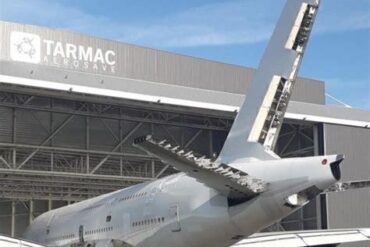
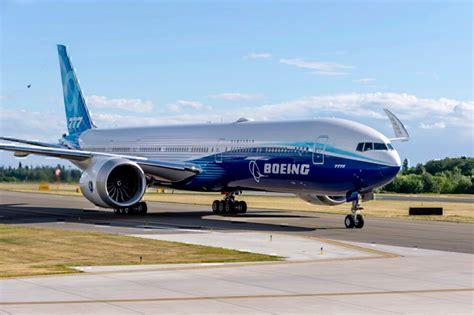
The 777X was designed around several major technological changes. Boeing developed a new composite wing with an extended span and folding wingtip, allowing the aircraft to achieve greater aerodynamic efficiency without becoming incompatible with airports designed around existing widebody gate and taxiway limitations. When extended in flight, the wing would provide the aerodynamic benefits of a much larger structure. When the aircraft was on the ground, its folding tip would reduce the effective span.
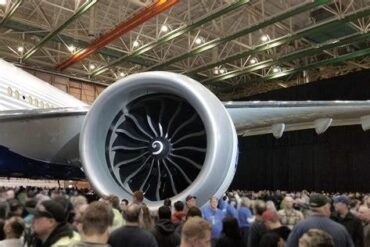
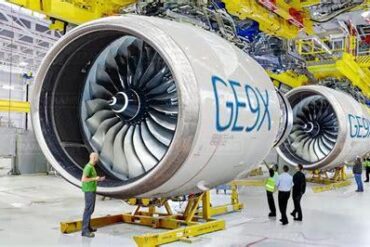
The aircraft would also receive the GE9X, developed by GE Aerospace and intended to become the largest and most powerful commercial aircraft engine ever produced. Together, the new wing, advanced engine, updated aerodynamics, and redesigned systems were intended to make the 777X substantially more efficient than the aircraft it was replacing.
The family was planned around several variants. The 777-8 would accommodate roughly 350 to 425 passengers in a typical two-class configuration and offer a range of up to 9,500 nautical miles. The larger 777-9 would carry approximately 375 to 450 passengers and have a range of about 8,000 nautical miles. Boeing also planned the 777-8F freighter, extending the platform into the cargo market.
On paper, the concept was compelling. In practice, however, almost every stage of bringing the aircraft into service took considerably longer than Boeing originally expected.
The 777X Certification Timeline Has Slipped By Years
Boeing initially envisioned production beginning in 2017 and commercial service arriving in 2020. Neither milestone was achieved. Certification is now expected around 2027, meaning the first deliveries could arrive roughly seven years later than originally planned.
The delay cannot be attributed to a single problem. The 777X encountered technical difficulties during development and flight testing, while Boeing itself came under much greater regulatory scrutiny following the two fatal 737 MAX crashes in 2018 and 2019. The Federal Aviation Administration consequently adopted a far more demanding approach toward Boeing’s new aircraft programs.
The 777X test program also experienced a series of setbacks. A fuselage structural failure occurred during high-pressure ground testing in 2019, while issues involving the GE9X contributed to delays in the aircraft’s first flight. Flight testing subsequently identified other technical concerns, including uncommanded pitch events.
Further engine-related problems emerged in 2022, grounding the test fleet. In 2024, cracks were discovered in the thrust-link structures connecting the GE9X engines to the wings, producing another interruption. More recently, concerns involving GE9X engine seal durability have added another layer to an already lengthy certification campaign.
Each individual problem might have been manageable in isolation. The difficulty came from their cumulative effect. Every delay pushed the certification target farther into the future, increasing the amount of time between the manufacture of early aircraft and the eventual configuration that regulators will accept.
Boeing Built 777Xs Before Certification — And Time Became The Enemy
Building aircraft before certification is not inherently unusual. Manufacturers commonly begin production before regulatory approval is complete because otherwise an aircraft program could face an enormous production bottleneck immediately after certification.
Boeing has used this strategy before with aircraft including the 767, original 777, and 787. The basic idea is straightforward: manufacture aircraft using the best available design, continue testing and certification, and subsequently incorporate approved changes into aircraft already in production.
The 777X turned that normal production strategy into an unusually difficult challenge because certification took far longer than anticipated.
Some early 777X airframes have reportedly been sitting at Boeing’s Everett facility since 2019 and 2020. An aircraft that was relatively close to the expected production configuration when it was assembled can become significantly outdated after several additional years of structural testing, flight testing, regulatory review, and engineering changes.
That means Boeing cannot simply start the engines, complete final inspections, paint the aircraft, and hand it to an airline. Instead, the early aircraft must be evaluated individually and modified to reach the common configuration required for certification and delivery.
Why Boeing Scrapped 777X Airframe WH007
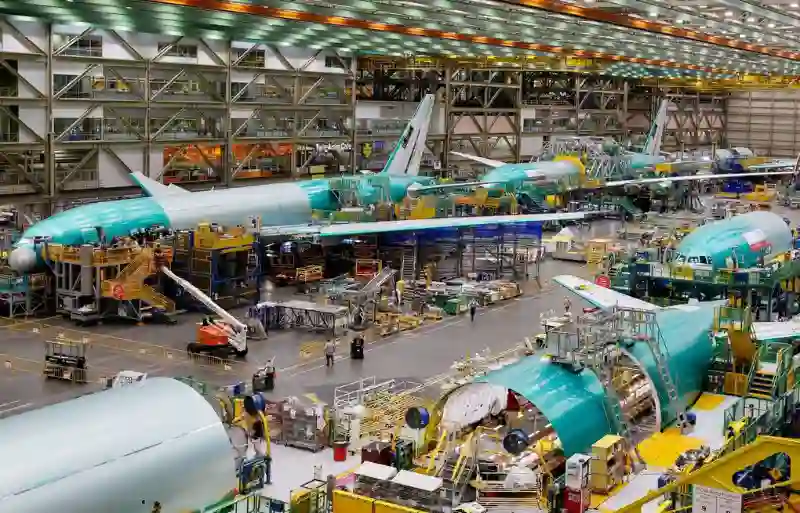
The clearest demonstration of the scale of this problem is WH007, the seventh 777-9 produced.
The aircraft emerged from production in the summer of 2019, but it subsequently remained dormant at Everett for approximately six years. Its unfinished appearance reflected its unusual status. Weighted blocks occupied locations where engines would eventually be installed, while Emirates branding on the folding wingtips suggested the aircraft’s intended customer.
But the aircraft never reached airline service.
According to reporting cited by The Air Current, Boeing eventually dismantled the airframe. Boeing later confirmed that the partially assembled 777-9 had been scrapped, explaining that the associated costs had already been reflected in previous financial results.
The significance of WH007 is not simply that one aircraft was lost. Commercial aircraft are enormously valuable assets, and manufacturers generally have powerful incentives to preserve them. Scrapping an airframe before it ever flies indicates that the cost and complexity of bringing that particular aircraft forward had become difficult to justify.
The decision also provides a tangible illustration of Boeing’s broader 777X change-incorporation problem. If an aircraft that has never carried passengers can become economically unattractive to modify, the challenge facing the rest of the pre-built fleet becomes easier to understand.
The $4.9 Billion Charge Shows How Expensive The Delay Has Become
The WH007 decision occurred against a much larger financial backdrop. Boeing recorded an additional $4.9 billion charge associated with the 777X program in its third-quarter 2025 financial results.
That figure was not simply the cost of dismantling one aircraft. It reflected the broader consequences of a program that had accumulated years of delays and technical changes. The financial burden includes costs associated with prolonged testing, airline compensation and penalties, production inefficiencies, and modifications required for aircraft that were manufactured before the final certified configuration was established.
With the additional $4.9 billion charge, total charges associated with the 777X program exceeded $15 billion.
That number is particularly striking when viewed against the program’s original commercial promise. Boeing began the project with hundreds of orders and enormous expectations surrounding a new flagship widebody. Instead, the aircraft has become one of the company’s most expensive development programs.
The irony is that the more aircraft Boeing builds in anticipation of certification, the larger the potential modification workload becomes. Yet producing too few aircraft could create an equally serious problem once certification finally arrives, because airlines expect deliveries according to contracts and production must ramp up efficiently.
Boeing therefore finds itself balancing two expensive risks: producing aircraft early and potentially having to rebuild them, or waiting until certification and potentially being unable to meet delivery commitments.
Why Older 777X Airframes Need So Much Work
Boeing CEO Kelly Ortberg has described the work required on the pre-built aircraft as highly dependent on when each individual aircraft was manufactured. The older the aircraft, the greater the amount of change incorporation and structural-related work likely to be necessary.
That makes sense from an engineering perspective. The earliest production aircraft were built while the design was still being refined through testing and certification. Later aircraft benefited from information that did not exist when the first examples entered production.
The modification process can therefore involve far more than replacing an individual component. Boeing must establish a common configuration and then bring each aircraft to that standard. In some cases, aircraft may need to be stripped down sufficiently to allow engineers and technicians to incorporate structural and systems changes.
This is effectively a second manufacturing operation performed on aircraft that have already passed through part of the first one.
Boeing has indicated that a dedicated team is working through the pre-built fleet to determine the statement of work required for each aircraft. The company expects the process to take years, reinforcing just how much effort remains even after certification itself is achieved.
The 730-Aircraft Order Book Raises The Stakes
Despite the problems, the 777X has not become commercially irrelevant. Quite the opposite: Boeing’s order book has grown dramatically from the 259 launch commitments.
The family now has orders for approximately 730 aircraft, including substantial commitments from Emirates, Qatar Airways, Singapore Airlines, Cathay Pacific, Lufthansa, British Airways, Korean Air, Air India, and other carriers.
Emirates is particularly important to the program. The airline originally ordered 150 777Xs at launch and remains one of the aircraft’s most significant customers. Qatar Airways has also accumulated a large commitment, while numerous other international carriers are relying on the 777X as part of their future long-haul fleets.
This means Boeing cannot simply walk away from the program because of its development costs. The aircraft represents a major future product line, and airlines have structured fleet strategies around receiving it.
The challenge now is to transform a technically mature but severely delayed aircraft program into a reliable production system.
Boeing’s 777X Problem Is Bigger Than One Scrapped Aircraft
WH007 will probably remain one of the strangest footnotes in the history of the 777X: an aircraft built years before certification that ultimately became too expensive or complicated to bring forward. Yet the airframe itself is less important than what it reveals about the program.
The $4.9 billion charge and more than $15 billion in cumulative 777X-related charges demonstrate the financial consequences of a development cycle that has stretched far beyond its original schedule. Every year of delay increases the distance between the aircraft Boeing originally built and the aircraft regulators will ultimately approve.
The 777X still has a strong commercial case. Its composite wing, folding wingtips, GE9X engines, large passenger capacity, and long-range capability give airlines a compelling aircraft for high-capacity international routes. Its order book shows that carriers continue to believe in the product.
But Boeing’s next challenge is no longer simply getting the 777X certified. It must also work out how to turn years-old airframes into modern production aircraft, absorb billions of dollars in accumulated costs, and establish a sustainable delivery system once regulatory approval finally arrives.
The dismantling of WH007 makes that challenge visible. It is one thing to delay an aircraft. It is another to discover that the aircraft has been delayed for so long that rebuilding it becomes more practical than finishing it.