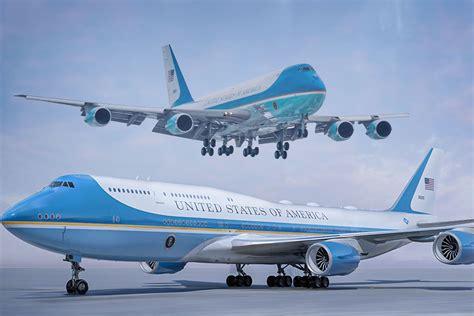
Air Force One, the iconic flying command center of the President of the United States, is undergoing its most significant transformation in over three decades. The arrival of the VC-25B, based on the Boeing 747-8 Intercontinental, signals not only a visual upgrade but also a technological and dimensional leap forward. The aircraft it is set to replace—the VC-25A, a heavily modified Boeing 747-200B—has served with distinction since 1990. However, the scale and capabilities of its successor mark a substantial evolution in presidential air travel.
A Legacy in the Sky: From VC-25A to VC-25B
Since their debut, the VC-25A aircraft have carried presidents through wars, crises, and summits, becoming a symbol of U.S. power projection and diplomatic presence. Despite their historical importance, these aircraft are nearing the end of their operational life. After more than 30 years of service, increasing maintenance issues, outdated systems, and reduced efficiency have underscored the need for modernization.
In 2018, the U.S. government signed a $3.9 billion contract with Boeing to develop and retrofit two 747-8 aircraft into the next generation of Air Force One, known as VC-25B. These new aircraft are undergoing extensive modifications at Boeing’s facility in San Antonio, with delivery now expected no earlier than 2027 due to delays in engineering, supply chains, and certification processes.
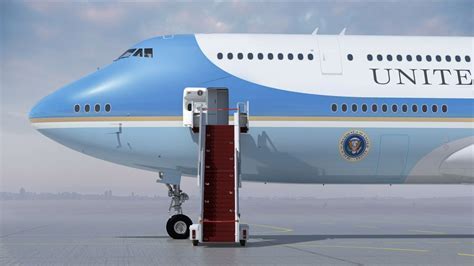
The New Air Force One Is Undeniably Bigger
From a purely physical standpoint, the Boeing 747-8 outclasses its predecessor in every measurable category. At 250 feet 2 inches (76.3 meters), it is nearly 19 feet longer than the 747-200B it replaces. The wingspan has also grown—from 195 feet 8 inches (59.6 meters) to 224 feet 5 inches (68.4 meters)—reflecting advanced aerodynamic engineering and fuel efficiency considerations. These dimensions make the 747-8 the longest passenger aircraft currently flying.
More importantly, this expansion brings increased interior space, payload capacity, and fuel storage, which directly translate into greater mission flexibility. The maximum takeoff weight of the new aircraft is 987,000 pounds (447,700 kg) compared to the older model’s 833,000 pounds (377,800 kg). This allows it to carry more advanced communications systems, defensive countermeasures, staff, and fuel for longer missions without the need for refueling.
Under the Hood: Advanced Engines and Efficiency
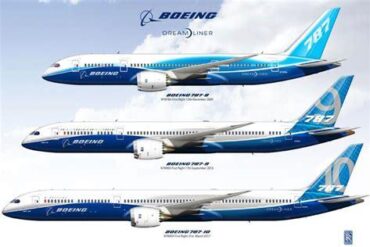
The VC-25B will be powered by four General Electric GEnx-2B67 engines—descendants of the engines used on the Boeing 787 Dreamliner. These engines offer more thrust, burn less fuel, and produce lower emissions than the CF6 series engines currently installed on the VC-25A.
The 747-8’s redesigned wings—featuring raked wingtips—enhance lift and reduce drag. These innovations result in an improved range of 7,730 nautical miles (14,430 kilometers), compared to the older plane’s 6,735 nautical miles (12,700 kilometers). In operational terms, that means fewer stops, greater reach, and increased security during presidential missions.

Technology for a Modern Command Center
Beyond its dimensions and engines, the VC-25B introduces a leap in military avionics, communications security, and survivability. The aircraft will feature advanced electromagnetic pulse (EMP) shielding, hardened communications systems, and secure command-and-control interfaces, allowing the president to maintain national security operations during crises—even in the air.
While the interior design remains classified, it is expected to include conference rooms, medical facilities, secure video links, and presidential living quarters, much like the current model—but optimized for the digital age.
An Interim Jet: Qatar’s 747-8 Joins the Mix
Facing delays in the VC-25B program, the Department of Defense has acquired a privately-owned Boeing 747-8, formerly part of Qatar Amiri Flight’s VIP fleet. This jet, previously configured for royal use with only 89 luxury seats, is undergoing evaluation for use as an interim Air Force One.
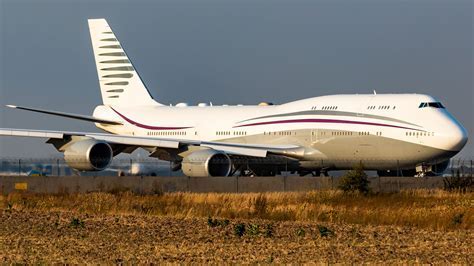
President Donald Trump personally toured the aircraft at Palm Beach International Airport in early 2024, expressing frustration with Boeing’s delayed timeline and praising the potential of using a pre-owned aircraft. In May 2024, the U.S. formally accepted the jet. While retrofitting this jet to presidential standards will require significant time and money—estimated by some at nearly $1 billion—it could become operational years before the official VC-25B fleet.
Historical Context: The Evolution of Presidential Aircraft
The term “Air Force One” is a call sign, not a specific aircraft. It applies to any U.S. Air Force aircraft carrying the president. Over time, many models have held this title:
- VC-54C “Sacred Cow” used by Franklin D. Roosevelt
- VC-121E “Columbine III” during Eisenhower’s tenure
- VC-137C (Boeing 707 variant) flown by John F. Kennedy and successors
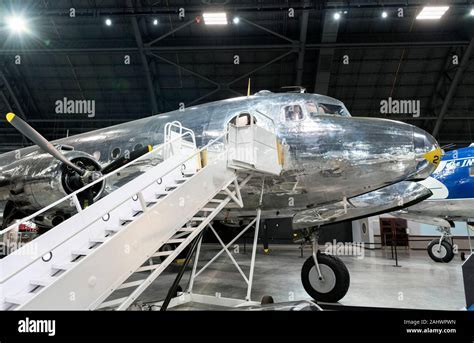
The current VC-25A jets, tail numbers 28000 and 29000, replaced the VC-137C in 1990 and have served presidents from George H. W. Bush to Joe Biden. Their replacement marks the end of an era—and the beginning of a new one with cutting-edge systems designed for 21st-century threats.
Delays and Cost Overruns Plague the Program
The VC-25B program, although ambitious, has not been immune to development bottlenecks. Boeing’s fixed-price contract has left the company absorbing over $2 billion in losses. What was initially scheduled for 2024 delivery now faces delays that may stretch until 2029, depending on technical hurdles and defense certification timelines.
Critics cite poor project management, outdated factory practices, and bureaucratic red tape as root causes. Boeing, meanwhile, continues to work with defense contractor L3Harris to accelerate system integration and testing.
Final Verdict: Bigger, Smarter, and More Capable
Yes, the new Air Force One is definitively bigger than the old one—and not just in dimensions. With longer range, greater fuel capacity, superior engine technology, and modern defense features, the 747-8-based VC-25B is a quantum leap in presidential air travel. But size and capability come at a price—both in terms of money and time.
The delays affecting the VC-25B have left room for alternatives like the Qatar aircraft to fill the gap. Whether this interim aircraft takes to the skies first or the official VC-25B beats it to service, both represent a bold step forward. The U.S. presidency will soon be airborne aboard one of the most advanced and secure aircraft ever built.

As history shows, Air Force One is more than a plane—it’s a flying White House, a global symbol of power, and a vital instrument of national command. The next generation will not only preserve that legacy—it will expand it, in every sense of the word.