Long-haul flying has changed dramatically over the past few decades. While economy class remains the standard choice for most travelers, airlines have introduced premium economy cabins to attract passengers who want more comfort without paying the much higher prices associated with business class. Positioned between economy and business class, premium economy has become one of the fastest-growing cabin segments in international aviation.
For travelers facing a 10-hour, 14-hour, or even 20-hour journey, the difference between economy and premium economy is not simply a slightly wider seat. On modern widebody aircraft, airlines redesign the entire experience with more personal space, improved seating, upgraded meals, enhanced services, and additional loyalty benefits.
The biggest differences appear on long-haul routes because airlines have more cabin space to create distinct products. Aircraft such as the Airbus A350, Boeing 787 Dreamliner, Boeing 777, and Airbus A380 allow carriers to separate premium economy from standard economy with dedicated cabins, different seating layouts, and a higher level of service.
For short flights, premium economy may feel like a simple upgrade with limited advantages because narrowbody aircraft often have fewer opportunities for cabin differentiation. However, on international long-haul flights, premium economy becomes a genuine alternative for travelers who value comfort but do not want to spend thousands of dollars for business class.
Lower-Density Cabins Create a More Comfortable Long-Haul Experience
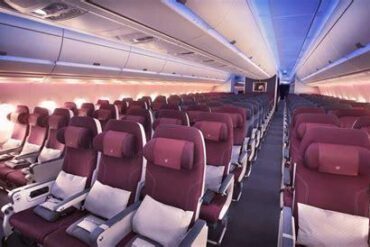
The foundation of premium economy is simple: airlines reduce the number of seats and use that additional space to improve passenger comfort. Economy cabins are designed around efficiency, allowing carriers to transport the largest possible number of passengers. Premium economy takes the opposite approach by sacrificing capacity in exchange for a better passenger experience.
Most economy cabins on large widebody aircraft use high-density seating layouts. For example, many Boeing 777 aircraft feature a 3-4-3 economy configuration, placing ten seats across each row. While this layout helps airlines maximize revenue, it also means narrower seats and limited personal space.
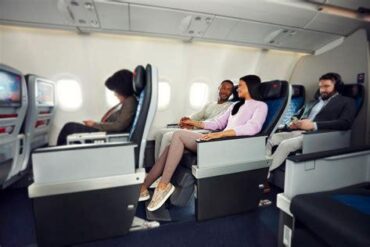
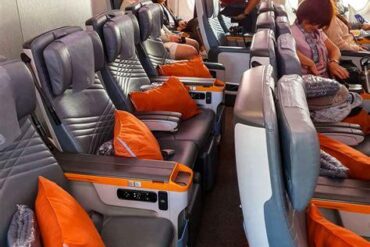
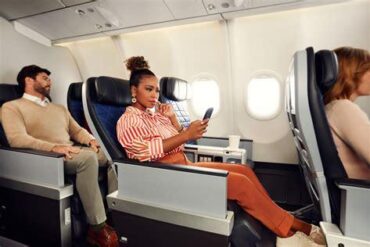
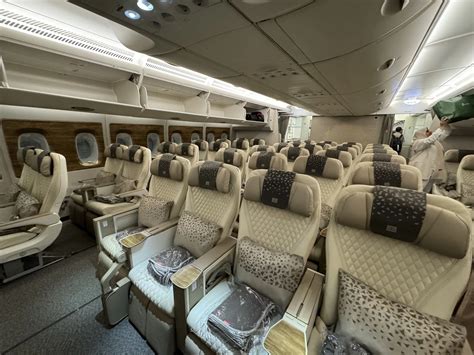
Premium economy cabins usually adopt layouts such as 2-4-2 or 2-3-2, reducing the number of seats per row. By removing seats, airlines can increase seat width, provide more legroom, and create a cabin atmosphere that feels quieter and less crowded.
Emirates provides a clear example of this difference. Its economy cabins on aircraft such as the Boeing 777 and Airbus A380 typically use dense configurations, while its premium economy cabins feature wider seating arrangements designed around passenger comfort rather than maximum capacity.
This lower-density approach creates benefits beyond physical space. Premium economy passengers often enjoy a separate cabin environment, fewer people moving through their area, easier access to overhead storage, and a stronger feeling of privacy throughout the flight.
Premium Economy Seats Offer Significantly More Space
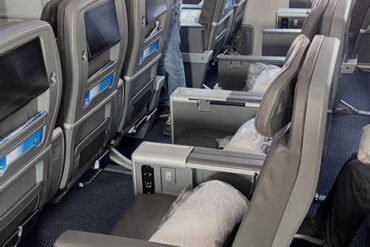
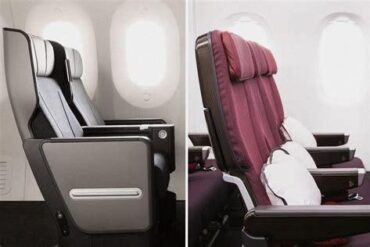
The most noticeable difference between economy and premium economy is the seat itself. On a long-haul flight, even small improvements in seat dimensions can have a major impact because passengers spend many hours sitting, sleeping, eating, and relaxing in the same position.
Seat pitch, seat width, and recline are the three primary measurements that determine comfort. Seat pitch refers to the distance between one seat and the same point on the seat in front, while seat width determines personal space. Recline affects how comfortably passengers can rest during overnight journeys.
Typical long-haul economy seats usually provide around 31 to 34 inches of pitch, depending on the airline and aircraft type. Premium economy seats often increase this figure to approximately 38 to 42 inches, creating noticeably more legroom.
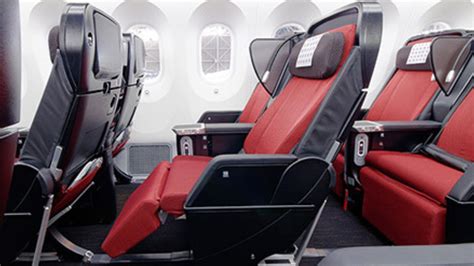
Seat width also improves. Economy seats commonly range between 17 and 18.5 inches wide, while premium economy seats frequently reach 19 to 20 inches. Although the difference may appear small on paper, those extra inches make a significant difference during long flights.
Recline is another important advantage. Premium economy seats usually offer greater recline compared with economy seats, allowing passengers to find a more comfortable sleeping position without feeling as restricted.
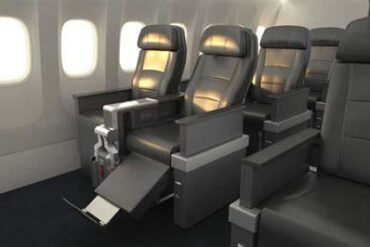
Many premium economy seats also include additional features that are unavailable in standard economy cabins, including:
- Larger personal entertainment screens
- Adjustable footrests
- More spacious tray tables
- Additional storage compartments
- Improved headrests
- Enhanced seat cushioning
These features are designed specifically for long-distance travel, where comfort becomes increasingly important as flight duration increases.
Improved Meals, Amenities, and Onboard Services
The premium economy experience extends beyond the seat. Airlines use additional services and amenities to justify the higher ticket price and create a noticeable distinction from economy class.
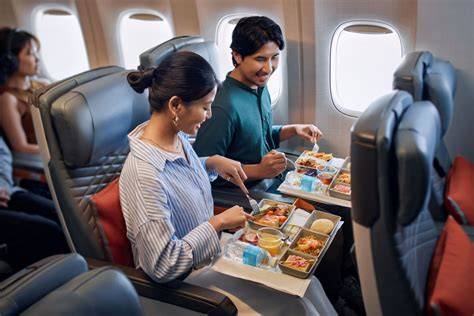
Passengers flying premium economy often receive upgraded meal services with better presentation, larger portions, and more menu choices. Some airlines provide welcome drinks before departure, additional snacks during the flight, and improved dining equipment.
For example, airlines including Emirates, Singapore Airlines, United Airlines, and Cathay Pacific have developed premium economy services that include enhanced meals and dedicated cabin service.
Amenity kits are another common feature. While economy passengers may receive basic travel items on certain routes, premium economy passengers often receive more complete kits containing items such as socks, eye masks, toothbrushes, and skincare products.
Airport services can also differ. Depending on the airline, premium economy travelers may receive priority check-in, priority boarding, additional baggage allowance, and access to faster airport procedures.
Some airlines go even further by offering limited lounge access benefits for premium economy passengers. Although lounge access remains uncommon compared with business class, selected carriers provide this benefit on certain routes or fare types.
Premium Economy Can Provide More Frequent Flyer Rewards
For travelers who collect airline miles and loyalty points, premium economy offers another advantage: higher earning potential.
Because premium economy tickets cost more than economy fares, airlines generally reward passengers with more miles. However, the exact difference depends heavily on the airline, booking class, route distance, and fare category.
On some airlines, premium economy passengers may earn around 30% to 40% more miles compared with economy passengers on similar routes. In other cases, especially with flexible premium economy fares, the difference can be significantly larger.
United Airlines, for example, may provide substantially higher mileage earnings for premium economy tickets compared with discounted economy fares. Meanwhile, airlines such as Emirates and Singapore Airlines also use different fare categories that affect how many miles passengers collect.
For frequent travelers, the extra cost of premium economy may therefore provide additional value because it accelerates progress toward elite status and future rewards.
However, passengers should always check the specific fare rules before purchasing. A discounted premium economy ticket may not always earn the same benefits as a fully flexible fare.
Premium Economy Tickets Cost More Than Economy
The biggest consideration for most travelers is price. Premium economy provides clear advantages, but those improvements come at a higher cost.
Generally, premium economy fares on long-haul flights are approximately 50% to 80% more expensive than economy tickets. On some ultra-long-haul routes, the difference can approach or exceed 100%.
However, pricing depends heavily on demand, competition, travel season, and route popularity. A premium economy seat on a less competitive route may represent excellent value, while a high-demand route can produce a much larger price gap.
For example, popular international routes between major business centers can see premium economy fares several times higher than discounted economy tickets during peak travel periods.
Passengers can sometimes reduce costs through upgrade opportunities. Airlines may offer discounted upgrades after booking economy, especially when premium economy seats remain available close to departure.
Using airline miles is another option. Premium economy award tickets generally require more points than economy tickets but fewer than business class awards, making them attractive for travelers seeking a balance between comfort and value.
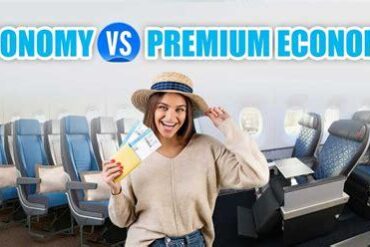
Premium Economy vs Economy: Which One Is Better for Long Flights?
Whether premium economy is worth the additional cost depends largely on the traveler, the route, and the length of the journey.
For short international flights lasting only a few hours, economy may remain the most practical choice. The additional comfort may not justify the higher fare because passengers spend less time in the seat.
For long-haul flights, especially overnight journeys, premium economy becomes much more appealing. Extra legroom, wider seats, better meals, and improved service can significantly reduce fatigue after landing.
Business class still offers a much higher level of luxury, including fully flat beds, premium lounges, and exclusive services. However, the price difference between premium economy and business class is often enormous.
Premium economy fills an important gap by offering a more comfortable experience without requiring business-class spending. It is particularly attractive for travelers who want to arrive feeling refreshed but still need to control their travel budget.
The Final Verdict: Is Premium Economy Worth the Upgrade?
Premium economy on long-haul flights is not simply a larger economy seat. It represents a different approach to air travel, combining additional space, better service, and improved comfort while remaining far cheaper than business class.
The biggest advantages come from the physical improvements: fewer seats, more personal space, greater recline, and a quieter cabin environment. These benefits become increasingly valuable as flight times increase.
For travelers taking long international flights, premium economy can be one of the smartest upgrades available. It delivers many of the comfort improvements people want from a premium cabin without the extreme price of business class.
However, value depends on the individual ticket price. A reasonable upgrade cost can transform a long journey into a much more enjoyable experience, while an unusually expensive premium economy fare may not always justify the difference.
Ultimately, the choice between premium economy and economy class comes down to priorities. If comfort, rest, and a better arrival experience matter most, premium economy is often worth considering. If keeping costs low is the priority, modern economy cabins remain a practical option for long-distance travel.