Air Canada is preparing to take delivery of its first Airbus widebody in almost thirty years, with eight A350-1000s scheduled to begin arriving in the second half of 2030. In the same stretch of the industry’s timeline, Emirates placed an order for 65 additional Boeing 777-9s in November, lifting a book that already stood at 270. These are the two most revealing data points in the widebody market, and they point in opposite directions. One of the world’s most disciplined mid-sized carriers is betting its flagship future on an Airbus twinjet, while the largest Boeing 777 operator on the planet is doubling down on an aircraft that has still not been certified for commercial service. This is not a story about brand loyalty, and it is not a story about one planemaker winning and the other losing. It is a story about timing, capacity, range, engines and the brutal arithmetic of fleet renewal, and it explains why the Airbus A350 has quietly become the flagship of some airlines while others refuse to abandon the Boeing 777.
The Staggering Delivery Gap Between The A350-1000 And The Boeing 777-9
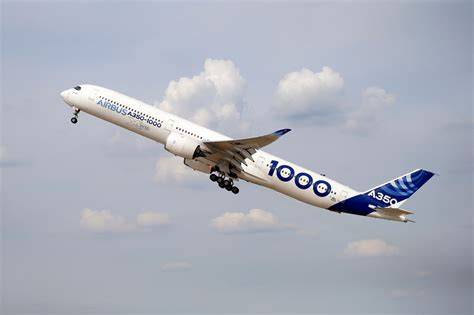
The single most powerful force shaping widebody decisions today is not the aircraft itself but the calendar. By June 2026, the A350-1000 had accumulated 367 orders and 114 deliveries, while the 777-9, which first flew in January 2020, remained uncertified and was targeting a first delivery roughly seven years late. Every airline planner staring at a fleet of ageing 777-300ERs with thousands of cycles on the airframe faces the same question: can the schedule be trusted? For carriers that could not afford to gamble, the A350 was the only answer available within a realistic window. For carriers whose existing fleets had years of useful life left, waiting for Boeing was a calculated and sometimes intelligent risk. Lufthansa is due to become the first airline to fly the 777-9 in 2027, and Emirates expects its first aircraft to land in the second quarter of 2027, so the waiting game is nearly over. Yet the delivery timetable has already reshaped the competitive landscape in ways that will outlast the aircraft themselves. Airbus will likely have well over 150 A350-1000s in revenue service by the time Boeing hands over its first 777-9, which means airlines evaluating the two jets will be judging measured performance against promises.
Why Qatar Airways, Japan Airlines And Delta Built Their Long-Haul Plans Around The Airbus A350
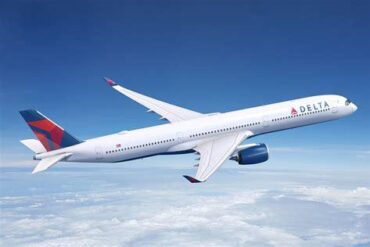
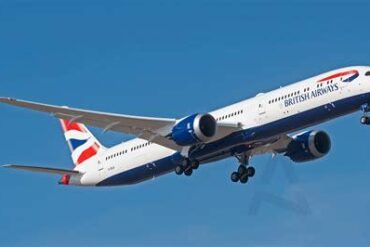
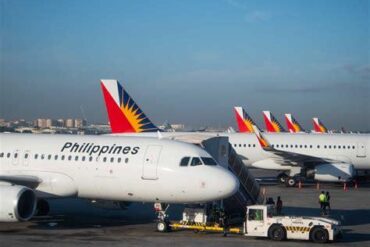
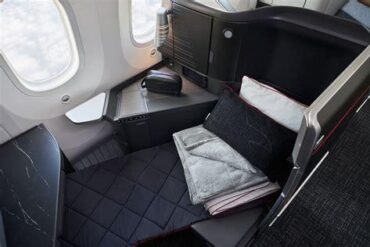
Qatar Airways launched the A350-1000 into service in February 2018 and has since become the type’s most enthusiastic ambassador, but the more instructive adopters are the carriers that switched from Boeing logic. Japan Airlines offers the cleanest example: its A350-1000 entered service between Tokyo Haneda and John F. Kennedy International in January 2024, with daily Los Angeles flights following on June 30, 2025. Delta Air Lines will add 20 A350-1000s from early 2027 on top of 41 A350-900s already flying, and it says the new jet burns more than 20 percent less fuel per available seat mile than the aircraft it replaces. Delta will also debut a next-generation Delta One Suite with a flat bed more than three inches longer, giving passengers over six and a half feet of sleeping space, a detail that matters because the premium cabin is where an airline’s flagship is actually judged. British Airways flies the A350-1000 alongside its 777s, while Qantas, Riyadh Air and Philippine Airlines have all ordered the type. The pattern is clear: airlines are selecting the A350 not because it is the largest aircraft available, but because it is the best aircraft they can actually receive and put into service.
Air Canada Proves That A Firm Delivery Slot Beats A Bigger Airplane On Paper
Air Canada’s reasoning is the most revealing case in the entire market, because it chose the A350-1000 as a direct stand-in for its 777-300ERs even though it remains one of Boeing’s most loyal widebody customers. The numbers are persuasive on their own terms: a 19 to 25 percent reduction in fuel burn per passenger-nautical mile and a cabin altitude of about 6,000 feet instead of the 777 family’s 8,000 feet, a comfort difference that frequent travellers notice on twelve-hour sectors. The combination of economics and altitude means passengers arrive fresher while the airline spends less on every seat flown. Yet the decisive factor was the delivery slot. Air Canada is not leaving Boeing, and that distinction matters enormously: it still operates 19 777-300ERs and expects 14 787-10s, so the A350 represents diversification rather than defection. It is a hedge against certification slippage, engine durability problems and geopolitical shocks that can upset any fleet plan. Ten years ago, that sort of dual-sourcing was unusual for flagship fleets. Today it is becoming the prudent default.
Qantas Retires The A380 Early And Hands Its Flag To The A350-1000
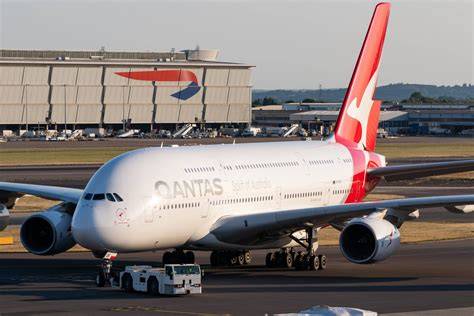
The most dramatic conversion in the industry belongs to Qantas, which will gradually phase out its 10 A380s from 2028, roughly four years earlier than a plan that pointed to fiscal 2032. Qantas took its first superjumbo in September 2008 and its last in December 2011, so the oldest are approaching two decades of service, and CEO Vanessa Hudson has cited rising maintenance costs and high fuel prices tied to the Middle East conflict. Lufthansa and Etihad Airways look set to keep their superjumbos into the early 2030s, while Korean Air and Qatar Airways are likely to follow Qantas toward the exit. The A350-1000 will take over flagship routes from Sydney to Singapore, London and Los Angeles. The transition will not be seamless: Qantas’s A380s carry 485 seats compared with an indicative capacity of more than 250 for the planned A350-1000LR replacements, and Hudson has noted that additional replacement aircraft will not arrive until after 2030. In the interim, 787s will cover A380 services to Dallas/Fort Worth International and Johannesburg. The airline is betting that frequency, route proliferation and lower unit costs will overcome the loss of raw capacity, a gamble that only makes sense if the A350’s efficiency genuinely compensates for its smaller size.
Project Sunrise Shows What The A350-1000 Ultra Long Range Can Unlock
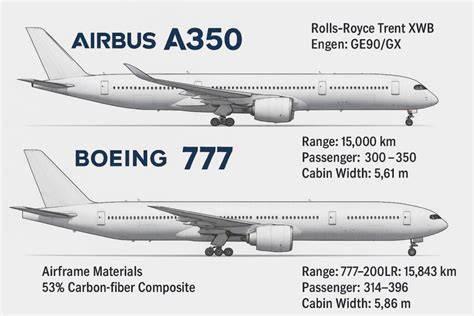
Qantas expects its 12 Project Sunrise A350-1000ULRs to help offset the loss of A380 capacity, and some will operate Perth to London and Auckland to New York, freeing up 787s for other routes. These are not ordinary aircraft. Designed for ultra-long-haul missions such as Sydney to London and Sydney to New York, the ULR completed its maiden flight on June 2, and its additional 20,000-litre fuel tank supports flights of up to 22 hours, expanding the boundaries of what a nonstop network can be. Airbus lists certification and first delivery of the Qantas-bound A350-1000ULR for 2027, so the long-range case is about to move from demonstration to daily service. Two routes illustrate why range reshapes the argument. Dubai to London, at roughly 5,370 km, favours the 777-9’s approximately 16 percent seating advantage, because on a short dense trunk route capacity reduces cost per passenger. Perth to London, at around 14,450 km, favours the A350-1000, whose range of 8,700 nautical miles comfortably exceeds the 8,000 nautical miles of the 777-9. Airbus also notes that carbon-fibre composites account for 53 percent of the A350-1000’s structural weight, cutting fuel consumption and maintenance requirements over the aircraft’s life.
Why Emirates, American And United Continue To Bet On The Boeing 777
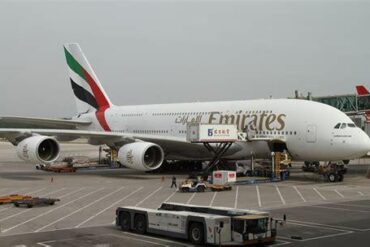
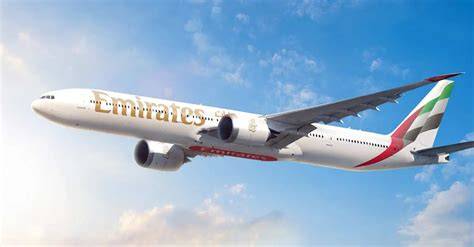
For Emirates, the answer is largely about scale. Its order for 65 more 777-9s, worth US$38 billion at list prices, pushed its 777X total to 270, with first deliveries expected from the second quarter of 2027. The airline already operates about 140 777s, based on 119 777-300ERs, 10 777-200LRs and 11 freighters, so the training, maintenance and ground infrastructure are already built around the type. The 777-9 seats between 375 and 450 passengers against 350 to 410 on the A350-1000, and on dense routes such a gap translates directly into lower cost per seat. Emirates chairman Sheikh Ahmed bin Saeed Al Maktoum has said the airline wants manufacturers to build larger aircraft, and the carrier holds options to convert orders to the 777-10 or 777-8. Executive Traveller reports that Emirates plans to keep its A380s flying until 2040, which tells you exactly how much it values raw capacity at Dubai’s superhub. United Airlines flies nearly 100 777s and no A350s at all, while American Airlines is retrofitting its 777-300ERs rather than replacing them: its first retrofitted aircraft, which began flying from New York to Buenos Aires on September 2, offers 144 premium seats including 70 Flagship Suites across a fleet of 20, with Flagship First no longer sold on those aircraft from November 19. American’s strategy is essentially to buy a new cabin experience and a new flagship product at a fraction of the cost of a new airframe.
The Trent XWB-97 Engine Problem That Complicates The A350-1000 Pitch
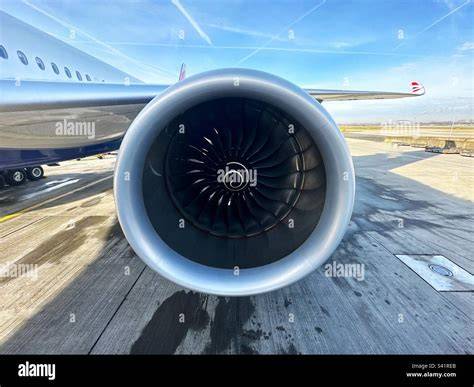
No discussion of the A350-1000 is complete without the engine, because the aircraft has exactly one option: the Trent XWB-97. Emirates president Tim Clark has publicly called the engine defective, and by one account its units stay on the wing for only about a quarter of the time Emirates needs between maintenance visits. Airbus said recently that a durability package aims to double time on the wing from 2028, though that improvement has not yet been demonstrated in airline service, and Rolls-Royce has committed £1 billion across its Trent engine family, with much of it aimed squarely at the XWB-97. The engine question has become part of the fleet decision itself, and it explains part of United’s strange position: as of June 30, the airline still lists 45 A350-900s as firm commitments but assigns no delivery dates, amid a $175 million dispute with Rolls-Royce. United considered a triple-digit widebody order involving either 787s or A350s in 2022 but ultimately committed to 100 787s in December 2022, and has since built a 787 order book of 146 firm commitments, giving it an easy exit route. That sequence is instructive, because it shows how a planemaker’s order book can matter less than an airline’s leverage over a single supplier.
Emirates Is Quietly Building An Airbus Fleet While Expanding Its Boeing Backlog
Even the Boeing camp’s flagship customer is quietly buying Airbus. Emirates counts 13 A350-900s in service and 52 on order, and its interest in the A350-1000 remains an open question, with reports that it weighed an order for at least 30 aircraft. The logic is not difficult to follow: the 777X remains unavailable in sufficient numbers, the A350-900 already performs well in Dubai’s heat and humidity, and the two A350 variants share a type rating and systems architecture, so pilots move between them with minimal extra training. If Emirates converts that reported interest into a firm order, the entire Airbus-versus-Boeing framing collapses, because the world’s largest 777 operator would then be running both flagships at once. That possibility sits at the centre of every fleet forecast published this year, and it is precisely why the market should be read as a spectrum rather than a binary.
The Airlines Buying Both Aircraft And Why Dual Flagships Make Sense
Some airlines have already stopped pretending the choice is exclusive. Qatar Airways, Cathay Pacific and British Airways all fly the A350-1000 and have 777-9s on order, Lufthansa has ordered both and takes its first A350-1000 in mid-November, while Singapore Airlines has ordered only the 777-9. The logic is straightforward: the larger 777 suits the busiest routes, where capacity is everything, while the A350 covers missions where range and efficiency matter more. Airbus is even studying a stretched version, informally called the A350-2000, to fill the gap between the A350-1000 and the 777X, although a formal launch depends on how airlines assess the market once the 777X enters service. What makes dual operation attractive is that the aircraft are complementary rather than interchangeable: one protects the network’s core trunk routes, the other extends its reach and improves efficiency on thinner or longer sectors. An airline that owns both has a fleet-planning tool that adapts to demand rather than one that forces demand to fit a single airframe.
What The 777-9 Delivery Schedule Means For Airbus A350 Orders
Boeing still leads the order book with more than 520 777-9s against 367 A350-1000s, but Airbus has already delivered 114 of its flagship, and that asymmetry is what matters in the near term. The next few 777-9 deliveries are therefore important beyond the headline numbers. If Lufthansa’s first aircraft slips again, airlines with ageing 777-300ERs will have another reason to look toward Toulouse, and there are only so many times a carrier can delay a fleet renewal before maintenance bills start dictating the purchase. Airlines needing aircraft now have few practical alternatives to the A350-1000, and the choice becomes genuinely difficult for deliveries between 2027 and 2030, when both flagships are simultaneously available and both planemakers can offer attractive slots. Air Canada’s slots only begin in late 2030, which shows how far ahead some large widebody campaigns are being planned, and how much of the market is already locked down. The A350 therefore holds the advantage on longer routes, particularly where range and delivery timing matter, yet some of the world’s biggest airlines continue to favour Boeing, because an aircraft that is not yet flying is still an aircraft that can still be configured, negotiated and priced to an airline’s advantage.
The Verdict: Neither Flagship Wins Every Route
Neither aircraft has to win every route, and the carriers making the most money are the ones that stopped asking which jet is better. For airlines, the choice comes down to range, capacity, costs and availability, and in some cases the smartest move is not choosing one over the other but using both where they make the most sense. The Airbus A350 has become the new flagship of some airlines because it arrived, performed and could be trusted on the routes that define their prestige networks, from Tokyo Haneda to New York and Perth to London to Sydney to Singapore. The Boeing 777, and its 777-9 successor, remains the backbone of others because no other aircraft matches its capacity on the world’s densest trunk routes. What the market has produced is not a winner but a duopoly of specialisation, and the airlines that recognise this earliest, building fleets that use each aircraft where its economics are strongest, will be the ones flying the most profitable flagships when the next decade of widebody deliveries arrives.