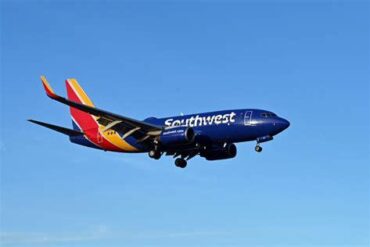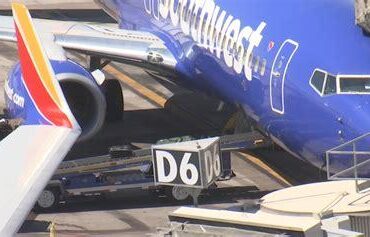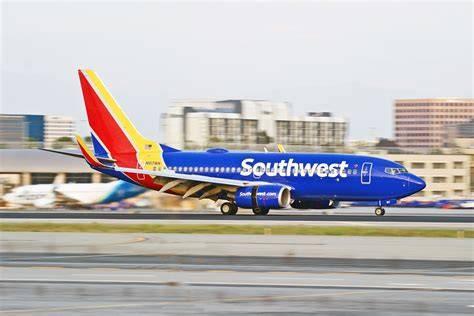
A Southwest Airlines Boeing 737 carrying 128 people concluded its Saturday evening flight at Buffalo Niagara International Airport (BUF) not at a gate, but on an isolated stretch of airfield pavement, as federal and local authorities investigated a bomb threat reportedly written on a napkin. The aircraft, operating as Southwest flight WN3052 from Fort Lauderdale-Hollywood International Airport (FLL), touched down safely at 5:10 PM local time, and every passenger and crew member aboard was reported safe. Yet the sight of the jet parked far from the terminal, held in place while investigators moved through the cabin, underlined how rapidly a single handwritten message can transform a routine domestic arrival into a full-scale security operation.
Southwest Flight 3052 Lands Safely as Napkin Bomb Threat Triggers Isolation
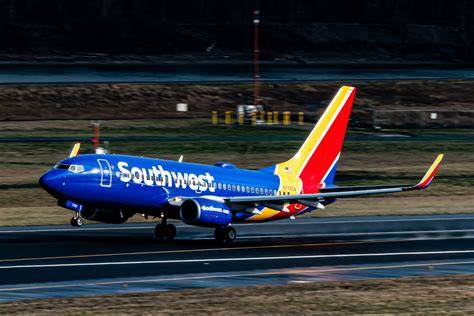
The aircraft at the center of the incident was an 18-year-old Boeing 737-700 registered as N924WN, a workhorse of Southwest’s short and medium-haul network that has flown countless rotations across the airline’s domestic map. Rather than taxiing toward a terminal gate after landing, the jet was directed to remain on the airfield away from passenger boarding areas, a standard precaution when an aircraft is suspected of carrying a credible threat.
The Niagara Frontier Transportation Authority (NFTA), the agency that operates Buffalo Niagara International Airport, publicly characterized the event as a “possible threat aboard an aircraft,” language deliberately calibrated to acknowledge the seriousness of the report without prejudging its validity. New York Governor Kathy Hochul went further, describing the situation as a “reported bomb threat,” a designation that placed the incident squarely within the orbit of state and federal law enforcement scrutiny.
Audio captured by CrimeRadar offers the clearest window into how the drama began. The Southwest pilot contacted Buffalo air traffic control to disclose that a bomb threat had been discovered written on a napkin, then asked whether the aircraft should taxi to a “bomb pad” — aviation shorthand for an airport’s isolation bay, the designated remote parking area where aircraft are instructed to hold when suspected explosive or hazardous material may be aboard. The pilot’s transmitted words were strikingly matter-of-fact: “We’re over here off the side of the expressway. We had a bomb threat written on a napkin.”
128 Passengers and Crew Accounted for While Buffalo Airport Operations Continue
An NFTA spokesperson confirmed to local news outlet WIVB that 128 people were onboard the aircraft, and that all were safe. The agency also stated that the incident was not affecting airport operations, a claim supported by the flow of traffic through the terminal even as the isolated jet remained cordoned off on the field.
The timing could hardly have been more sensitive. The disruption unfolded during the final weekend of the Thanksgiving holiday period, one of the busiest stretches of the United States air travel calendar, when airports operate near capacity and any hold ripples quickly through schedules. Buffalo Niagara International is a compact operation with limited taxiway alternatives, which made the decision to sequester a single narrowbody away from the terminal both prudent and operationally demanding.
Diverted Flights and a Delayed Departure Extend the Ripple Effect
Flight tracking data shows that at least two inbound flights bound for Buffalo were diverted as the incident developed. United Express flight UA4823 from Washington Dulles International Airport (IAD) and American Airlines flight AA1542 from Charlotte Douglas International Airport (CLT) were both sent to Rochester International Airport (ROC), roughly an hour’s drive east, while authorities assessed the situation in Buffalo.
The 737-700 involved in the incident also saw its onward schedule pushed back. Tracking data shows its next departure to Baltimore/Washington International Thurgood Marshall Airport (BWI) was delayed from 7:05 PM until at least 11:00 PM — more than five and a half hours after it landed. Southwest has not publicly commented on the incident, telling Simple Flying that it will not comment on security matters, a standard posture that keeps investigative details out of the airline’s public statements.
The weekend context amplifies the significance of the delay. The Transportation Security Administration (TSA) screened 3,133,924 people on the Sunday after Thanksgiving in 2025, its highest single-day total on record, and Saturday’s disruption came the day before what was expected to be the busiest single day of the 2026 Thanksgiving period. Southwest is the largest carrier at Buffalo, carrying over 1.4 million passengers through the airport in 2025, or roughly 28.5% of its total traffic, which explains why a single Southwest hold at BUF can reverberate across an entire regional network.
Written Threats Carry Serious Federal Penalties Under US Law
The legal exposure for whoever wrote the message is substantial. Under 49 U.S.C. § 46507, knowingly providing false information about an attempt to bring explosives aboard an aircraft can carry a prison sentence of up to five years. Separately, the federal “bomb hoax” statute, 18 U.S.C. § 35, provides for civil penalties for false reports, along with felony penalties of up to five years for certain malicious or reckless reports. Law enforcement has not disclosed whether a suspect has been identified or whether the napkin itself has yielded forensic evidence.
Saturday’s incident is not the first security scare involving a Southwest flight this year. In August, passengers were held on the tarmac in Houston for hours after a bomb threat, and in March a Southwest flight diverted to Atlanta over a reported bomb threat, during which SWAT officers boarded the aircraft and removed one passenger. The pattern suggests a recurring strain on frontline crews and airport security teams, and it reinforces why carriers and authorities treat even a handwritten napkin message as a matter warranting an isolation bay, diverted aircraft and hours of operational disruption.
Boeing 737-700 N924WN Returns to Service After Security Clearance
By late evening, the aircraft remained under evaluation, with its next Baltimore departure slipping past 11:00 PM as investigators completed their work. The isolation bay protocol exists precisely for moments like this: it keeps a potentially hazardous aircraft away from concourses, fueling operations and passenger crowds while bomb technicians and canine teams conduct their sweep. Once cleared, N924WN would be released to resume its rotation, though the day’s delays would likely follow the aircraft and its crews into the next morning.
For the 128 travelers who landed safely at Buffalo that evening, the incident will linger as an unexpected chapter in a holiday journey — a reminder that in commercial aviation, the most consequential threats often arrive in the most ordinary form, folded into a square of paper and passed along by an unknown hand.