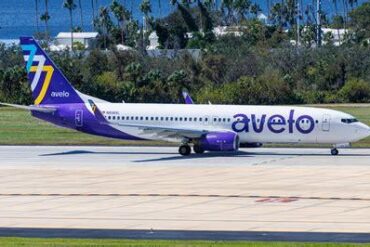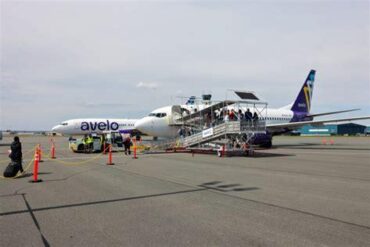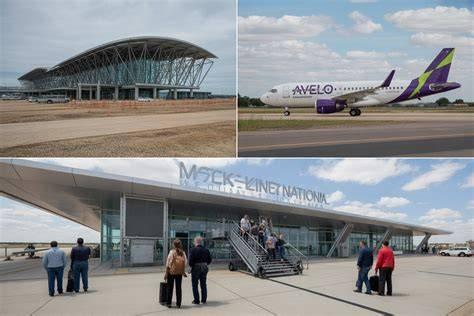
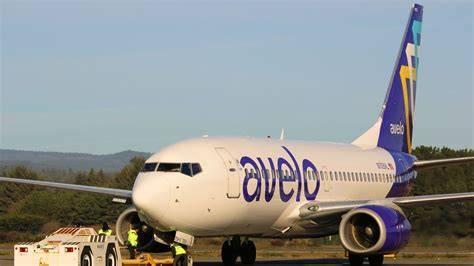
Avelo Airlines has never had any interest in winning a popularity contest at Dallas/Fort Worth International Airport or Charlotte Douglas International Airport. When the ultra-low-cost carrier launched its new services from Tampa International Airport (TPA) in November 2026, it pointed its Boeing 737-800s not at the giant hubs that anchor the Dallas and Charlotte markets, but at two far quieter fields: McKinney National Airport (DTX) in North Texas and Concord Regional Airport (USA) in the Charlotte suburbs. The Dallas route runs four times per week, while the Charlotte service operates twice weekly, a schedule that signals leisure and visiting-friends-and-relatives demand rather than the high-frequency shuttle traffic DFW and CLT were built to absorb. On paper, this looks like a paradox: Avelo is flying into the same metropolitan areas as two of American Airlines’ most formidable fortress hubs while deliberately avoiding both of them. In practice, it is one of the most disciplined decisions the airline could make. Secondary airports are the budget airline’s natural habitat, offering lower costs, softer competition, and a passenger base that values convenience over connection possibilities. Avelo’s Tampa–McKinney and Tampa–Concord flights are not a workaround around Dallas/Fort Worth and Charlotte Douglas. They are the strategy itself.
Why McKinney and Concord Beat DFW and CLT for a Small Carrier
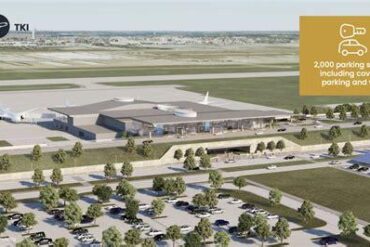
The distance argument is often misunderstood. DTX sits about 30 miles (48 kilometers) from downtown Dallas, and USA lies roughly 17.5 miles (28 kilometers) by road from downtown Charlotte, meaning neither airport is a remote outpost; both are embedded in the regions they serve. What changes is the traveler’s calculus. Someone living in Frisco, Plano, or Allen, the fast-growing corridor of North Dallas, can reach McKinney in a fraction of the time it takes to navigate DFW’s sprawling terminals, parking garages, and security queues. The same holds for Charlotte’s northern suburbs, where Concord’s compact layout turns a trip to the airport into a short errand rather than an expedition. DFW and CLT are built for connections and business travel, with an enormous breadth of routes and schedules that Avelo cannot possibly match; they are also served by entrenched incumbents whose loyalty programs, premium cabins, and corporate contracts make them the default choice for high-value flyers. Avelo would have to fight for every seat on those routes using price alone, and a carrier with 15 aircraft and just over 30 destinations is not in a position to win a fare war against American Airlines. By operating from DTX and USA, Avelo sidesteps that fight entirely.
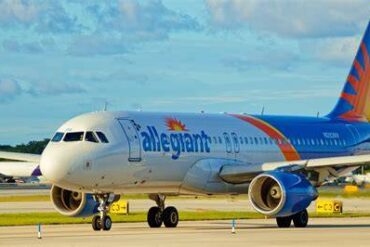
The economics reinforce the geography. Secondary airports typically charge airlines lower landing fees, offer cheaper terminal space, and deliver faster turnarounds, all of which reduce the cost per available seat mile that determines whether a low fare is profitable. Avelo also gains operational simplicity: McKinney and Concord are uncongested, meaning fewer delays and less fuel burned in holding patterns, which matters enormously for a carrier eking out margins on thin routes. Avelo is the only passenger airline operating at McKinney, a monopoly that gives it total control over gates, staffing, and ground handling, while Concord is shared with just one other carrier, Allegiant Air. Contrast that with DFW or CLT, where securing gates and slots can be expensive and politically complicated. Avelo in fact operates only one route out of DFW and does not serve CLT at all, a deliberate omission that tells you everything about where the airline believes its future lies.
Capturing Demand Versus Inducing It
Avelo’s decision reflects a distinction that separates sophisticated network planners from careless ones: capturing existing demand versus inducing new demand. On Tampa–DFW, demand is immense and well documented, but Avelo would be capturing a small slice of a market already saturated by American Airlines and Southwest, while surrendering every competitive advantage except price. On Tampa–McKinney, Avelo captures a different kind of demand: travelers who live near DTX and would rather drive fifteen minutes to a quiet airport than an hour to a congested one. It also induces demand, because a nonstop flight that did not previously exist transforms a trip that once required a connection or a long drive into a plausible weekend getaway. The combination of low fares and nonstop convenience is the classic ULCC demand-generation formula, one that Brazilian carrier Azul has built into its business model and that budget airlines have exploited for decades. When a route like Tampa–Concord starts operating twice weekly, it is not competing for a share of existing traffic so much as manufacturing new traffic that did not exist before.
New Haven, Lakeland, and Wilmington: The Same Playbook in Different Markets
The Tampa–McKinney and Tampa–Concord routes are not anomalies but extensions of Avelo’s entire identity. Its largest base, New Haven, is one of only two airports in that market served by commercial airlines, and Avelo is by far the larger operator there, giving travelers in southern Connecticut a nonstop alternative to driving to Boston or New York. Lakeland and Wilmington are likewise airports where Avelo is the only passenger carrier, mirroring McKinney’s status. This “big fish in a small pond” model is older than Avelo itself; Ryanair built a European empire on secondary airports, and Allegiant Air has spent two decades connecting small cities to vacation destinations with minimal competition. Avelo’s network is overwhelmingly built around bases connected to Florida leisure markets, and it has generally avoided the busiest city pairs where legacy carriers dominate. The New Haven strategy also illustrates why distance from a major hub matters: southern Connecticut is far enough from New York’s airports that a New Haven departure saves real time, which is precisely the value proposition Avelo now extends to North Dallas and the Charlotte suburbs.
The Competitive Landscape: Allegiant, Frontier, and the Hybrid Threat
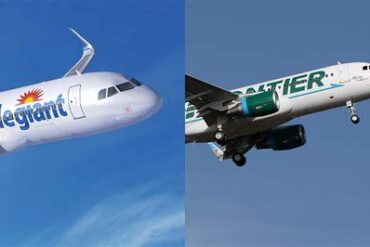
Avelo’s closest philosophical cousin is Allegiant Air, the ULCC that has made a fortune connecting underserved cities to leisure destinations, and which completed its acquisition of Sun Country Airlines in May 2026, with full integration expected in 2028 and a new first class cabin rolling out in 2027 under the Allegiant brand. Allegiant’s scale gives it cost advantages Avelo lacks, but the underlying logic is identical. Frontier Airlines, with more than 150 aircraft, has taken the opposite path, competing head-on with the legacy carriers and Southwest on high-traffic routes; that approach is harder to sustain on price alone, which is why Frontier is constantly pruning unprofitable routes and plans to introduce its own first class cabin in 2027. Meanwhile, Breeze Airways, JetBlue, and Southwest occupy a hybrid space, offering passenger experiences closer to legacy carriers, with JetBlue rolling out BlueFirst in December 2026 and Breeze already selling Breeze Ascent. Avelo remains the purest price-led carrier of the group, with no premium cabin and no plans to add one, a sharper bet on cost discipline than on product differentiation.
Avelo’s Financial Tightrope and the Embraer E195-E2 Bet
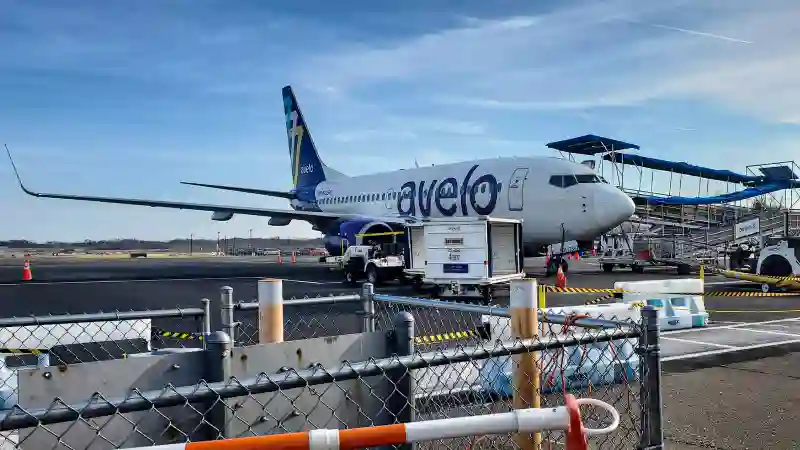
Avelo only began flying in 2021, and its current form is a study in modest scale and outsized ambition. The carrier lost money in 2025 despite pockets of profitability, and 2026 brought a sharp rise in fuel prices tied to the ongoing Iran War that squeezed every airline, budget carriers most of all. Avelo has responded by retiring older, less economical 737-700s and cutting unprofitable flying, including its former Burbank base and its ICE deportation flight contract. Its commitment to 50 Embraer E195-E2s with options for 50 more, with deliveries beginning in 2028, is a colossal bet for a company of its size, and the absence of announced growth for 2027 suggests management is prioritizing stability over expansion. As a privately held company, Avelo does not publish full financial results, so the outside world must infer its health from network decisions. The Tampa–McKinney and Tampa–Concord launches, then, are best read as disciplined, low-risk experiments: small aircraft, low frequencies, low-cost airports, and routes chosen to avoid direct confrontation with carriers that could crush a fare war.
What Tampa–McKinney and Tampa–Concord Signal About Avelo’s Future
Every route an airline launches is a statement about what it believes it can defend. By choosing McKinney over DFW and Concord over CLT, Avelo is saying that its competitive advantage lies not in beating American Airlines but in going where American Airlines is not. That logic will govern the Embraer E2 era as well: the E195-E2’s smaller capacity and lower trip costs are ideally suited to thin, secondary routes where a 737-800 is too much airplane and a hub-to-hub frequency game is unwinnable. Tampa is Avelo’s gateway to Florida leisure demand, and McKinney and Concord are its bets that the suburbs around Dallas and Charlotte contain enough travelers hungry for affordable nonstops from a convenient local airport to fill a handful of weekly flights. If those bets pay off, expect more of the same: more secondary spokes, more twice-weekly experiments, and more routes that look odd on a map but make perfect sense on a spreadsheet. Avelo is not trying to become American Airlines. It is trying to be the only airline that matters at the airports American Airlines ignores, and Tampa to McKinney and Concord is exactly that strategy in motion.