The Dallas–Fort Worth metroplex has never done anything halfway. Sprawling across more than 10,000 square miles and approaching 10 million residents, North Texas has long relied on two dominant gateways: Dallas/Fort Worth International Airport (DFW), the fortress hub of American Airlines, and Dallas Love Field (DAL), where Southwest Airlines commands overwhelming market share. That duopoly is now poised for disruption.
By year’s end, McKinney National Airport (TKI)—a general aviation airfield on the northern edge of the metroplex—expects to welcome its first scheduled commercial flights. If timelines hold, November will mark a structural shift in the Dallas aviation landscape, introducing a third commercial airport designed around lower costs, performance-based incentives, and access to one of the fastest-growing suburban corridors in the United States.
For an airport that has quietly operated for more than four decades as a general aviation facility, the transformation is dramatic. What was once a business jet and private aviation enclave is becoming a strategic pressure valve for an overheated regional market.
Why Dallas Needs a Third Commercial Airport
The rationale behind McKinney’s commercial pivot is not speculative optimism; it is rooted in demand metrics and structural constraints at existing airports. Since late 2018, airlines began reaching out to airport leadership to explore operational feasibility. The drivers were straightforward: high operating costs at DFW and Love Field, limited gate availability, and an expanding population base in Collin County that increasingly found itself geographically distant from convenient air service.
DFW is one of the largest and busiest airports in the world. Love Field operates under physical and legislative constraints, with gate capacity effectively capped and dominated by a single carrier. For new entrants or expanding airlines, access is neither simple nor cheap. McKinney offered something different: room to breathe.
Catchment analysis—an aviation term referring to the population within a practical driving radius—revealed that TKI could reasonably address more than 2 million annual enplanements based on proximity advantages alone. Collin County cities such as Plano, Frisco, Allen, and Richardson have seen sustained population and corporate growth. The demographic profile skews affluent, mobile, and travel-intensive. In aviation economics, that is fertile ground.
The business case strengthened further when economic impact modeling showed that while TKI already contributes more than $300 million annually to the local economy through general aviation activity, commercial service could more than double that contribution. The combination of airline interest, quantifiable demand, and political support from the city council created a rare alignment of incentives.
A Performance-Based Cost Model Designed to Attract Airlines
Airports traditionally rely on fixed rents, landing fees, and long-term capital cost recovery to fund operations and infrastructure. McKinney is deliberately deviating from that script.
The commercial framework being implemented at TKI is performance-based, meaning airline costs scale with passenger throughput. Rather than imposing heavy fixed charges, the airport shares risk and reward with its tenants. The more passengers an airline carries, the better the financial outcome for both parties.
This structure is possible because the airport avoided burdensome debt. Much of the infrastructure funding was secured through local grants and public investment, limiting capital recovery pressures. As a result, operating costs at TKI are projected to be a fraction of those at DFW or Love Field.
In a competitive industry where margins are razor-thin and cost discipline determines survival, that difference matters. For ultra-low-cost carriers and emerging airlines seeking secondary market penetration, the arithmetic becomes compelling.
Inside the $72 Million Terminal Development
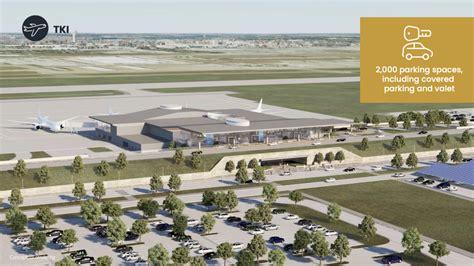
The physical transformation underway is anchored by a $72 million passenger terminal on the airport’s east side. Spanning 45,000 square feet (approximately 4,200 square meters), the facility is intentionally right-sized for phased growth rather than overbuilt for speculative demand.
The initial configuration includes:
- Four operational gates at opening
- Six passenger hold rooms constructed from the outset
- 1,500 parking spaces
- Dedicated rental car facilities
- Expanded aircraft apron capacity
The interior shell is being built with expansion in mind. Two additional gates can be added with minimal structural modification once traffic volumes justify growth. This modular strategy reduces initial capital risk while preserving scalability.
Construction progress remains aligned with the November target. Interior walls are complete, parking facilities are built, and apron work is nearing final stages. Mechanical, electrical, and plumbing installations are currently underway. Simultaneously, the airport is constructing a new parallel Taxiway C alongside its existing 7,000-foot runway, enhancing aircraft movement efficiency and safety margins.
The runway length positions TKI comfortably for narrowbody aircraft operations, including Airbus A220s and Boeing 737-family jets—types commonly deployed by low-cost and hybrid carriers.
Avelo Airlines Becomes Launch Tenant
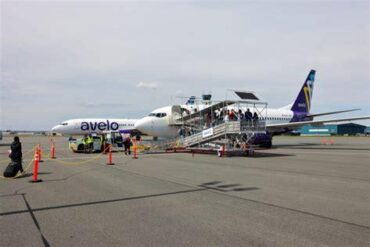
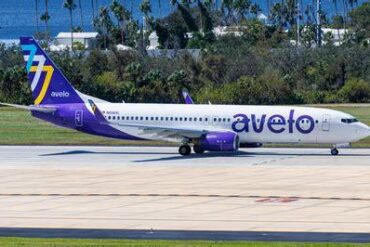
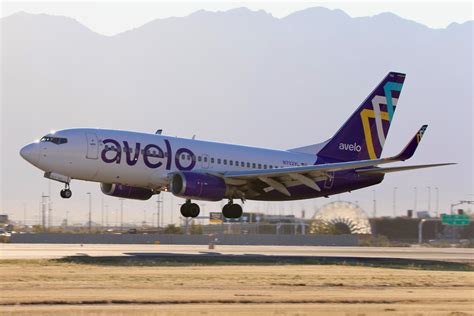
The first airline to commit is Avelo Airlines, which has signed a five-year agreement and plans to establish TKI as its fifth operational base. While specific routes have not yet been publicly announced, projections indicate approximately three daily flights during the first year, scaling to seven or eight daily departures by year three.
If those targets are met, annual enplanements could approach 450,000 passengers within three years. For a newly converted airport, that is significant momentum.
Operational timing is critical. Avelo aims to initiate service with enough runway before the Thanksgiving travel surge to stabilize operations and address early-stage inefficiencies. The airport’s construction timeline is therefore tightly coupled to airline launch strategy.
However, two regulatory variables remain outside local control. First, the Transportation Security Administration (TSA) must allocate personnel and screening equipment for checkpoint operations. Second, the airport must secure full FAA Part 139 certification, the regulatory framework governing airports serving scheduled passenger carriers. Certification ensures compliance with safety, firefighting, and operational standards required for commercial service.
A joint review over the summer will determine whether the November target holds. If federal resource allocation delays materialize, service could shift to spring 2027. As of now, leadership expresses confidence in meeting the 2026 year-end objective.
Which Airlines Could Follow? Strategic Fits for TKI
Securing a second airline will be pivotal in validating the model. Airport leadership has indicated that discussions with multiple carriers are advancing, with a nationally recognized brand potentially announcing within months.
Several strategic candidates stand out.
Allegiant Air currently lacks a presence at DFW or Love Field. Its leisure-focused network model—linking mid-sized cities to vacation destinations like Las Vegas and Florida—aligns well with a low-cost, uncongested airport environment. TKI would provide Allegiant direct access to North Texas demand without head-to-head gate battles.
Breeze Airways, operating Airbus A220 aircraft optimized for thinner long-haul routes, could find McKinney a better fit than DFW for incremental expansion. The aircraft’s efficiency opens both eastward and westward possibilities from Collin County.
JetBlue maintains limited Dallas presence, primarily seasonal service from DFW. A lower-cost alternative could support frequency growth or new point-to-point routes.
Even carriers already entrenched at DFW, such as Frontier or Spirit, might consider selective deployment at TKI to test alternative cost structures. International growth players like Porter Airlines, which has aggressively expanded with Embraer E195-E2 aircraft, represent another theoretical fit.
The common denominator is economics. If early adopters demonstrate sustainable profitability, competitive gravity will intensify.
Land Availability and Long-Term Expansion Potential
Airports fail when they run out of space. McKinney does not have that problem. Hundreds of acres on the east side remain available for commercial development. The current terminal is a starting node, not a capstone.
Future scenarios include:
- Terminal expansion along the existing footprint
- Construction of an entirely new standalone terminal for a major carrier
- Additional apron and taxiway build-outs
- Ancillary commercial real estate development
The flexibility echoes early phases of now-dominant secondary airports elsewhere in the United States. When cost structures are attractive and land constraints minimal, growth can compound rapidly.
Speculation inevitably surfaces around whether a major network carrier—particularly one without a Texas hub—might eventually establish a meaningful presence. That remains hypothetical. Concrete is still curing on the first apron sections. Yet the mere plausibility reflects how strategic gaps in high-growth metro areas can reshape airline maps over time.
Competitive Dynamics in the Dallas Aviation Market
Introducing a third commercial airport does not automatically fracture entrenched dominance. DFW’s global connectivity and American Airlines’ hub scale are structural advantages that will not evaporate. Love Field’s proximity to downtown Dallas ensures continued relevance for Southwest.
McKinney’s role is more surgical. It targets geographic convenience, lower fares enabled by reduced operating costs, and relief from capacity bottlenecks. For travelers in northern suburbs, driving time reductions alone could alter airport preference patterns.
In aviation network theory, secondary airports often function as disruptive complements rather than direct substitutes. They absorb demand that would otherwise be suppressed or diverted. If fares drop in certain city pairs due to competitive entry, consumer surplus increases—an economist’s way of saying travelers win.
The metroplex’s sheer scale supports this diversification. Many global cities operate with multiple airports serving differentiated market segments. North Texas appears ready to join that cohort in a more formalized way.
A Transformational Moment for Collin County
Beyond aviation metrics, the symbolic weight of a commercial airport in Collin County is substantial. Airports catalyze corporate relocation decisions, convention planning, and tourism flows. Accessibility signals economic maturity.
For decades, northern suburbs functioned as feeders to DFW and Love Field. With TKI’s transition, they become origin points. The psychological shift matters as much as the logistical one.
If November sees the first passenger departure roll down the 7,000-foot runway under scheduled service designation, it will represent more than a ribbon-cutting. It will signal that Dallas’ aviation ecosystem is entering a new competitive phase—one defined by cost innovation, suburban growth, and strategic recalibration.
The final months before launch will determine whether timelines remain intact. Federal coordination, construction precision, and airline execution must align. Yet the trajectory is clear.
Dallas is not merely adding another airport. It is adding optionality to one of America’s most dynamic aviation markets—and in this industry, optionality is power.