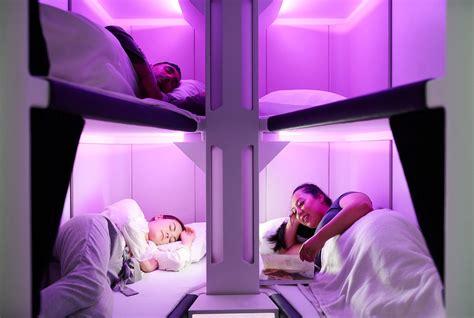
Long-haul flying has long been defined by endurance rather than comfort, especially for economy passengers. That paradigm is now shifting as Air New Zealand prepares to introduce the world’s first lie-flat sleep pods designed for both economy and premium economy travelers. Branded as Skynest, this groundbreaking concept will officially launch in November, marking a pivotal moment in the evolution of commercial aviation comfort.
The airline has confirmed that tickets for Skynest access will go on sale in mid-May, with the inaugural rollout on its flagship ultra-long-haul route between Auckland Airport and John F. Kennedy International Airport. This route, already among the longest nonstop flights in the world, provides the perfect proving ground for a product designed to redefine rest at 30,000 feet.
Reimagining Economy Class With Lie-Flat Sleep Pods
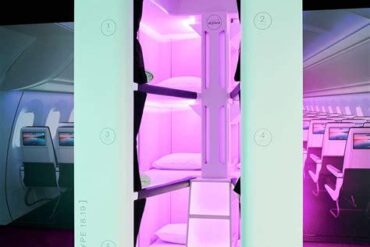
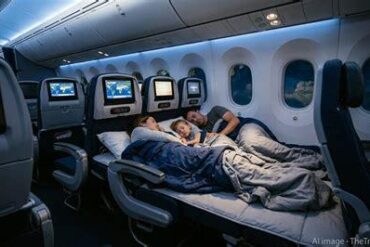
The Skynest is not merely an upgrade—it is a reinvention of what economy-class travel can offer. Positioned between the Economy and Premium Economy cabins, the installation features six fully flat bunk-style pods arranged in a compact yet thoughtfully engineered layout. Each pod is approximately 6.6 feet long, providing enough space for most passengers to stretch out fully—something previously reserved exclusively for premium cabins.
Unlike traditional seats, these pods are bookable in four-hour increments, allowing passengers to reserve a dedicated sleep window during their journey. On ultra-long-haul flights, where fatigue accumulates quickly, this segmented access is a strategic design choice rooted in human sleep cycles. It enables more passengers to benefit from meaningful rest rather than a select few enjoying uninterrupted luxury.
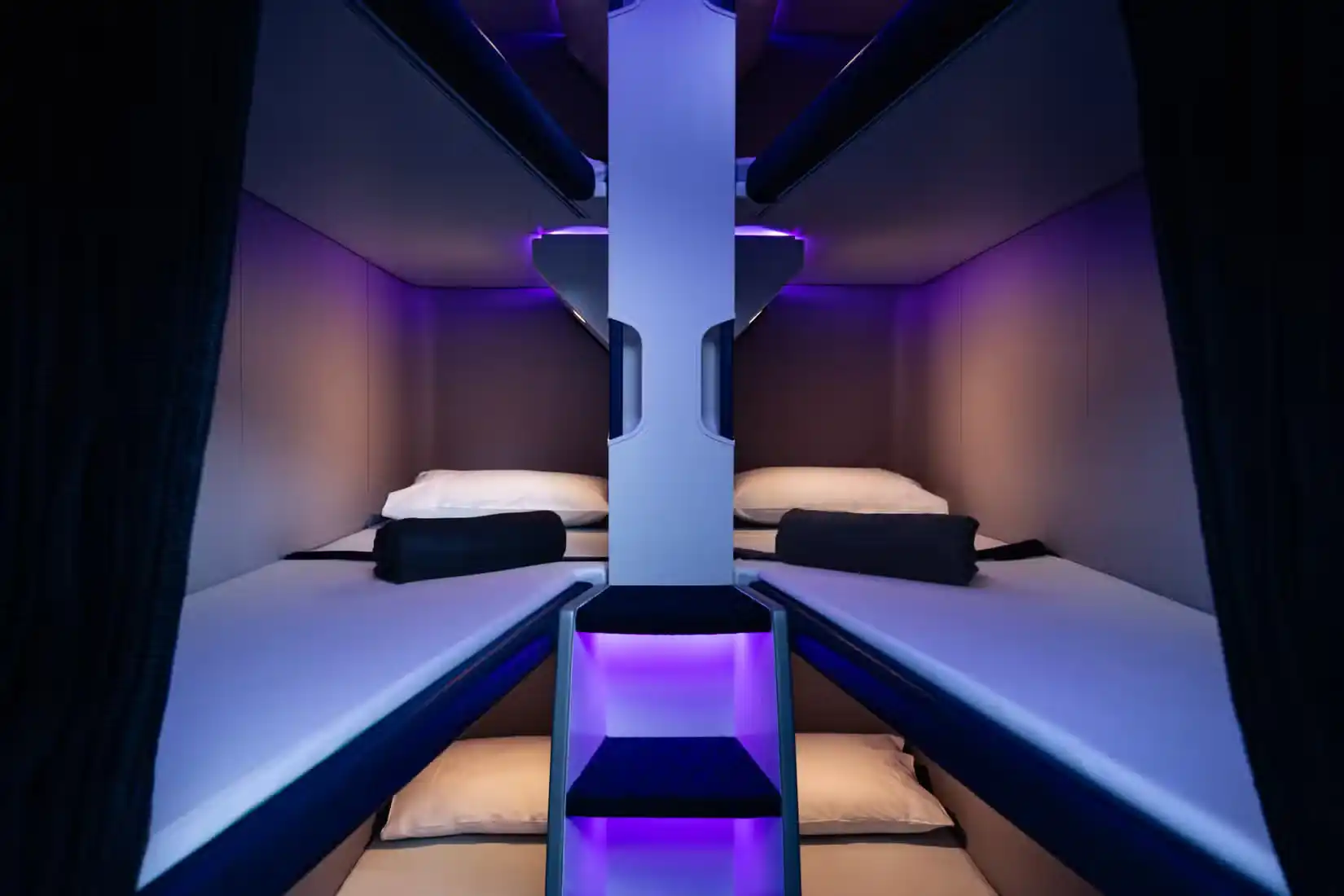
Inside the Skynest: A Purpose-Built Sleep Environment
Every detail inside the Skynest has been crafted with sleep science and passenger comfort in mind. Travelers stepping into their assigned pod will find a full-length mattress dressed with fresh bedding, including a pillow, sheets, and blanket. Privacy curtains ensure a secluded environment, shielding occupants from cabin distractions and ambient light.
The pods also integrate soft, adjustable lighting designed to mimic natural circadian rhythms, helping passengers fall asleep faster and wake more refreshed. Individual ventilation systems maintain airflow, while USB charging ports keep devices powered without clutter. A reading light, seatbelt, and crew call button provide both convenience and safety without compromising the tranquil atmosphere.
Passengers are also provided with a curated amenity package known as the “Nestcessities kit.” This includes essentials such as an eye mask, earplugs, socks, and skincare products—subtle additions that collectively elevate the experience from functional to restorative.
A Strategic Innovation for Ultra-Long-Haul Travel
New Zealand’s geographic isolation has always posed a unique challenge for air travel. Flights connecting the country to major global hubs often exceed 15 hours, placing immense physical strain on passengers. Skynest emerges as a direct response to this reality, offering a practical yet innovative solution tailored to the demands of ultra-long-haul routes.
By enabling rest opportunities previously unavailable to economy travelers, the product addresses one of aviation’s most persistent pain points. It transforms long-distance travel from an endurance test into a more balanced, human-centered experience. This is not just about comfort—it is about accessibility. For the first time, lie-flat rest is no longer confined to premium ticket holders.
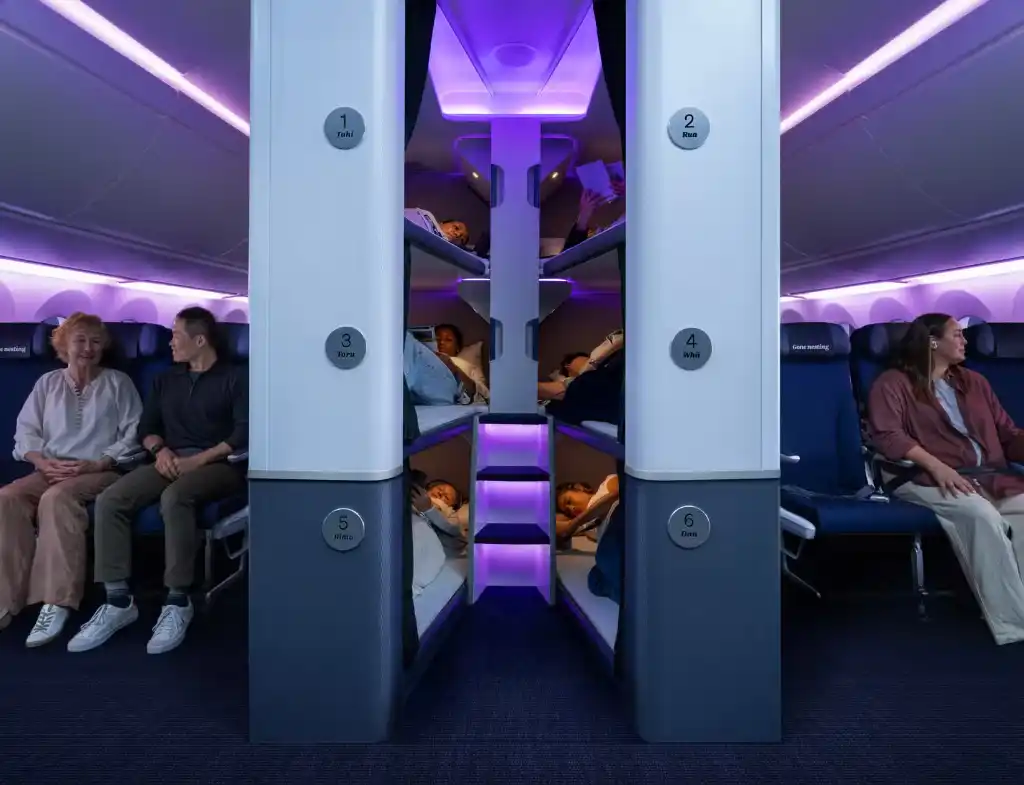
Pricing, Availability, and Passenger Experience
Access to Skynest comes at an additional cost of approximately NZ $495 per session, positioning it as an optional upgrade rather than a bundled feature. While this fee may initially appear steep, it represents a fraction of the price difference between economy and business class tickets, making it an attractive middle-ground solution for travelers seeking rest without a full cabin upgrade.
Each flight will offer two four-hour booking windows, allowing up to 12 passengers to use the pods during a single journey. This rotational system maximizes accessibility while maintaining exclusivity. For many travelers, even a few hours of uninterrupted sleep can dramatically improve the overall flight experience and reduce jet lag upon arrival.
A Competitive Leap in Cabin Innovation
The introduction of Skynest reinforces Air New Zealand’s reputation as a pioneer in passenger-centric innovation. The airline previously introduced the Skycouch—a convertible row of economy seats designed for lounging—which has since influenced similar concepts across the industry.
Now, with Skynest, the carrier takes a decisive step further. The product has been patented and trademarked, securing its position as a unique offering in the global aviation market. Competitors are likely to monitor its performance closely, as the success of Skynest could signal a broader shift toward modular, experience-driven cabin designs.
The Future of Flying Starts Here
As airlines continue to compete on comfort and differentiation, Skynest represents a bold vision of what the future of economy travel could look like. It challenges long-standing assumptions about class boundaries and introduces a hybrid model that blends affordability with genuine rest.
For passengers embarking on some of the world’s longest journeys, the ability to lie flat—even for a few hours—could redefine expectations entirely. When Skynest takes flight in November, it will not just launch a new product; it will usher in a new era where sleep becomes an essential, accessible part of the journey, not a luxury reserved for the few.