The Solar System is home to hundreds of natural satellites, each revealing a different story about planetary formation, geology, and the possibility of life beyond Earth. For thousands of years, humanity only knew about one moon: Earth’s Moon. It dominated ancient calendars, inspired myths, and remained the only known natural satellite until the invention of the telescope changed astronomy forever.
When Galileo Galilei pointed his telescope toward Jupiter in 1610, he discovered four large moons orbiting another world. That discovery proved Earth was not the only place with a companion in space and opened a new chapter in planetary science. Today, astronomers have identified hundreds of moons throughout the Solar System, ranging from tiny captured rocks to enormous worlds larger than some planets.
Among these satellites, the largest stand out because of their incredible size and unusual characteristics. Some have active volcanoes, some hide oceans beneath frozen surfaces, and some possess atmospheres that rival planets. These five giants represent the most fascinating examples of natural satellites orbiting planets in our cosmic neighborhood.
Earth’s Moon: The Familiar Giant That Shaped Human History
Earth’s Moon is the closest natural satellite to humanity and remains one of the most important objects in space exploration. Orbiting at an average distance of around 240,000 miles (384,000 kilometers) from Earth, it appears enormous in the night sky compared with other moons seen from their planets.
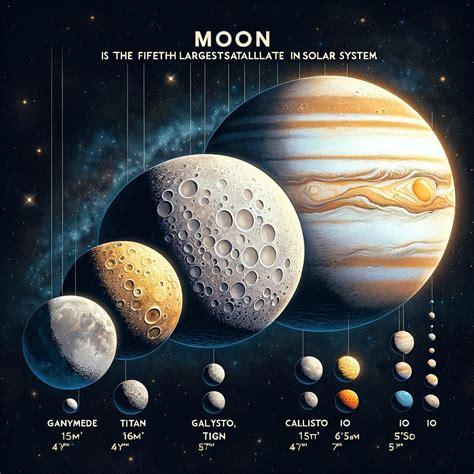
With a diameter of approximately 2,160 miles (3,476 kilometers), the Moon is the fifth-largest natural satellite in the Solar System. Although it is smaller than the giant moons of Jupiter and Saturn, it is unusually large compared with Earth itself. The Moon is about 27% the diameter of Earth, making the Earth-Moon system one of the most balanced planet-satellite relationships known.
Scientists believe the Moon formed billions of years ago after a massive collision between the young Earth and another planetary body, often called Theia. The impact likely ejected material into orbit around Earth, eventually forming the Moon. This event helped shape Earth’s evolution and may have influenced the stability of our planet’s climate.
The Moon’s gravitational influence is responsible for ocean tides, while its presence helps stabilize Earth’s axial tilt. Without the Moon, Earth’s environment could have experienced much greater long-term climate variations.
Human exploration transformed the Moon from a distant object into a physical destination. On July 20, 1969, astronauts from the Apollo 11 mission became the first humans to walk on another world. Neil Armstrong and Buzz Aldrin’s historic landing marked one of the greatest achievements in exploration history.
Today, the Moon remains a major target for future missions. Programs such as NASA’s Artemis mission aim to return humans to the lunar surface and use it as a foundation for deeper exploration, including possible missions to Mars.
Io: Jupiter’s Volcanic Moon Covered in Fire and Ice
Among the largest moons in the Solar System, Io is one of the most extreme. Discovered by Galileo alongside Jupiter’s other major moons, Io measures about 2,264 miles (3,643 kilometers) in diameter, making it slightly larger than Earth’s Moon.
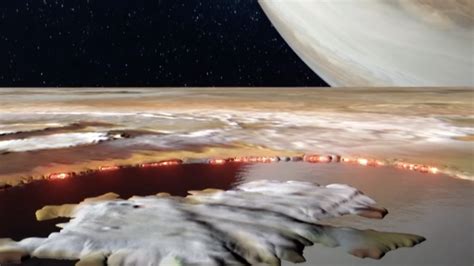
However, Io’s importance is not simply related to its size. It is the most volcanically active world known in the Solar System. Scientists have observed more than 400 active volcanoes covering its surface, constantly reshaping the moon with lava flows and volcanic eruptions.
The reason behind Io’s violent geology is its relationship with Jupiter. As Io travels around the massive planet, Jupiter’s enormous gravity stretches and compresses the moon. This process, known as tidal heating, generates tremendous internal energy that melts rock beneath the surface and fuels its volcanic activity.
Io’s surface is constantly changing. Lava lakes, sulfur deposits, and enormous volcanic plumes create a landscape unlike anything found on Earth. Some scientists describe Io as a cosmic hellscape, not because it is hot everywhere, but because its surface is continuously destroyed and rebuilt.
Despite its fiery appearance, Io is actually extremely cold overall. Because Jupiter is located far from the Sun, Io receives much less sunlight than Earth. The average surface temperature is around -202 degrees Fahrenheit (-130 degrees Celsius).
Io provides scientists with an important natural laboratory for studying tidal heating, a process that may also influence other moons with hidden oceans.
Callisto: The Ancient Cratered Moon Holding a Hidden Ocean
Callisto is another of Galileo’s four original discoveries around Jupiter. With a diameter of approximately 2,996 miles (4,820 kilometers), it is about one-third larger than Earth’s Moon and is one of the largest satellites ever discovered.
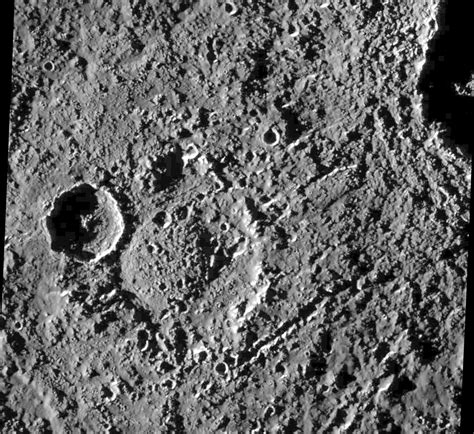
At first glance, Callisto appears less dramatic than Io. Its gray surface is covered with countless impact craters, giving it a similar appearance to Earth’s Moon. However, this quiet appearance hides one of the most scientifically valuable environments in the Solar System.
Callisto has one of the oldest surfaces known to scientists, estimated to be around 4 billion years old. Unlike Io, Callisto has experienced very little geological activity, allowing ancient impact marks to remain almost unchanged for billions of years.
The moon also contains a thin atmosphere, or exosphere, mainly composed of carbon dioxide. While this atmosphere is extremely weak compared with Earth’s, it provides clues about chemical processes occurring on icy worlds.
One of Callisto’s greatest mysteries is the possibility of a hidden underground ocean. Scientists believe a salty liquid ocean may exist beneath approximately 155 miles (250 kilometers) of ice. Although the surface appears lifeless, underground water environments could potentially provide conditions suitable for microbial life.
This possibility makes Callisto an important destination for future research. Like several outer Solar System moons, it demonstrates that life-supporting environments may exist far away from sunlight.
Titan: Saturn’s Planet-Like Moon With Lakes of Methane
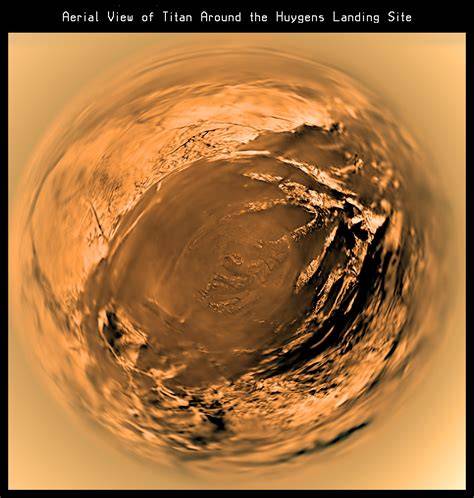
Saturn’s largest moon, Titan, is one of the most unique satellites ever discovered. Found by Dutch astronomer Christiaan Huygens in 1655, Titan immediately attracted attention because of its impressive size and dense atmosphere.
Titan has a diameter of about 3,200 miles (5,150 kilometers), making it roughly 50% wider than Earth’s Moon. It is the second-largest moon in the Solar System and is even larger than the planet Mercury in diameter.
What separates Titan from almost every other moon is its thick atmosphere. Unlike most satellites, Titan has a dense atmospheric layer primarily made of 95% nitrogen and 5% methane. The atmosphere is thicker than Earth’s, although it lacks breathable oxygen.
The surface of Titan is one of the strangest landscapes known to science. Because temperatures reach approximately -209 degrees Fahrenheit (-131 degrees Celsius), water ice behaves like rock. Instead of liquid water flowing across the surface, Titan has rivers, lakes, and rainfall made from liquid methane and ethane.
NASA’s Cassini spacecraft and its Huygens lander provided humanity with the first close observations of Titan. In 2005, Huygens successfully landed on Titan’s surface and transmitted valuable information about its atmosphere and environment.
Scientists are especially interested in Titan because it contains both organic chemistry and liquid environments. Beneath its icy crust, researchers believe there may be a global ocean of liquid water mixed with salts and ammonia. These conditions make Titan one of the most promising locations for studying the possibility of life beyond Earth.
Ganymede: The Largest Moon in the Entire Solar System
Ganymede is the largest natural satellite known in the Solar System. Another discovery made by Galileo in 1610, this enormous moon orbits Jupiter and measures approximately 3,270 miles (5,268 kilometers) across.
Its size is remarkable because Ganymede is actually larger than the planet Mercury in diameter. It ranks among the largest objects in the Solar System and represents one of the most complex moons ever studied.
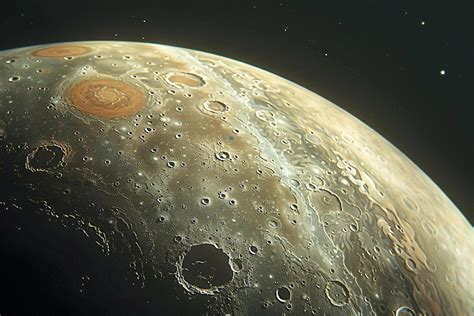
One of Ganymede’s most extraordinary features is its magnetic field. It is the only moon in the Solar System known to generate its own magnetic field. This creates auroras similar to those seen on Earth when charged particles interact with magnetic forces.
Ganymede is also believed to contain a massive underground ocean. Scientists estimate that its hidden ocean may exist beneath around 95 miles (150 kilometers) of ice and could contain more water than all of Earth’s surface oceans combined.
The moon’s surface shows evidence of geological activity, including regions with different ages and structures. Although it appears heavily cratered, Ganymede has experienced internal changes over billions of years.
Its thin atmosphere contains oxygen, likely produced when sunlight interacts with water ice on the surface. However, temperatures remain extremely harsh, ranging from approximately -171 to -297 degrees Fahrenheit.
Ganymede represents one of the strongest examples of how moons can become worlds in their own right. Rather than being simple companions to planets, giant satellites can contain oceans, atmospheres, magnetic fields, and environments worthy of planetary exploration.
The Importance of Giant Moons in Space Exploration
The largest natural satellites in our Solar System challenge the traditional idea that planets are the only important worlds. These moons demonstrate that fascinating environments can exist around planets, hidden beneath ice or transformed by powerful geological forces.
The Moon, Io, Callisto, Titan, and Ganymede each reveal a different chapter of cosmic history. One helped humanity leave Earth, another shows extreme volcanic activity, another preserves ancient impacts, another contains complex atmospheric chemistry, and another possesses a magnetic field and possible underground ocean.
As space exploration advances, these giant moons will likely become some of the most important destinations for future missions. They may hold answers about planetary evolution, the origins of water, and perhaps even the possibility of life beyond Earth.