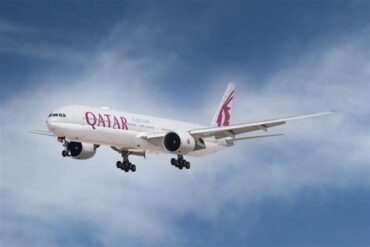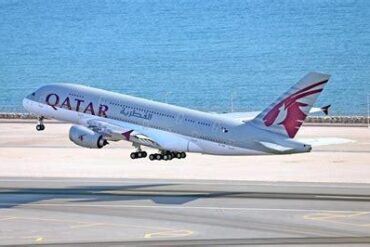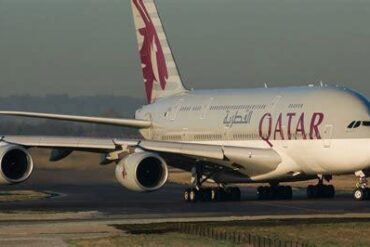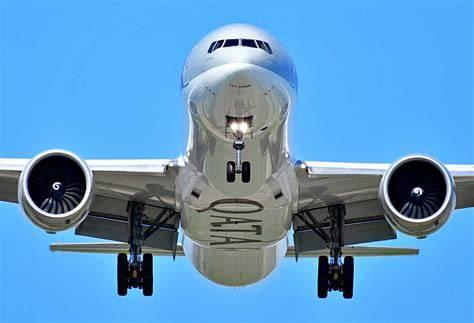
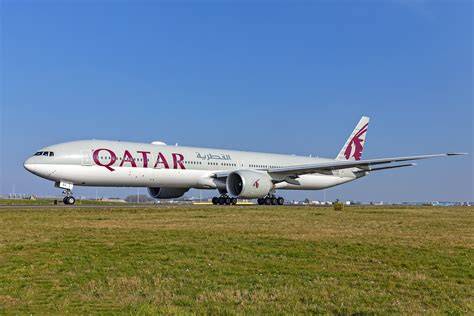
Qatar Airways will restore its Canberra link on December 8, ending a gap of more than six years that began in March 2020, when the route was suspended. The relaunch comes less than three weeks from today, and the service will operate daily with a 354-seat Boeing 777-300ER in a two-class layout: 42 QSuites and 312 economy seats, with no first class and no premium economy. The aircraft scheduling is built around Doha connections, and the relaunch follows an initial plan of only four weekly services before the airline raised the frequency to daily.
The December Timetable and the Melbourne Stopover
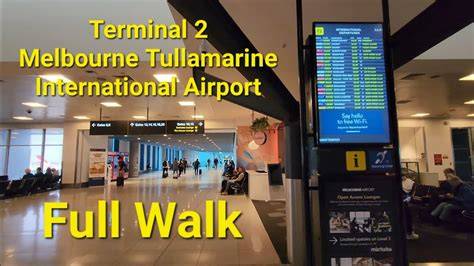
The published schedule runs QR988 from Doha at 8:15 AM and arriving Melbourne at 5:45 AM the following morning, then continuing as QR988 from Melbourne at 7:15 AM to Canberra at 8:20 AM. The return operates as QR989 from Canberra at 12:30 PM, reaching Melbourne at 1:45 PM, before departing Melbourne at 4:10 PM and landing in Doha at 10:25 PM. Each sector is daily. No traffic rights exist between Melbourne and Canberra, because eighth freedom traffic rights, or cabotage, are rarely granted, and Analytic Flying data shows the domestic legs have operated nearly empty. On return, Qatar Airways will again offer two daily flights to Melbourne, a frequency last held in March, with one continuing to Canberra and the other to Auckland, replacing the one-stop service via Adelaide.
Why Qatar Airways Fly to Canberra: The Regulatory Loophole Explained
Qatar Airways has no commercial interest in Canberra itself. The airline may fly to Australia’s four main cities — Brisbane, Melbourne, Perth and Sydney — up to 28 times weekly, and that allowance is fully used. Virgin Australia, which leases Qatar Airways 777-300ERs and also flies from Brisbane, Perth and Sydney, uses the Australian half of the traffic rights on the Gulf carrier’s behalf. Cutting frequencies to a major airport and redeploying the allowance would reduce market share, while upgauging to the Airbus A380 — last flown to Sydney in March 2026, Perth until April 2025 and Melbourne until 2020 — cannot match the competitive advantage of higher frequency. Continuing to a regional city, including the capital, carries no frequency limit, which is why the airline first flew to Canberra via Sydney, then switched to Melbourne, and why it previously served Adelaide through Melbourne.
Up to Ten Daily Nonstop Departures With Virgin Australia
Between December 2026 and October 2027, Qatar Airways and partner Virgin plan up to ten daily nonstop departures to Australia, excluding the Canberra add-on to avoid double counting. In January 2027, Qatar Airways offers five weekly A350-900 flights to Adelaide, a daily 777-300ER to Brisbane, the daily 777-300ER via Melbourne to Canberra, two daily 777-300ERs to Melbourne, a daily to Perth and a daily to Sydney. Virgin adds a daily 777-300ER to Melbourne, four weekly to Perth and two daily to Sydney, having cut flights from Brisbane and Perth to stay within its own 28 weekly departures under the air service agreement.
Why the Canberra Return Matters for Australian Travellers
The relaunch restores access that has been absent since March 2020, giving the Australian capital a daily oneworld connection through Doha to Europe, the Middle East and Africa, with a stop in Melbourne that cannot sell local seats. For travellers, the practical benefit is a single airline and a single ticket from Canberra to more than 170 destinations, with QSuite seating available on the long-haul leg. For Qatar Airways, the route enlarges its Australian footprint without cutting a single flight to Brisbane, Melbourne, Perth or Sydney, and it arrives as multiple carriers continue to suspend routes to the Gulf. The 18-hour journey leaves more room for the airline’s Doha hub to feed traffic, and frequency gains that mostly protect market share rather than expand it remain the strategic prize.