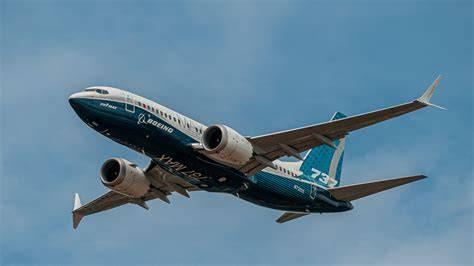
Every pound on a commercial airliner pulls profit against physics, and on no narrowbody is that tension tighter than on the Boeing 737 MAX. Airlines routinely board a full cabin, load every checked bag, and push the jet away from the gate at a weight that legally exceeds the figure printed as its maximum takeoff weight. The aircraft is not in violation, and no inspector is looking the other way. Two separate certifications govern how heavy the airframe may be at two different moments of its day, and a slim regulatory allowance for taxi fuel lets dispatchers aim the jet at the higher number while the lower one remains the true ceiling on the runway.
The mechanism exists because a jet standing at the gate and a jet accelerating toward rotation impose entirely different loads on the same structure. While the aircraft rests on concrete or rolls at walking pace, only the tires, wheels, and landing gear carry the mass, and the forces involved are mild enough that certification authorities grant a more generous ground limit. Once the throttles advance, the wings, engines, and brakes take over the workload, and the airframe must be light enough to climb safely on both engines, to keep climbing after a single engine failure, and to stop within the remaining runway if the takeoff is rejected. That distinction is what lets a Maximum Taxi Weight (MTW) sit above a Maximum Takeoff Weight (MTOW), and the gap between the two on the 737 MAX 8 is precisely 500 pounds, or 227 kilograms.
For the most widely flown MAX variant, the certified numbers read 182,700 pounds (82,871 kilograms) at pushback and 182,200 pounds (82,644 kilograms) at the start of the takeoff roll. That difference is not a rounding error or a legacy quirk someone forgot to remove; it is a deliberate allowance that dispatchers convert into usable taxi fuel on the busiest flights of the week. When the cabin is full, the cargo holds are packed, and the route requires substantial weather reserves, the flight can be loaded right up to the takeoff limit and then topped with 500 pounds of kerosene intended purely to get the aircraft to the runway threshold. By the time the crew requests takeoff clearance, that surplus has usually dissolved into the exhaust of the engines, and the jet meets the stricter standard exactly as it is meant to.
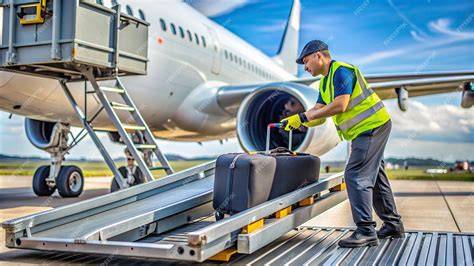
How Ground Physics Differ From Takeoff Demands on the 737 MAX
Certification law draws a sharp line between rolling slowly on pavement and racing down a runway, because the loads and failure consequences are not remotely comparable. During taxi at roughly 15 knots, an airliner encounters gentle vertical and lateral accelerations that rarely exceed 1.2 times standard gravity, and the primary structure plus the oversized main landing gear absorb them with comfortable margin, because the wings are not yet generating lift and the airframe is not being pulled and bent by aerodynamic forces. Engineers can therefore certify a higher ground weight without compromising structural integrity, and the Maximum Taxi Weight captures that reality in the type certificate.
Takeoff is where the envelope closes in. At decision speed, the tires and brakes must be capable of stopping a fully loaded jet within the runway remaining, and if an engine fails shortly after rotation, the aircraft must still be able to clear obstacles ahead on a single powerplant. Those two scenarios, rejected takeoff and engine-out climb, are what set the Maximum Takeoff Weight far more than any structural concern, and they are why the same airframe carries a lower number for the runway than for the ramp. Heat, altitude, wind, runway slope, and contamination all shrink the achievable limit further on any given day, so the certified ceiling is a best case rather than an everyday allowance.
That second point explains why pilots cannot exceed the takeoff limit by even a single pound, whatever the paperwork says. A hot summer afternoon at a high-elevation airport thins the air, cutting both wing lift and engine thrust, while a wet or icy surface stretches the stopping distance a heavy jet needs after a rejected takeoff. On such days the workable takeoff weight may fall thousands of pounds below the certified maximum, and the 500-pound taxi allowance becomes the least of the crew’s calculations rather than the whole of them.
How Dispatchers and Pilots Manage the 500-Pound Weight Buffer
The arithmetic of a full 737 MAX 8 flight explains why dispatchers lean on the taxi allowance at all. An operating empty weight of roughly 99,360 pounds leaves 46,040 pounds of payload before the jet reaches its Maximum Zero Fuel Weight of 145,400 pounds, a figure that 172 passengers with luggage and freight can exhaust on a popular route. Once the required trip fuel and legal weather reserves are added on top, the aircraft is pressed against the takeoff ceiling, and the only remaining slack is the 500 pounds the regulation permits between the gate and the runway. Loading to the takeoff limit and then adding taxi fuel is not creative accounting; it is the difference between carrying every revenue passenger and leaving some at the terminal.
Managing that buffer through a busy turnaround is a shared task between the flight deck and the ground. Before pushback, the auxiliary power unit in the tail cone supplies the cabin’s air conditioning and electrical load while burning roughly 100 to 200 pounds of fuel per hour, so the clock on the allowance starts ticking long before the main engines spool up. Once the crew starts both engines and begins to taxi, the surplus drains at a predictable rate, and the pilots cross-check the onboard weight and fuel readings against the planned taxi burn as the jet works its way toward the runway.
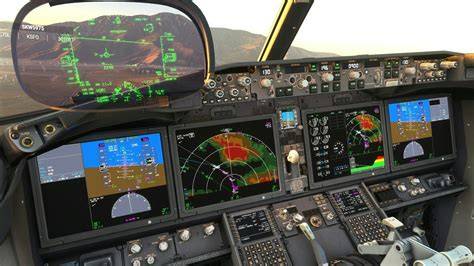
Crew judgment matters because airport traffic rarely follows the plan. If air traffic control clears the aircraft for an immediate takeoff before the 500 pounds has burned off, the correct response is to hold short and burn the excess rather than accept the clearance and launch overweight. If the taxi drags through a long departure queue, the crew instead watches the fuel gauges to make sure the burn does not begin eating into the reserves required for the actual flight, and in the worst case the aircraft leaves the line and returns to the stand for more fuel. That return is annoying for passengers, but it preserves the assurance that no 737 MAX departs without the legally mandated fuel to reach its destination.
When a Fast Runway Clearance Leaves the 737 MAX Too Heavy to Depart
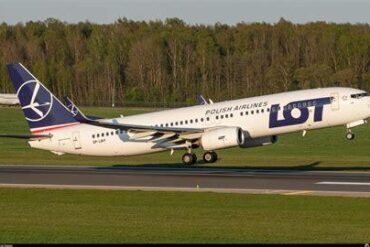
A typical 12-minute taxi at a congested hub burns about 250 pounds of fuel, which comfortably brings the aircraft below its takeoff weight before the crew reaches the holding point. The arrangement depends on ground time existing in roughly the expected quantity. An unexpected shortcut that shortens the drive to under four minutes, with both engines idling at roughly 20 pounds of fuel per minute, can leave the jet hundreds of pounds above its certified takeoff limit when the tower offers an immediate clearance.
Strict regulations forbid starting the takeoff roll at that weight, so the crew faces an awkward choice between declining a slot the tower may not offer again and parking on an open concrete pad to burn off the surplus with the brakes set. To shed the weight quickly, pilots advance the throttles slightly and run the cabin air conditioning at full power while the aircraft remains stationary. Anyone watching from the terminal sees the irony plainly: a modern airliner certified within a few hundred pounds of its structural ceiling sometimes has to waste runway slots, fuel, and passenger patience simply because it arrived at the runway early.
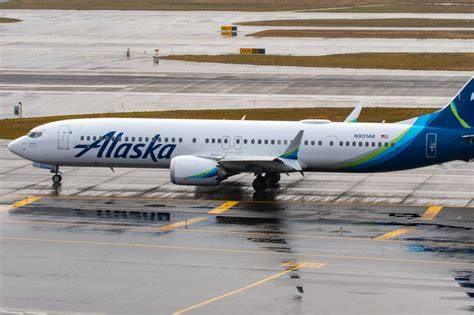
Why the Airbus A320neo Family Enjoys Nearly Twice the Taxi Cushion
The 737 MAX’s slim margin stands out sharply against its European rival. The Airbus A320neo carries a takeoff limit of 174,165 pounds and a ground limit of 175,047 pounds, an 882-pound taxi cushion, while larger members of the family such as the A321neo stretch that allowance even further. That wider band lets Airbus operators absorb congested taxiways and long gate waits without eroding flight reserves, and it removes much of the tactical pressure that defines a maximum-weight MAX departure.
Airbus could preserve that flexibility because its foundation was not constrained by a 1960s airframe. The MAX ended up roughly 7,000 pounds heavier than the previous generation of 737 because of strengthened wing supports, added fire barriers, and the large CFM LEAP-1B engines mounted higher and farther forward on the wing, among other changes. That added base weight consumed structural margin across the design, and because Boeing could not heavily reinforce the landing gear mounts without reworking the low ground stance that allows the 737 to operate from austere airports, engineers locked the ground-to-takeoff gap at just 500 pounds.
| Certified Weight Limit | Boeing 737 MAX 8 | Airbus A320neo |
|---|---|---|
| Allowable Taxi Fuel Buffer | 500 lbs (227 kg) | 882 lbs (400 kg) |
| Maximum Taxi Weight (At Gate) | 182,700 lbs (82,871 kg) | 175,047 lbs (79,400 kg) |
| Maximum Takeoff Weight (At Runway) | 182,200 lbs (82,644 kg) | 174,165 lbs (79,000 kg) |
| Maximum Landing Weight | 152,800 lbs (69,308 kg) | 148,592 lbs (67,400 kg) |
| Maximum Zero Fuel Weight | 145,400 lbs (65,952 kg) | 141,757 lbs (64,300 kg) |
| Operating Empty Weight | 99,360 lbs (45,069 kg) | 97,700 lbs (44,316 kg) |
| Maximum Payload | 46,040 lbs (20,883 kg) | 44,057 lbs (19,984 kg) |
Keeping that buffer slim preserved passenger seats and cargo capacity on paper, which is precisely what airlines demand from a narrowbody. The trade-off is a crew that manages razor-thin fuel margins whenever the MAX is dispatched at its maximum range, and a dispatch office that must treat the 500-pound allowance as a precision instrument rather than a comfortable round number.
Why a 1960s Airframe Feels the Stretch on Long Flights
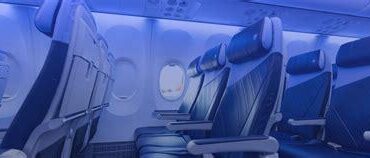
Pushing a design conceived in the 1960s to transcontinental ranges introduces trade-offs that passengers feel in other ways. Cruising at 41,000 feet, the cabin of a 737 MAX sits at a pressure altitude near 8,000 feet because its classic aluminum skin cannot tolerate as much internal pressure as the composite fuselage of the A350 or the aluminum-lithium structure of the 787, which hold cabins closer to 6,000 or 7,500 feet. The result is slightly less oxygen and noticeably more fatigue after a long sector, a cost paid quietly by travelers in exchange for the economics that make the route viable in the first place.
Cabin moisture suffers for the same reason. Aluminum frames corrode when moisture collects inside the wall insulation, so engineers cannot simply pump extra humidity into the air system, and on a five-hour flight at high load the humidity can fall to roughly 10 percent, drier than most deserts. The 737 MAX earns its keep by carrying close to 180 passengers and cross-country fuel on a single aisle, keeping fares competitive and thin routes profitable, but that efficiency is bought with a drier, higher-altitude cabin than newer jets offer on identical missions.
The 500-pound taxi allowance is thus a small technical hinge on a much larger economic door. It lets airlines fill seats that would otherwise go empty, it demands disciplined fuel planning from dispatchers and pilots, and it occasionally leaves a crew idling at the holding point while a few hundred pounds of kerosene disappears into the afternoon heat, all so that the jet crossing the threshold reflects the same 182,200-pound figure its designers certified.