The cost of earning United Premier 1K status in 2026 is not a single number. It is a continuum that stretches from roughly $4,000 in premium fares for a pure business flyer to $420,000 in credit card spend for a member who wants to buy the tier almost entirely through plastic. Between those extremes sits a dense middle ground of blended strategies, each with its own arithmetic and its own practical limits. What follows unpacks the 2026 qualification rules, the spend-to-points conversions behind United’s Chase card portfolio, the hidden costs of chasing status, and a candid comparison against Delta and American. The goal is a complete Premier 1K cost calculation, so that anyone weighing a run at United’s most exclusive earned tier can see exactly what the finish line will take.
The 2026 Premier 1K Qualification Thresholds Explained
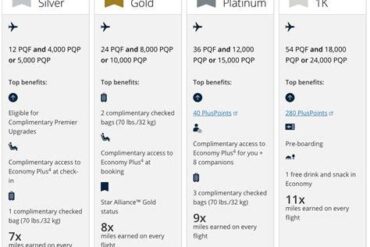
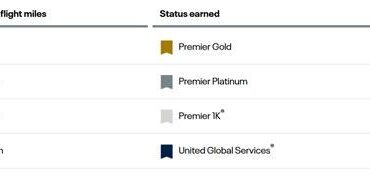
United Airlines sets the Premier 1K qualification bar for the 2026 program year at either 28,000 Premier Qualifying Points (PQP) on their own, or a hybrid route of 22,000 PQP plus 60 Premier Qualifying Flights (PQF). Those two paths are not interchangeable shortcuts; they represent different lifestyles. The first rewards high-dollar tickets, premium cabins, and long-haul bookings where the base fare and carrier-imposed charges climb quickly. The second rewards frequency, rewarding travelers who take off often enough to accumulate sixty separate flight segments across United, United Express, and eligible partner carriers.
Understanding the units matters more than memorizing the numbers. A PQP is essentially a dollar counter: members earn one PQP for every dollar of base fare plus carrier-imposed surcharges on United.com and United Express tickets, and substantially more for preferred seating, paid upgrades, and select partner flights. A PQF counts each individual flight segment, which means a round trip with a connection in each direction registers as four PQFs, not one. Layovers matter. Connecting through Denver instead of flying nonstop can quietly advance a member toward the sixty-segment threshold while adding hours to the journey.
The structural shift behind these thresholds tells its own story. Since the 2010 merger with Continental Airlines, United has moved decisively from distance-based to revenue-based loyalty, and every subsequent revision has tightened the link between dollars spent and status earned. Whether a traveler books cheap transcons or expensive international business class now changes the math far more than raw mileage ever did. The 2026 PQP requirement is, in effect, a $28,000 spend target dressed in points, with a frequency escape hatch attached.
What 28,000 PQP Actually Costs When You Fly United
For the fly-only path, the price tag depends almost entirely on cabin and route structure. Because PQPs track base fare, a member flying discounted economy on domestic routes collects perhaps three to five cents of PQP per mile flown, which stretches 28,000 PQP into a six-figure mileage year. The same threshold collapses dramatically when fares rise. A traveler booking $1,200 round trips in premium cabins, or $6,000 transatlantic business class tickets, can reach 28,000 PQP in roughly twenty to forty premium trips. At an average of $4,500 per premium-cabin round trip, the pure flying route lands near $30,000 to $35,000 in airfare across the qualification year. A domestic road warrior logging 150 segments on cheap fares faces a far grimmer figure.
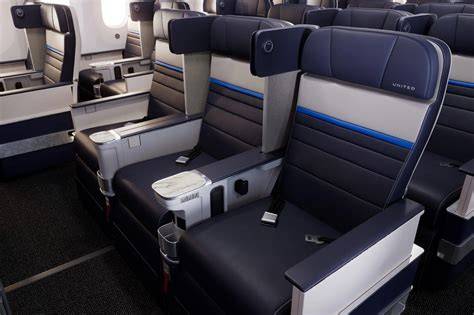
The hybrid path changes the equation for heavy flyers who never quite reach the spend ceiling. Sixty PQFs plus 22,000 PQP rewards the traveler who flies weekly but spends modestly, since the sixty segments do the heavy lifting that dollars would otherwise have to carry. Consider a consultant who logs seventy segments annually on $500 domestic tickets: seventy segments satisfied, generating roughly $35,000 in base fare and therefore 35,000 PQP, comfortably clearing the hybrid bar. The same traveler buying cheaper fares would need roughly 45 to 60 qualifying segments paired with premium spending to hit 22,000 PQP. The hybrid route is the classic frequent flyer value play, and it remains available for 2026 before PQFs disappear from qualification in 2027.
The Chase Credit Card Spend Required for Premier 1K
Credit cards are where the cost of Premier 1K becomes stark. United’s co-branded Chase lineup converts spending into PQP at two rates: one PQP per $20 spent on the standard cards, and one PQP per $15 spent on the premium tiers. At the $20 rate, funding the full 28,000 PQP through card spend alone requires $560,000 in annual purchases. At the $15 rate, the bill drops to $420,000. Both figures assume the member also records the four-flight minimum United enforces for any Premier status, including entry-level Premier Silver, because card spend alone will never open the door.
The card route is theoretically elegant and practically brutal. A member would need to funnel roughly $35,000 per month through a single co-branded card, which is realistic only for small business owners, heavy corporate reimbursements, or households with exceptional purchasing volume. More importantly, the sub-$420,000 card-only path simply does not exist; the four PQF floor is unconditional. Even a member who generates 28,000 PQP entirely through Chase purchases must board four United-operated or eligible partner segments to be eligible at all.
For most serious aspirants, credit cards are a bridge rather than a highway. A traveler who flies enough to bank 18,000 PQP naturally can close the remaining 10,000 PQP gap with approximately $200,000 at the $20 rate or $150,000 at the $15 rate. That blended approach is how United’s leadership envisions the program working. Jarad Fisher, who became President of MileagePlus in February 2026 after building Delta’s SkyMiles program and creating the Apple Card, has described 2026 Premier 1K earning as majority PQP-based, with United credit cards bridging the gap for members whose flying does not get them all the way there.
The True Cost of Premier 1K, From Fees to Opportunity Spend
The advertised thresholds understate the real bill, because status-chasing carries friction costs that rarely appear in the PQP arithmetic. Annual card fees reach $695 on United’s top co-branded product and $525 on the mid-tier version, before considering authorized user charges. Award and paid fare taxes, seat selection on routes where Economy Plus is unavailable, and the premium a traveler pays to book direct rather than through cheaper third-party channels all inflate the true outlay. Members who route spending through United cards to build PQP also forfeit rewards they might have captured elsewhere: a 2% cash-back card would return $8,400 on $420,000 of spending, and that forgone value deserves a place in any honest accounting.
Time is the other hidden expense. Sixty qualifying segments means roughly thirty round trips with a connection each way, which translates into dozens of travel days, layovers, and recovery weekends that no spreadsheet captures. And once the tier is earned, it must be defended annually: Premier 1K is not a lifetime award, so every qualification year restarts the clock and the spend. Members who reach the tier occasionally find that a single soft year, a job change, or a corporate travel freeze resets them to Premier Platinum or Gold.
Premier 1K Benefits and Whether They Justify the Spend
The benefits attached to United Premier 1K are genuinely the deepest publicly available elite package United offers. Members receive three complimentary checked bags, Economy Plus seating at booking for themselves and up to eight companions, and expanded award availability that unlocks seats invisible to lower tiers. Complimentary Premier Upgrades can clear as early as 96 hours before departure, priority pre-boarding accelerates every airport transit, and a dedicated Premier phone line bypasses general customer service queues entirely.
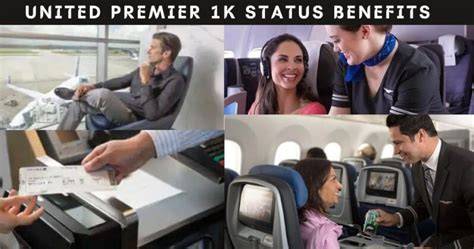
The headline perk, however, is PlusPoints. Every member who reaches Premier 1K receives a 280 PlusPoints allocation that can be applied toward upgrade requests on eligible United and partner-operated flights. Those points give travelers control that complimentary upgrades never offer, letting them target specific long-haul routes and premium cabins rather than hoping for a last-minute seat. The catch is inventory: upgrade capacity remains strictly controlled, so even a 1K member may watch a PlusPoints request sit unconfirmed on a peak-season flight. PlusPoints are valuable, but they are not cash.
Layered on top is Million Miler recognition, which rewards lifetime distance flown on United aircraft rather than annual spend. The program is deliberately insulated from the credit card economy, so a member cannot buy a lifetime title through a Chase statement. For long-tenured United loyalists, Million Miler and Premier 1K reinforce each other, forming a cumulative relationship that a status match from a competitor cannot replicate.
Premier 1K Against Delta Diamond and American Executive Platinum
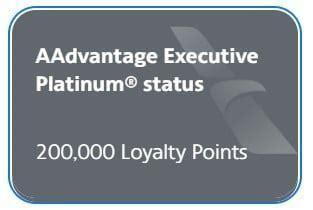
Any honest comparison of top-tier airline status starts with the thresholds. Delta’s Diamond Medallion requires $28,000 in Medallion Qualification Dollars, which maps almost exactly to United’s 28,000 PQP but offers fewer non-flying accelerators and no frequency-based hybrid. American’s Executive Platinum requires 200,000 Loyalty Points, a currency that can be earned through flights, co-branded card spending, shopping portals, hotel partners, and a wide menu of non-flight activity. That breadth is why many loyalty analysts regard American’s AAdvantage program as the most accessible top tier in the country, even though the currency itself is heavily diluted by non-loyalty spending.
Geography, not spreadsheets, usually decides the winner. A traveler anchored at Chicago O’Hare, Denver, Houston, or Newark gains more from Premier 1K than from any competitor’s tier, because United’s hub network supplies the nonstop inventory and upgrade inventory that make elite perks meaningful. A member based in Atlanta will extract more from Delta Diamond, and a Dallas-Fort Worth resident benefits most from Executive Platinum. The largest domestic hubs with multiple airline options, including Los Angeles and New York, reward members for matching their primary airline to their most-flown airport rather than chasing a threshold.
Status Matches, Pointsflation, and the 2027 Rule Change
Two forward-looking forces should inform any decision to pursue Premier 1K now. The first is the removal of PQFs from qualification beginning in 2027, announced by United in October 2026. Once PQF disappears, the frequency escape hatch closes and PQP becomes the sole currency, which likely raises the effective cost for the pure road warrior who flies often but spends little. The second is pointsflation, the steady upward drift in elite requirements that Thrifty Traveler has documented across United’s program. Thresholds ratchet, benefits retune, and the bar that felt reachable in one qualification year can feel punishing in the next.
Status match programs provide an alternative entry point: Delta and American elites occasionally convert their tiers to United equivalents through targeted offers, though matches typically deliver provisional status with a challenge period that demands genuine flying to retain. It is a legitimate strategy for members considering a hub relocation or airline switch, but it is not a substitute for the annual spend commitment.
So Is Earning United Premier 1K Worth the Money?
The cost of Premier 1K in 2026 resolves into three defensible answers depending on who is asking. For the corporate traveler whose employer funds frequent premium cabin trips, the tier arrives near $30,000 in booked airfare with benefits that cost the traveler almost nothing personally. For the leisure enthusiast willing to blend flying with heavy card spending, the realistic entry point is $8,000 to $15,000 in airfare plus $100,000 to $200,000 in card purchases. For the member determined to buy the tier outright, the price is $420,000 to $560,000 in credit card spend, a sum that no rational traveler should treat as a discount on upgrades.
The verdict hinges on how much of the spend would have happened anyway. A member whose business naturally routes $150,000 annually through a United card and who flies sixty segments a year is getting Premier 1K at marginal cost, and the PlusPoints, Economy Plus access, and upgrade priority are pure upside. A member who would need to manufacture spending, take unnecessary flights, or divert rewards from better-earning cards is far better served by Premier Platinum or a cash-back portfolio. Premier 1K remains one of the most prestigious statuses in North America, but it is no longer a reward for flying; it is a financial commitment, and the smartest travelers will treat it as exactly that.