For decades, earning elite airline status was largely a game of miles flown, segments completed, and time spent in the air. Travelers who crossed continents regularly could climb the loyalty ladder even if they were not purchasing premium tickets. That reality has fundamentally changed at Delta Air Lines.
In 2026, reaching Diamond Medallion, Delta’s highest publicly available elite tier, is no longer about how often you travel. It is about how much money you generate for Delta. The airline has transformed SkyMiles and Medallion qualification into a system centered almost entirely on spending, whether through airfare purchases, Delta Vacations packages, or co-branded American Express credit cards.
The result is a loyalty ecosystem where a traveler can potentially achieve elite status with relatively little flying, while another passenger flying dozens of times annually could fall short if ticket spending remains low. Understanding what it actually takes to earn Diamond Medallion in 2026 requires looking beyond the headline qualification number and examining the mechanics that drive the program.
Delta’s approach represents one of the most dramatic loyalty transformations among major global airlines and continues to reshape how frequent flyers pursue elite benefits.
How Delta Completely Changed The Medallion Qualification System
For many years, Delta used a familiar airline loyalty structure built around multiple qualification metrics. Travelers accumulated Medallion Qualification Miles (MQMs), Medallion Qualification Segments (MQSs), and Medallion Qualification Dollars (MQDs). The combination allowed frequent travelers to earn status through either extensive flying activity or higher spending.
That structure no longer exists.
Delta eliminated MQMs and MQSs entirely, leaving MQDs as the sole qualification metric. Whether a traveler flies 10 flights or 100 flights, the number itself has no direct impact on elite qualification. Only qualifying spending matters.
This shift aligns status more closely with passenger revenue contribution. From Delta’s perspective, the customer purchasing premium-cabin tickets and spending heavily on Delta-branded credit cards creates greater value than someone accumulating thousands of miles on discounted economy fares.
The transition was controversial when initially announced. Many longtime SkyMiles members viewed the changes as a departure from the traditional concept of rewarding loyalty through travel frequency. The criticism became so intense that Delta eventually lowered qualification thresholds from its original proposal.
Despite the adjustments, the fundamental structure remained unchanged. Delta fully committed to a spending-based model and has shown no indication of reversing course.

Delta Medallion Status Requirements For 2026
The 2026 Medallion qualification thresholds are significantly simpler than previous years because only one metric matters.
The current qualification requirements are:
- Silver Medallion: 5,000 MQDs
- Gold Medallion: 10,000 MQDs
- Platinum Medallion: 15,000 MQDs
- Diamond Medallion: 28,000 MQDs
At first glance, Diamond Medallion appears straightforward. Earn 28,000 MQDs and the status is yours.
However, the challenge lies in understanding how MQDs are accumulated and what combinations of flying and spending realistically generate that amount.
The jump from Platinum to Diamond deserves particular attention. Travelers moving from Platinum’s 15,000 MQD threshold to Diamond’s 28,000 MQD requirement must generate an additional 13,000 MQDs. That gap alone exceeds the entire requirement for Gold Medallion status.
This substantial leap explains why Diamond remains an exclusive tier even after the threshold reductions.
What Diamond Medallion Members Actually Receive
The benefits attached to Diamond Medallion remain among the most valuable offered by any U.S. airline loyalty program.
Members receive the highest upgrade priority within Delta’s elite hierarchy, improving their chances of securing complimentary upgrades on domestic routes and select international flights where upgrades are available.
Diamond members also earn a 120% SkyMiles bonus on eligible flights. Every dollar spent on Delta airfare generates significantly more redeemable miles than lower-tier members receive.
Additional benefits include:
- Priority check-in and boarding
- Dedicated Diamond support phone line
- Premium baggage handling
- Enhanced SkyTeam Elite Plus benefits
- Access to premium Choice Benefits
- Global Upgrade Certificates
- Preferred seat selection privileges
The Global Upgrade Certificates often represent the most valuable Diamond benefit. These certificates can potentially move travelers into premium cabins on eligible international routes, creating substantial value on long-haul flights where business-class tickets can cost thousands of dollars.
For frequent international travelers, these upgrades alone can justify pursuing Diamond status.
Why American Express Cards Have Become Essential
One of the most important realities of the modern Delta loyalty program is that American Express cards are no longer optional tools for maximizing status.
They are central to the qualification strategy.
Delta’s co-branded American Express cards provide an automatic MQD Headstart each qualification year. Once the annual fee posts, eligible cardholders receive MQD credits without taking a single flight.
A traveler holding a qualifying Delta American Express card begins the year with 2,500 MQDs already earned.
Those holding multiple eligible cards may stack these benefits, creating an even larger starting balance.
This dramatically alters the qualification math.
Instead of beginning at zero and working toward 28,000 MQDs, many Diamond aspirants begin the year with several thousand MQDs already credited.
The importance of these automatic boosts cannot be overstated because they effectively reduce the amount of spending needed elsewhere.

The Power Of MQD Boost Through Credit Card Spending
The second major credit card component involves MQD earning through everyday purchases.
Delta Platinum American Express cardholders earn:
- 1 MQD for every $20 spent
Delta Reserve American Express cardholders earn:
- 1 MQD for every $10 spent
This difference significantly impacts status accumulation.
Consider a traveler spending $100,000 annually on a Delta Reserve card.
That spending alone generates:
$100,000 ÷ 10 = 10,000 MQDs
Combined with the annual MQD Headstart, the traveler may already be approaching half of the Diamond qualification requirement before purchasing substantial airfare.
Business owners, consultants, entrepreneurs, and professionals with large reimbursable expenses often find this structure particularly attractive because routine operational spending contributes directly toward elite status.
Under the previous mileage-based systems, such spending would have had little effect on airline status qualification.
Today, it plays a central role.
Realistic Ways To Reach 28,000 MQDs
The most practical path to Diamond Medallion usually involves a combination of flight purchases and credit card spending.
Few travelers reach 28,000 MQDs exclusively through economy airfare unless they travel constantly for business.
For example, a traveler purchasing approximately $18,000 in qualifying Delta airfare and generating 10,000 MQDs through Reserve card spending would successfully reach Diamond.
Another traveler might generate:
- 5,000 MQDs through Headstarts
- 8,000 MQDs through card spending
- 15,000 MQDs through flights
That combination also reaches the threshold.
A premium-cabin traveler purchasing frequent international business-class tickets could potentially earn Diamond through airfare alone. Long-haul premium fares often generate MQDs rapidly because qualification is directly tied to ticket spending.
Corporate travelers whose employers regularly purchase premium tickets remain among the easiest candidates for Diamond qualification.
The challenge is greater for leisure travelers relying exclusively on discounted economy fares.
A passenger purchasing several low-cost domestic tickets annually may struggle to generate meaningful MQDs through flying alone.
Sky Club Access And The New Spending Incentives
Airport lounge access has become another major component of Delta’s strategy.
The airline introduced restrictions designed to reduce overcrowding while simultaneously encouraging greater credit card engagement.
American Express Platinum cardholders receive a limited number of annual Sky Club visits.
Delta Reserve cardholders receive a larger allocation.
However, the restrictions disappear for cardholders who spend at least $75,000 annually on qualifying cards.
At that point, visit limits are removed.
This creates an additional incentive for travelers to consolidate spending onto Delta-affiliated cards rather than distributing purchases among multiple rewards programs.
The strategy reflects Delta’s broader objective: rewarding total customer value rather than merely flight frequency.
How Delta Diamond Compares To United Premier 1K
Among major U.S. carriers, Delta and United now share surprisingly similar top-tier spending thresholds.
United Premier 1K requires either:
- 28,000 Premier Qualifying Points (PQP), or
- 22,000 PQP plus 60 qualifying flights
The crucial distinction is that United still rewards flight frequency.
Travelers who fly often can qualify with lower spending requirements if they meet segment thresholds.
Delta eliminated this option entirely.
A traveler completing 100 Delta flights receives no qualification advantage over someone completing 10 flights if spending levels are identical.
For road warriors who frequently travel on lower-cost fares, United’s system often remains more forgiving.
For high spenders who value simplicity, Delta’s single-metric model may appear more straightforward.

Comparing Delta Diamond To American Executive Platinum
American Airlines uses a substantially different framework.
Instead of MQDs or PQPs, American relies on Loyalty Points.
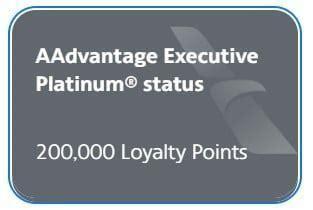
Executive Platinum requires 200,000 Loyalty Points annually.
Because Loyalty Points originate from multiple sources, including flights, credit cards, shopping portals, and partner activities, direct comparisons become more complicated.
Many travelers appreciate the flexibility because earning opportunities extend far beyond flight purchases.
However, the system can be less transparent than Delta’s straightforward spending model.
Depending on fare classes, travel patterns, and partner activity, Executive Platinum qualification may require spending levels roughly comparable to Delta Diamond.
The difference is that American offers additional pathways that may reduce the need for direct airline spending.
Delta remains the purest expression of a revenue-driven loyalty model among the major U.S. carriers.
The Evolution Of Airline Loyalty Programs
The journey from mileage-based rewards to spending-based qualification did not happen overnight.
When airline loyalty programs emerged during the early 1980s, the concept was remarkably simple. Passengers earned rewards based on distance flown. The traveler covering 100,000 miles generated twice the rewards of someone flying 50,000 miles.
Revenue played little role.
Over time, airlines realized that not all passengers contributed equal profitability.
A traveler purchasing a last-minute business-class ticket generated substantially more revenue than a traveler purchasing deeply discounted economy fares months in advance.
Airlines gradually shifted toward revenue recognition.
Mileage earning became revenue-based.
Elite qualification increasingly incorporated spending metrics.
Eventually, Delta completed the transformation by eliminating mileage and segment requirements entirely.
The modern loyalty landscape now reflects spending power more than travel distance.
For airlines, this approach better aligns rewards with profitability.
For consumers, it fundamentally changes how elite status is earned.
Is Delta Diamond Medallion Worth Pursuing In 2026?
The answer depends heavily on travel habits and spending patterns.
For frequent business travelers purchasing expensive tickets, Diamond Medallion remains one of the most valuable airline statuses available in North America. Upgrade priority, Global Upgrade Certificates, mileage bonuses, and premium customer service can easily generate thousands of dollars in annual value.
For travelers capable of leveraging American Express spending strategically, qualification becomes significantly more achievable than the raw 28,000 MQD figure might suggest.
On the other hand, leisure travelers flying primarily discounted domestic routes face a much steeper challenge. The program increasingly favors high spenders rather than high-frequency travelers.
That reality reflects Delta’s broader philosophy. The airline no longer measures loyalty by miles traveled or flights completed. It measures loyalty through revenue contribution.
Reaching Diamond Medallion in 2026 therefore requires more than frequent flying. It requires a deliberate strategy built around airfare spending, credit card optimization, and understanding how MQDs accumulate throughout the qualification year. For travelers willing and able to align their spending with Delta’s ecosystem, the rewards remain substantial. For everyone else, the path to the top has never been more expensive—or more clearly defined.