For years, airline loyalty programs have evolved from simple rewards systems into multi-billion-dollar financial engines. Rather than merely encouraging travelers to fly more often, today’s programs are increasingly designed to generate revenue through partnerships with banks and credit card issuers. Delta Air Lines’ SkyMiles program stands as perhaps the most prominent example of this transformation, and its latest 2026 updates reinforce a trend that many frequent flyers have feared for years.
Although Delta has announced several enhancements to its elite benefits, one of the program’s most valuable perks has quietly been scaled back. Even travelers who achieve the airline’s prestigious Diamond Medallion status are now receiving less value from one of their most popular Choice Benefits, signaling another shift toward maximizing profitability rather than rewarding loyalty.
After years of positioning itself as a premium airline with premium rewards, Delta’s newest changes demonstrate that even its most dedicated customers are no longer immune from benefit reductions.

Delta SkyMiles Continues Its Evolution Into a Financial Powerhouse
The modern airline industry increasingly relies on loyalty programs as standalone businesses rather than supplementary marketing tools. Delta has successfully transformed SkyMiles into one of the world’s most valuable airline loyalty ecosystems, generating enormous revenue through its relationship with American Express and other commercial partners.
Industry analysts estimate that the SkyMiles program is worth tens of billions of dollars, with Delta earning more from loyalty-related activities than from selling airline tickets themselves in certain periods. That remarkable success has encouraged management to optimize every component of the program for financial returns.
Instead of focusing exclusively on rewarding frequent travelers, today’s strategy prioritizes encouraging credit card spending, increasing partner engagement, and maximizing margins across the loyalty ecosystem.
This broader business model provides the backdrop for understanding why Delta introduced its latest Choice Benefit revisions.
The Biggest 2026 SkyMiles Change Hits American Express Statement Credits
Beginning on February 1, 2026, Delta significantly reduced the value of one of its most appreciated elite perks: the American Express statement credit available through Choice Benefits.
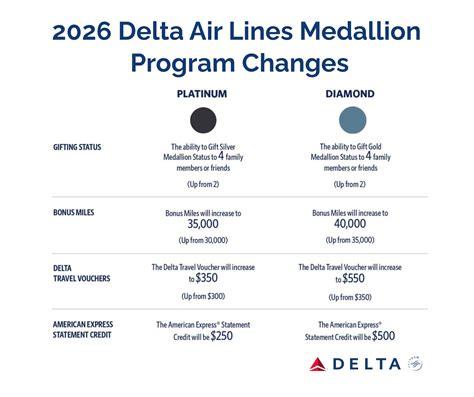
Previously, eligible Platinum Medallion members could select a statement credit worth $400, while Diamond Medallion members could choose a generous $700 credit.
Under the revised structure:
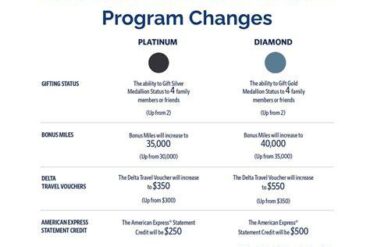
- Platinum Medallion members now receive a $250 statement credit.
- Diamond Medallion members now receive a $500 statement credit.
For top-tier elites who strategically selected this benefit each year, the reduction represents a meaningful loss in value.
Many Diamond members effectively used the previous $700 credit to offset the annual cost of maintaining premium Sky Club access or expensive co-branded American Express cards. The revised benefit substantially reduces that financial advantage.
Delta Softens the Blow by Increasing Other Choice Benefits
Rather than eliminating value entirely, Delta simultaneously enhanced several alternative Choice Benefits in what appears to be a strategic effort to encourage different selections.
Members who choose bonus miles now receive larger awards than before:
- 35,000 bonus miles for Platinum Medallion members.
- 40,000 bonus miles for Diamond Medallion members.
Similarly, elite members can now gift status to four companions instead of two, expanding the reach of one of the program’s more community-oriented perks.
Travel vouchers have also increased in value:
- Platinum members now receive $350 travel vouchers.
- Diamond members receive $550 travel vouchers.
While these increases certainly add flexibility, they may not fully compensate travelers who consistently depended on the higher-value American Express credits.
Why Diamond Medallion Members May Feel Especially Disappointed
Achieving Diamond Medallion status requires substantial annual spending and consistent engagement with Delta’s ecosystem. These travelers often represent the airline’s highest-value customers.
As a result, many expected their premium benefits to remain relatively insulated from cost-cutting measures.
Instead, the reduction in statement credits demonstrates that even Delta’s most loyal customers are not exempt from program recalibrations.
For travelers paying high annual fees on premium co-branded cards while simultaneously investing thousands of dollars to maintain elite qualification, the decrease can feel like a direct reduction in return on loyalty.
The message is subtle but clear: revenue optimization now carries equal or greater importance than preserving legacy elite perks.
Understanding Delta’s Choice Benefits Structure
One reason SkyMiles has maintained strong customer engagement is its customizable Choice Benefits program.
Unlike some competitors that assign fixed rewards, Delta allows qualified elite members to choose benefits that best match their travel habits.
Platinum Medallion members select one annual Choice Benefit, while Diamond Medallion members may select three.
Available options include:
- Bonus SkyMiles.
- Regional Upgrade Certificates.
- Global Upgrade Certificates for Diamond members.
- Status gifting.
- Sustainable Aviation Fuel contributions.
- Delta Vacations discounts.
- Wheels Up credits.
- MQD accelerators.
- Starbucks Rewards Stars.
- American Express statement credits.
- Travel vouchers.
- Sky Club memberships for Diamond members.
This menu-based approach gives travelers considerable flexibility but also makes reductions to any individual option particularly noticeable.

Sky Club Memberships Remain Valuable but Require Strategic Choices
Diamond Medallion members retain access to another highly valuable privilege through Choice Benefits: Sky Club memberships.
However, obtaining those memberships consumes multiple annual selections.
A Sky Club Individual Membership requires two Choice Benefits, while an Executive Membership requires three, effectively using every annual Diamond selection.
This structure forces members to evaluate trade-offs carefully. Selecting lounge access may mean sacrificing upgrade certificates, bonus miles, or travel vouchers.
The newly reduced statement credit further complicates these calculations because many members previously used it to offset separate lounge-related expenses.
Delta’s Credit Card Partnership Drives Much of SkyMiles’ Success
The SkyMiles ecosystem cannot be understood without recognizing the central role played by American Express.
Delta sells enormous quantities of loyalty miles to its banking partner, which in turn awards those miles to cardholders through spending and welcome bonuses.
Because producing digital loyalty points costs relatively little compared with selling airline seats, these partnerships generate exceptionally attractive profit margins.
Consequently, Delta has every incentive to encourage customers to maintain premium credit cards and continue spending within the ecosystem.
The latest Choice Benefit changes appear designed to reinforce that objective while reducing direct costs associated with statement credits.
Why SkyMiles Members Stay Loyal Despite Lower Redemption Value
Independent valuations frequently place SkyMiles below competing currencies such as American Airlines AAdvantage miles or United MileagePlus miles in terms of average redemption value.
Many estimates suggest Delta miles are worth roughly 1.1 to 1.2 cents per mile, depending on redemption strategy.
Yet millions of customers remain deeply committed to the program.
The explanation lies less in mathematical value and more in customer behavior.
Travelers based in Delta hub cities such as Atlanta, New York, Boston, and Los Angeles naturally accumulate miles through routine travel. Many also hold Delta-branded American Express cards for everyday purchases, earning rewards regardless of flight frequency.
The combination of convenience, airline preference, and integrated credit card benefits keeps engagement remarkably high.
Co-Branded American Express Cards Play a Central Role
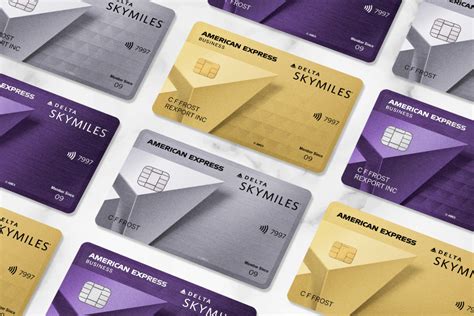
Delta currently offers multiple co-branded American Express cards spanning both personal and business categories.
The product lineup ranges from entry-level options with no annual fee to premium Reserve cards featuring substantial travel perks.
Higher-tier cards provide benefits such as:
- Complimentary checked baggage.
- Limited Sky Club visits.
- Centurion Lounge access when flying Delta.
- Various annual statement credits.
- Accelerated pathways toward Medallion qualification.
For many customers, these cards generate more annual value than actual flying.
As a result, changes affecting statement credits or elite benefits have ripple effects extending well beyond airport experiences.
Maximizing Value Under the New Rules
Although the revised Choice Benefits reduce one important perk, members can still optimize SkyMiles through strategic planning.
Travelers should evaluate which benefits best align with their personal travel patterns rather than automatically selecting familiar options each year.
Those who frequently purchase Delta tickets may find travel vouchers increasingly attractive.
Members traveling with family or colleagues could derive significant value from expanded status gifting.
Meanwhile, flyers seeking premium cabin experiences may continue prioritizing Regional or Global Upgrade Certificates despite their limited availability.
The flexibility of Choice Benefits remains one of Delta’s strongest competitive advantages, provided members actively calculate the relative value of each selection.
Delta Reflects a Broader Industry Trend Toward Revenue-Based Loyalty
Delta is not operating in isolation.
Across the airline industry, major U.S. carriers increasingly structure loyalty programs around spending rather than flight distance or segments flown.
Revenue-based qualification systems reward customers who generate higher profits while strengthening relationships with financial institutions issuing co-branded credit cards.
United Airlines has already expanded mileage earning opportunities for cardholders, while American Airlines continues refining its Loyalty Points framework.
These developments suggest future competition may focus less on rewarding frequent flying and more on rewarding participation within broader financial ecosystems.
In practical terms, customers who avoid airline credit cards may find themselves earning substantially fewer benefits than equally active travelers who integrate banking products into their loyalty strategies.
What Delta’s Latest SkyMiles Changes Mean for the Future
The newest SkyMiles revisions reveal an important shift in priorities. Delta continues enhancing selected benefits while simultaneously trimming others that have become expensive to maintain.
For Platinum and Diamond Medallion members, the reduction in American Express statement credits represents more than a simple adjustment. It symbolizes the ongoing evolution of airline loyalty from customer appreciation programs into highly optimized commercial platforms driven by banking partnerships and revenue generation.
Elite travelers can still unlock meaningful value through upgrade certificates, bonus miles, travel vouchers, lounge memberships, and status gifting. However, extracting maximum benefit now requires more deliberate planning than ever before.
As airlines increasingly refine their loyalty economics, even their highest-tier members should expect future benefits to evolve according to profitability rather than tradition. For Delta loyalists, understanding those incentives may become just as important as earning the miles themselves.