Choosing a single airline to concentrate your travel loyalty on is not a casual decision. Elite status is no longer just a nice-to-have badge for aviation enthusiasts; it has become a powerful economic tool that can materially change how comfortable, efficient, and predictable your travel experience feels over an entire year. Delta Medallion and United Premier represent two of the most influential elite status ecosystems in the United States, yet they are built on fundamentally different ideas about what loyalty should look like.
At a distance, both programs promise similar rewards. Priority check-in, shorter security lines, waived baggage fees, preferred seating, and the intoxicating possibility of complimentary upgrades all sit at the top of the marketing funnel. The complexity reveals itself only when travelers attempt to earn these privileges. Qualification mechanics, credit card integrations, flight patterns, alliance reach, and spending behavior all collide in ways that are not immediately obvious.
This is where the question becomes practical rather than theoretical. Which elite status is actually easier to achieve for a real traveler with a real budget and real constraints? The answer depends less on brand loyalty and more on how each airline defines value, rewards spending, and filters its most profitable customers.

How Delta and United Define Loyalty Very Differently
Delta Air Lines and United Airlines are both global network carriers, but their loyalty programs reflect sharply distinct corporate personalities. Delta has spent the past decade repositioning itself as a premium-forward airline that monetizes consistency, comfort, and brand trust. United, by contrast, has focused on scale, alliance reach, and operational breadth, especially across the Star Alliance network.
Delta’s SkyMiles Medallion program is anchored by Medallion Qualification Dollars (MQDs). This single metric governs almost everything. How much you spend matters more than how often you fly, how far you go, or how many segments you complete. The philosophy is blunt and unapologetic: the customer who pays more is the customer who matters most.
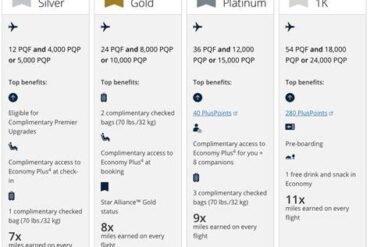
United’s MileagePlus Premier system takes a more traditional and nuanced approach. It blends Premier Qualifying Flights (PQFs) with Premier Qualifying Points (PQPs), allowing travelers to qualify through a mixture of frequency and spending. This creates multiple viable paths to status, but it also introduces layers of rules that require constant monitoring.
These foundational choices ripple through every part of the status journey, shaping who finds each program intuitive and who finds it exhausting.
Why Airlines Guard Elite Status So Carefully
Elite status exists because airlines operate under two competing pressures. On one side, airfare pricing is increasingly transparent, pushing travelers to shop by price. On the other, airlines offer premium benefits that cannot be given to everyone simultaneously. Elite tiers solve both problems at once.
Status encourages travelers to book directly, avoid restrictive basic economy fares, and remain loyal even when competitors undercut pricing. It nudges customers toward higher-yield tickets and co-branded credit cards that generate massive revenue streams through banking partnerships. At the same time, tiers function as a rationing system. Complimentary upgrades, lounge seating, priority phone support, and overhead bin space are finite resources.
By controlling how difficult status is to earn, airlines manage demand for these benefits while maximizing revenue. Delta and United simply turn different dials to reach the same outcome.

Delta Medallion Explained: A Spending-First Blueprint
Delta’s Medallion program is one of the most transparent elite qualification systems in the industry. Everything revolves around MQDs, which are earned primarily through ticket spend, surcharges, and select partner activity. The published thresholds are straightforward and unapologetically high-spend focused.
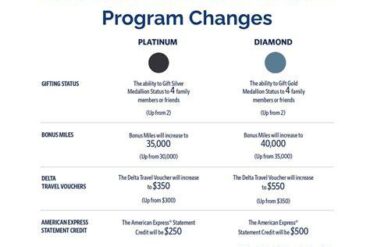
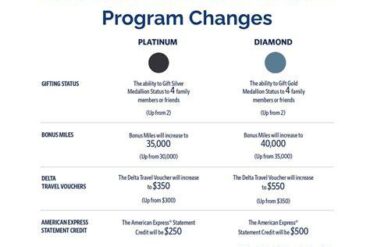
Silver Medallion begins at $5,000 MQDs, followed by Gold at $10,000, Platinum at $15,000, and Diamond at $28,000. Status is earned on a calendar-year basis and then extended into the following Medallion year, providing predictability for planners.
What makes Delta feel unusually attainable for many travelers is not the thresholds themselves, but the number of non-flight pathways that feed directly into MQDs. Delta has deeply integrated American Express co-branded credit cards into the status ecosystem. Cardholders receive automatic MQD headstarts, often worth thousands of dollars before a single flight is taken. Additional MQDs can be earned through card spending, Delta Vacations packages, and select promotional offers.
This design heavily favors travelers who are willing to centralize spending. You may not fly frequently, but if your annual travel and card spend are concentrated with Delta, the math becomes surprisingly forgiving. The trade-off is that bargain hunters who fly many cheap segments gain little advantage unless real dollars are attached.
United Premier Explained: Flexibility With Rules Attached
United’s Premier program offers more levers, but each lever comes with conditions. For the upcoming qualification cycle, travelers can earn Silver status with 15 PQFs and 5,000 PQPs, or alternatively 6,000 PQPs alone. Each higher tier escalates both requirements, culminating in Premier 1K at 60 PQFs and 22,000 PQPs, or 28,000 PQPs without flight counts.
This dual-track system accommodates a broader range of traveler profiles. Road warriors on short-haul routes can rack up PQFs quickly, while premium cabin travelers can lean into spending-heavy itineraries. However, United imposes guardrails. At least four segments must be flown on United-operated flights, preventing purely credit-card-based qualification.
Credit cards do contribute meaningfully to PQPs, but caps limit how far spending alone can take you. Flying remains unavoidable. United also introduces additional complexity at higher tiers, where benefits such as PlusPoints require strategic planning to extract real value.
The result is a program that feels empowering to some and mentally taxing to others.

Credit Cards as Status Accelerators
Credit cards are no longer optional tools in elite status strategies; they are central accelerants. Delta’s advantage lies in how cleanly card benefits translate into MQDs. A single premium Delta American Express card can provide a meaningful head start toward Silver or Gold before flights are even booked. Stack multiple cards, and the runway shortens further.
United’s co-branded cards are helpful, but they are intentionally constrained. PQP earnings are capped, and no card eliminates the requirement to actually fly United metal. This keeps the program anchored to flight activity rather than pure financial engagement.
For travelers who prefer predictable progress with minimal flying, Delta’s card ecosystem feels frictionless. For travelers who already fly frequently, United’s cards act as useful supplements rather than primary engines.
What Earning Status Looks Like in Real Life
Theoretical thresholds mean little without real-world application. In practice, Delta status is easier to plan for because MQDs allow travelers to forecast outcomes with precision. Annual spending targets can be set, tracked, and adjusted. Near-miss scenarios can often be solved with incremental card spend or targeted Delta purchases.
United status requires more active management. PQFs and PQPs must be balanced throughout the year, and flight choices can unintentionally skew progress. A traveler may fly often but fall short on PQPs, or spend heavily but miss PQF minimums. The mental overhead is higher, even if flexibility is greater.
Neither system is forgiving of procrastination, but Delta’s is more legible at a glance.
Which Status Is Actually Easier to Achieve
For the majority of travelers, Delta Medallion status is objectively easier to earn. The reason is not generosity but design. Delta has aligned its incentives around spending, and spending is easier to control than flight frequency. Credit cards, vacation packages, and targeted purchases all count in ways that feel intuitive.
United Premier status becomes easier only for a specific profile: high-frequency flyers who already live on United routes and value Star Alliance reach. For them, PQFs accumulate naturally, and PQPs follow. Outside that niche, the program feels heavier.
Ease, in this context, is not about lower thresholds. It is about predictability, optionality, and cognitive load. Delta wins on all three.
Choosing the Right Program for Your Travel Reality
Elite status should serve your life, not dictate it. Travelers who prioritize simplicity, card-driven acceleration, and a premium-focused domestic experience will find Delta Medallion status more attainable and less stressful. Travelers who fly constantly, value international alliance depth, and enjoy optimizing rules will find United Premier rewarding despite the complexity.
Neither program is universally better. One is cleaner. The other is broader. Understanding how each airline defines loyalty is the real shortcut. When you align your natural behavior with the airline’s incentives, elite status stops feeling like a chase and starts feeling inevitable.