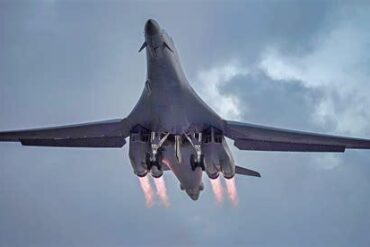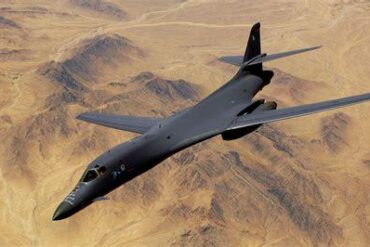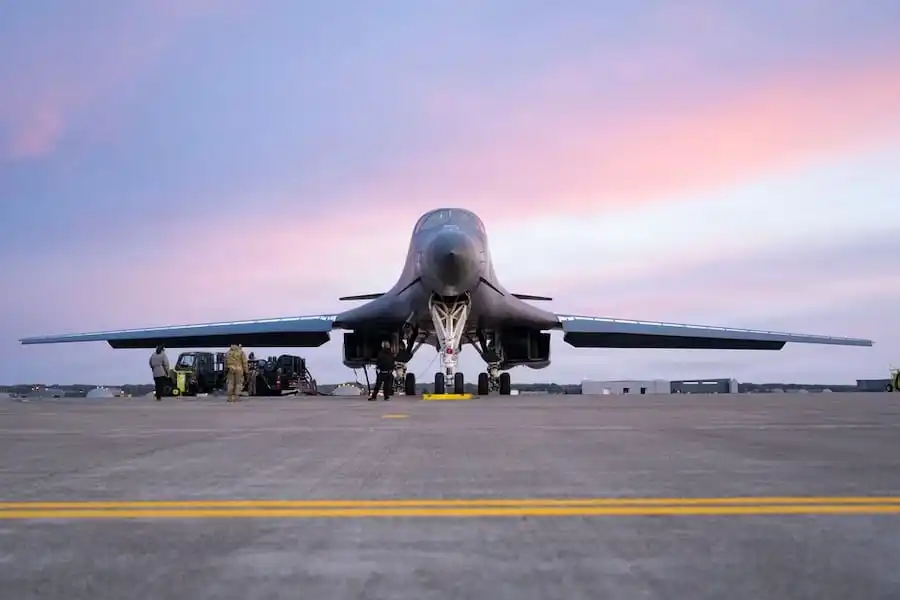
The deployment of a significant portion of the US Air Force’s B-1B Lancer bomber fleet to RAF Fairford in the United Kingdom has become one of the most strategically important aviation movements in recent years. With around a dozen B-1B bombers stationed at the British airbase during the height of Operation Epic Fury, Washington demonstrated how vital European bases remain for projecting long-range air power into the Middle East and beyond.
The arrival of these aircraft was not simply a routine overseas rotation. The decision reflected changing geopolitical calculations, concerns about regional threats, and the evolving role of the United Kingdom as a key partner in American military operations. By positioning a large part of its supersonic bomber force in Britain, the US Air Force gained a strategically valuable launch point while reducing some of the risks associated with more vulnerable forward locations.
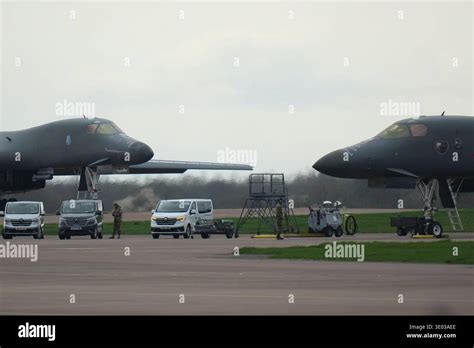
Why RAF Fairford Became the Center of the US Air Force B-1B Deployment
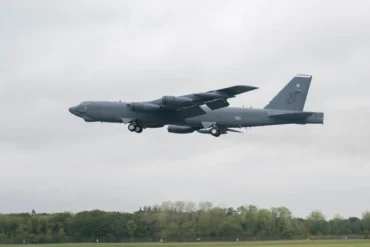
At the peak of Operation Epic Fury in late March 2026, approximately 15 B-1B Lancers and around six B-52H Stratofortress bombers were deployed to RAF Fairford, one of the most important overseas operating locations for US strategic bombers.
The first wave of B-1B aircraft arrived around March 6, followed shortly afterward by B-52 bombers. While some aircraft later returned to the continental United States, a substantial number of B-1Bs remained stationed at Fairford for months, highlighting the base’s growing importance.
RAF Fairford has historically served as the US Air Force’s primary bomber operating location in Europe. Unlike permanent bomber bases located inside the United States, Fairford provides Washington with a valuable middle ground: close enough to support operations in strategically important regions while remaining outside the immediate threat environment of frontline areas.
The United States maintains its strategic bomber fleet primarily at bases such as Dyess Air Force Base in Texas, Ellsworth Air Force Base in South Dakota, Barksdale Air Force Base in Louisiana, Minot Air Force Base in North Dakota, and Whiteman Air Force Base in Missouri. However, relying only on aircraft flying directly from American territory creates significant challenges.
Long-distance missions reduce operational efficiency, increase aircraft wear, require extensive aerial refueling support, and limit the number of sorties that bombers can generate. Forward operating locations solve these problems by placing aircraft closer to potential mission areas.
The three most important overseas bomber locations are RAF Fairford, Andersen Air Force Base in Guam, and Diego Garcia in the British Indian Ocean Territory. Each provides strategic value depending on the region of interest.
For operations connected to the Middle East, RAF Fairford has gained importance because it provides a secure European location with strong logistical support. Meanwhile, Diego Garcia, which historically played a major role in Middle Eastern operations, has become less attractive as improvements in Iranian missile capabilities have changed the threat environment.
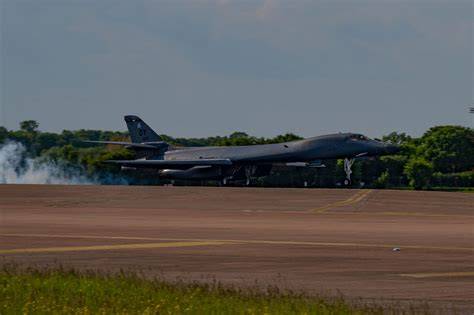
Nearly One-Third of America’s B-1B Fleet Moved Across the Atlantic
The scale of the deployment is significant because the B-1B Lancer fleet is relatively small compared with other US bomber forces.
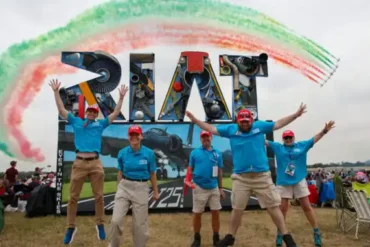
In July 2026, open-source intelligence reports indicated that approximately 12 B-1B Lancers remained stationed at RAF Fairford. Aircraft identified at the base included famous Lancers such as Doolittle Raiders, Avenger, The Reluctant Dragon, and Dragon Slayer.
The US Air Force officially maintains a congressional requirement for 46 B-1B bombers, although operational availability is often lower because of maintenance requirements, accidents, and aging aircraft structures. With roughly 45 aircraft actually in inventory, having 12 stationed overseas represents a substantial portion of the entire fleet.
This means RAF Fairford was hosting roughly one-quarter to one-third of the operational B-1B force, depending on fleet availability at any given moment.
The movement demonstrated confidence in the B-1B’s continuing relevance despite the aircraft’s age. First developed during the Cold War, the Lancer remains one of the most capable conventional strike platforms in American service.
Unlike the stealth-focused B-2 Spirit, the B-1B was designed around speed, range, and weapons capacity. Its variable-sweep wings allow it to operate efficiently across different flight conditions, while its large internal weapons bays provide significant payload capacity.
The bomber has evolved far beyond its original nuclear mission. Today, the B-1B primarily performs conventional strike operations, carrying precision-guided weapons such as GBU-31 JDAM bombs and other advanced munitions.
The United Kingdom’s Strategic Role in US Air Power Operations
Although Britain was not officially conducting offensive bombing operations against Iran, its role in supporting American military activity made it an essential participant in the broader campaign environment.
Before Operation Epic Fury began, the UK government initially restricted the use of British bases for direct offensive missions. However, Britain continued allowing American aircraft to use its facilities for logistics, refueling, transportation, and other support activities.
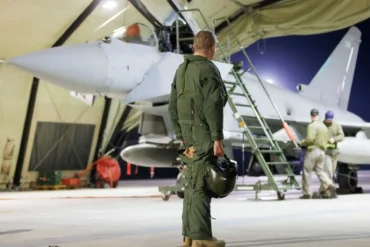
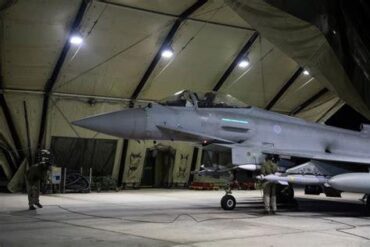
That distinction quickly became less significant as the regional conflict expanded. The UK deployed Eurofighter Typhoon fighters, counter-drone systems, and other military assets to protect partners in the Middle East. British forces also operated from RAF Akrotiri in Cyprus, where British aircraft helped respond to regional threats.
As a result, British bases became increasingly important to the overall Western military posture.
Facilities including RAF Fairford, RAF Lakenheath, and RAF Mildenhall host a variety of American aircraft, including fighters, tankers, transport aircraft, and bombers. Their strategic value extends far beyond British territory because they provide the United States with a reliable network for global operations.
This also means these bases become potential targets during international crises.
Iranian officials and military organizations warned that facilities supporting operations against Iran could be considered legitimate targets. The Islamic Revolutionary Guard Corps specifically referenced American B-1 aircraft operating from RAF Fairford.
Such statements highlighted the changing security environment surrounding overseas US military bases. Locations that were once considered safe rear-area facilities can become strategically important targets during a major confrontation.
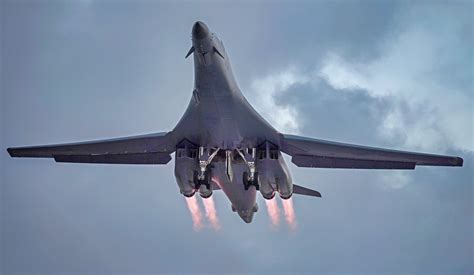
Iranian Threats Highlight the Risks of Forward Bomber Deployments
The Iranian threats against RAF Fairford demonstrated the risks involved in positioning strategic aircraft overseas.
The base sits thousands of miles from Iran, but modern missile technology has changed military calculations. Long-range ballistic missiles, cruise missiles, and unmanned systems have expanded the number of locations that can potentially be threatened.
The British government responded by emphasizing its ability to defend national territory through a layered approach involving the Royal Air Force, Royal Navy, and British Army.
However, Britain’s air defense network does not include some of the advanced systems operated by the United States, such as Patriot or THAAD missile defense systems, or European systems like SAMP/T.
This creates a complicated strategic balance. RAF Fairford offers distance and security compared with locations closer to the Middle East, but no overseas base can be considered completely immune from attack.
The US Air Force therefore balances multiple factors when choosing bomber locations: distance from enemy weapons, operational effectiveness, political support, infrastructure, and defensive capability.
RAF Fairford remains attractive because it provides a combination of these advantages.
The B-1B Lancer’s Place in America’s Future Bomber Strategy
The deployment also highlights the continued importance of the B-1B during a transitional period for the US bomber fleet.
Today, the US Air Force operates four major bomber types: the B-52 Stratofortress, B-1B Lancer, B-2 Spirit, and the emerging B-21 Raider.
The B-52, despite entering service in the 1950s, is expected to remain operational into the 2050s after major upgrades, including new engines and improved systems. Its role will increasingly focus on carrying large numbers of missiles and stand-off weapons.
The B-2 remains America’s stealth penetration bomber, capable of striking heavily defended targets. However, the fleet has declined due to accidents and the retirement of some aircraft.
The future of American bomber power is centered on the B-21 Raider, which is expected to enter operational service later this decade. The stealth bomber is designed to replace both the B-2 and eventually the B-1B.
Despite this transition, the B-1B is not disappearing immediately.
Earlier plans called for the aircraft to begin retirement around fiscal year 2028, with the fleet completely phased out by approximately 2032. However, updated planning has delayed retirement by several years, extending B-1B service toward 2037.
The delay gives the Air Force more time to increase B-21 production and ensure that the next-generation bomber can fully replace existing capabilities.
Why the B-1B Lancer Still Matters Before Retirement
Maintaining the B-1B fleet is becoming increasingly difficult. The aircraft’s airframes have endured decades of demanding operations, including low-level flight missions, combat deployments, and extensive training cycles.
The variable-sweep wing design that gives the B-1B impressive flexibility also increases maintenance complexity. Keeping aging aircraft operational requires significant investment in structural repairs, upgrades, and spare parts.
The Air Force has planned hundreds of millions of dollars in modernization funding to keep the bomber effective during its remaining years.
However, the deployment to RAF Fairford proves that the B-1B remains a valuable military asset. Its combination of speed, payload capacity, and range makes it one of the most effective conventional strike aircraft available.
The decision to send a large percentage of the fleet to Britain was therefore not simply about responding to a single conflict. It reflected a broader strategy: maintaining global reach, strengthening alliances, and ensuring that American air power can respond quickly when international crises develop.
RAF Fairford Shows Why Overseas Bomber Bases Remain Essential
The deployment of B-1B Lancers to RAF Fairford represents the continuing importance of overseas military infrastructure in modern warfare.
Even as new aircraft such as the B-21 Raider reshape the future of strategic aviation, existing platforms like the B-1B remain essential for maintaining global combat capability.
By placing a significant portion of its bomber fleet in Britain, the US Air Force demonstrated the value of RAF Fairford as a strategic hub. The base provides operational flexibility, political partnership, and geographic advantages that cannot easily be replaced.
The B-1B may be approaching retirement, but its latest deployment shows that the Lancer still plays a major role in American military strategy. Until the B-21 becomes available in sufficient numbers, aircraft like the B-1B will continue carrying a significant share of America’s long-range strike responsibilities.