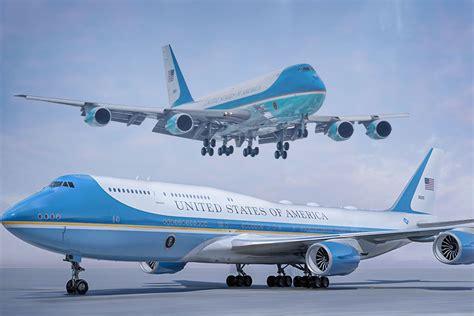
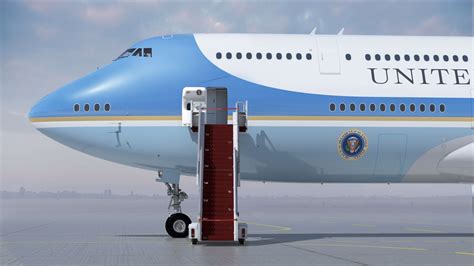
The replacement of the current Air Force One fleet was supposed to symbolize a new era of presidential air travel. Instead, the program has become a striking example of how modern military aviation projects can evolve into decade-long engineering battles. Although the next-generation aircraft are based on already manufactured Boeing 747-8 jumbo jets, transforming them into flying White Houses involves far more than repainting the fuselage and installing luxury interiors.
The new aircraft, designated VC-25B, are among the most complex airplanes ever modified for government service. Every system onboard must survive cyberattacks, electronic warfare, missile threats, and even the aftermath of a nuclear blast. That level of capability dramatically changes what would otherwise be a conventional aircraft conversion program.
The existing VC-25A fleet, based on the Boeing 747-200 platform, has served since 1990. While the aircraft remain highly capable, maintaining them has become increasingly difficult as parts age and systems grow obsolete. Replacing them was never optional. The real challenge has been creating aircraft advanced enough to serve future presidents in an era where warfare increasingly includes cyber intrusion, satellite disruption, and long-range precision weapons.
By the time Boeing received the $3.9 billion contract in 2018, expectations were already enormous. The company initially promised delivery by 2024, but repeated delays pushed operational readiness to at least 2029. Those postponements have frustrated both government officials and aviation observers, especially because the base aircraft already existed before the program even began.
Turning a Boeing 747 Into a Flying Command Center
One of the biggest misconceptions about Air Force One is that it functions mainly as a luxury transport aircraft. In reality, it operates as a fully survivable military command platform capable of maintaining U.S. government continuity during national emergencies.
That mission transforms the modification process into an engineering nightmare.
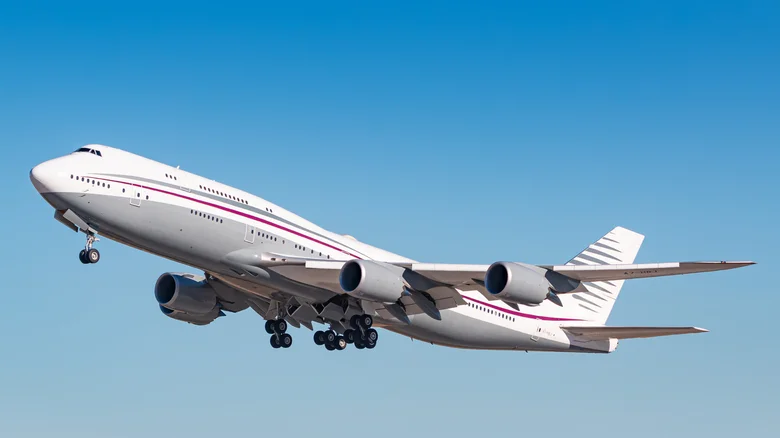
The two Boeing 747-8 aircraft selected for the VC-25B program were originally built for the now-defunct Russian airline Transaero. After the airline collapsed, the jets remained undelivered until they were acquired for presidential conversion. While the airframes themselves were complete, nearly everything inside them required redesigning or replacement.
The communications suite alone represents a monumental undertaking. The aircraft must support highly encrypted global communications across multiple military and civilian networks simultaneously. The president must be able to communicate securely with the Pentagon, nuclear forces, intelligence agencies, allied governments, and airborne military assets anywhere on Earth.
This requires thousands of miles of specialized wiring, hardened electronics, redundant power systems, and sophisticated shielding against electronic interference. Unlike commercial aircraft systems, these technologies cannot simply be purchased off the shelf. Many are custom-built, classified, and subject to strict security testing before installation.
Modern cybersecurity concerns have also dramatically increased development complexity. The aircraft’s digital architecture must resist hacking attempts that could target communications, navigation, or onboard operational systems. In a world where cyber warfare evolves constantly, every network integrated into the aircraft requires years of validation and security certification.
Electromagnetic Pulse Protection Adds Massive Complexity
One of the least visible yet most difficult modifications involves protecting the aircraft against electromagnetic pulse effects, commonly known as EMP.
An EMP generated by a nuclear detonation can instantly disable unprotected electronics across massive distances. Commercial airliners are not designed to survive such an event. Air Force One, however, must continue operating even under catastrophic wartime conditions.
To achieve this, engineers perform a process often referred to as shell hardening. Sensitive electronics receive specialized shielding, wiring systems are protected against energy surges, and critical components are isolated to ensure continued functionality after exposure to intense electromagnetic radiation.
This work is extraordinarily time-consuming because every onboard system must be tested individually and collectively. Even a minor vulnerability in shielding could compromise the aircraft during a crisis scenario. Engineers cannot simply assume systems will function correctly; they must prove survivability through rigorous validation procedures.
The result is an aircraft that behaves less like a civilian jumbo jet and more like an airborne military fortress.
Supply Chain Problems and Boeing’s Wider Struggles
The Air Force One delays also reflect broader problems affecting the aerospace industry. Boeing has spent recent years battling manufacturing disruptions, labor shortages, certification issues, and supply chain instability. Those pressures have impacted commercial programs as well as military contracts.
Because the VC-25B program relies on highly specialized suppliers, even small delays can cascade into years of schedule disruption. Many components used onboard are custom manufactured in extremely low quantities. Unlike commercial airlines that can source standardized equipment globally, Air Force One requires uniquely certified systems with stringent military-grade specifications.
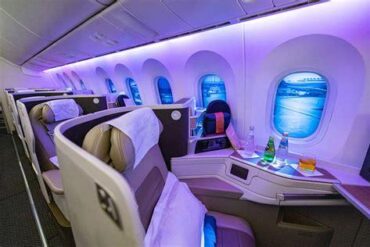
The aircraft interiors add another layer of complexity. Although the jets contain conference rooms, executive offices, communications areas, medical facilities, and presidential accommodations, every component must meet military survivability standards. Even seemingly ordinary cabin materials may require redesigning to satisfy fire resistance, electromagnetic shielding, or security requirements.
Compounding the issue is the fact that the Boeing 747 itself is no longer in production. Boeing ended 747 manufacturing in 2023, meaning long-term support for specialized airframe components has become more difficult as suppliers shift focus to newer aircraft programs.
Why the Qatari 747 Became a Temporary Solution
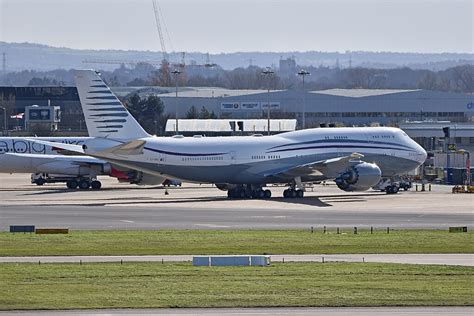
As delays mounted, the U.S. government explored alternatives to bridge the growing capability gap. In 2025, reports emerged that Qatar offered one of its Boeing 747-8 aircraft as an interim presidential transport platform.
The proposal immediately generated intense discussion because modifying an aircraft to full Air Force One specifications normally takes years. To accelerate the process, the Air Force reportedly turned to defense contractor L3Harris, a company with extensive experience integrating secure communications and defensive systems into executive aircraft.
The Qatari aircraft already featured a highly customized luxury interior, potentially reducing structural modification requirements. Even so, experts believe the interim aircraft would likely operate with a reduced capability set compared to the full VC-25B standard.
That compromise highlights the extraordinary demands placed on Air Force One. Building the aircraft is not simply about transporting the president in comfort. It involves creating a survivable airborne headquarters capable of functioning during the most dangerous scenarios imaginable.
The Most Demanding Presidential Aircraft Ever Built
The long timeline surrounding the new Air Force One fleet ultimately reflects the reality that these aircraft occupy a category entirely their own. No commercial airliner undergoes this level of transformation. No civilian aircraft requires the ability to coordinate military operations during a global crisis while simultaneously resisting missile threats, cyberattacks, and nuclear-related electromagnetic effects.
Every modification introduces new engineering challenges, and every challenge demands exhaustive testing before the aircraft can safely carry the president of the United States.
The delays may be politically controversial, but from an aerospace engineering perspective, they reveal just how unprecedented the VC-25B program truly is. Air Force One is not merely a presidential jet. It is one of the most technologically demanding aircraft projects ever attempted.