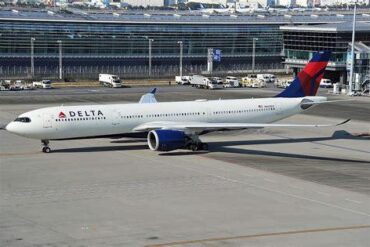
Delta Air Lines has long built its strength around one of the most powerful hub networks in global aviation. With a carefully positioned group of airports across the United States, the carrier has created a system designed to connect millions of travelers through strategic gateways. However, recent passenger data shows that several of Delta’s most important hubs are experiencing declines, raising questions about changing travel patterns, competitive pressure, and the future shape of the airline’s network.
According to U.S. Department of Transportation passenger data, six of Delta Air Lines’ nine major hubs recorded year-over-year passenger losses in the 12 months ending April 2026. While most declines were relatively small, the trend highlights a shift in the domestic aviation market where airlines are competing more aggressively for travelers through capacity adjustments, new routes, and pricing strategies.
New York JFK Becomes Delta Air Lines’ Biggest Passenger Loser
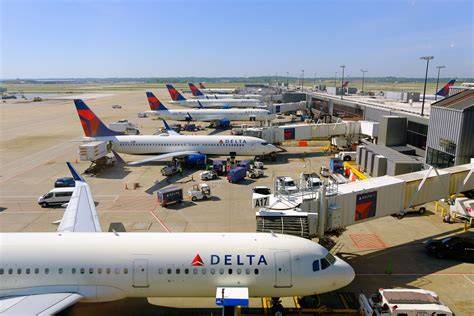
Among all Delta hubs, John F. Kennedy International Airport (JFK) experienced the largest passenger decline. The New York gateway handled 18,257,449 Delta passengers during the latest 12-month period, down from 18,714,750 passengers in the previous year.
The 2.4% decline may appear modest, but JFK remains one of Delta’s most strategically important airports. The carrier has invested heavily in its international network from New York, competing directly with global airlines offering premium long-haul services.
Delta continues to emphasize its strong presence at JFK, stating that it operates more flights and seats than any other airline at the airport, with more than 225 peak-day departures serving nearly 100 domestic and international destinations.
However, the decline reflects the challenges facing major international hubs. New York’s aviation market is among the most competitive in the world, with Delta competing against carriers including American Airlines, United Airlines, and international airlines seeking premium passengers.
Changing business travel patterns, increased leisure competition, and adjustments to international schedules may all contribute to passenger fluctuations at JFK.
Los Angeles and LaGuardia Also Face Passenger Declines
Delta’s West Coast operations at Los Angeles International Airport (LAX) also saw noticeable passenger losses. During the 12 months ending April 2026, Delta carried 13,439,470 passengers through LAX, representing a 1.7% decrease compared with 13,671,676 passengers in the previous period.
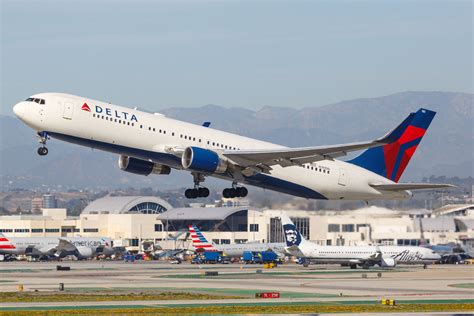
Los Angeles remains a critical market for Delta because of its size, economic importance, and strong demand for transcontinental travel. The airline has continued strengthening its presence on the West Coast, especially as competition from Alaska Airlines and other carriers increases.
Meanwhile, New York LaGuardia Airport (LGA) recorded a smaller but still measurable decline. Delta passenger traffic dropped from 13,816,823 to 13,667,234, representing a 1.1% year-over-year decrease.
Unlike JFK, LaGuardia primarily serves domestic travelers, making it particularly sensitive to changes in business travel demand and regional competition. The airport’s modernized facilities have improved the passenger experience, but airlines continue to adjust schedules based on market demand.
Minneapolis and Seattle Experience Smaller Drops
Delta’s major Midwest hub, Minneapolis-Saint Paul International Airport (MSP), also recorded a decline. Passenger numbers fell from 24,815,603 to 24,495,018, a reduction of 1.3%.
MSP remains one of Delta’s strongest operational bases, supported by its geographic position and extensive domestic network. The airline offered approximately 30.6 million seats through Delta-marketed flights at Minneapolis during the period, including both mainline and regional aircraft operations.
Despite the passenger decline, Minneapolis continues to play a vital role in Delta’s network strategy. The airport provides strong connections throughout the United States while serving as the carrier’s primary gateway in the Upper Midwest.
Seattle-Tacoma International Airport (SEA), Delta’s secondary West Coast hub, experienced one of the smallest declines. Passenger totals decreased only 0.3%, falling from 12,349,600 to 12,310,370.
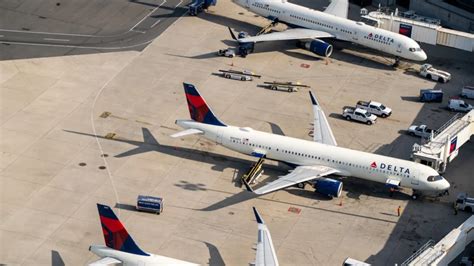
Seattle has become a major competitive battleground, particularly because of Alaska Airlines’ dominant position in the region. Delta has expanded its Seattle operations over recent years to challenge that dominance, adding routes and increasing capacity in important markets.
The slight passenger decline suggests that Delta’s investment has helped stabilize its position, even as competition remains intense.
Even Atlanta Sees a Slight Passenger Decline
The largest Delta hub in the world, Hartsfield-Jackson Atlanta International Airport (ATL), was not completely immune from the downturn.
Atlanta handled 81,251,715 Delta passengers in the latest period, compared with 81,434,269 passengers previously. The decline of just 0.2% was the smallest among Delta’s six declining hubs.
The numbers remain enormous. Delta offered approximately 98.8 million seats on flights to and from Atlanta during the period, including 92.7 million mainline seats and 6.1 million regional seats.
Atlanta continues to serve as the backbone of Delta’s global network. Its central location, extensive domestic connections, and operational efficiency make it one of the most important airline hubs worldwide.
The small decrease is unlikely to represent a major strategic concern, but it demonstrates that even the strongest hubs are affected by broader aviation trends.
Three Delta Air Lines Hubs Continue Growing
While several airports experienced declines, Delta’s overall network performance was not negative. Three major hubs recorded passenger growth during the same period.
Boston Logan International Airport (BOS) was the strongest performer by percentage growth. Passenger numbers increased from 10,972,120 to 11,239,494, supported by strong demand in the Northeast market and Delta’s continued expansion.
Detroit Metropolitan Wayne County Airport (DTW) recorded the largest increase in actual passenger numbers. Traffic grew by nearly half a million passengers, rising 2.2% from 22,846,144 to 23,340,073.
Delta’s Detroit hub remains a critical connection point, especially for Midwest travelers and international routes linking the United States with Europe and Asia.
Salt Lake City International Airport (SLC) also achieved growth, with passenger numbers increasing 0.6% from 18,567,498 to 18,674,576. The Utah hub continues benefiting from regional population growth and Delta’s strong position in the Mountain West.
What Passenger Trends Mean for Delta’s Future Hub Strategy
The passenger declines across six Delta hubs do not necessarily signal a major weakness. Most reductions were limited, and the airline continues operating one of the strongest hub networks in the aviation industry.
However, the results reveal a changing competitive environment. Airlines must constantly balance capacity, demand, aircraft availability, and profitability. A hub can remain strategically important even when passenger numbers temporarily decline.
Delta’s future growth will likely depend on how effectively it adapts its network, strengthens profitable routes, and responds to competition from both traditional rivals and expanding low-cost carriers.
The latest passenger figures show that while some Delta hubs are losing momentum, others continue growing. The airline’s ability to adjust its strategy across different markets will determine whether these temporary declines become a larger trend or simply part of normal aviation cycles.