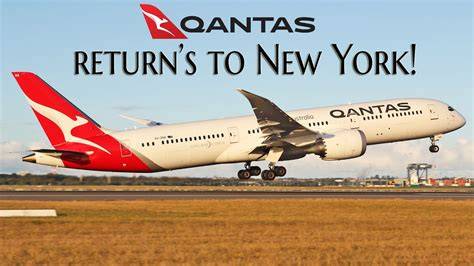
Qantas is making a significant change to its US network just as one of the biggest transformations in its long-haul fleet begins to take shape. The Australian flag carrier has increased its Sydney–New York service via Auckland to daily, giving it a surprisingly strong presence on the Auckland–JFK market even though New Zealand has its own flag carrier operating from the same hub. The increase is temporary, but its timing reveals much about how Qantas intends to reshape its American network.
The immediate reason for the additional flights is the 2026 FIFA World Cup, which is generating additional demand between Australia, New Zealand and the United States. Qantas introduced the daily Sydney–Auckland–New York service in June, with the higher frequency scheduled to continue until October. Yet the significance of the move goes well beyond a sporting event. Qantas is preparing for a period in which its US capacity could fall sharply because of the accelerated retirement of its Airbus A380 fleet.
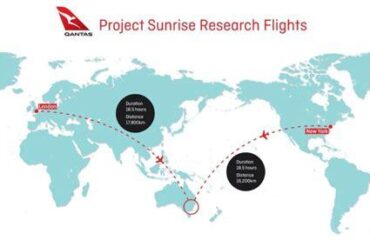
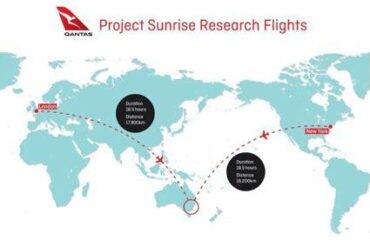
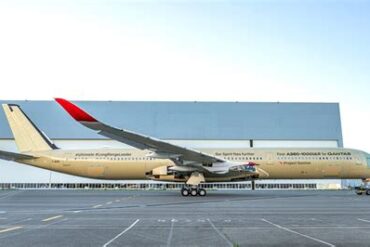
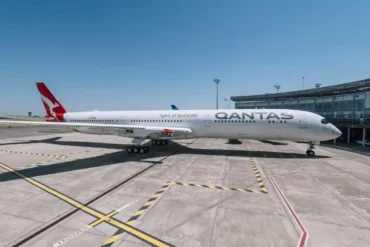
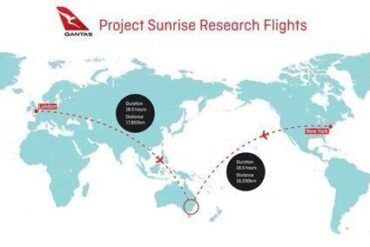
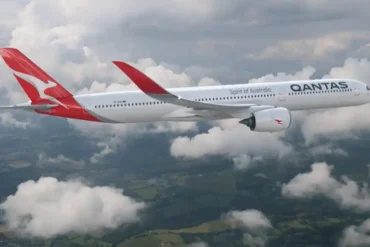
The timing is particularly interesting because Qantas is simultaneously preparing for Project Sunrise, its long-planned ultra-long-haul operation using the Airbus A350-1000ULR. The aircraft will eventually connect Sydney directly with destinations such as London and New York, eliminating the need for an intermediate stop. On the surface, that might appear to make the Auckland routing unnecessary. In practice, Qantas appears increasingly likely to retain both options, using nonstop Project Sunrise flights for premium demand while maintaining one-stop services to preserve broader network capacity.
Qantas’ Expanding New York Strategy
Qantas currently serves several major US destinations, but New York has become increasingly important in its network strategy. The carrier originally launched its Sydney–Auckland–JFK service in 2023 with only three weekly flights. The schedule has subsequently grown, demonstrating that Qantas has found enough demand to justify increasing the route beyond its original limited operation.
The current daily schedule represents another step in that progression. After October, however, the airline plans to reduce the route to four flights per week before increasing it again to five weekly flights during the 2027 summer season. Even after the temporary reduction, Qantas is expected to sell more capacity on the Auckland–JFK market than Air New Zealand, an unusual position considering that Auckland is the New Zealand carrier’s principal long-haul hub.
The route also has an important historical dimension. Qantas has not operated a nonstop Sydney–New York service since before the pandemic. Its previous New York operation was routed through Los Angeles using the Boeing 747-400, meaning the eventual Project Sunrise service will mark a fundamentally different approach. Instead of relying on a traditional US gateway, Qantas will use the extraordinary range of the A350-1000ULR to fly directly between Australia and New York.
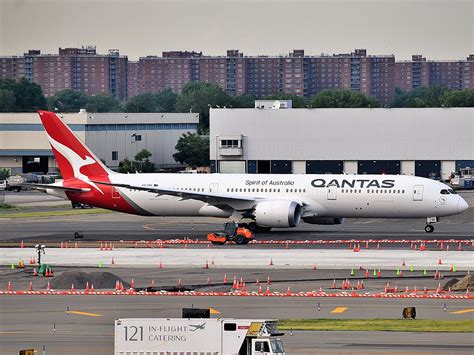
That does not mean the Auckland service has become obsolete. Quite the opposite. Keeping a one-stop option gives Qantas another way to serve New York while its limited number of A350-1000ULRs are allocated to the most strategically important ultra-long-haul routes. It also creates additional flexibility during periods of unusually strong demand, including major international events.
The 2026 Qantas US Network
Qantas currently operates a relatively concentrated US network, with Los Angeles, Dallas/Fort Worth, San Francisco, Honolulu and New York forming the core of its American footprint. Los Angeles remains one of the largest markets, with daily Airbus A380 services from Sydney and Melbourne, while Brisbane is also connected to LAX using the smaller Airbus A330-200.
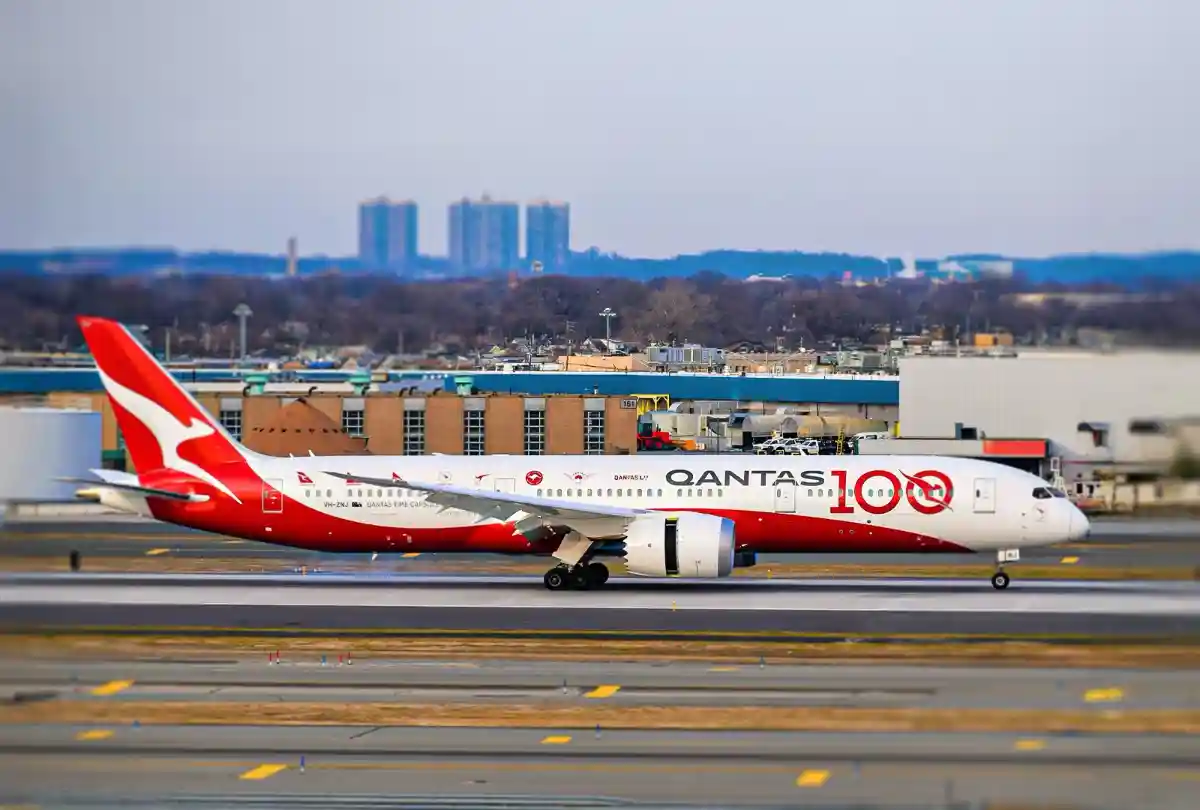
Dallas/Fort Worth is another major route. Qantas operates daily Sydney–DFW flights using the A380, supplemented by three weekly Boeing 787-9 services. San Francisco receives three weekly 787 flights from Sydney, while Honolulu is served six times per week with a combination of Boeing 787 and Airbus A330-300 aircraft.
These routes do more than simply connect Australia with individual American cities. LAX and DFW are important connecting gateways because Qantas has a joint venture with American Airlines. Passengers can therefore use Qantas to reach the United States before transferring to American’s extensive domestic network.
That structure explains why the retirement of the A380 presents a challenge. Replacing a 485-seat aircraft with a much smaller widebody does not simply change the aircraft type. It changes the number of passengers that Qantas can carry on every individual flight, making frequency and network breadth increasingly important.
Why The Airbus A380 Retirement Changes Everything
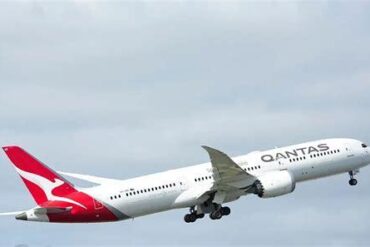
Qantas currently has ten Airbus A380-800s, and the aircraft has played a central role in its long-haul network for years. The double-deck jet can carry 485 passengers in Qantas’ configuration, making it dramatically larger than the airline’s Boeing 787-9, which carries 236 passengers.
The A380 is already an expensive aircraft to operate and maintain, particularly as fuel prices, maintenance requirements and fleet complexity become increasingly important considerations. Qantas had previously planned to begin retiring its A380s in 2032. In September, however, the airline brought that timetable forward by four years, with the first retirements now expected in 2028 and the final A380 scheduled to leave service in mid-2028.
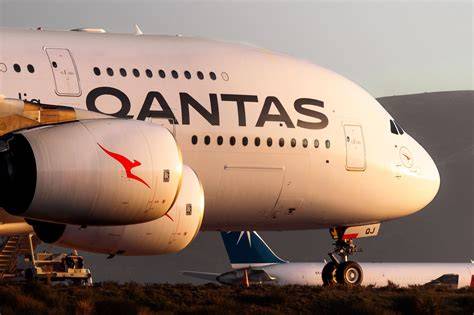
The impact on the US network could be substantial. A380s currently serve Los Angeles and Dallas/Fort Worth, while the aircraft is also used on major international routes including London, Singapore and Johannesburg. Once those aircraft disappear, Qantas will have to replace a considerable amount of seat capacity with smaller aircraft.
The airline has 12 Airbus A350-1000s on order separately from its 12 A350-1000ULRs, along with additional Boeing 787-9 aircraft. The exact configuration of the conventional A350s has not been finalized, but even an aircraft with more than 300 seats would represent a significant reduction compared with the 485-seat A380.
That difference creates an important strategic problem. Qantas could theoretically operate fewer flights with smaller aircraft, but doing so would reduce the number of seats available to the United States. Instead, the carrier appears to be preparing for a different model: more destinations, more frequencies and smaller aircraft.
Project Sunrise Will Not Be The Main Cause Of The Capacity Drop
It is easy to assume that Project Sunrise itself will reduce Qantas’ US capacity because the A350-1000ULR is much smaller than the A380. The reality is more complicated.
The 238-seat A350-1000ULR is designed for an entirely different mission. Its four-class, premium-heavy configuration prioritizes passengers willing to pay for the ability to travel nonstop over extremely long distances. Qantas plans to use the aircraft on routes such as Sydney–London and Sydney–New York, with London expected to launch first in October 2027 and New York following afterward.
The Sydney–JFK service will therefore add a new nonstop option rather than directly replacing an existing A380 operation. The capacity reduction will primarily come later, when the A380 fleet begins leaving service.
This distinction matters because Project Sunrise can actually help Qantas expand its US network. A nonstop Sydney–JFK service can attract passengers who previously had to connect through another city, while the existing Auckland routing can continue serving another segment of the market.
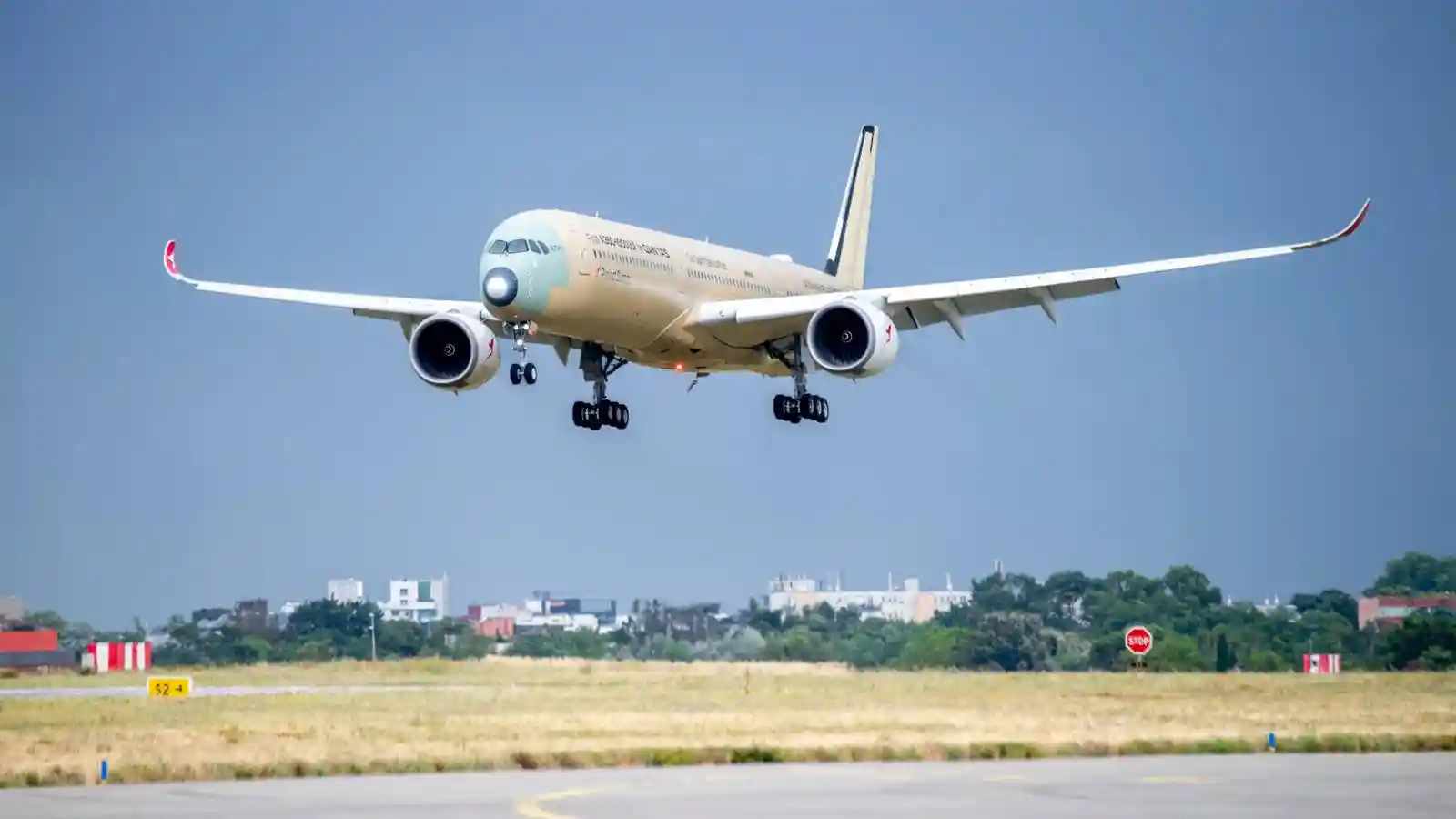
The A350-1000ULR also gives Qantas something the A380 cannot: the ability to serve thinner long-haul markets economically. The carrier no longer needs hundreds of passengers on every flight to justify opening a new route. That opens the door to destinations that would have been difficult to support with a 485-seat aircraft.
Las Vegas Shows Where Qantas Is Heading
The clearest example is Las Vegas. In December 2026, Qantas plans to begin three weekly nonstop flights between Sydney and Harry Reid International Airport using the Boeing 787-9. The seasonal service is scheduled to operate through March, giving Qantas its sixth US destination.
Thirty years ago, such a route would have been difficult to imagine as part of Qantas’ core strategy. The airline historically concentrated long-haul capacity on major trunk routes such as London, Singapore, Hong Kong and Los Angeles. Large aircraft were used to funnel passengers into major gateways, where partner airlines could take them onward.
The modern fleet changes that equation. The 787-9 can operate long distances with substantially less capacity than an A380, while the A350 family extends this philosophy even further. Qantas can now connect Australia directly with individual destinations instead of relying entirely on large hubs.
Las Vegas is therefore more than a new dot on the route map. It demonstrates how Qantas can replace some of the lost A380 capacity with a larger collection of smaller routes. The airline may not put 485 seats into every market, but it can distribute its available aircraft across more cities and tailor capacity more closely to demand.
Why Qantas Needs To Keep The Auckland–JFK Flight
The continued Auckland–JFK service makes strategic sense even after Project Sunrise begins. A nonstop Sydney–New York flight will appeal strongly to passengers who value convenience, but the one-stop option can provide additional seats without consuming one of Qantas’ highly specialized A350-1000ULRs.
It also gives Qantas more scheduling flexibility. The airline can operate the nonstop service as a premium-focused product while using the 787 on the Auckland routing to capture other demand. During particularly strong periods, both services can contribute to the New York market.
That strategy could become increasingly important as the A380 disappears. Rather than attempting to replace every 485-seat flight with another aircraft of similar size, Qantas can divide the capacity across multiple routes. New York, Las Vegas, Los Angeles, Dallas/Fort Worth, San Francisco and Honolulu can collectively support a broader US presence even as the number of A380 flights declines.
Qantas Is Moving Beyond The Old Trunk-Route Model
The larger story is that Qantas is changing the philosophy behind its international network. For decades, its long-haul strategy depended heavily on a handful of major routes supported by large aircraft. The arrival of the 787, A350-1000 and A350-1000ULR allows the airline to move toward a more distributed network.
That shift also reflects changing passenger expectations. Many travelers would rather fly directly to their destination than connect through Los Angeles, Dallas or another gateway. New-generation aircraft make those nonstop routes possible without requiring the enormous passenger volumes once needed to justify a jumbo jet.
Qantas is therefore entering a period in which frequency may matter as much as aircraft size. LAX and DFW will remain strategically important, particularly because of their relationship with American Airlines, but they no longer need to absorb the same proportion of Qantas’ international capacity.
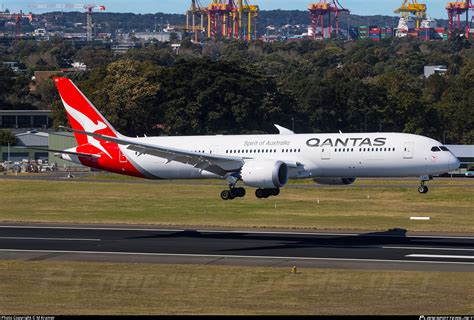
The combination of four additional 787-9 aircraft, 12 A350-1000s and 12 A350-1000ULRs gives Qantas considerable flexibility over the coming years. The airline can replace some A380 capacity, launch new routes and increase frequencies without returning to the era of enormous aircraft serving only a small number of destinations.
A New US Network Is Taking Shape
Qantas’ decision to increase Sydney–New York via Auckland to daily before Project Sunrise begins is therefore more significant than a temporary response to the FIFA World Cup. It shows that New York has become a central part of the airline’s US strategy, and it provides a preview of how Qantas may manage the capacity challenge created by the A380’s accelerated retirement.
Project Sunrise will introduce an extraordinary nonstop Sydney–JFK service, but it is unlikely to eliminate the need for the Auckland routing. Instead, the two services can coexist, allowing Qantas to combine an ultra-long-haul premium product with a more conventional one-stop operation.
At the same time, Las Vegas demonstrates that the airline is willing to place smaller aircraft on routes that would once have been outside its traditional network strategy. As A380s disappear, Qantas can compensate not by finding another jumbo jet, but by spreading its capacity across more destinations and more frequencies.
The result could be a very different Qantas presence in the United States by the end of the decade. The airline may operate fewer giant aircraft, but its network could become considerably broader. New York is at the center of that transition, with the Auckland service providing immediate capacity and Project Sunrise eventually delivering the nonstop connection that has been one of Qantas’ most ambitious long-haul goals.