Qantas’ seasonal Perth–Rome route looks like a simple leisure-focused service connecting Australia with one of Europe’s most popular destinations. However, behind the scenes, the route has become something far more important: a real-world experiment for the airline’s ambitious Project Sunrise program. By operating one of the world’s longest commercial routes with existing aircraft, Qantas has been gathering valuable data about passenger demand, operational reliability, and the commercial potential of ultra-long-haul travel.
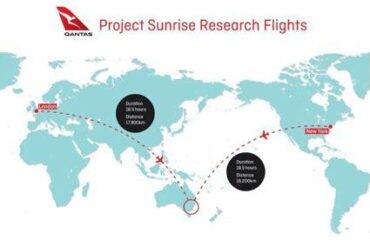
Project Sunrise represents one of the biggest changes in modern aviation. The program aims to introduce nonstop flights from Australia’s eastern cities to destinations such as London and New York, eliminating the traditional stopovers that have defined long-distance travel between Australia and the Northern Hemisphere for decades. Before the specially designed Airbus A350-1000ULR aircraft enter service, Qantas has been using existing international routes to test whether passengers are ready for a new era of nonstop flying.
The Perth–Rome service has emerged as one of the strongest indicators that the airline’s ultra-long-haul strategy could succeed. Strong passenger demand, high load factors, and significant connecting traffic from Australia’s eastern states suggest that travelers are willing to choose direct long-distance flights even when they involve extended time in the air.
Qantas Project Sunrise Begins With Real-World Testing
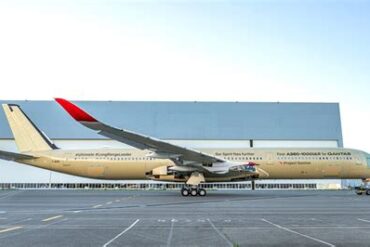
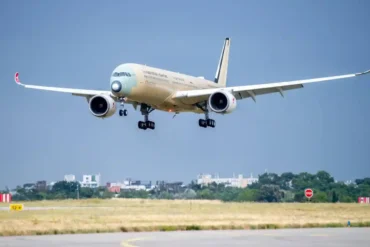
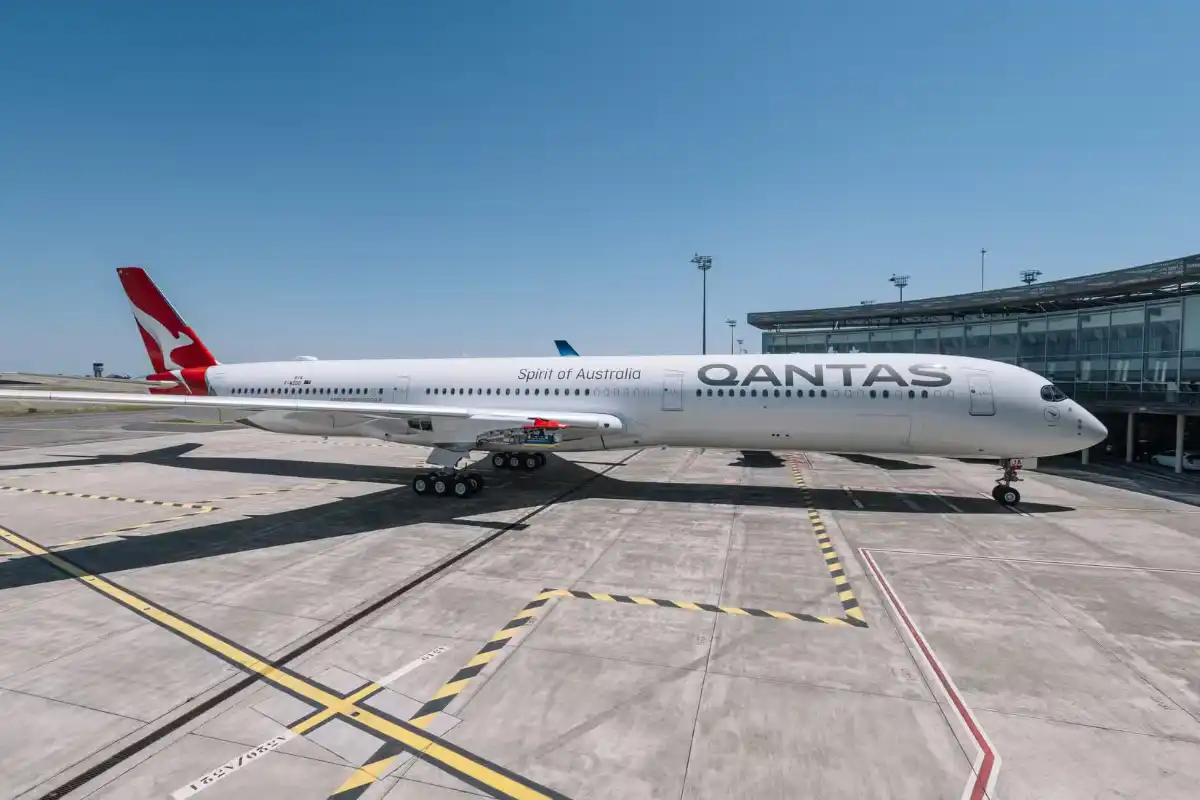
Qantas’ Project Sunrise has been developing for nearly a decade, with the airline working closely with Airbus to create an aircraft capable of operating missions that were previously considered commercially impossible. The program’s centerpiece is the Airbus A350-1000ULR, a specialized version of the A350-1000 designed for flights lasting up to approximately 22 hours.
The airline initially planned to launch Project Sunrise earlier, but global supply chain challenges affecting Airbus production have pushed the timeline back. The first aircraft deliveries are now expected in 2027, with the first Sydney–London nonstop service targeted for October of that year.
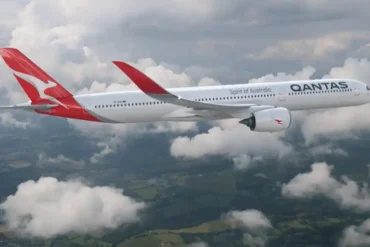
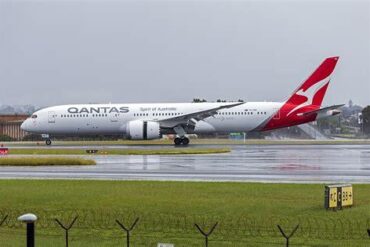
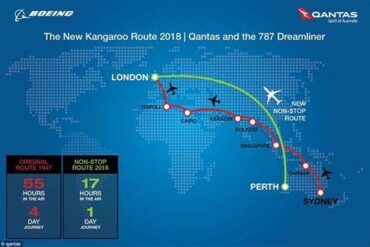
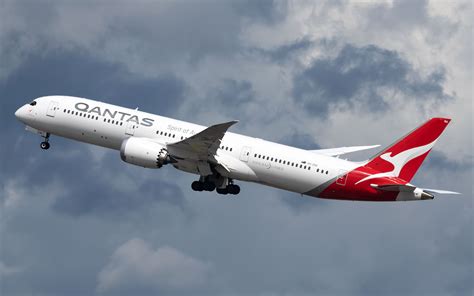
While the final aircraft are still being prepared, Qantas has not simply waited for the launch date. Instead, it has used its existing network to collect operational experience. The Perth–London route, launched in 2018 with the Boeing 787-9 Dreamliner, became the first nonstop connection between Australia and Europe. It proved that passengers were willing to spend more than 17 hours on a direct flight if the convenience outweighed the longer journey time.
The Perth–Rome route followed this success. Introduced in 2022 as a seasonal service, it gave Qantas another opportunity to examine demand patterns beyond traditional gateway cities. Rome is not only a major tourism destination but also a useful indicator of whether Australian travelers want direct access to secondary European markets.
Why Perth–Rome Matters More Than It Appears
The success of Perth–Rome provides Qantas with insights that extend far beyond one route. According to industry reports, the service has consistently achieved load factors above 90% since launch, demonstrating strong passenger demand. Since 2022, the route has carried more than 70,000 passengers, encouraging Qantas to expand the seasonal schedule.
For 2026, the airline plans to operate additional flights during the peak European summer travel period. The route will increase to four weekly services between late June and late September before returning to three weekly flights through October. The expansion will add nearly 10,000 seats and contribute to Qantas’ growing European network from Perth.
The most revealing detail is where many passengers originate. More than half of travelers flying Perth–Rome reportedly begin their journeys in eastern Australia and connect through Perth. This shows that the route is not only serving Western Australia but functioning as a national gateway for international travel.
That pattern closely matches the logic behind Project Sunrise. Sydney and Melbourne are Australia’s largest population centers, but Qantas needs evidence that passengers from across the country will support nonstop ultra-long-haul services. Perth–Rome demonstrates that travelers are willing to connect domestically in order to access direct international flights.
The route is effectively answering a critical question for Qantas: if passengers are willing to fly from Sydney or Melbourne to Perth before continuing nonstop to Europe, could they also support future direct flights from Australia’s eastern cities?
Perth Becomes Qantas’ Ultra-Long-Haul Laboratory
Perth’s geographic position makes it uniquely valuable for Qantas’ long-haul ambitions. Located on Australia’s western edge, the city provides the shortest possible Australian departure point for flights to Europe. This advantage helped make Perth the launch point for the airline’s first nonstop Australia–Europe route.
The original Kangaroo Route between Australia and London required multiple stops and could take several days to complete. Over decades, improvements in aircraft range gradually removed these stops. Perth–London represented a major milestone by reducing the journey to a single nonstop flight.
Now, Perth is serving as a testing ground for the next stage of aviation development. The city allows Qantas to study passenger behavior, crew operations, aircraft performance, and airport requirements before introducing even longer services.
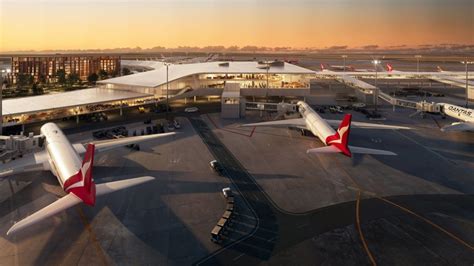
Airport infrastructure is also becoming an important part of the strategy. Qantas and Perth Airport previously had disagreements over terminal arrangements, but the two sides reached an agreement in 2024 for a major redevelopment program. The project includes billions of dollars of investment into new terminal facilities and runway improvements.
The upgraded facilities will eventually support larger and more advanced aircraft, including the A350-1000ULR aircraft that will operate Project Sunrise missions. Existing terminal upgrades are already being made to ensure Perth can handle future ultra-long-haul operations.
The Airbus A350-1000ULR Will Change Long-Haul Flying
The aircraft at the center of Project Sunrise is not simply a standard long-range jet. Qantas’ Airbus A350-1000ULR fleet has been specifically designed around passenger comfort and endurance.
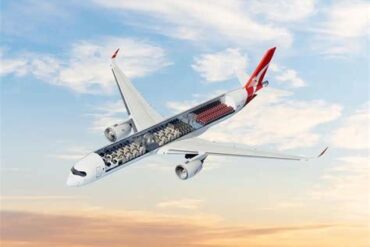
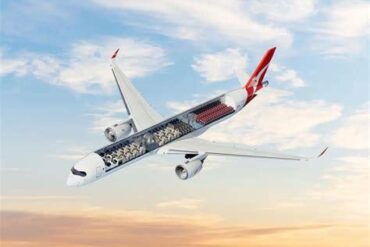
The airline has ordered 12 aircraft, each configured differently from typical high-density A350 layouts. Instead of carrying around 400 passengers, Qantas will operate the aircraft with only 238 seats across four cabin classes.
The cabin will include six first-class suites, 52 business-class suites, 40 premium economy seats, and 140 economy seats. This lower-density configuration allows more personal space, which is essential when passengers may remain onboard for almost an entire day.
Qantas understands that ultra-long-haul success depends on more than just aircraft range. A 20-hour flight requires a completely different passenger experience compared with traditional long-haul services. The airline has worked with researchers from the University of Sydney’s Charles Perkins Centre to study sleep patterns, nutrition, hydration, movement, and circadian rhythms.
These studies have influenced the aircraft interior design. Features such as a dedicated Wellbeing Zone, improved lighting systems, and better crew rest facilities are intended to reduce fatigue and improve passenger comfort.
The lessons learned from Perth–Rome are valuable because they allow Qantas to understand how passengers respond to long flights before introducing even longer nonstop services.
Sydney–London and Sydney–New York Will Be The Next Frontier
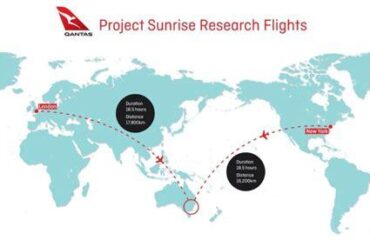
The initial focus of Project Sunrise is on two historic routes: Sydney–London and Sydney–New York. These flights are expected to become among the longest commercial services ever operated.
The Sydney–London route covers roughly 10,573 miles (17,016 kilometers), while Sydney–New York spans around 9,950 miles (16,013 kilometers). Both routes push modern aircraft technology to its limits.
For decades, these journeys required one or more stops. Even today, many passengers traveling between Australia and Europe still connect through hubs such as Singapore, Dubai, or Doha. Project Sunrise aims to remove the final stop from the journey and create a completely new travel experience.
Qantas CEO Vanessa Hudson has described the program as the final step in the evolution of the Kangaroo Route. Each generation of aircraft has removed another stop, and the A350-1000ULR will remove the last one.
However, the Perth–Rome experience suggests that Project Sunrise may eventually expand beyond its first destinations. If demand continues to grow, Qantas could consider additional nonstop services connecting Australia’s eastern cities with other European destinations.
Perth–Rome Could Predict The Future Of Qantas’ Global Network
The biggest lesson from the Perth–Rome route is that ultra-long-haul flying is not only about aircraft capability. The technology already exists. The real challenge is proving that passengers, airports, and airline operations can support a profitable business model.
Qantas has used Perth–Rome as a practical demonstration of this concept. The route has shown that travelers value convenience, even when nonstop flights require long periods onboard. It has also revealed demand for European cities beyond traditional hubs.
As Project Sunrise moves closer to launch, every successful Perth operation strengthens Qantas’ confidence. The airline is learning how passengers behave, how crews manage extended missions, and how airports must adapt.
The future of long-distance aviation may not simply be about flying farther. It may be about making the journey itself easier, faster, and more comfortable. Qantas’ seasonal Perth–Rome service may appear to be a niche summer route, but it is actually helping shape one of the most ambitious aviation projects of the modern era.
When the first Project Sunrise flights finally take off in 2027, much of their success will have been built on lessons learned thousands of kilometers away in Perth.