Airbus and Boeing entered 2026 with the commercial aviation industry facing an unusual paradox: airlines desperately need new aircraft, yet manufacturers are still struggling to deliver them quickly enough. Demand remains exceptionally strong as carriers replace aging fleets, add capacity, and seek more fuel-efficient jets. At the same time, supply-chain constraints, engine shortages, manufacturing disruptions, and regulatory scrutiny continue to limit how rapidly new aircraft can move from assembly lines into airline service.
For a brief moment, Boeing appeared to have broken through those obstacles. The US manufacturer began 2026 ahead of Airbus in commercial aircraft deliveries, achieving a quarterly milestone that would have seemed improbable only a few years earlier. Boeing delivered 143 commercial aircraft in the first quarter, compared with 111 for Airbus, marking the first time in seven years that Boeing had surpassed its European rival in quarterly deliveries.
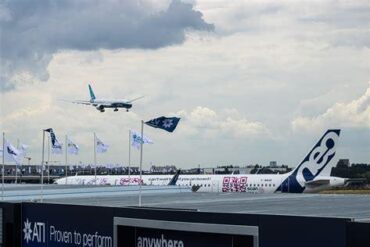
That early advantage, however, did not last. Airbus dramatically increased its delivery pace during the second quarter, benefiting from improving supplier performance and the resumption of aircraft handovers to Chinese customers. By the end of the first half of 2026, Airbus had delivered 351 commercial aircraft to 77 customers, while Boeing’s improving performance had not been sufficient to prevent the European manufacturer from moving back into first place.
The significance extends well beyond a simple monthly or quarterly scoreboard. Airbus’ 2026 delivery lead highlights the strength of its A320neo family production system, the depth of its order backlog, and the enormous customer demand for the A321neo and A321XLR. It also demonstrates that Boeing’s recovery is real but remains constrained by the consequences of years of production and quality challenges.
Boeing’s 737 MAX Recovery Creates an Early 2026 Lead
Boeing’s first-quarter performance deserves considerable attention because it represented a major reversal from the pattern established after the 737 MAX crisis. The manufacturer delivered 143 commercial aircraft during Q1 2026, with 114 of those aircraft belonging to the 737 MAX family. That means roughly four out of every five commercial aircraft Boeing delivered during the quarter were 737 MAX jets.
The result demonstrated just how important the narrowbody family has become to Boeing’s recovery. The remaining deliveries consisted of six 767s, eight 777s, and 15 787 Dreamliners. While Boeing’s widebody programs continued to contribute valuable aircraft, the 737 MAX was clearly the engine driving its delivery rebound.
The milestone was particularly significant because Boeing had not delivered more commercial aircraft than Airbus in a quarter since Q1 2019. Between then and 2026, the company experienced an extraordinary sequence of challenges surrounding the 737 MAX, including two fatal accidents, a worldwide grounding, production interruptions, and continuing regulatory scrutiny.
The January 2024 Alaska Airlines 737 MAX 9 door-plug incident added another major setback. The Federal Aviation Administration subsequently restricted Boeing’s production rate and required the company to implement a quality improvement plan. A seven-week machinists’ strike in late 2024 created another disruption, putting additional pressure on production schedules.
Yet Boeing’s first-quarter numbers showed that the company had begun converting its recovery plans into actual deliveries. The 737 MAX is no longer simply a recovery story; it is becoming the mechanism through which Boeing attempts to regain manufacturing momentum.
Airbus Reclaims the Delivery Lead
Airbus’ response was considerably stronger than its weak first quarter initially suggested. The company remained behind Boeing through the first four months of 2026, but the situation changed rapidly in May.
During that month, Airbus delivered 81 aircraft to 45 customers, representing a 59% increase compared with May 2025. The improvement was also substantial compared with April, when Airbus delivered 67 aircraft. June provided another acceleration, with 89 commercial aircraft handed over—the company’s highest monthly delivery total of the year at that point.
The rebound was partly enabled by the resumption of deliveries to Chinese customers. Earlier in 2026, Airbus had acknowledged that an administrative issue had delayed a number of handovers. Industry reports linked the disruption to discussions involving the European certification of COMAC’s C919, with roughly 20 Airbus aircraft reportedly affected.
Once the issue was resolved, Airbus was able to release aircraft that had effectively been waiting for their delivery process to be completed. That created an important catch-up effect during the second quarter and helped explain why Airbus could move from a first-quarter deficit to a first-half lead so quickly.
Airbus ultimately delivered 351 aircraft during the first half of 2026. Its breakdown included 25 A220s, 190 A320neo-family aircraft, seven A330s, and 15 A350s in the second-quarter delivery figures provided in the reference data. The numbers reveal the central role of Airbus’ single-aisle portfolio.
The A320neo Family Is Airbus’ Biggest Advantage
The most important reason Airbus can maintain a delivery advantage is not simply that it is producing more aircraft today. It is the combination of production scale, product demand, and backlog depth surrounding the A320neo family.
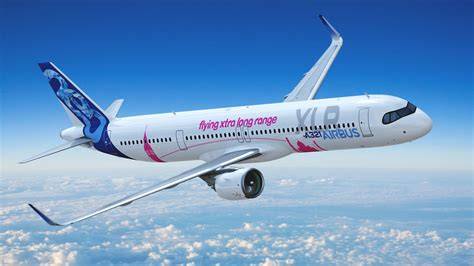
The A320neo family has become the foundation of Airbus’ commercial aircraft business. Within the family, the A321neo is particularly important because airlines increasingly want larger single-aisle aircraft capable of serving routes that previously required smaller widebodies or traditional midsize jets.
The A321XLR adds another dimension. With its extended range, the aircraft allows airlines to connect cities that may not generate enough demand for a widebody aircraft while still requiring more range than a conventional narrowbody can provide. That flexibility has made the aircraft highly attractive to carriers seeking to develop new routes while controlling operating costs.
Airbus now holds roughly 60% of the narrowbody market, compared with approximately 40% for Boeing’s 737 MAX family. The delivery figures therefore reflect a broader structural advantage rather than a temporary production surge alone.
This matters because every additional aircraft Airbus delivers strengthens its relationship with airline customers and lessors. Aircraft deliveries generate revenue, support fleet expansion, and help customers activate routes and replace older jets. A manufacturer that can consistently turn orders into physical aircraft has a significant commercial advantage even when both companies possess enormous backlogs.
Pratt & Whitney Remains Airbus’ Biggest Production Threat
Airbus’ advantage should not be interpreted as evidence that its manufacturing problems have disappeared. In fact, engine availability remains one of the biggest constraints on Airbus’ ability to increase production.
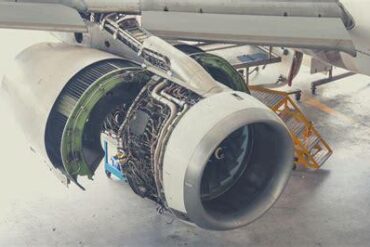
The problem is closely connected to Pratt & Whitney’s geared turbofan engines. In 2023, a manufacturing defect was identified in powder-metal components used in certain GTF high-pressure turbine and compressor disks. Approximately 1,200 engines were affected by inspection or rework requirements.
The consequences extended beyond aircraft already flying. Inspections and repairs placed additional pressure on Pratt & Whitney’s ability to supply new engines at the pace Airbus requires. As a result, some completed A220 and A320neo-family aircraft have remained on the ground while awaiting engines.
This is especially important because Airbus wants to increase A320-family production substantially. The manufacturer has targeted a monthly production rate of 75 aircraft for years, but supply-chain and engine problems have repeatedly delayed that objective. Airbus now expects to reach 70 to 75 A320-family aircraft per month by the end of 2027.
That delay reveals an important limitation behind the current delivery lead. Airbus has strong demand and a huge backlog, but it cannot simply accelerate production by turning a switch. Engines, components, labor, logistics, quality control, and final assembly must all increase together.
Boeing Is Preparing to Fight Back
Boeing’s improving production system means Airbus cannot assume that its 2026 lead will continue indefinitely. The company is attempting to increase 737 MAX production as regulatory restrictions become less restrictive and its manufacturing processes stabilize.
Following the Alaska Airlines incident, the FAA capped 737 MAX production at 38 aircraft per month while Boeing implemented its quality improvement plan. The regulator later approved an increase to 42 aircraft per month while maintaining close oversight.
In March 2026, the FAA removed the fixed production cap, allowing Boeing to increase output provided that it continued to satisfy safety and quality requirements. Boeing CEO Kelly Ortberg has outlined a strategy of increasing production in increments of five aircraft per month, with a target of approximately 53 737 MAX aircraft per month by the end of 2026.
That target could materially change the delivery race.
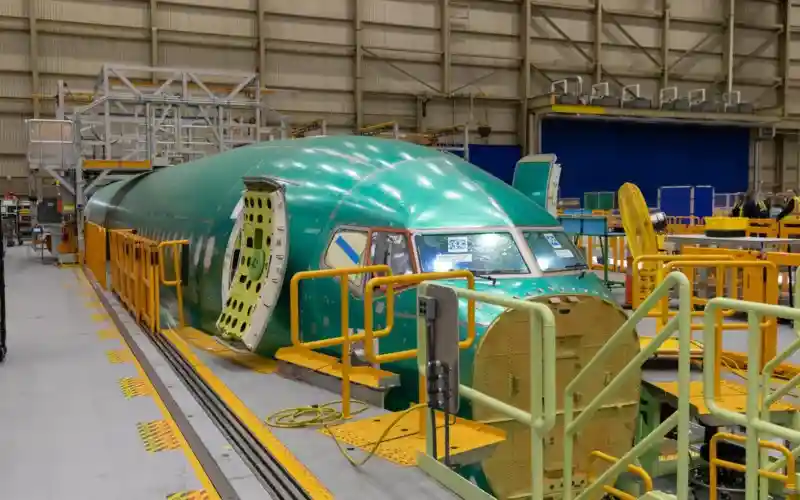
Boeing has also opened a new 737 MAX production line at its Everett, Washington, facility. Known as the North Line, the facility can produce the different MAX variants and is initially focused on the MAX 8, MAX 9, and MAX 10.
The company has also reached another important milestone for the MAX 7. Boeing recently received the amended type certificate needed to clear the aircraft for commercial service, removing another obstacle to broader MAX-family production and deliveries.
Airbus Has the Stronger Backlog
Even if Boeing succeeds in increasing deliveries substantially, Airbus enters the second half of 2026 with an extraordinary commercial advantage: a massive backlog supported by strong global demand.
Airbus ended the first half of the year with a commercial aircraft backlog of 9,216 aircraft, including 7,461 A320neo-family jets. At an annual delivery target of around 870 aircraft, that backlog represents approximately 10.6 years of production.
Boeing’s backlog was also enormous. At the end of June, the manufacturer had 6,814 commercial aircraft in its order book. At its current delivery rate, that likewise represents more than a decade of production.
These numbers demonstrate why the delivery race cannot be judged solely by who wins one quarter. Both companies have far more orders than they can currently fulfill within a few years.
The real competitive question is therefore who can convert backlog into deliveries more reliably. Airbus currently has the advantage because its production system is generating a higher delivery volume, particularly through the A320neo family.
For airlines and leasing companies, reliability can be nearly as important as the aircraft itself. A delayed aircraft can disrupt fleet planning, route launches, capacity forecasts, and financial projections. Manufacturers that consistently deliver on schedule become more valuable partners.
Airbus Still Has to Reach Its 2026 Target
Airbus’ lead does not mean the company has already achieved its objectives. It is targeting approximately 870 deliveries in 2026, which requires a sustained acceleration through the remainder of the year.
Based on its second-quarter performance, Airbus needs to maintain an average monthly delivery rate of roughly 84 to 86 aircraft to remain on track. The June result of 89 aircraft suggests that the target is achievable, but maintaining that pace over multiple months will be more difficult than achieving one strong month.
The company must continue managing engine availability, supplier performance, final assembly capacity, customer acceptance procedures, and international delivery logistics. Any renewed disruption could quickly reduce the margin over Boeing.
At the same time, Airbus continues to receive substantial new orders. SMBC Aviation Capital, for example, committed to 100 A320neo-family aircraft, including 65 A321neos and 35 A320neos. Other orders include additional A330neos and A350s from airlines such as flynas, SAS, Philippines Airlines, and Riyadh Air, while BermudAir placed its first Airbus order for ten A220-300s.
That demand gives Airbus a powerful foundation for future growth, but it also creates pressure to deliver.
What Airbus’ 2026 Lead Means for Boeing
The delivery race is ultimately a test of industrial recovery. Boeing’s first-quarter lead proved that its production system can recover significant ground when 737 MAX output improves. Airbus’ subsequent comeback showed that production resilience matters just as much as recovery speed.
For Boeing, the challenge is to increase output without repeating the quality problems that caused regulators to intervene in the first place. Higher production is valuable only if aircraft can be completed, certified, accepted, and delivered without creating another cycle of disruption.
For Airbus, the challenge is almost the opposite. It has enormous demand and strong customer confidence, but its ability to capitalize on that position depends heavily on suppliers. Pratt & Whitney’s engine constraints illustrate how even a highly successful aircraft program can become limited by a component outside the manufacturer’s direct control.
The wider aviation market therefore has a clear stake in the outcome. Airlines need aircraft, lessors need reliable delivery schedules, and passengers ultimately depend on fleet growth to support additional capacity.
The Delivery Race Is Really a Production Race
Airbus’ 2026 delivery lead is significant because it shows how the commercial aircraft market is evolving after several turbulent years. Boeing is recovering, but Airbus currently has greater delivery momentum. The European manufacturer has leveraged the popularity of the A320neo family and its large industrial base to regain the lead after a disappointing start to the year.
Yet the advantage remains fragile. Boeing is increasing 737 MAX production, the FAA has removed the fixed production cap, and the Everett North Line gives Boeing additional manufacturing capacity. Meanwhile, Airbus must overcome continuing engine and supply-chain constraints while attempting to reach 870 deliveries.
The extraordinary size of both manufacturers’ backlogs makes the stakes even higher. With more than ten years of production represented in each order book, neither company faces a shortage of demand. The scarce resource is delivery capacity.
That is why Airbus’ lead in 2026 matters. It is not merely a statistic showing which manufacturer handed over more aircraft. It is evidence of which company is currently doing a better job of turning enormous global demand into physical airplanes. If Airbus can maintain its second-quarter momentum while resolving engine constraints, it could finish 2026 with a meaningful advantage. If Boeing reaches its ambitious 737 MAX production targets without compromising quality, however, the gap could narrow quickly.
For now, Airbus has the upper hand. But with thousands of aircraft waiting to be built and airlines pressing for deliveries, the Airbus-Boeing battle in 2026 is less about who has the biggest order book and more about who can actually build, certify, and deliver the aircraft customers are waiting for.