Modern airlines do not simply buy airplanes. They buy operational ecosystems, and at the center of every ecosystem is the cockpit. While passengers notice the size of the aircraft, the comfort of the cabin, and the range of a new jet, airline executives often focus on a far less visible factor: how efficiently their pilots can operate, train on, and transition between aircraft.
The true product that Boeing and Airbus sell airlines is not only the aircraft itself — it is the flight deck philosophy behind it. A jet’s engines, wings, and materials determine performance, but the cockpit determines how easily an airline can integrate that aircraft into its existing operation.
For a major carrier managing hundreds of aircraft and thousands of pilots, the cockpit can represent billions of dollars in long-term costs. A flight deck that reduces training requirements, simplifies scheduling, and creates flexibility across different aircraft families can provide a financial advantage that lasts for decades.
The competition between Boeing and Airbus is therefore not simply about who builds the most efficient aircraft. It is a battle over software, pilot experience, training systems, and operational philosophy. The manufacturer that creates the most valuable cockpit ecosystem can influence airline decisions long after the initial aircraft purchase.
Why Airlines Care More About Cockpit Commonality Than Aircraft Features
When an airline orders a new aircraft, the purchase price is only the beginning of the financial commitment. The aircraft must be supported by maintenance infrastructure, spare parts networks, airport procedures, and most importantly, trained flight crews.
Pilot training is one of the largest expenses in commercial aviation. Every new aircraft type requires pilots to complete specialized education, simulator sessions, examinations, and operational checks before carrying passengers.
A completely new aircraft family can force an airline to create an entirely separate pilot workforce. This means additional simulator capacity, dedicated instructors, new manuals, and more complicated crew scheduling.
A full-flight simulator used for commercial aircraft training is an extremely expensive piece of equipment. These devices can weigh more than 30,000 pounds and recreate realistic flight conditions through complex motion systems. Airlines may spend hundreds of dollars per hour operating these simulators, while also absorbing the cost of pilots temporarily removed from normal flight duties.
For airlines, every hour a pilot spends training is an hour they are not generating revenue in the cockpit of a passenger aircraft.
This is why cockpit design has become one of the strongest competitive weapons in aviation. A manufacturer that allows pilots to transition quickly between aircraft models can save airlines enormous amounts of money.
The aircraft itself may only represent the beginning of the relationship. The cockpit creates the long-term financial connection.
Airbus Created a Cockpit Family Instead of Individual Aircraft
Airbus built its commercial aircraft strategy around one revolutionary idea: aircraft should share the same operational language.
When Airbus introduced the A320 family, it moved away from traditional aircraft design philosophy. Instead of creating every aircraft as a completely independent machine, Airbus developed a common digital flight deck based on fly-by-wire technology.
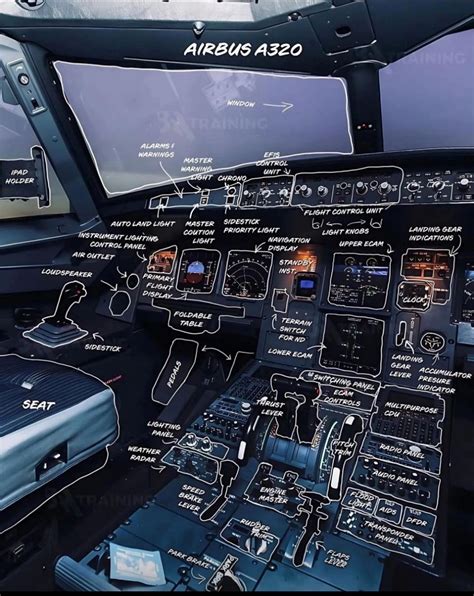
The goal was simple but powerful. A pilot trained on one Airbus aircraft should already understand the basic logic of another Airbus model.
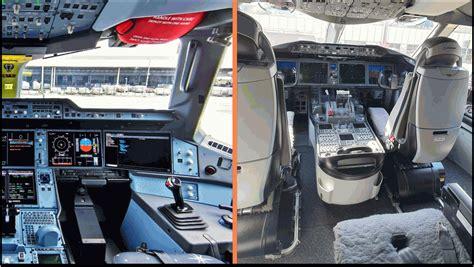
The A320, A330, A340, A350, and A380 all share similar cockpit layouts, system philosophies, and operating procedures. Although these aircraft differ dramatically in size and mission capability, Airbus designed them around a common pilot interface.
This creates what airlines value most: fleet flexibility.
A pilot flying an Airbus A320 on short regional routes can eventually transition to a larger Airbus A350 designed for long-haul international flights without completely starting over. The training process becomes a differences course rather than a full aircraft conversion.
For airlines operating mixed fleets, this commonality reduces complexity. Instead of maintaining separate pilot groups for every aircraft type, carriers can build a more flexible workforce.
A pilot pool becomes easier to schedule, especially when operational disruptions occur. If one aircraft requires a replacement crew, airlines have more options available.
This flexibility is especially valuable for global airlines operating networks that include both short-haul and long-haul flights. A single pilot group can potentially support multiple aircraft families, creating a much more efficient operation.
The Airbus Fly-By-Wire Philosophy Changed Pilot Training Forever
The foundation of Airbus’ cockpit strategy is its fly-by-wire system. Instead of relying on direct mechanical connections between pilot controls and aircraft surfaces, computers interpret pilot inputs and manage flight control responses.
This approach allows Airbus aircraft to share similar handling characteristics across very different sizes.
An A320 and an A350 are obviously not physically identical. One is a narrowbody aircraft designed for regional operations, while the other is a widebody aircraft capable of flying thousands of miles across oceans.
However, from the pilot’s perspective, many basic interactions remain familiar. The side-stick controller, display arrangement, automation philosophy, and flight control logic create a consistent experience.
This consistency is one reason Airbus has been able to promote concepts such as Cross-Crew Qualification (CCQ).
A pilot moving between Airbus aircraft families does not need to relearn every fundamental procedure. Instead, training focuses on aircraft-specific differences.
For airlines, this translates into fewer training days, fewer simulator sessions, and reduced operational disruption.
The cockpit becomes a business advantage.
Boeing’s Different Approach: Keeping Pilots Connected Through The Controls
While Airbus focused on digital commonality, Boeing developed a different philosophy. The American manufacturer prioritized a cockpit environment where pilots remain physically connected to aircraft inputs.
Boeing’s modern fly-by-wire aircraft, including the 777 and 787, continue using traditional control yokes instead of Airbus-style side-sticks.
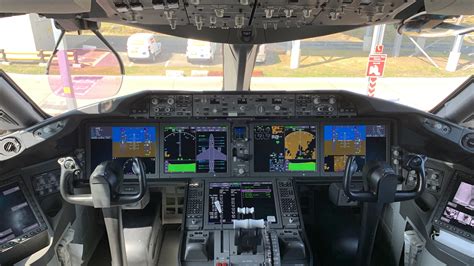
The decision was intentional. Boeing engineers believed that keeping both pilots connected through shared controls provided important situational awareness.
In a Boeing cockpit, when one pilot moves the control yoke, the other pilot’s yoke moves as well. This creates a visible and physical indication of what is happening during manual flight.
For Boeing, this represents a philosophy centered around crew coordination.
A captain can immediately understand what the first officer is doing. Pilots can feel control movements and maintain a shared understanding of aircraft behavior.
This approach contrasts with Airbus aircraft, where each pilot’s side-stick operates independently. Airbus emphasizes computer-managed flight control consistency, while Boeing emphasizes direct pilot awareness.
Neither philosophy exists without tradeoffs.
The Boeing approach can provide valuable tactile feedback, but it often results in less cockpit commonality between different aircraft families.
A pilot moving from a Boeing 737 to a Boeing 787 does not experience the same level of transition simplicity found within Airbus aircraft families.
Why Boeing’s 787 Creates Training Challenges
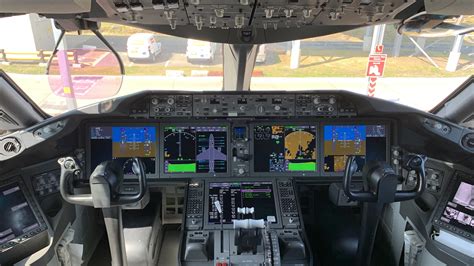
The Boeing 787 Dreamliner introduced some of the most advanced aviation technology ever placed on a commercial aircraft. It features composite structures, advanced electrical systems, and highly sophisticated automation.
However, advanced technology does not automatically create training simplicity.
The 787 cockpit shares Boeing’s traditional design philosophy, but internally it represents a major technological leap compared with older Boeing aircraft.
Pilots transitioning from previous Boeing models must learn a new generation of systems, procedures, and aircraft logic.
For airlines, this means longer training pipelines compared with aircraft families designed around stronger cockpit commonality.
A pilot moving between Airbus aircraft often learns differences. A pilot moving between certain Boeing aircraft may need to learn entirely new systems.
This difference becomes increasingly important as airlines attempt to maximize pilot productivity.
A carrier does not want highly trained pilots sitting in classrooms when they could be operating profitable flights.
The Boeing 737 MAX Shows The Risk Of Preserving Cockpit Familiarity
The Boeing 737 family represents one of the most ambitious attempts to preserve cockpit continuity.
The original 737 entered service in the 1960s with a cockpit designed around traditional mechanical systems. Over decades, Boeing continuously updated the aircraft while maintaining the core flight deck philosophy.
The advantage was obvious: airlines could continue using existing 737 pilots with limited additional training.
When Boeing developed the 737 MAX, maintaining this connection became a central objective.
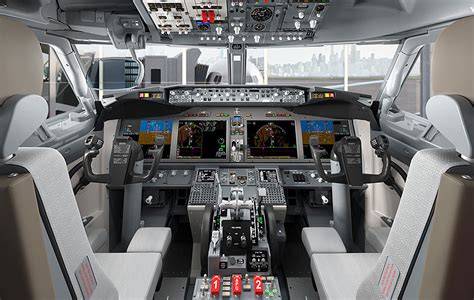
The aircraft introduced larger and more efficient CFM LEAP engines, aerodynamic improvements, and updated systems. However, because the engines were positioned differently compared with previous 737 models, the aircraft’s handling characteristics changed.
Boeing developed the Maneuvering Characteristics Augmentation System (MCAS) to address these aerodynamic differences.
The intention was to preserve the familiar 737 experience and reduce the training burden for airlines.
However, after two tragic accidents involving the 737 MAX, regulators required additional pilot training and simulator sessions. The original goal of minimizing training requirements was significantly challenged.
The 737 MAX demonstrated a difficult reality in aircraft design: preserving cockpit familiarity can create enormous value, but stretching the same cockpit philosophy across generations also introduces engineering and operational challenges.
The Cockpit Is Becoming The Ultimate Airline Lock-In System
Aircraft manufacturers compete aggressively for airline orders because fleet decisions often last for decades.
Once an airline invests billions into pilot training, simulators, procedures, and operational systems, switching manufacturers becomes extremely difficult.
A carrier operating a large Airbus fleet has developed a workforce familiar with Airbus cockpit logic. Moving to Boeing aircraft requires significant investment in retraining.
The same applies in reverse.
This creates a powerful form of manufacturer loyalty. The cockpit becomes an invisible barrier that protects market share.
An airline may choose between aircraft that have similar fuel efficiency, range, and passenger capacity. The deciding factor may ultimately be which cockpit integrates better with the existing operation.
In this sense, Boeing and Airbus are not only selling airplanes. They are selling a long-term relationship between pilots, software, and airline operations.
The Future Battle Will Be Fought Through Software
The next generation of aviation competition will likely focus even more heavily on cockpit technology.
Future flight decks will incorporate larger digital displays, artificial intelligence assistance, advanced automation, synthetic vision, and increasingly sophisticated decision-support systems.
The cockpit of tomorrow may look less like a traditional aircraft control center and more like a highly advanced computer workstation.
Manufacturers are already exploring technologies that could support reduced crew operations, including single-pilot concepts assisted by automation and ground-based support systems.
As aircraft become more automated, the importance of the physical airplane may decrease. The relationship between pilots and software will become the defining factor.
The company that creates the most intuitive, reliable, and efficient cockpit environment may gain the strongest advantage in commercial aviation.
The future airline fleet decision will not only ask, “How efficient is this aircraft?”
It will ask a more important question:
“How effectively can our pilots operate this aircraft within our entire network?”
That is why the real product Boeing and Airbus sell airlines is not simply the jet. It is the cockpit behind the door.