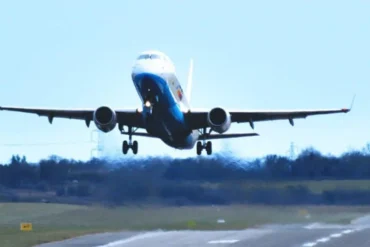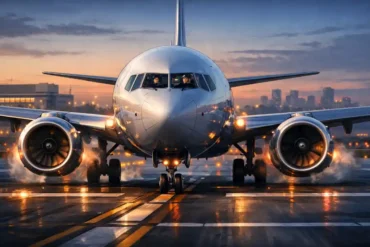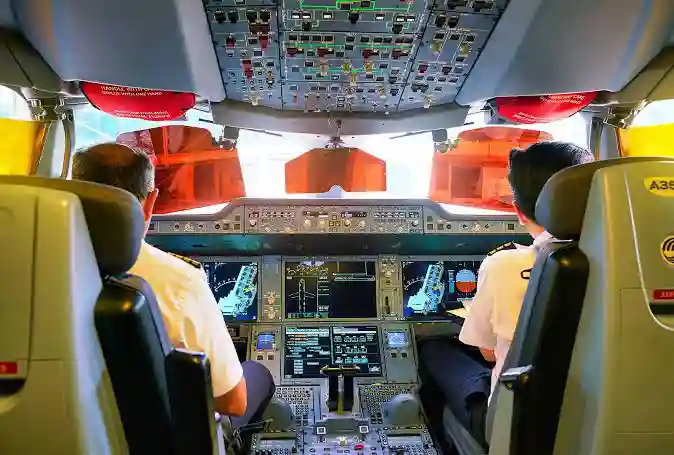
Modern jetliners can fly themselves across oceans, yet every ultra-long-haul departure still begins with four pilots strapped into the flight deck. That is not a legacy ritual preserved out of nostalgia, nor a failure of imagination on the part of airlines. It is the deliberate product of federal duty-time law, the brutal physics of a hundred-ton aircraft loaded almost entirely with fuel, and a hard-won understanding that human judgment degrades in ways no autopilot can compensate for. The requirement exists because the most demanding moment of an 18-hour mission arrives in the first three minutes, when the aircraft is heaviest, the runway is behind it, and the options for recovery are at their narrowest. Understanding why carriers like Qantas are staffing two captains and two first officers aboard the A350-1000ULR explains more about modern long-haul operations than any specification sheet ever could.
Why Four Pilots Are Required for Ultra-Long-Haul Takeoff
The regulatory architecture is deceptively simple. Under Part 117 of the Code of Federal Regulations, flight crew members are limited to roughly eight to nine hours of flight time within a single duty period. That ceiling is not arbitrary; it reflects decades of fatigue research showing that alertness, reaction time, and complex problem-solving collapse on a predictable curve once cumulative wakefulness passes a certain threshold. A nonstop sector from Sydney to London occupies between 20 and 22 hours of block time, which places it well beyond what any two-person crew could legally or safely cover. When a mission exceeds 17 hours, the rule effectively mandates a four-pilot complement aboard, because no three-pilot rotation can preserve a two-pilot flight deck while also delivering restorative rest.
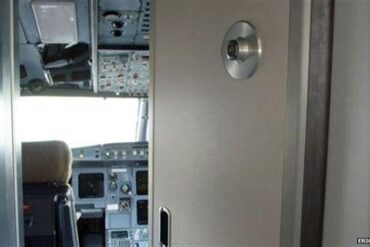
What surprises most passengers is that the relief crew does not wait in the cabin for the cruise phase to begin. The two pilots scheduled for the second shift occupy the jump seats during takeoff, harnessed and headsets on, while the operating pair flies the departure. This arrangement gives the aircraft four trained sets of eyes and hands at precisely the moment when failure carries the greatest consequence. Relief pilots read aloud from the checklists, monitor engine parameters and flight instruments, and cross-check the operating crew’s callouts. If an engine fails, a pressurization anomaly appears, or a warning light demands immediate interpretation, the response does not depend on waking someone from a bunk and waiting for orientation to settle. The backup is already there, already briefed, already tracking the same flight path.
There is a subtler benefit that rarely appears in regulatory summaries. Four pilots on the flight deck during departure create a natural redundancy of attention. Aviation accident investigations repeatedly identify fixation, where a crew becomes absorbed by a single malfunction and loses awareness of the wider flight state, as a contributing thread. With additional qualified aviators scanning altitude, airspeed, terrain, and engine data independently, the probability that a developing problem escapes notice drops sharply. The takeoff phase lasts minutes, but those minutes set the trajectory for everything that follows, including the possibility of a return to the departure field.
Handle With Care: Why the Giants of the Sky Demand a Soft Touch
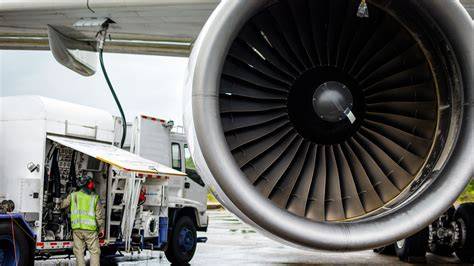
An ultra-long-haul widebody departs weighing hundreds of thousands of pounds, and the overwhelming majority of that mass is jet fuel. A long-range departure is essentially a flying fuel depot accelerating toward the speed of sound, and every input to the controls must respect the aircraft’s immense physical inertia. Large aircraft do not respond instantly; they respond deliberately, with a lag that grows as weight increases. Pilots trained on these machines learn to anticipate rather than react, because a correction applied too aggressively to a heavy jet at low altitude can produce an overcorrection that compounds the original deviation.
The consequences of mishandling are not theoretical. A maximum-weight departure that suffers an engine failure shortly after rotation cannot simply turn back and land. The aircraft exceeds its maximum landing weight by a wide margin, which means crews must either hold to burn fuel, divert to a suitable airfield with adequate runway length, or accept a overweight landing with the structural and brake-energy risks that follow. Every one of those decisions must be made under time pressure, with incomplete information, while managing a heavy aircraft that responds slowly to every command. Fatigue makes that decision chain fragile in ways that are difficult to detect from the inside, because the deteriorating pilot typically feels fine even as higher-order cognition erodes.
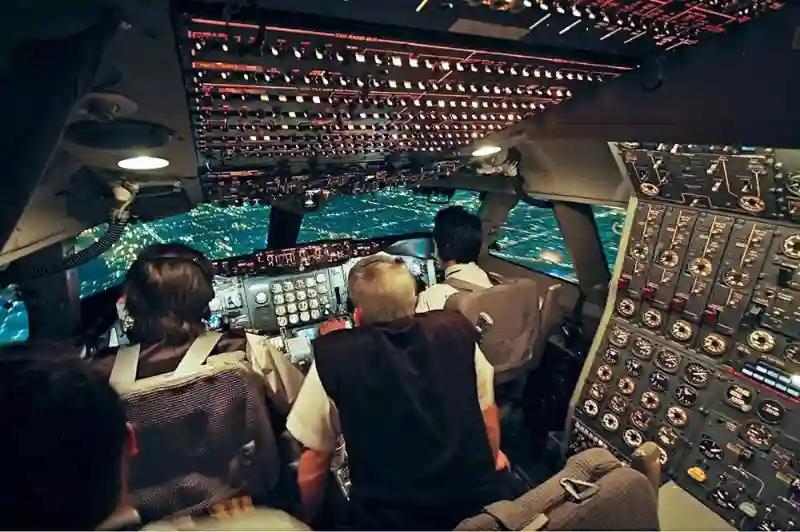
Automation offers real protection, but it is narrow protection. Modern flight management systems hold altitude, track a programmed route, and manage thrust with precision no human can match. What they cannot do is exercise judgment when the situation departs from the expected. Automation does not recognize that a diversion airport has closed its runway, that a passenger is experiencing a cardiac emergency, or that the meteorological picture ahead has changed faster than the forecast suggested. Those calls require a mind capable of weighing competing priorities, and a rested human mind is the only certified instrument for that task.
Crew Resource Management on the Longest Routes
The organizational discipline known as Crew Resource Management looks nothing on an ultra-long-haul mission like it does on a two-hour shuttle between busy hubs. Short sectors reward a tactical mindset: brief quickly, fly precisely, land, reset. Long-haul endurance flying demands something closer to marathon pacing, where vigilance must be sustained across many hours and where complacency, not crisis, is the more persistent threat. Four pilots who will share a confined flight deck for the better part of a day must establish trust, communication norms, and role clarity long before the engines start, which is why the planning phase for these flights runs considerably longer than it does for ordinary sectors.
The paradox of extreme long-haul flying is that the greatest cognitive hazard is often boredom rather than stress. Oceanic cruise segments can stretch for fourteen hours with little external stimulation and few radio exchanges. Crews counter this deliberately by assigning productive cognitive work: periodic fuel-burn verification against the flight plan, cross-checking alternative routing options, and structured discussions of diversion scenarios and emergency procedures. When fatigue becomes overwhelming outside a scheduled rest window, a short controlled nap of twenty to thirty minutes in the seat is a recognized mitigation, provided the other pilot remains fully alert and monitoring duties are clearly divided.
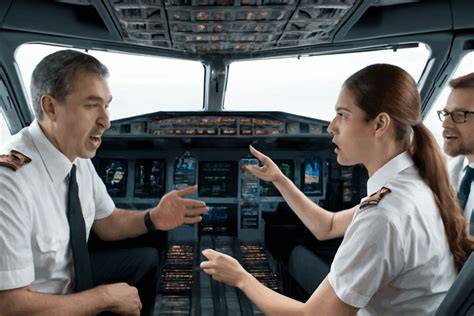
The cultural component matters as much as the procedural one. Crews are trained to declare fatigue openly, without euphemism and without fear of being judged as weak. Equally important, they are trained to watch each other, because fatigue impairs the very faculty needed to recognize it in oneself. If a junior first officer observes an experienced captain fumbling a routine callout during a late-flight approach, the culture of the flight deck authorizes that junior pilot to question the action, offer assistance, or take control. That inversion of traditional hierarchy is not a courtesy; it is a safety system calibrated to the reality that rank offers no immunity from exhaustion.
Case Study: Qantas Project Sunrise and the Four-Pilot Standard
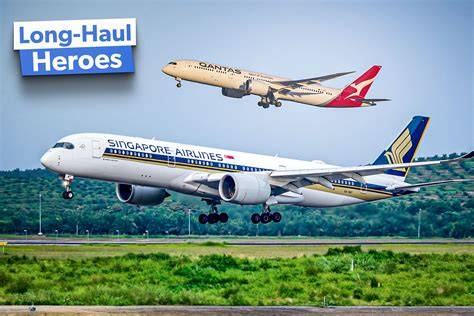
Qantas has spent years preparing what will become the longest commercial flights on Earth, nonstop services from Sydney to London Heathrow and New York JFK. The aircraft enabling those missions is a specialized A350-1000ULR, a stretched and fuel-optimized derivative of the A350-900ULR that Singapore Airlines already flies on the current longest scheduled route. Where the Singapore service tops out near eighteen and a half hours, the Qantas missions will run roughly twenty to twenty-two hours depending on direction and destination, roughly a thousand miles longer and close to a full day of sustained flight from brake release to touchdown.
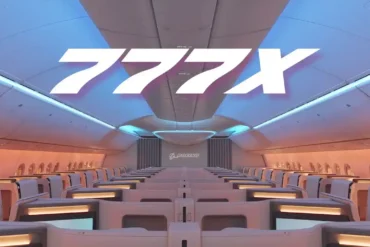
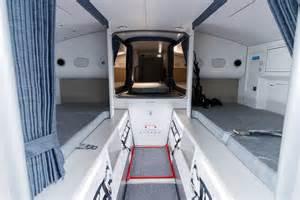
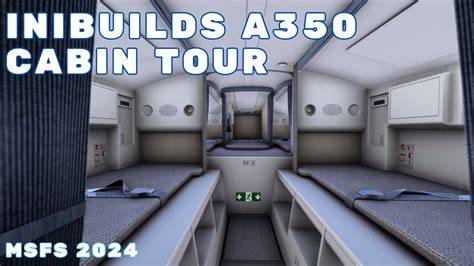
The cabin configuration tells its own story about the operational challenge. A standard A350-1000 carries between 350 and 410 passengers, but the Sunrise jets will accommodate only 238 seats, with the freed space devoted to crew rest facilities and passenger comfort on a flight that tests human tolerance as much as aircraft range. The pilot rest compartment sits in the aircraft’s upper crown, physically separated from the cabin to maximize quiet, and is outfitted with two full-length lie-flat bunks, ergonomic design, and warm-toned lighting that encourages sleep alongside blue-wavelength lighting to help pilots wake and reorient.
The crewing philosophy behind Sunrise deliberately rejects the practice of padding a roster with inexperienced relief crew. Rather than relying on junior second officers, Qantas will staff each aircraft with a heavy crew of two fully qualified captains and two experienced first officers, maximizing both redundancy and judgment on the flight deck. The twenty-two-hour block is divided into operational segments of a few hours each, with rotations arranged so that every pilot spends time at the controls and every pilot gets at least two distinct opportunities to sleep in a bunk. Before any pilot reports for a Sunrise flight, the schedule guarantees a clear window of forty-eight to seventy-two hours of local time-zone rest, and a comparable recovery period applies after landing before another ultramarathon is assigned.
Underpinning the whole structure is a fatigue risk management system that gathers data on sleep, alertness, and duty patterns rather than assuming that regulatory limits alone guarantee readiness. The stakes justify that rigor. A single catastrophic error on a flagship long-haul route would damage an airline’s reputation in ways no marketing budget could repair, and aviation history offers sobering reminders of how quickly public trust can be undone by a solitary mishap. The system exists to protect the executive functioning of the pilot in the loop, ensuring that a human capable of sound judgment remains present at every stage of the journey.
Numbers Game: Why Four Pilots Are Better Than Two or Three
Beyond compliance, four pilots deliver a measurable operational advantage over the minimum legal complement. A four-pilot crew divides cleanly into two independent two-person teams, and that division allows rest to be scheduled in long, consolidated blocks that mirror normal human sleep architecture. A three-pilot operation, by contrast, must maintain a two-pilot flight deck at all times, which means only one pilot can rest at any given moment. On a twenty-hour sector, an even split of cruise time yields each pilot roughly six and a half hours of bunk time, but that figure must be fragmented into multiple short breaks, producing the discontinuous, low-quality sleep that never reaches the restorative depth the brain actually needs.
The difference plays out in real operational behavior. A well-rested team stepping into the cockpit midway through a Sunrise flight has the mental capacity to actively optimize the route, coordinate with air traffic control across multiple oceanic boundaries, and adjust speeds and altitudes to exploit shifting global jet stream patterns. That level of engagement saves fuel that a fatigued crew, defaulting to passive acceptance of a fixed flight plan simply to reduce workload, would never capture. On a twenty-two-hour sector, the fuel burned by sustained neglect of favorable winds and optimal step-climbs can be substantial.
The final argument is a matter of resilience and roster sustainability. If an engine fails or a severe medical emergency erupts eighteen hours into a flight, a four-pilot crew can bring all hands on deck immediately, dividing responsibilities between handling the aircraft, communicating with air traffic control, managing cabin coordination, and preparing for an unplanned diversion. A three-pilot crew facing the same scenario has no reserve left. And because four pilots sleep better in flight, they recover faster on the ground, which protects long-term health against the chronic sleep deprivation, immune suppression, and early-career burnout that plague long-haul aviators. In an industry still managing a persistent pilot shortage, sustainable scheduling is not a luxury; it is a strategic necessity.
The four-pilot takeoff is therefore neither ceremonial nor redundant. It is the point at which regulation, physics, human psychology, and commercial strategy all converge on the same answer, and it is why every ultra-long-haul departure still begins with four professionals on the flight deck, even before the aircraft has left the ground.