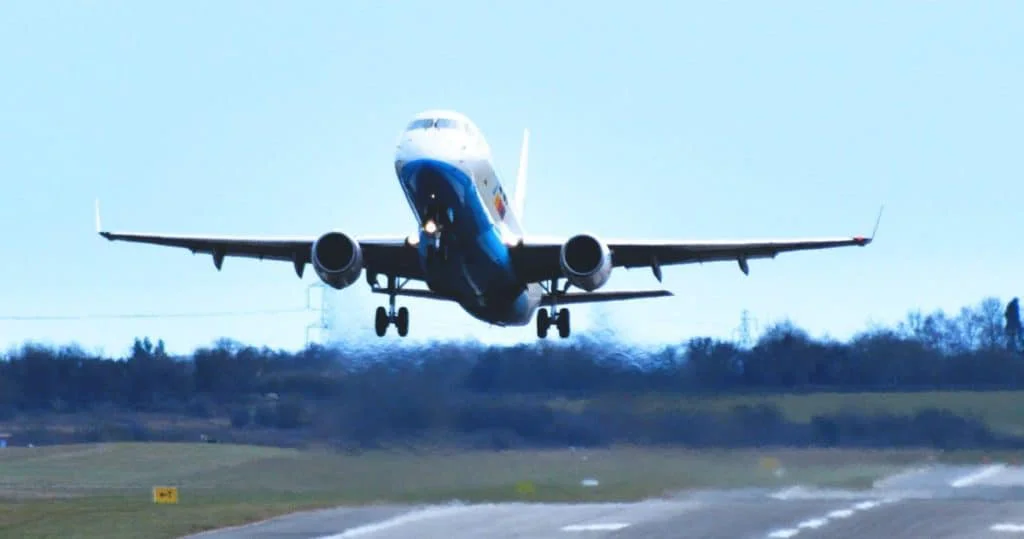
Commercial aviation is built upon precision, predictability, and carefully engineered procedures. Yet among the countless actions performed by flight crews during every flight, few are as widely misunderstood by passengers as the noticeable reduction in engine noise shortly after takeoff. The aircraft accelerates down the runway with tremendous force, the engines roar at maximum intensity, the wheels leave the ground, and then—sometimes within less than a minute—the sound suddenly diminishes. For many travelers, particularly nervous flyers, that moment can feel alarming. It may seem as though the pilots have reduced power at the exact time the aircraft should need it most.
The reality is precisely the opposite. What passengers perceive as a sudden loss of power is actually one of the most carefully calculated and standardized phases of a commercial departure. Far from indicating a problem, the reduction in thrust is usually evidence that everything is proceeding exactly according to plan. It reflects decades of engineering, operational experience, environmental regulation, and safety-focused procedures designed to maximize efficiency while maintaining substantial performance margins.
Understanding why pilots deliberately pull back thrust shortly after lifting off the runway requires a closer look at how modern jet aircraft are designed, how airline economics influence operations, and how international aviation regulations balance safety with environmental concerns.
Commercial jet engines are among the most powerful machines ever placed into routine service. Modern turbofan engines fitted to aircraft such as the Boeing 787 Dreamliner, Boeing 777, Airbus A350, and Airbus A330neo are capable of producing extraordinary levels of thrust. In many operating scenarios, these engines possess significantly more power than is actually required to get an aircraft airborne safely.
This surplus performance exists for good reason. Aircraft must be capable of operating under a wide range of conditions, including hot temperatures, short runways, high-altitude airports, adverse weather, and maximum passenger or cargo loads. Engineers therefore design aircraft with sufficient performance reserves to handle demanding situations rather than merely average ones.
Because of this design philosophy, a flight departing from a long runway at sea level on a cool morning often requires only a fraction of the engine’s available capability. Using maximum thrust in such circumstances would provide little operational benefit while imposing unnecessary stress on highly expensive equipment.
The misconception that every aircraft always uses full power during takeoff is one of the most persistent myths in aviation. In reality, many departures begin with deliberately reduced engine settings before the aircraft even starts rolling down the runway.
By avoiding unnecessary power, airlines extend engine life, reduce maintenance costs, lower fuel consumption, and minimize noise exposure around airports. The practice has become so common that reduced-thrust takeoffs are considered normal operations throughout much of the commercial aviation industry.
After passengers hear the engines surge during the takeoff roll, they often assume the aircraft will continue using the same level of power until it reaches cruising altitude. Instead, pilots intentionally transition to a different climb profile almost immediately after becoming airborne.
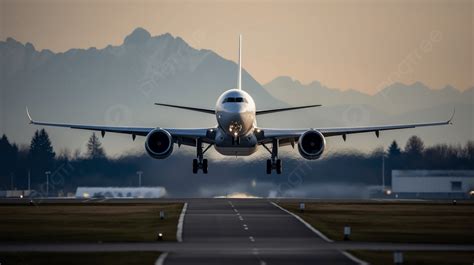
Modern Airliners Rarely Need Maximum Takeoff Power
To understand why thrust is reduced after takeoff, it is important to recognize that aircraft performance calculations begin long before passengers board the airplane.
Prior to departure, pilots use sophisticated performance software that analyzes a wide range of variables. Aircraft weight, runway length, wind conditions, temperature, airport elevation, obstacle clearance requirements, and weather forecasts all contribute to determining the minimum thrust necessary for a safe departure.
If calculations indicate that the aircraft possesses substantial performance margins, crews can choose reduced-thrust settings rather than full-rated engine power.
There are two primary methods used throughout commercial aviation.
The first is known as a derated takeoff. Under this system, the engine is electronically limited to a lower certified thrust rating. Although the engine may be capable of producing significantly more power, the aircraft’s systems prevent it from exceeding the selected limit.
The second method involves the use of an assumed temperature calculation, commonly called a FLEX temperature on Airbus aircraft. Pilots enter a fictional temperature higher than the actual outside air temperature into the flight management system. Because jet engines naturally generate less thrust in hotter conditions, the aircraft calculates a lower thrust setting corresponding to that assumed temperature.
While the process may appear unusual, it is entirely controlled and validated. Every performance calculation must satisfy strict regulatory requirements before the aircraft is cleared for departure.
The result is an aircraft that accelerates safely, meets all climb requirements, and retains sufficient performance reserves while avoiding unnecessary engine stress.
Why Engine Longevity Matters So Much To Airlines
The most significant reason airlines embrace reduced-thrust operations comes down to economics and engineering.
Jet engines represent some of the most expensive components installed on any commercial aircraft. Modern engines manufactured by companies such as GE Aerospace, Rolls-Royce, and Pratt & Whitney can cost tens of millions of dollars each and require extensive maintenance throughout their service lives.
Inside these engines, temperatures reach extraordinary levels during high-power operations. Turbine blades, combustion chambers, and associated components are subjected to intense thermal and mechanical loads every time maximum thrust is used.
The relationship between engine wear and temperature is not linear. A relatively small increase in operating temperature can produce disproportionately higher stress on critical components. Consequently, even modest reductions in thrust can significantly extend engine lifespan.
For airlines operating hundreds of aircraft and conducting thousands of daily departures, the financial implications are enormous. Extending engine overhaul intervals by even a small percentage can save millions of dollars annually while simultaneously improving aircraft availability.
Reduced thrust therefore represents one of the most effective ways to balance operational efficiency with long-term asset preservation.
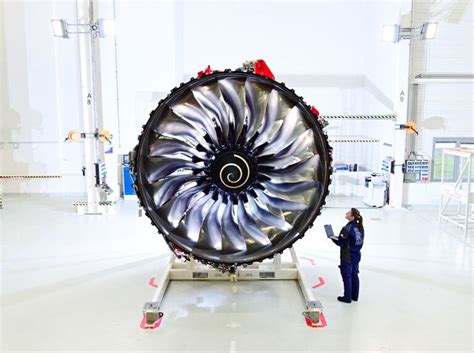
The Moment Passengers Notice: Thrust Reduction After Liftoff
While reduced-thrust settings before takeoff are important, they are not usually what passengers notice.
The distinctive change occurs after the aircraft has already become airborne and established a positive climb.
At a predetermined altitude, pilots deliberately reduce engine thrust from takeoff power to climb power. This transition is entirely normal and is incorporated into standard operating procedures worldwide.
Inside the cabin, the effect is immediately noticeable. Engine noise decreases significantly, vibrations often become less pronounced, and the sensation of acceleration may diminish.
For inexperienced travelers, this can create the illusion that the aircraft has stopped climbing or that something has changed unexpectedly. In reality, the aircraft continues climbing safely and efficiently while operating within a different performance envelope.
Modern jet aircraft are designed to climb effectively without remaining at maximum power. Once safely airborne and clear of immediate obstacles, the enormous thrust used during takeoff is no longer necessary.
Instead, the aircraft transitions into a more efficient climb configuration optimized for fuel economy, engine preservation, and noise reduction.
Noise Abatement Procedures Drive Much Of The Transition
One of the most important reasons pilots reduce thrust shortly after takeoff is compliance with international noise-abatement procedures.
Communities located near major airports have long been affected by aircraft noise. The powerful engines required for takeoff generate substantial sound levels, particularly when aircraft pass over residential neighborhoods at low altitudes.
To address these concerns, aviation authorities developed standardized procedures known as Noise Abatement Departure Procedures, or NADPs.
These procedures specify how aircraft should climb after takeoff in order to minimize noise exposure while maintaining safe operating margins.
Under most NADP profiles, pilots reduce engine thrust at a designated altitude, typically somewhere between approximately 800 and 3,000 feet above the airport surface.
The exact altitude varies depending on airport requirements, local regulations, surrounding terrain, and airline procedures.
By reducing power after reaching a safe altitude, aircraft significantly decrease their acoustic footprint while continuing to climb away from populated areas.

NADP 1 And NADP 2: Two Different Approaches To Noise Reduction
International aviation standards recognize two primary noise-abatement departure profiles.
NADP 1 focuses on protecting communities located close to the airport. Under this profile, aircraft prioritize altitude gain immediately after takeoff. The aircraft maintains a relatively slower speed and delays acceleration, allowing it to climb more steeply and become higher above nearby neighborhoods before transitioning into a normal climb.
This procedure is particularly useful at airports surrounded by dense urban development immediately beyond the runway ends.
NADP 2 serves a different purpose. Rather than emphasizing early altitude gain, it accelerates the aircraft sooner and allows earlier flap retraction. The aircraft transitions more quickly into a clean aerodynamic configuration and achieves greater efficiency earlier in the departure.
This approach benefits communities located farther from the airport because the aircraft reaches higher speeds and improved aerodynamic efficiency sooner.
Although the profiles differ, both share the same fundamental objective: reducing environmental impact without compromising safety.
Airports around the world select the profile best suited to their geography, population distribution, and local operational requirements.
Safety Always Takes Priority Over Noise Reduction
One of the most important aspects of reduced-thrust procedures is that they are never allowed to compromise safety.
Every takeoff calculation must ensure that the aircraft can safely continue departure even if an engine fails at the most critical moment. Regulatory requirements demand extensive performance margins before reduced-thrust settings are authorized.
If conditions become unfavorable, pilots simply use higher thrust settings.
Heavy aircraft, contaminated runways, strong winds, high temperatures, mountainous terrain, and high-elevation airports frequently require greater engine output. In such circumstances, airlines may use full-rated takeoff thrust because operational conditions leave less room for reduction.
Likewise, noise-abatement procedures can be suspended immediately whenever circumstances require.
If crews encounter wind shear, severe turbulence, engine anomalies, bird strikes, or other unexpected situations, maximum performance becomes the priority. Pilots are trained to disregard noise considerations whenever safety demands it.
The availability of full power at any moment remains one of the most important safeguards built into modern airline operations.
Technology And Cross-Checks Prevent Performance Errors
Reduced-thrust departures depend upon precise calculations, which is why modern airlines employ multiple layers of verification.
Performance data is generated using advanced software systems capable of evaluating thousands of variables within seconds. Pilots independently review calculations, verify runway information, confirm aircraft weights, and cross-check thrust settings before departure.
Modern aircraft further enhance safety through automated monitoring systems.
Aircraft such as the Airbus A220, Boeing 787 Dreamliner, and Boeing 777X incorporate systems that continuously compare expected aircraft performance against actual acceleration during the takeoff roll.
If acceleration deviates from calculated expectations, crews receive immediate indications and can reject the takeoff before reaching critical decision speeds.
These layers of protection ensure that reduced-thrust procedures remain among the safest and most standardized practices in commercial aviation.

Why The Quieting Engines Are Actually A Sign Everything Is Normal
For passengers unfamiliar with airline operations, the sudden reduction in engine noise shortly after takeoff can feel counterintuitive. Common instinct suggests that an aircraft should continue using maximum power until it is safely high above the ground.
Modern aviation operates differently.
The roaring engines heard during takeoff are providing only the performance needed for a specific phase of flight. Once that phase is complete, pilots transition to a more efficient climb profile that reduces engine wear, lowers fuel consumption, decreases environmental impact, and minimizes noise exposure for surrounding communities.
Far from indicating a problem, the reduction in thrust is typically evidence that the aircraft is performing exactly as designed and that the crew is following procedures refined through decades of operational experience.
Every day, thousands of commercial flights around the world execute this carefully choreographed sequence. The engines surge during takeoff, the aircraft lifts gracefully into the sky, and moments later the power eases back into a quieter climb. What passengers experience as a brief change in sound is actually the visible result of one of aviation’s most sophisticated balancing acts—combining safety, efficiency, engineering, economics, and environmental responsibility into a seamless departure that has become routine across the global airline industry.