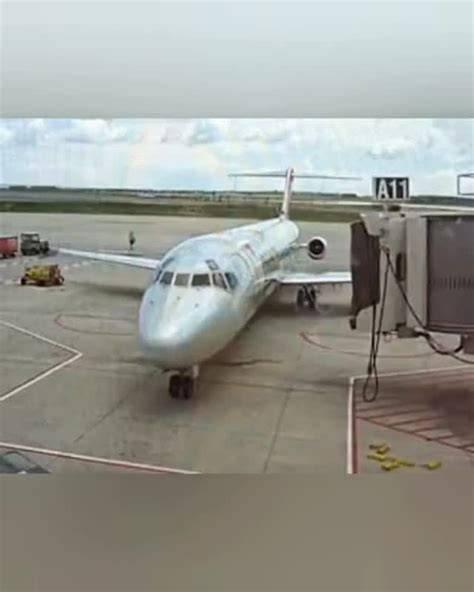
For decades, some of the most recognizable American passenger jets could leave the gate without a pushback tug. Instead, the aircraft would start its engines, deploy its thrust reversers, and use reverse thrust to move itself backward from the terminal. The maneuver, known as a powerback, was once a familiar sight at major U.S. airline hubs.
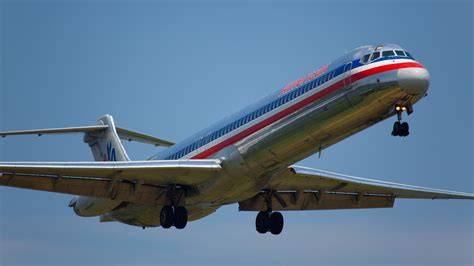
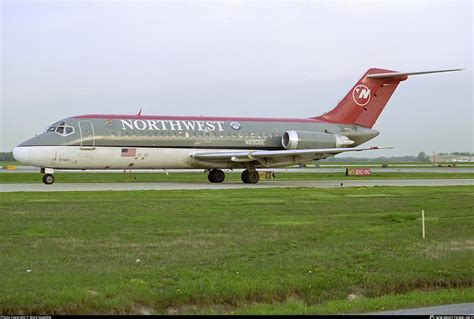
Passengers aboard an American Airlines MD-80 or Northwest Airlines DC-9 in the 1980s, 1990s, or early 2000s could watch the aircraft perform a maneuver that would look unusual today. Rather than waiting for a tug to connect to the nose gear, the jet effectively pushed itself away from the gate under its own power.
At its peak, the procedure was used by several major and regional carriers, including American Airlines, Northwest Airlines, Eastern Airlines, AirTran Airways, and Alaska Airlines. Yet within only a few years, the practice had almost completely vanished from U.S. commercial aviation.
The disappearance was not caused by a dramatic FAA prohibition or a single accident. Instead, the economics of airline operations changed. Fuel became more expensive, concerns about foreign object damage became more important, engine and reverser wear became harder to justify, and ground equipment improved. Most importantly, the aircraft that made powerbacks practical gradually disappeared.
What Was the Powerback Maneuver?
A powerback was essentially a self-powered pushback from the airport gate. Instead of relying on a tug to move an aircraft away from the terminal, pilots used the aircraft’s own engines and thrust reversers.
The sequence was relatively straightforward. After the jetbridge was removed and the ground crew cleared the area, the engines were started. Once the aircraft was ready, the pilots deployed the thrust reversers and carefully increased engine power. Reverse thrust generated a forward-directed force that caused the aircraft to roll backward.
A wing walker or other ground personnel remained nearby to provide visual guidance. Once the aircraft had moved sufficiently far from the gate, the pilots stowed the reversers, selected forward thrust, and continued toward the taxiway.
The maneuver did not necessarily save enormous amounts of time on every individual departure. Its real attraction was that it removed several pieces of ground equipment and coordination from the departure process.
A conventional pushback could involve a tug, towbar, steering bypass pin, tug driver, wing walker, and ground crew. The aircraft’s nose-wheel steering system also had to be appropriately configured for towing, and the ground crew needed to disconnect the equipment after the pushback.
Powerback eliminated much of that choreography.
For airlines operating hundreds of departures every day, that simplicity could be valuable. A jet did not have to wait for a tug to become available, and a station with limited ground equipment could potentially keep aircraft moving without adding another vehicle to the operation.
The concept therefore made particular sense during an era when certain aircraft were exceptionally well suited to it.
Why the DC-9 and MD-80 Were Perfect for Powerbacks
The powerback was closely associated with a particular generation of jetliners because of where their engines were mounted and how their thrust reversers worked.
Aircraft such as the Douglas DC-9, McDonnell Douglas MD-80 series, Boeing 727, Boeing 717, and Fokker 100 placed their engines at the rear of the fuselage. Instead of hanging beneath the wings, the engines were mounted on either side of the rear fuselage.
That configuration had an important advantage during a powerback.
Their bucket-style or clamshell-style thrust reversers redirected engine exhaust forward and upward. Much of the reverse-thrust flow therefore moved above the ramp rather than being blasted directly across the ground.
This mattered enormously at a busy terminal.
A gate is an unusually crowded operating environment. Baggage carts, belt loaders, catering trucks, fuel vehicles, maintenance equipment, ground personnel, and other aircraft can all be nearby. A powerful jet engine directing exhaust across that environment is potentially problematic.
The rear-mounted engine architecture of the DC-9 and MD-80 helped make the powerback manageable at approved locations.
Modern aircraft generally have a very different configuration.
Why Wing-Mounted Engines Changed Everything
Most modern commercial jets use high-bypass turbofan engines mounted beneath the wings. This arrangement offers major aerodynamic and operational advantages, but it is poorly suited to the traditional powerback.
The engines are positioned relatively close to the ramp. When their thrust reversers are deployed, the resulting exhaust and airflow can spread forward and outward across the ground.
That creates several problems.
A reverse-thrust operation near a gate can disturb loose material on the ramp and potentially send debris toward personnel or equipment. It can also expose nearby aircraft to engine blast and create uncomfortable or unsafe conditions for ground crews.
The issue is not simply how much thrust an engine produces. It is where that thrust goes.
A rear-mounted DC-9 engine could direct much of its reversed airflow upward. A modern under-wing turbofan can produce a broad blast pattern across the ramp. At a busy airport gate, that distinction is critical.
This is why the disappearance of the powerback was not merely an airline policy decision. The evolution of commercial aircraft itself removed much of the physical foundation that had made the maneuver practical.
Which Major Airlines Used Powerbacks?
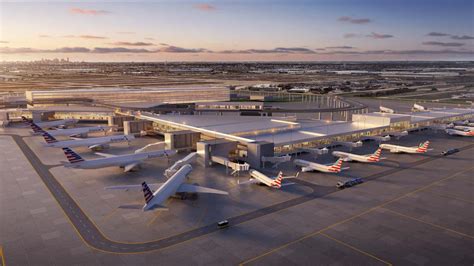
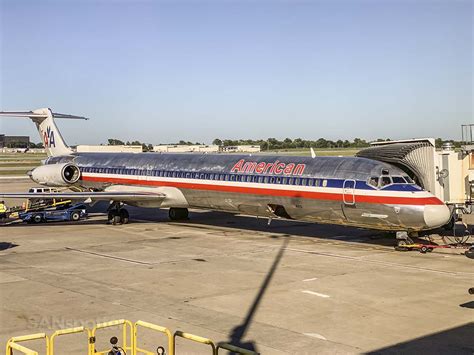
American Airlines became one of the most prominent users. The airline operated the world’s largest MD-80 fleet, with more than 300 aircraft at its peak. Powerbacks became a familiar part of operations at major hubs such as Dallas/Fort Worth, Chicago O’Hare, and Miami, as well as at other stations where suitable gates were approved.
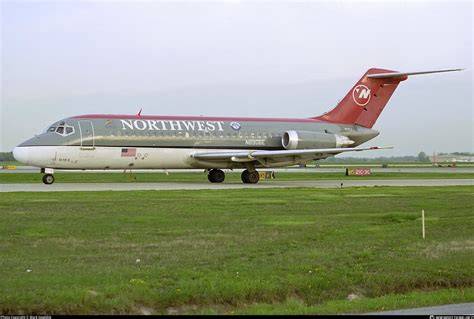
Northwest Airlines also used the procedure extensively with its DC-9 fleet. The airline’s hubs at Detroit, Minneapolis, and Memphis provided environments where the maneuver could be integrated into regular operations.
Northwest eventually became one of the clearest examples of why powerbacks disappeared. Its DC-9 fleet was among the last large groups of aircraft capable of making the procedure routine, yet the airline discontinued powerbacks around 2005, citing fuel conservation.
Other airlines used the maneuver in different ways.
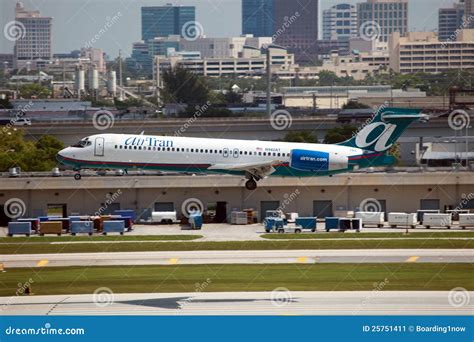
Eastern Airlines performed powerbacks with DC-9s and Boeing 727s. AirTran Airways used the technique with its Boeing 717 fleet, particularly at airports such as Fort Lauderdale, Southwest Florida International, and New Orleans. Alaska Airlines also performed powerbacks with its MD-80s at various West Coast stations.
The practice was never universal, however.
Not every gate was approved for a powerback. Airport authorities and airlines could impose specific restrictions based on ramp design, surface conditions, surrounding equipment, aircraft type, and local operating procedures.
Why Powerbacks Were Restricted
The fact that an aircraft was technically capable of performing a powerback did not mean pilots could perform one anywhere.
The gate itself had to be suitable. Ramp surfaces generally needed to be sufficiently level or appropriately sloped away from the terminal. Wet, contaminated, or otherwise unsuitable surfaces could prohibit the maneuver because reverse thrust could disturb water, dirt, loose material, or other debris.
The surrounding environment also mattered.
A gate surrounded by ground equipment and nearby aircraft presented a very different risk profile from a relatively isolated parking position. Airlines therefore established detailed procedures governing where and when powerbacks could be performed.
The maneuver also demanded careful coordination between the cockpit and ramp personnel. The pilots controlled the engines, but they could not simply look backward from the flight deck and see everything behind the aircraft.
A wing walker provided visual guidance while the aircraft moved backward.
This meant powerback was never simply a case of “put the engines in reverse and go.” It was a specialized ground operation with specific airport, aircraft, environmental, and crew requirements.
The Mid-2000s Economics That Killed the Powerback
The decisive change came from economics.
By the middle of the 2000s, airlines were becoming increasingly aggressive about reducing unnecessary fuel consumption. Every stage of an aircraft’s operation was being examined, including taxiing and ground movements that had previously attracted less attention.
A powerback required the aircraft’s engines to produce meaningful reverse thrust for a period that could last roughly 30 to 60 seconds.
A conventional tug pushback, by contrast, could move the aircraft without using engine thrust to perform the actual push. Depending on the airline’s procedures, the engines could remain at idle or be started after the pushback was completed.
That created a fundamental calculation.
The airline was saving labor and ground-equipment requirements by using the aircraft’s engines, but it was spending additional jet fuel to do so.
When fuel was relatively inexpensive, that trade could make sense.
When fuel became a much larger component of airline operating costs, the equation changed.
The powerback therefore became an example of a broader airline-industry principle: a procedure that saves time is not automatically economical if it consumes more fuel than the alternative.
Airlines increasingly adopted other fuel-saving practices during this period, including single-engine taxi procedures where operationally appropriate. Against that background, burning additional fuel simply to replace a tug began to look increasingly difficult to justify.
FOD, Noise, and Maintenance Added More Pressure
Fuel was important, but it was not the only problem.
Foreign object debris, or FOD, was a major concern around airport ramps. Small objects can become serious hazards when exposed to powerful engine airflow. A powerback could disturb loose debris and potentially draw contaminants toward the aircraft or send them toward nearby equipment and aircraft.
The more congested the gate environment, the more significant that concern became.
Noise was another consideration.
Two engines operating at reverse thrust close to a terminal produce a very different acoustic environment from an aircraft being moved by a relatively quiet ground tug. Airports were also facing increasing pressure to manage noise, particularly at facilities located near residential communities.
Then came maintenance.
Repeated reverse-thrust cycles impose additional operating demands on the thrust-reverser system. Airlines have to consider not only whether a procedure works but also what repeated use does to components over thousands of cycles.
If a maneuver saves a few minutes of ground labor but contributes to additional maintenance expense, the apparent benefit can shrink rapidly.
By the middle of the 2000s, the powerback was therefore being squeezed from several directions at once.
Why 2005 and 2006 Became the Turning Point
There was no single day when American commercial aviation officially abandoned powerbacks.
Instead, the practice faded across roughly 2004 to 2006 as individual airlines reconsidered their procedures.
Northwest stopped using powerbacks with its DC-9 fleet around 2005. American ended the practice around the same period, while AirTran continued longer before eventually abandoning it.
That gradual disappearance is important because it explains why the powerback can sometimes be remembered as something that was “banned.”
It wasn’t.
There was no sweeping FAA rule that suddenly prohibited every airline from using reverse thrust to push an aircraft away from a gate. Instead, airlines voluntarily decided that the operational benefits no longer justified the costs and risks.
The decision was therefore driven by changing economics and changing technology rather than by one regulatory event.
The Aircraft That Kept the Powerback Alive Disappeared
The final reason the maneuver never returned is perhaps the simplest: the aircraft that made it practical largely disappeared.
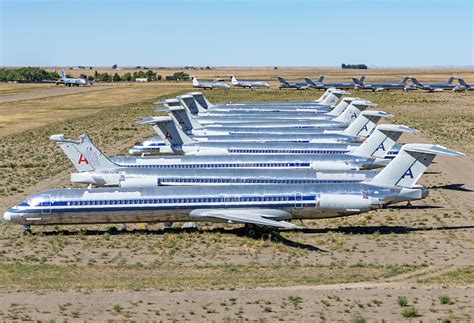
American Airlines retired its final MD-80s in 2019. Delta Air Lines subsequently retired its MD-88 and MD-90 fleets in 2020. The Boeing 727 had already disappeared from U.S. passenger operations much earlier.
The Boeing 717 represents one of the later descendants of the rear-engine configuration, while Hawaiian Airlines operated 717s for years. Yet even aircraft capable of making powerbacks did not bring the procedure back as a mainstream airline practice.
The disappearance of these aircraft removed the infrastructure of experience surrounding the maneuver.
Airlines no longer had large fleets of rear-engined jets departing hundreds of times per day. Pilots, ground crews, airport procedures, and maintenance programs increasingly became organized around newer aircraft and newer ground-handling practices.
Once the operational ecosystem disappeared, there was little incentive to rebuild it.
Modern Pushback Tugs Removed the Original Advantage
There is another piece of the puzzle that is easy to overlook: pushback equipment itself became better.
The conventional tug of the past was not necessarily the same machine we see today. Modern towbarless tractors can lift and cradle an aircraft’s nose gear, reducing or eliminating some of the mechanical steps associated with traditional towing.
That matters because one of the original advantages of powerback was its ability to eliminate the tug, towbar, steering bypass procedure, and associated coordination.
Modern ground equipment has reduced some of those disadvantages.
The airline no longer has to choose between a complicated, equipment-heavy pushback and a self-powered maneuver that burns fuel and generates engine blast. The pushback tug has become a highly specialized and efficient part of modern airport infrastructure.
As a result, the original business case for powerback has largely disappeared.
Why the Powerback Will Probably Never Return
A modern airline could theoretically design procedures around self-powered pushback, but doing so would require overcoming several obstacles simultaneously.
First, the aircraft would need an engine and thrust-reverser configuration suitable for the task. Second, airports would need appropriate gate layouts and operating restrictions. Third, airlines would need to demonstrate that the fuel, maintenance, noise, and FOD implications were acceptable.
That is a difficult proposition when modern commercial aircraft are already designed around under-wing high-bypass turbofans.
There is also little economic motivation.
Airlines have spent decades improving ground handling, reducing turnaround times, optimizing fuel consumption, and automating equipment. Reintroducing a procedure that deliberately uses engine fuel to replace a ground vehicle would run against many of those objectives.
The powerback therefore belongs to a particular technological period.
It made sense when rear-mounted engines, bucket-style thrust reversers, expensive ground coordination, and specific airline economics came together. When those conditions changed, the maneuver disappeared.
The Powerback Was Not a Bad Idea—It Became the Wrong Idea
The most interesting lesson from the powerback is that aviation technology rarely abandons a procedure simply because it is inherently bad.
The maneuver worked.
For the right aircraft, at the right gate, under the right conditions, it could be fast and operationally useful. Airlines including American and Northwest used it repeatedly because there was a genuine practical benefit.
But aviation is an ecosystem.
Change the price of fuel, change the aircraft, improve the tug, increase sensitivity to FOD and noise, and the same procedure can move from useful to unnecessary without anything about the basic physics changing.
That is exactly what happened to the powerback.
By around 2006, major U.S. airlines had largely decided that using expensive jet engines to perform a job that a specialized ground vehicle could accomplish more efficiently was no longer worthwhile. The aircraft that made reverse-thrust pushback practical then disappeared from mainstream fleets.
Today, passengers may occasionally see photographs or videos of an MD-80 roaring backward from a terminal and wonder why modern aircraft do not do the same thing. The answer is not that pilots forgot the technique.
The airplanes changed, the economics changed, and the ground operation changed.
The powerback disappeared because the entire system that supported it disappeared with it. And once modern high-bypass turbofans and improved pushback technology became standard, there was simply no compelling reason to bring the maneuver back.