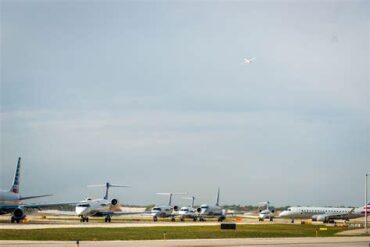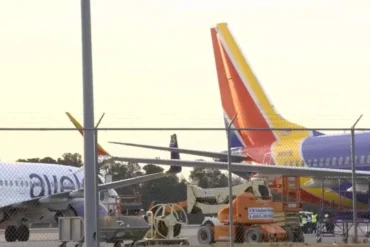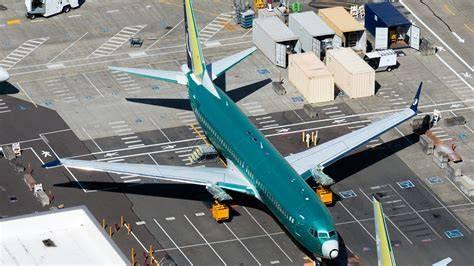
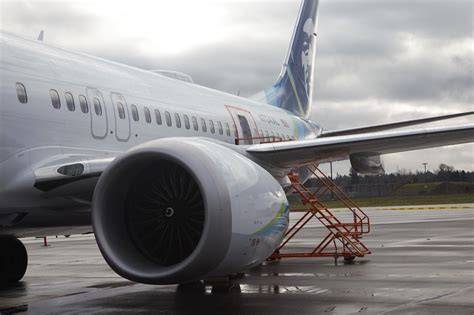
Every Boeing 737 MAX pushed back from a gate in Los Angeles, Dublin, or Jakarta carries a legally sanctioned weight its crew can never certify at the runway threshold: a Maximum Taxi Weight (MTW) that sits exactly 500 pounds, or roughly 227 kilograms, above its Maximum Takeoff Weight (MTOW). That gap is not an engineering accident, nor is it a courtesy cushion. It is a certified weight envelope that exists so an airplane can leave the gate heavier than the weight at which it is legally permitted to rotate, and Boeing has deliberately carried that same 500-pound figure forward through five generations of the world’s most-produced jetliner, even as the aircraft itself grew by more than 30 tonnes. Understanding why requires looking past the sticker certification and into the physics of ground operations, the economics of fueling, and the institutional inertia of a 1960s design lineage that keeps being asked to do more.
The arrangement is best understood as a controlled weight debit. An airline may load the MAX up to its ramp weight at the gate, provided the aircraft burns off at least 500 pounds of fuel before it begins its takeoff roll. The Auxiliary Power Unit, the engine start sequence, and the taxi itself consume that fuel with almost mechanical predictability, so the allowance functions as a pre-paid operational margin rather than a leap of faith. It is an accounting solution to a physical problem, and it allows dispatchers to add taxi fuel without stripping passengers or cargo off the load sheet to pay for it.
The 500-Pound Taxi Allowance Explained Through Fuel Burn on the Ground
Aircraft consume a measurable quantity of fuel before the wheels ever leave the ground, and the consumption is remarkably consistent across modern narrowbodies. A 737 MAX or an Airbus A320neo typically burns between 300 and 650 pounds (roughly 135 to 295 kilograms) of fuel on a normal departure between the completion of refueling and the start of the takeoff roll. During periods of heavy congestion, extended ground holds, or winter de-icing, that figure can climb past 1,000 pounds (over 450 kilograms), because de-icing fluid application at a remote pad may require the engines to run longer than planned while the aircraft queues for its slot.
Set those numbers against the MAX 8’s total fuel capacity of 46,063 pounds (20,894 kilograms) and the taxi burn represents roughly 0.7% to 1.4% of total fuel volume. Most missions, however, are not flown at maximum fuel, and for a typical two- to three-hour sector the pre-takeoff consumption can represent as much as 2% to 4% of the fuel actually loaded. Boeing recognized that some of that burn could be pre-loaded as taxi fuel, seated firmly in the 500-pound space between ramp weight and takeoff weight, so that a crew holding at a congested hub does not have to decide between legal takeoff weight and adequate ground fuel.
Structural Safety Margins and the Logic of MTOW Certification Flexibility
Aircraft are routinely manufactured to withstand considerably more than their certified weights advertise. To satisfy FAA and EASA airworthiness standards, airframes must be built with substantial structural and aerodynamic reserves so that the design can survive hard landings, violent gusts, and the minimum climb gradient required after a single-engine failure. Boeing and its competitors intentionally design airframes with greater capability than any single certified configuration demands, which is precisely what allows a manufacturer to sell the same basic airframe at multiple certified weight variants.
The Airbus A321neo family illustrates this commercial logic neatly, offered at certified weights of 89, 90.5, 93.5, and 97 tonnes, with the A321LR sitting at the top of that range and the A321XLR requiring more extensive structural modification. An airline can purchase a 93.5-tonne airframe certified at 89 tonnes, accepting a lower paper weight to reduce weight-based airport and air navigation fees, even though the aircraft’s empty weight and dry operating weight are identical. The taxi allowance sits within this same philosophy: a certified ground weight higher than the takeoff weight reflects what the structure can actually carry, not a generous interpretation of the rules.
How the 737’s 500-Pound Allowance Shrank With Every Generation
Boeing inherited the 500-pound taxi allowance from the 737 Next Generation and chose not to recertify it for a larger ground-maneuvering margin when it developed the MAX. The original 737-100 flew with a standard MTOW of 97,800 pounds (44,361 kilograms) and a ramp weight of 98,300 pounds (44,588 kilograms), a margin of roughly 0.51% in its initially certified form, which settled to around 0.39% on the more popular 737-200. The figure stayed constant while the aircraft grew heavier, and the margin duly compressed.
By the 737-400 Classic, MTOW had risen to 138,500 pounds (62,823 kilograms) with a ramp weight of 139,000 pounds (63,049 kilograms), a margin of about 0.36%. The 737-800, the workhorse of the NG generation, arrived with an MTOW of 155,500 pounds (70,534 kilograms) and a ramp weight of 156,000 pounds (70,760 kilograms), narrowing the allowance to 0.32%. The same 500 pounds now represents a fraction of what it was on the original jet, because the denominator has grown faster than the numerator.
Merged Data: Boeing MAX Variant Weights and Their Contracting Taxi Margins
The MAX family stretches that trend to its logical conclusion. The shortened MAX 7 carries an MTOW of 177,000 pounds (80,286 kilograms) and a ramp weight of 177,500 pounds (80,513 kilograms), yielding the family’s most generous margin at roughly 0.28%. The baseline MAX 8 sits at 181,200 pounds (82,191 kilograms) MTOW and 181,700 pounds (82,418 kilograms) ramp weight, effectively the same percentage after rounding, while the high-density 737-8-200 flown by airlines like Ryanair matches those figures exactly, distinguished by additional doors rather than heavier fuel tanks. The stretched MAX 9 reaches 194,700 pounds (88,314 kilograms) MTOW against a 195,200-pound (88,541-kilogram) ramp weight, dropping the margin to 0.26%, and the extra-stretched MAX 10, certified in October 2026 with an MTOW of 197,900 pounds (89,766 kilograms) and a ramp weight of 198,400 pounds (89,992 kilograms), bottoms out at just 0.25%, the tightest in the aircraft’s history.
| Aircraft Type | Absolute Taxi Margin | Percentage Above MTOW |
|---|---|---|
| Airbus A220 | 1,000 lb (454 kg) | 0.71% (A220-100), 0.68% (A220-300) |
| COMAC C919 | 882 lb (400 kg) | 0.53% (STD) |
| Airbus A320neo | 882 lb (400 kg) | 0.53% (A320neo HGW), 0.40% (A321neo) |
| Boeing 737 Original | 500 lb (227 kg) | 0.39% (737-200) |
| Boeing 737 Classic | 500 lb (227 kg) | 0.36% (737-300) |
| Boeing 737NG | 500 lb (227 kg) | 0.29% (737-800) |
| Boeing 737 MAX | 500 lb (227 kg) | 0.28% (MAX 7), 0.27% (MAX 8), 0.26% (MAX 9), 0.25% (MAX 10) |
How the 737 MAX Taxi Allowance Compares With Airbus and COMAC
It would be wrong to conclude that Boeing is a uniquely stingy designer. The opposite is closer to the truth: the 500-pound allowance is unusually thin by modern narrowbody standards. The Airbus A320neo offers 882 pounds (400 kilograms), roughly 0.51% of MTOW, and the A321neo holds about 0.43%, both comfortably ahead of the MAX 8 and MAX 9. The Airbus A220 grants a full 1,000 pounds (454 kilograms) despite being a substantially smaller aircraft, achieving 0.68% on the A220-300, and the Embraer E-Jet E2 offers 441 pounds (200 kilograms), which works out to 0.33% on those lighter regional frames. The COMAC C919 provides 882 pounds (400 kilograms), or approximately 0.53%, while the pre-sanction Russian MC-21 planned a 441-pound (200-kilogram) allowance, roughly 0.25%, putting it in the same marginal territory as the MAX.
Why a Shrinking Taxi Margin Is a Minor Nuisance Rather Than a Crisis
The overwhelming majority of 737 missions never approach maximum fuel capacity, so the taxi allowance only matters in a small minority of edge cases: long sectors flown near range limits, departures from airports with limited fuel infrastructure, or fuel-pricing strategies that encourage tankering. On those flights, the 500-pound envelope gives dispatchers a narrow but useful lever, absorbing taxi fuel without affecting payload. The shrinking margin is better read as a symptom than as a defect. It is another illustration of an upgraded generation of aircraft constrained by an aging 1960s baseline, the same lineage whose short landing gear struggled to accommodate large-diameter engines and forced the MCAS software that contributed to the crashes in 2017 and 2018, and whose relatively heavy aluminum airframe and narrow cabin remain commercial liabilities.
Clean-Sheet Replacements and the Future of the Taxi Allowance
Both Airbus and Boeing are now developing clean-sheet narrowbody replacements expected to enter service in the mid-to-late 2030s, with Boeing considered to be behind Airbus in the design and development cycle. These aircraft are targeting a 20% to 25% reduction in fuel burn and are expected to employ thermoplastic composites, next-generation engines, and possibly folding wingtips that would allow larger span without exceeding airport gate boxes. It is reasonable to expect that a clean-sheet design will be drawn with room for future growth built into its certification basis, and that Boeing will take the opportunity to raise its ground-maneuvering margin to the 0.5% to 0.7% band that has become the industry norm.
Until then, the 500-pound taxi allowance on the MAX stands as a small but telling artifact of the 737’s remarkable longevity: a certified space large enough to hold taxi fuel for a typical departure, narrow enough to disappear on a heavyweight mission, and unchanged since the days when the jet was a third of its current weight. Boeing built the MAX so it can take off heavier than it legally may because the aircraft will always be lighter by the runway than it was at the gate, and because a 500-pound allowance, however thin, is still enough to keep the world’s busiest narrowbody moving.