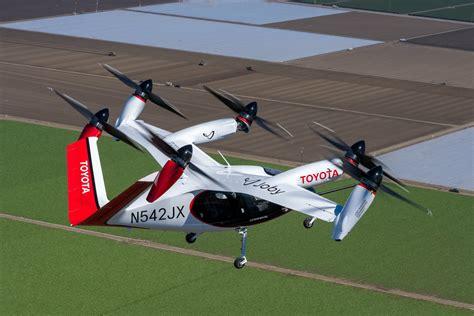
In a monumental stride for the future of urban air transportation, Joby Aviation has unveiled its expanded 435,500-square-foot manufacturing facility in Marina, California. This milestone marks a significant chapter in the company’s mission to redefine mobility through electric vertical takeoff and landing (eVTOL) technology. With a targeted production capacity of 24 aircraft per year, the new plant forms the backbone of Joby’s plan to transform how people travel within and between cities.
The expansion comes on the heels of several key milestones, including successful test flights in Dubai, a new airframe entering the test program, and deepening collaborations with global partners like Toyota. As Joby scales up, this plant is not just a factory—it’s a launchpad for the next generation of aviation.
Scaling the Skies: The Marina Facility and Its Strategic Significance
Joby’s Marina facility is now one of the largest dedicated eVTOL manufacturing sites in the world. Previously limited in size, the expansion positions the plant as a central hub for full-rate production. It will enable Joby to move from small-batch prototypes to commercial-grade assembly lines, replicating the scale and discipline found in automotive manufacturing.
Every detail within the facility has been engineered for high-throughput, precision fabrication. From 3D printing metal parts to incorporating Toyota-style lean manufacturing systems, the Marina site integrates aerospace rigor with automotive efficiency. These production methods not only accelerate output but also maintain exceptionally tight tolerances, ensuring the safety, reliability, and performance of every air taxi that rolls off the line.
Powered by Innovation: A Fusion of Aerospace, Software, and Automation
The heart of Joby’s manufacturing model lies in its blend of cutting-edge robotics, proprietary software, and data-driven decision-making. Every part—from the rotor blades to the carbon-composite fuselage—is designed, manufactured, and assembled in-house, allowing Joby complete control over quality and iteration speed.
Toyota, a strategic investor and development partner, has embedded its engineers into the Joby production floor. Their contributions extend to optimizing workflows, advising on automation strategies, and guiding the design of custom tooling systems. This unique synergy between an automotive giant and an aviation startup exemplifies the kind of interdisciplinary collaboration that future transportation demands.
Reimagining Air Travel: Test Flights, Vertiports, and Commercial Readiness
In June 2025, Joby’s aircraft performed a full envelope of vertical takeoff and landing flights in Dubai, signaling readiness for commercial deployment in one of the world’s most mobility-forward cities. The tests—conducted with regulatory and governmental support—mark the first time a piloted Joby aircraft flew outside the United States.
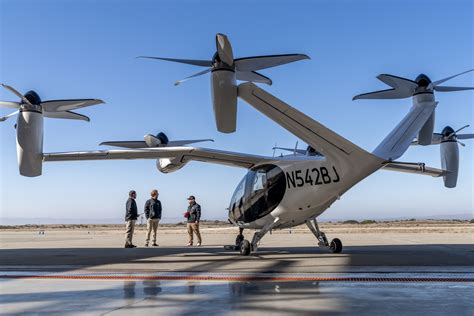
Dubai’s planned launch of air taxi services at DXB, Palm Jumeirah, Dubai Marina, and Downtown Dubai places Joby in the vanguard of commercial eVTOL operations. A typical ride from Dubai International Airport to Palm Jumeirah will take only 12 minutes—a fraction of the current 45-minute car commute.
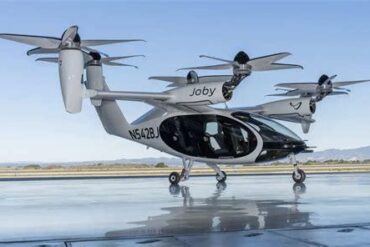
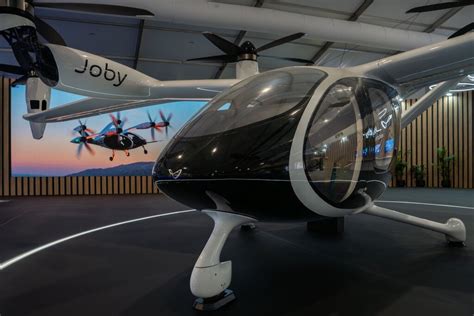
Key aircraft specifications include:
- Top Speed: 200 mph (approx. 320 km/h)
- Range: ~100 miles per charge
- Seating Capacity: 1 pilot + 4 passengers
- Noise Profile: Nearly silent in flight
- Emissions: Zero operational emissions
The test flights also serve to refine Joby’s integration into vertiport infrastructure, optimizing approaches, takeoffs, and charging operations. With public demonstrations completed and certifications in motion, 2026 is set to mark the debut of full passenger services.
The Global Strategy: From California to Ohio, Japan to UAE
Joby’s commercial ambitions are not confined to California. A parallel manufacturing site in Dayton, Ohio—selected for its aerospace legacy and logistics advantage—will mirror the Marina facility. Together, the two plants are expected to meet both domestic and international demand.
Meanwhile, Joby’s international profile continues to expand. In November 2024, the company conducted its first overseas flight in Japan at Toyota’s Higashi-Fuji Technical Center. The milestone capped off nearly seven years of collaboration with Toyota and confirmed Joby’s intent to enter the Japanese urban air mobility market.
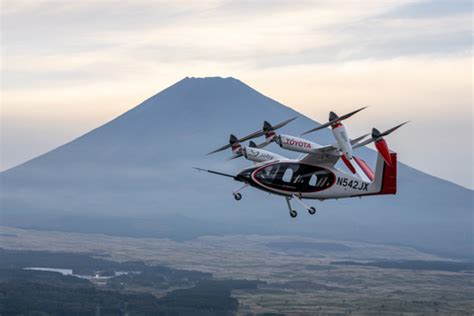
Combined with its Edwards Air Force Base testing site, Joby now operates a trifecta of production, R&D, and certification environments that span coast to coast and cross continental borders. This multi-nodal strategy ensures regulatory robustness, engineering redundancy, and scalable production bandwidth.
A Defense-Backed Revolution: The Pentagon’s Role in Accelerating eVTOL
One of Joby’s early breakthroughs came not from a commercial airliner but from a military contract. In 2023, Joby delivered the first eVTOL aircraft to the U.S. Air Force, fulfilling a portion of a contract worth up to $131 million. The delivery was part of the Pentagon’s Agility Prime initiative, a Department of Defense program designed to fast-track next-gen aviation.
At Edwards AFB, Joby collaborates with the Air Force Research Laboratory, NASA, the 412th Test Wing, and the Emerging Technologies Integrated Test Force. These partnerships give Joby access to elite airspace, veteran test pilots, and high-level operational feedback. For the U.S. military, it represents an investment in quiet, fast, low-footprint mobility systems ideal for troop transport, supply missions, and reconnaissance.
The dual-use potential of eVTOLs—serving both civilian and defense sectors—gives Joby a diversified pathway to scale and stabilize its business model.
Leadership Voices: Joby’s Vision in Their Own Words
Eric Allison, Joby’s Chief Product Officer, captured the spirit of the expansion during the unveiling of the new plant:
“Reimagining urban mobility takes speed, scale, and precision manufacturing. Our expanded manufacturing footprint in both California and Ohio is preparing us to do just that. We celebrated the opening of the new facility with the flight of our sixth aircraft, which earned airworthiness certification within a week of completion.”
This emphasis on speed-to-market, scalability, and regulatory readiness distinguishes Joby from a growing field of eVTOL hopefuls. It’s no longer just about innovation—it’s about executing at pace and with purpose.
Future Horizons: Toward a World Where Cities Fly
As the air taxi sector gains altitude, Joby is leading from the front—not merely with concept designs but with certified aircraft, active production lines, and real-world partnerships. The race to redefine urban mobility is no longer theoretical. With plants humming, vertiports under construction, and international trials underway, Joby is executing a blueprint for the sky-bound city.
What sets the company apart is its vertically integrated ecosystem—design, build, test, deploy—under one corporate roof. Whether it’s reducing urban congestion, cutting carbon emissions, or slashing cross-town travel times, Joby’s eVTOLs are positioned to become the Uber of the skies.
The expanded California plant is more than concrete and steel. It is the beating heart of an aviation renaissance—one powered by batteries, shaped by algorithms, and driven by the enduring human desire to fly above it all.
With 2026 set as the commercial launch window and regulatory hurdles falling away one by one, the future of urban air travel is now. And with Joby Aviation at the helm, it’s flying in fast.