The era of the trijet aircraft represents one of the most fascinating chapters in aviation history. Before modern twin-engine widebodies dominated international routes, aircraft manufacturers experimented with three-engine designs that promised the perfect balance between the power of four-engine jets and the efficiency of twinjets.
From the short-haul reliability of the Boeing 727 to the enormous long-range capabilities of the McDonnell Douglas MD-11, trijets pushed engineering boundaries and introduced technologies that shaped future aircraft development. These airplanes carried hundreds of passengers across continents, served military missions, and became symbols of technological ambition during aviation’s golden age.
Although the trijet has largely disappeared from passenger operations, its legacy remains visible. Many former passenger aircraft continue flying as cargo carriers, while modern business jets such as the Dassault Falcon 8X prove that the three-engine configuration still has advantages in certain markets.
What Is A Trijet Aircraft?
A trijet is an aircraft powered by three jet engines. Unlike conventional twinjets or four-engine aircraft, trijets were designed around a unique compromise: providing greater power and range than twin-engine aircraft while avoiding the fuel consumption and operating costs associated with four engines.
Most trijets used one of two engine arrangements. The first placed two engines under the wings and a third engine mounted at the rear of the fuselage. The second configuration, commonly seen on larger commercial aircraft, positioned all three engines toward the rear, with two engines mounted alongside the fuselage and one installed inside the tail.
The rear-mounted engine arrangement required a complicated S-duct intake system, allowing air to travel from the top of the fuselage into the tail-mounted engine. While this design reduced aerodynamic drag and improved efficiency, it increased manufacturing complexity and maintenance requirements.
During the 1960s and 1970s, trijets became highly attractive because aviation technology had not yet produced the extremely reliable high-thrust engines available today. Aircraft such as the Boeing 727 and Lockheed L-1011 TriStar demonstrated that three engines could provide excellent performance on medium- and long-range routes.
However, aviation followed a familiar pattern. Just as trijets replaced many quadjets, improved twinjets eventually replaced trijets. Modern engines became more powerful, more efficient, and more reliable, allowing aircraft like the Boeing 777 and Airbus A350 to operate long-distance routes with only two engines.
Dassault Falcon 8X: The Modern Luxury Trijet
Among today’s remaining trijet designs, the Dassault Falcon 8X represents the continuation of the three-engine concept in business aviation. Unlike the massive commercial airliners of the past, the Falcon 8X was developed for executives, governments, and private aviation customers seeking long-range performance combined with exceptional cabin comfort.
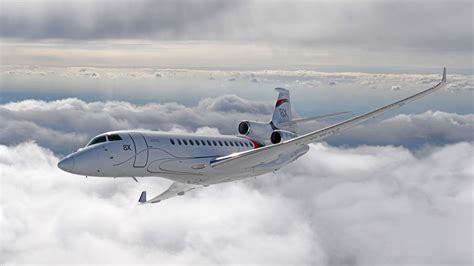
The aircraft measures approximately 80 feet 4 inches in length and has a wingspan of more than 86 feet. Despite its relatively compact size compared with commercial trijets, the Falcon 8X offers a spacious cabin capable of carrying up to 16 passengers.
Its three Pratt & Whitney Canada PW307D engines provide the aircraft with impressive range capabilities, allowing it to connect distant cities without requiring frequent fuel stops. The Falcon 8X can travel thousands of nautical miles while offering amenities typically associated with luxury hotels, including sleeping areas, conference spaces, and advanced entertainment systems.
The aircraft also demonstrates why trijets still have a place in specialized aviation. The third engine provides additional performance, particularly when operating from challenging airports or carrying heavy loads. For business aviation customers, that extra capability remains valuable.
Martin XB-51: The Military Trijet Experiment
Long before commercial airlines embraced trijets, military engineers explored the concept for high-speed attack aircraft. The Martin XB-51 was one of the most unusual examples of this approach.
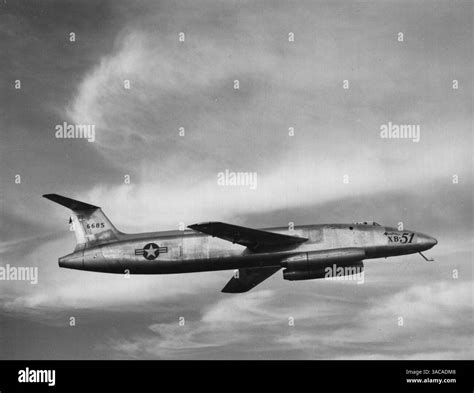
Developed shortly after World War II, the XB-51 was designed as a high-speed bomber capable of delivering weapons with exceptional accuracy. Its three-engine configuration consisted of two engines mounted beneath the forward fuselage and one engine positioned at the rear.
The aircraft had a distinctive narrow shape, earning it an almost futuristic appearance. Measuring more than 85 feet long, the XB-51 featured swept wings and a highly aerodynamic design intended for low-level attack missions.
Although test pilots praised its maneuverability and handling characteristics, the aircraft faced competition from other military designs. The U.S. Air Force ultimately selected the Martin B-57 Canberra instead, leaving the XB-51 as an experimental aircraft.
Only two prototypes were built, and both were eventually lost in crashes. Despite its short operational life, the XB-51 demonstrated the potential of three-engine military aircraft during a period of rapid aviation development.
Yakovlev Yak-42: The Soviet Short-Haul Trijet
The Yakovlev Yak-42 became one of the Soviet Union’s most important regional jetliners. Designed to replace older aircraft such as the Tupolev Tu-134, the Yak-42 introduced advanced technology and became one of the first Soviet aircraft to use modern turbofan engines.
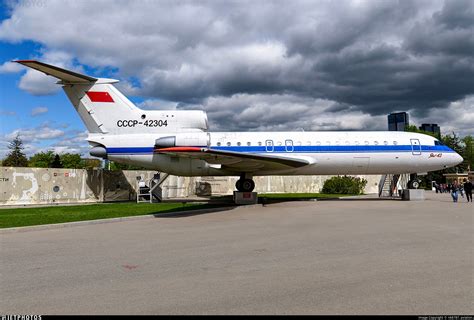
The aircraft entered service in the early 1980s and could accommodate up to 120 passengers. With a length of approximately 119 feet, a wingspan exceeding 114 feet, and a maximum takeoff weight of more than 126,000 pounds, it was a significant aircraft for regional transportation.
Several versions were developed, including the improved Yak-42D, which offered extended range, and specialized cargo variants. The aircraft also served as a platform for testing advanced avionics and alternative technologies.
Although production numbers were far smaller than Western competitors, the Yak-42 played an important role in connecting cities across the Soviet Union and later Russia.
Hawker Siddeley Trident: The First Commercial Trijet
The Hawker Siddeley Trident holds a special place in aviation history because it became the world’s first trijet airliner to enter commercial service.
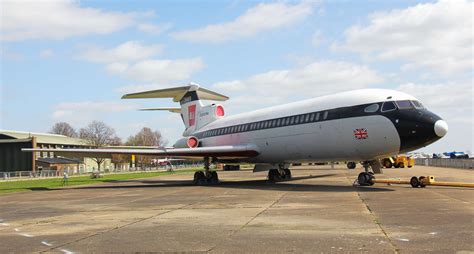
The aircraft first flew in 1962 and began carrying passengers in 1964. While it was smaller than later widebody trijets, the Trident introduced several groundbreaking technologies.
One of its most impressive achievements was its advanced automatic landing capability. The aircraft became the first commercial airliner capable of performing fully automatic landings in extremely poor visibility conditions.
The largest Trident variants stretched nearly 139 feet long and featured sophisticated navigation systems for the era. However, its success was limited because Boeing introduced the 727, which quickly became the dominant aircraft in the same market.
Despite being overshadowed commercially, the Trident helped prove that three-engine aircraft could successfully serve airline operations.
Boeing 727: The Most Famous Trijet Ever Built
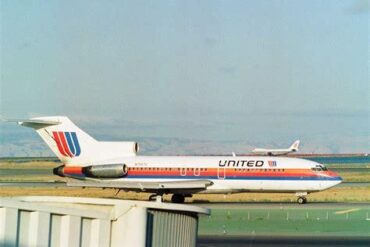
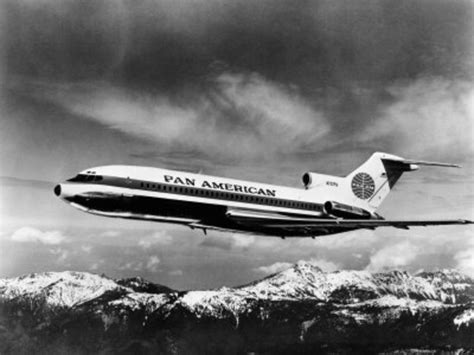
When discussing trijet aircraft, the Boeing 727 is almost impossible to ignore. It became the defining aircraft of the category and one of the most successful commercial jets ever produced.
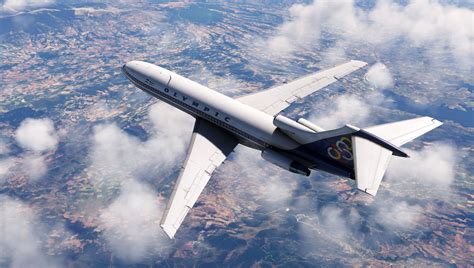
Introduced in the 1960s, the 727 was designed for airlines needing a powerful aircraft capable of operating from shorter runways while carrying large numbers of passengers.
The aircraft’s three rear-mounted engines gave it excellent performance, while its advanced high-lift wing design allowed it to operate efficiently from airports with limited infrastructure.
The largest version, the 727-200 Advanced, measured more than 153 feet long and could carry up to 155 passengers. With a maximum takeoff weight exceeding 209,000 pounds, it represented a major advancement in commercial aviation.
Pilots frequently praised the 727 for its handling characteristics and reliability. Although some passengers criticized its landing experience, investigations showed that many issues were related to operational factors rather than aircraft design.
More than 1,800 Boeing 727 aircraft were produced, making it the most successful trijet in history.
Tupolev Tu-154: The Soviet Aviation Workhorse
The Tupolev Tu-154 was one of the most important aircraft in Soviet aviation. Entering service in the late 1960s, it became the backbone of domestic and international airline operations across the Soviet Union.
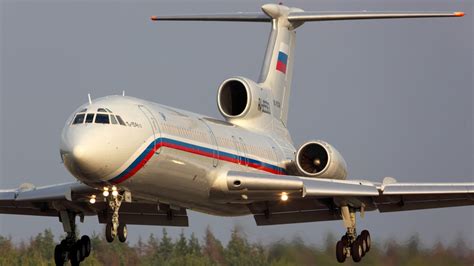
The aircraft was designed for medium-range routes and combined high capacity with strong performance. It could carry approximately 180 passengers and featured three rear-mounted engines similar to other successful trijet designs.
With a length of more than 157 feet, the Tu-154 was significantly larger than the Yak-42 and became known for its durability in challenging operating environments.
A special variant, the Tu-155, became an important experimental aircraft. It was modified to test alternative fuels, including hydrogen and liquid natural gas, making it one of the earliest aviation platforms for alternative fuel research.
The Tu-154 remained in service for decades and became one of the most recognizable Soviet aircraft ever built.
Lockheed L-1011 TriStar: The Luxury Widebody Trijet
The Lockheed L-1011 TriStar was one of the largest and most technologically advanced trijets ever created. Designed to compete with the Boeing 747 and McDonnell Douglas DC-10, the aircraft represented Lockheed’s attempt to enter the widebody commercial market.
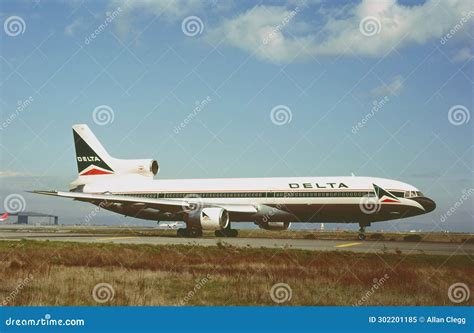
The TriStar was famous for its passenger comfort and innovative systems. It featured advanced automation, spacious cabins, and technology that allowed highly automated flight operations.
The aircraft measured nearly 179 feet long, stood more than 55 feet tall, and could carry around 250 passengers. Its maximum takeoff weight reached approximately 430,000 pounds, placing it among the largest aircraft of its era.
Despite its technical excellence, the L-1011 faced severe challenges. Development delays, financial problems, and difficulties involving the Rolls-Royce engine supplier limited its commercial success.
The TriStar became Lockheed’s final commercial airliner before the company focused primarily on military and defense projects.
McDonnell Douglas DC-10: The Long-Range Trijet Giant
The McDonnell Douglas DC-10 became one of the most recognizable widebody trijets in aviation history. Designed as a long-range aircraft, it entered service in 1971 and competed directly with the L-1011 TriStar.
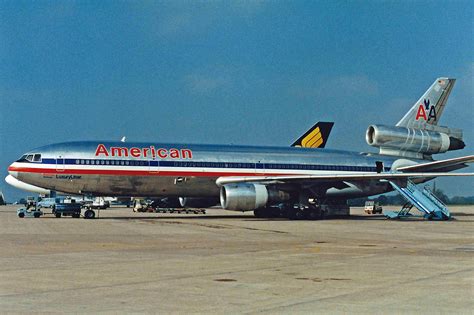
The DC-10 introduced a large twin-aisle cabin and offered airlines the ability to operate high-capacity routes efficiently. Depending on configuration, the aircraft could carry between 270 and 399 passengers.
The largest variants had impressive dimensions, stretching more than 182 feet long with wingspans exceeding 165 feet. Maximum takeoff weights reached approximately 555,000 pounds.
Although early safety issues damaged its reputation, later improvements transformed the DC-10 into a reliable aircraft. After passenger service ended, many DC-10s continued operating as cargo aircraft.
Its design also created the foundation for several military variants, including the KC-10 Extender.
McDonnell Douglas KC-10 Extender: The Heavyweight Military Trijet
The KC-10 Extender transformed the DC-10 into one of the world’s largest aerial refueling aircraft.
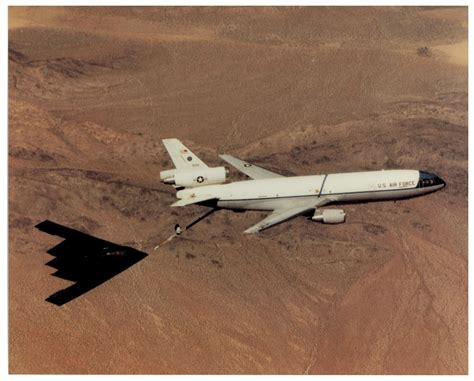
Developed for the United States Air Force, the KC-10 combined fuel transport, cargo capability, and aerial refueling functions. It could carry approximately 356,000 pounds of fuel while transporting large amounts of equipment.
The aircraft retained much of the DC-10’s structure but received specialized military systems, including advanced refueling equipment and improved flight controls.
With a maximum weight approaching 590,000 pounds, the KC-10 was among the heaviest trijets ever operated.
The U.S. Air Force retired its KC-10 fleet in 2024, ending an important chapter in military aviation history.
McDonnell Douglas MD-11: The Largest Trijet Ever Built
The McDonnell Douglas MD-11 represents the ultimate evolution of the commercial trijet. Developed as an improved successor to the DC-10, it introduced greater efficiency, extended range, and a modern two-person cockpit.
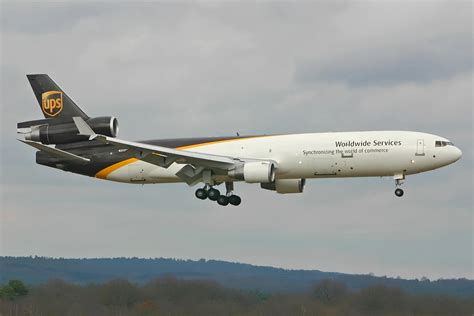
The aircraft stretched more than 200 feet long, making it the longest trijet ever produced. Its wingspan reached nearly 170 feet, and its maximum takeoff weight exceeded 610,000 pounds.
The MD-11 featured improved engines, aerodynamic refinements, and additional cargo capacity. Unlike older trijets requiring three cockpit crew members, the MD-11 introduced advanced automation that allowed operation with only two pilots.
However, the aircraft arrived during a difficult period. Airlines increasingly preferred efficient twin-engine aircraft, and the MD-11 struggled to achieve the performance promised by its manufacturer.
Today, most remaining MD-11s serve as cargo aircraft, where their large capacity and long fuselage remain valuable.
Why Trijets Disappeared From The Skies
The decline of the trijet was not caused by one single problem. Instead, several technological changes combined to make the design less attractive.
Modern twin-engine aircraft now offer exceptional reliability, allowing airlines to operate long-distance routes with fewer engines. Fewer engines mean lower fuel consumption, reduced maintenance costs, and simpler operations.
Aircraft such as the Boeing 787 Dreamliner and Airbus A350 demonstrate how far twinjet technology has advanced. Their engines provide more power than early trijet engines while delivering significantly better efficiency.
Although the commercial trijet era has ended, these aircraft remain important milestones. They introduced innovations in aerodynamics, automation, and long-range aviation that continue influencing modern aircraft design.
The giants of the trijet age may no longer dominate airports around the world, but their contribution to aviation history remains impossible to overlook.