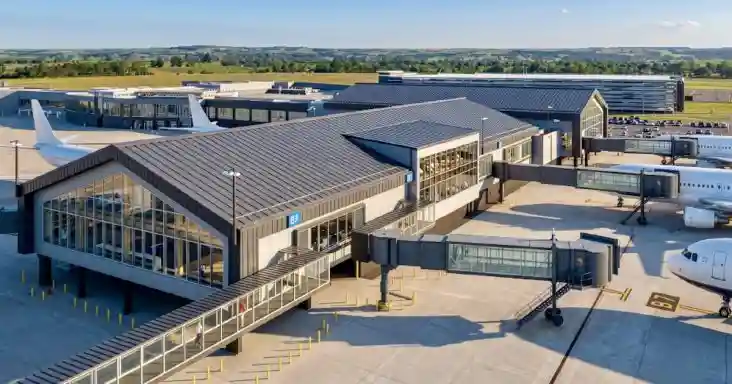
Pittsburgh International Airport: Retiring Concourse E for A320 and 737 Traffic
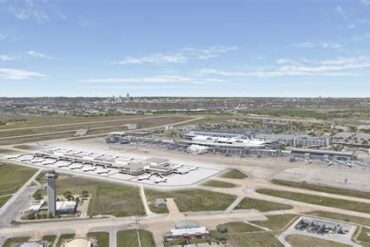
Pittsburgh International Airport (PIT) was built for a world that no longer exists. When its distinctive “X”-shaped landside terminal opened in 1992, the first arrival came from San Diego International Airport (SAN), and the facility was engineered around a USAir hub-and-spoke model that funneled transatlantic arrivals into a dense East Coast regional network. A dedicated commuter section, Concourse E, anchored the complex and housed USAir Express flights almost exclusively. That building became a liability rather than an asset when US Airways, the rebranded carrier, abruptly terminated its lease agreement and began dismantling the hub in 2004. Concourse E was rendered obsolete almost overnight.
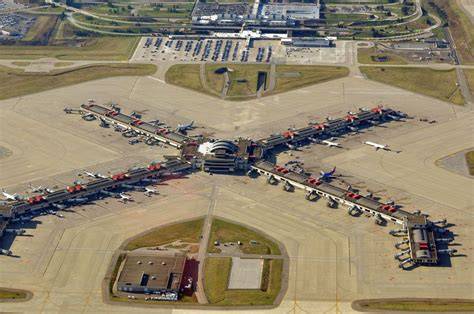
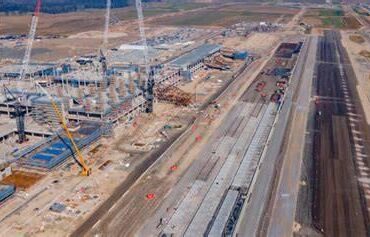
What followed reshaped the airport’s entire commercial logic. As legacy carriers retreated from Rust Belt hubs such as Cleveland Hopkins International Airport (CLE) and Cincinnati/Northern Kentucky International (CVG), low-cost carriers moved in to absorb the demand those de-hubbing decisions left behind. At PIT, the response was demolition. Concourse E was torn down as part of The Transformed PIT program, and the reclaimed capacity was redirected toward more frequent Airbus A320 and Boeing 737 operations flown by Frontier Airlines and Allegiant Air. Few American airports illustrate the regional-to-mainline pivot so literally: an entire concourse built for 50-seat turboprops and small jets simply ceased to exist, replaced by gate infrastructure sized for aircraft that carry roughly three times as many passengers per departure.
Northwest Arkansas National Airport: Mainline Growth Backed by a New Terminal
Northwest Arkansas National Airport (XNA) spent its formative years as a regional-aircraft operation, but that identity has eroded quickly. Allegiant Air’s aggressive expansion has been the catalyst, and each of the big three — United Airlines, Delta Air Lines, and American Airlines — now fields A320 and 737 service into the airport. United connects XNA to Denver International Airport (DEN), Delta to Hartsfield-Jackson Atlanta International Airport (ATL), and American to Dallas/Fort Worth International Airport (DFW), giving the Arkansas market a genuinely mainline route map rather than a feeder-only one.
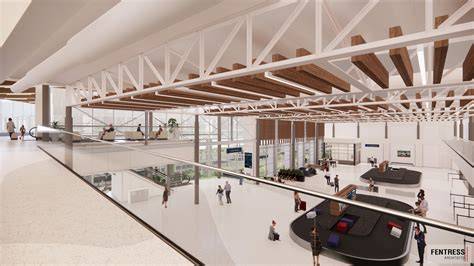
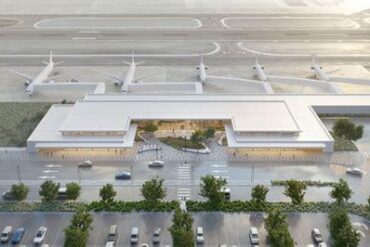
The market data explains why. Envoy Air remains the airport’s leading carrier at nearly 30 percent of traffic, but American’s mainline operation alone accounts for 12.1 percent of market share, according to Bureau of Transportation Statistics figures. Allegiant recently entered XNA’s top five carriers at roughly 10 percent, and critically, Allegiant operates an all-mainline fleet of A320 and 737 family jets with no regional equipment whatsoever. That combination signals to airport planners that airside facilities must handle more seats, more baggage, and longer boarding cycles per movement. XNA is responding with a new terminal construction project now in progress, with design development having begun only in 2025 — a timeline that puts the airport’s infrastructure bet squarely in the mainline era.
Wilmington International Airport: Record Enplanements Drive a $69 Million Expansion
Wilmington International Airport (ILM) historically depended on the regional subsidiaries of legacy carriers, with Piedmont Airlines and Delta’s regional partners dominating the schedule. Population growth along the North Carolina coast, documented by the US Census Bureau, has changed the calculus entirely. ILM recorded a record 907,753 enplanements in 2025, and the carrier roster now includes Sun Country Airlines, Avelo Airlines, and JetBlue, alongside mainline Delta service to Atlanta and American service to Charlotte Douglas International Airport (CLT) that sometimes arrives on an Airbus A321.

The airport launched a $69 million terminal expansion in 2018 to add gate space and square footage. Local reporting by WECT confirmed in August that the original scope has since grown to include an extended departures and arrivals curb, a commercial drop-off curb, a pedestrian tunnel, and additional parking facilities. Each addition traces back to the same pressure: airlines are flying larger aircraft into ILM, and the groundside and airside infrastructure must keep pace with the physical footprint of those jets.
Charlotte Douglas International Airport: Upgauging a Regional-Jet Stronghold
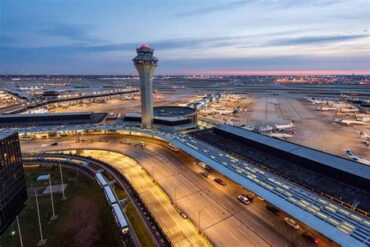
No major US airport leaned on regional jets quite like Charlotte Douglas International Airport (CLT) during the US Airways era. Hundreds of daily departures flowed through concourses engineered for high-volume, short-haul regional traffic, making CLT one of the busiest connecting airports in the country for smaller aircraft. That model is now being unwound deliberately. American Airlines has progressively upgauged routes from 50-seat regional jets to larger regional equipment such as the Embraer E170, and increasingly to mainline Airbus and Boeing jets.
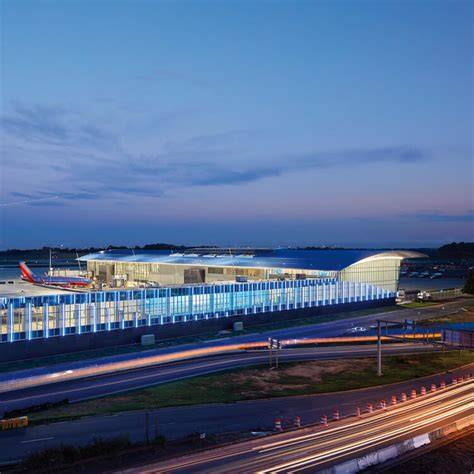
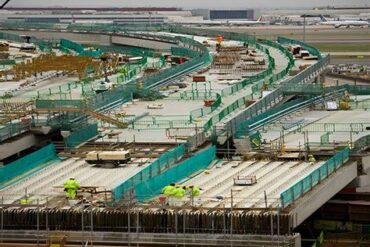
Charlotte’s answer is structural. The airport has invested heavily in concourse expansions and gate projects designed for higher-capacity aircraft and rising passenger volumes as part of the CLT Master Plan 2050. Recent and ongoing work, notably on Concourse A and adjacent terminal facilities, demonstrates how former regional-jet fortresses are being rebuilt for a fleet mix dominated by larger aircraft. The distinction matters: Charlotte is not simply adding gates, it is reshaping infrastructure to match the economics of today’s equipment, where a single mainline narrowbody replaces two or three regional departures.
Minneapolis-St. Paul International Airport: Fewer Gates, Larger Aircraft
The Metropolitan Airports Commission (MAC) and Delta Air Lines completed a sweeping Terminal 1 modernization at Minneapolis-St. Paul International Airport (MSP) between 2023 and 2025, renovating six of the seven concourses at the Charles Lindbergh Terminal. Concourse E was deliberately excluded, home as it is to American, Air Canada, the former Continental Airlines operation, and Spirit Airlines.
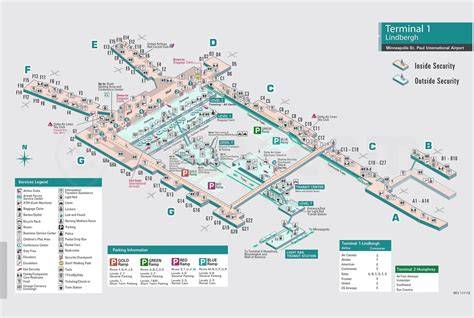
Concourses A and B carry the regional load, primarily for Delta Connection partners Endeavor Air and SkyWest. Where Saab 340 turboprops and Bombardier CRJ-200s once parked, Embraer E175s and Bombardier CRJ-900s now dominate. The Star Tribune has reported that Concourse A is slated for a reduction in its 14-gate count, trading quantity for the space needed by fewer but larger aircraft, while Concourse B is scheduled for complete demolition by 2040. Even without immediate low-cost carrier pressure in that corner of the field, the logic holds: Denver Air Connection occasionally parks its Dornier 328s at the B gates, but Frontier and Allegiant traffic is concentrated at Concourse E and Terminal 2.
Washington Dulles International Airport: Outdoor Regional Boarding Gives Way to International-Capable Gates
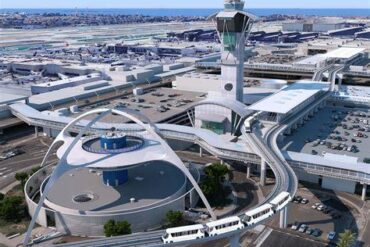
Washington Dulles International Airport (IAD) offers the strongest current example of the phenomenon, driven by United Airlines rather than any budget operator. For years, regional passengers boarded from the airport’s outdoor A-gate facilities, infrastructure originally built for high-volume regional jet operations. Dulles is now moving decisively in the opposite direction, replacing that open-air boarding with modern concourse facilities designed for larger volumes and a wider aircraft mix.
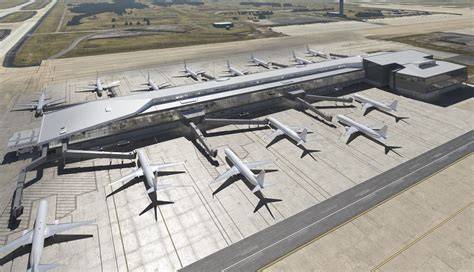
The centerpiece is the Global Gateway program, under which the eastern portion of Concourse A is being redeveloped so that outdoor regional boarding positions become enclosed, international-capable gates. A planned Tier-2 Concourse will replace the existing regional facility with a 14-gate structure able to handle larger narrowbodies and international services. Dulles mirrors Minneapolis-St. Paul in one crucial respect: the shift toward mainline equipment is not a low-cost phenomenon at all, but a structural response from a legacy carrier building a connecting hub around larger jets.
Bemidji Regional Airport: Early Proof That Mainline Gates Pay Off
Bemidji Regional Airport (BJI) holds no capacity expansion plans and faces none of the demand pressure driving larger airports. Its relevance is historical: it was one of the earliest US facilities to build for mainline aircraft while still serving a genuinely small market. A renovation completed in 2012 doubled the size of the passenger facilities and delivered the airport’s first jet bridge, a ThyssenKrupp unit rated for aircraft up to the Boeing 737-900 and the A320 family, capable of handling multiple flights at once.
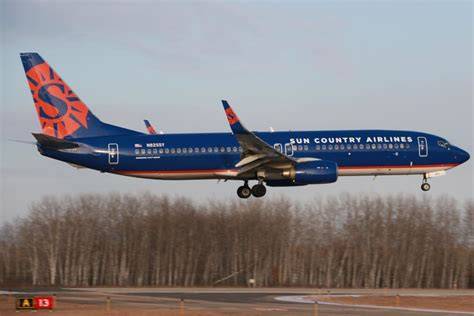
The investment has aged well. Sun Country Airlines launched periodic charter service to Laughlin/Bullhead International Airport (IFP) on a 737, and SkyWest operates twice-daily service to MSP under the Delta Connection brand. That service, once flown by Northwest Airlink before the Delta merger on a 34-seat Saab 340, now runs on a 69-seat Bombardier CRJ700. The progression at Bemidji, from turboprop to 69-seat jet on the same route with the same carrier brand, is the trend in miniature: airports that built for mainline capacity early found themselves ready when the aircraft grew.
Why Smaller Airports Are Scaling Up Alongside the Hubs
The pattern spans Newark-sized hubs and northern Minnesota municipal fields because the underlying pressures are national. The U.S. Government Accountability Office attributes the shift to several converging forces: low-cost carrier growth, pilot shortages, air traffic control staffing shortfalls, airport congestion, and a broader airline drive toward efficiency per departure. Airlines retire 50-seat regional jets with little ceremony, while Airbus and Boeing hold substantial backlogs for their narrowbody families. Master plans that once reserved satellite concourses for regional jets are being rewritten around a single assumption: the next generation of gates must handle mainline equipment. Pittsburgh’s demolished Concourse E, Charlotte’s upgauged concourses, Dulles’ enclosed A-gate replacements, and Bemidji’s single dual-rated jet bridge are all expressions of the same calculation, and the airports that commit to it early will carry the advantage for decades.