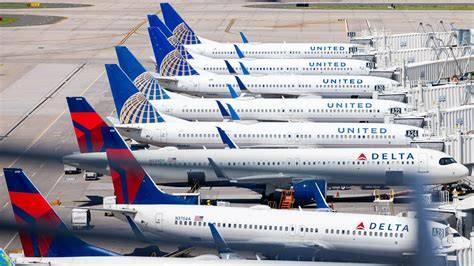
American Airlines is losing ground to its two largest domestic rivals, and a rare willingness among flyers to absorb Delta Air Lines and United Airlines premium fares is emerging as the single biggest explanation. Dan McKenzie, an analyst at Seaport Research Partners, estimates that American needs roughly $4.5 billion in additional annual revenue to match the profit margins its competitors generate, according to reporting by The New York Times. With jet fuel costs climbing and squeezing airline profitability, the capacity to charge more without scaring away demand has turned into the industry’s decisive commercial weapon. American’s most recent earnings miss shows exactly how far behind that arms race it has fallen.
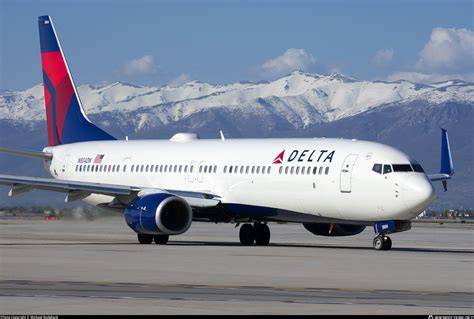
McKenzie’s pricing analysis is blunt. Delta commands fares roughly 12% above the industry average on comparable routes, United sits at about 9%, while American manages just 3%. On a flight where the industry-average fare is $500, Delta would collect $560 and United $545 without denting demand, while American would take $515. Multiplied across millions of passengers and thousands of daily departures, those percentage points compound into billions of dollars of lost revenue that no cost-cutting program can replace.
American Is Struggling To Match Its Rivals’ Pricing Power
The paradox buried in American’s third-quarter numbers is that its passenger yield growth of 18.3% was the strongest of the three carriers, ahead of United’s 16.8% and Delta’s 14.0%. Yet that headline gain masked a familiar problem. American simultaneously endured the largest load factor decline of the group, down 2.6 points to 83.4%, while Delta held flat at 86.0% and United slipped just half a point to 83.9%. Combined with capacity growth of 4.2% against 1.3% at United and 0.3% at Delta, the math produced slower unit revenue expansion: American’s passenger revenue per available seat mile rose 14.6%, trailing United’s 16.1% and Delta’s 15.0%.
Partly this reflects a deliberate pivot rather than pure weakness. American historically chased high load factors by filling every seat at whatever price cleared the market; management now says it is trading occupancy for pricing discipline. Chief Commercial Officer Nat Pieper told analysts on the third-quarter earnings call that the airline had “prioritized yield over load factor, proactively securing meaningfully higher yields in exchange for slightly lower loads.” Whether that strategy represents genuine commercial maturity or a rationalization of weaker pricing power is the question investors are pressing with each passing quarter.
Why Passengers Are Willing To Pay More For Delta & United
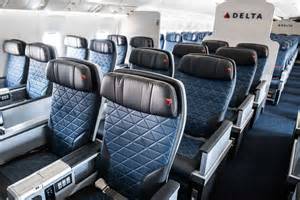
Delta and United have spent years making their cabins, lounges and loyalty programs worth a premium, and the payoff is now written directly into their income statements. United’s premium and loyalty revenues each climbed 17% year over year in the third quarter. At Delta, premium ticket revenue actually surpassed main cabin revenue, with the latter accounting for less than 40% of adjusted operating revenue. These carriers have effectively convinced travelers that a seat is an experience, not a commodity, and they price accordingly.
Corporate travelers amplify that advantage. Purchasing decisions in the managed travel channel hinge on schedule convenience, operational reliability and loyalty benefits far more than on fare. Delta topped the Business Travel News 2026 Airline Survey for the 16th consecutive year, winning eight of 11 categories, while United placed third and American finished fifth and last among qualifying carriers. American’s satisfaction score did climb sharply to 3.26 from 2.75, the largest improvement in the field, but it still trails convincingly.
Operational differences reinforce the pricing gap. In October 2026, Delta posted an 87% on-time arrival rate, United 84% and American 80%. Network geography compounds the problem: Delta and United both offer roughly twice as many departing seats from New York, the nation’s most affluent market, as American does. That exposure gives the two leaders disproportionate access to high-value coastal demand, and it explains why American’s intensifying fight with United at Chicago O’Hare matters so much, since greater frequency and connectivity there could unlock richer corporate contracts.
American Faces A Race Against Time To Close The Gap
American is not standing still. It is reversing several earlier management decisions with an ambitious passenger experience overhaul: reintroducing narrowbody seatback screens, expanding premium seating from 25% to roughly 40% of seats, acquiring 1,000-plus mainline aircraft for Starlink WiFi beginning in 2027, installing Flagship Suites on Boeing 787-9s and Airbus A321XLRs, retrofitting all 20 Boeing 777-300ERs by 2027 with premium density rising from 38% to 44%, and opening 10 lounges through 2027. It is also rebuilding agency relationships and consolidating its co-branded credit card under a single issuer through the Citi partnership.
There are real signs of traction. American’s premium revenue jumped 22.9% year over year, and managed corporate revenue rose 27.6%, marking a sixth straight quarter of double-digit growth. But the airline is chasing a moving target. United already offers Starlink on more than half of its daily flights, while Delta delivers its personalized Delta Sync seatback experience on over 900 aircraft. American will not begin its seatback screen rollout until 2028. Its ultimate challenge is not installing the products, but persuading passengers that an American Airlines ticket deserves the same premium Delta and United already command.