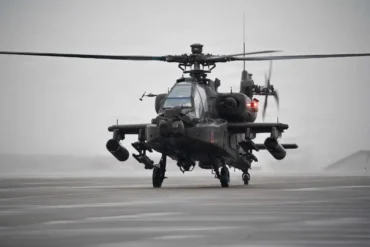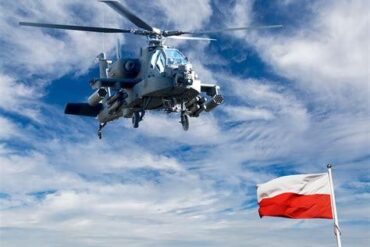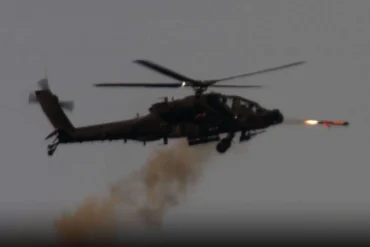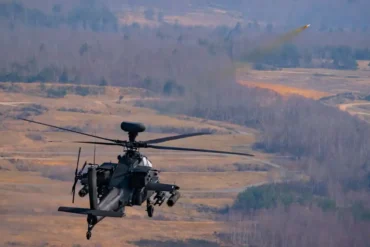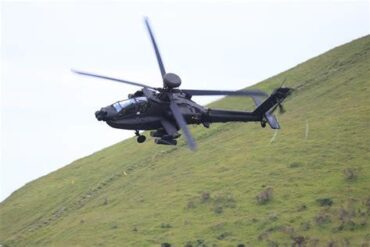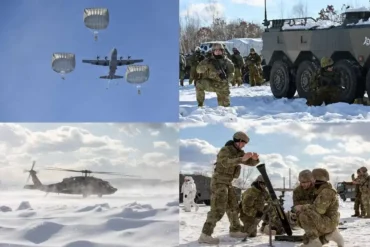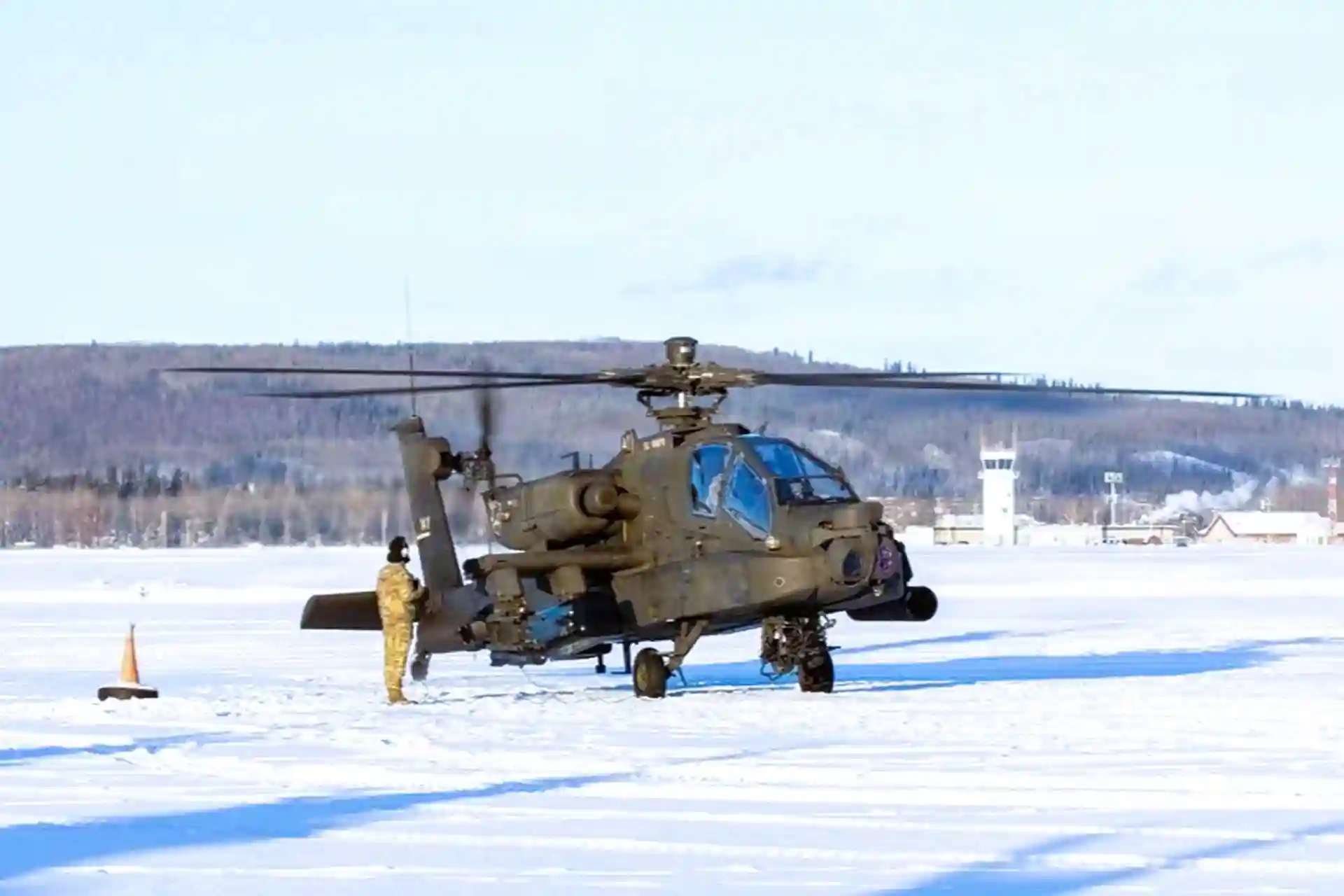
The U.S. Army is intensifying its Arctic warfare posture by sharpening the cold-weather combat capabilities of its AH-64E Apache Guardian attack helicopters in Alaska, transforming the High North into a proving ground for large-scale, high-intensity operations. On February 13, 2026, soldiers from Alpha Company, 1st Battalion, 25th Aviation Regiment under the 11th Airborne Division launched Apaches from snow-covered pads at Fort Wainwright during Joint Pacific Multinational Readiness Center (JPMRC) rotation 26-02, underscoring a deliberate and strategic expansion of American combat aviation readiness in extreme Arctic conditions.
The scene was stark and deliberate: rotor blades slicing through frigid air, ground crews conducting safety checks in sub-zero temperatures, and attack helicopters lifting off against a white, frozen horizon. These were not ceremonial flights. They were operational rehearsals in one of the harshest training environments on Earth. As strategic competition accelerates across the Arctic, the Army is positioning Alaska not as a remote outpost but as a forward laboratory for modern warfare.
The drills at JPMRC 26-02 represent more than routine aviation training. They are part of a force-on-force certification exercise designed to validate units for large-scale combat operations in Arctic terrain, where cold, darkness, and distance impose relentless friction on both personnel and machines.
Alaska as the Epicenter of Arctic Combat Readiness
The Joint Pacific Multinational Readiness Center in Alaska has evolved into the Army’s premier Arctic-focused combat training venue. Unlike traditional exercises conducted in temperate climates, JPMRC rotations replicate the brutal operational realities north of the Arctic Circle: frozen rivers doubling as maneuver corridors, limited daylight during winter months, low-visibility snow conditions, and logistical chains stretched across vast, sparsely populated terrain.
At Fort Wainwright, aviation, airborne, and air assault elements converge to rehearse the rapid concentration of combat power across dispersed objectives. In this environment, the AH-64E does not merely provide fire support; it becomes an essential reconnaissance and strike platform capable of shaping the battlefield before ground forces close with the enemy.
The 11th Airborne Division, reactivated and reoriented in 2022 as an Arctic-specialized formation under the “Arctic Angels” identity, provides the institutional backbone for this transformation. By integrating light infantry, airborne units, and modernized aviation assets, the division represents a purpose-built force tailored for cold-weather combat.
The AH-64E Apache Guardian: A Cold-Weather Force Multiplier
The AH-64E Apache Guardian is the most advanced iteration of the Apache family, engineered for network-centric, high-intensity warfare. In Arctic operations, its technological advantages become decisive.
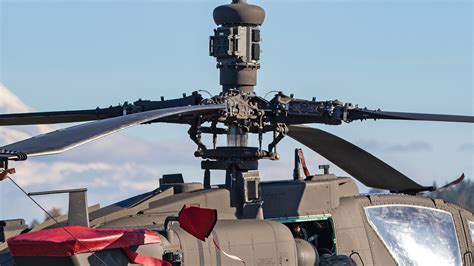
Equipped with uprated engines and advanced composite rotor blades, the AH-64E maintains performance margins in thin, frigid air where power output and mechanical reliability are routinely challenged. Its mast-mounted Longbow radar, electro-optical and infrared sensor suite, and fully integrated digital architecture allow crews to detect, classify, and prioritize multiple targets across snow-covered expanses where camouflage and terrain blending are amplified by uniform white landscapes.
Cold environments present unique targeting complications. Snow reflects light unpredictably. Thermal contrasts shift rapidly. Ice fog and blowing snow degrade visibility. The Apache’s sensor fusion capability mitigates these effects by combining radar returns with infrared imaging and digital mapping, allowing crews to maintain situational awareness even in degraded visual environments.
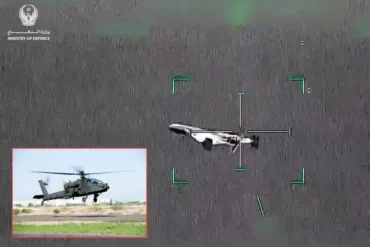
Beyond detection, the AH-64E excels in connectivity. Its digital data links enable real-time information exchange with ground units, artillery batteries, and other aircraft. It can also control unmanned aerial systems directly from the cockpit, extending reconnaissance reach without exposing the helicopter to unnecessary risk. In vast Arctic terrain, where ground patrols may be separated by dozens of miles, this networked capability transforms the Apache into a flying command-and-control node as much as an attack platform.
Tactical Integration in Large-Scale Arctic Operations
During JPMRC 26-02, Apaches are woven into complex maneuver scenarios designed to simulate peer-level conflict. In a typical evolution, attack helicopters conduct armed reconnaissance ahead of air assault insertions, scanning frozen valleys, road networks, and riverbeds for enemy defensive positions.
Once threats are identified, the AH-64E delivers precision fires to dismantle anti-armor positions, neutralize missile launchers, or suppress fortified strongpoints. From concealed hull-down positions behind tree lines or terrain undulations, crews exploit standoff range to shape the battlefield before infantry units advance.
Integration with airborne forces is particularly critical. Arctic operations demand speed and synchronization. Airborne units may seize key terrain, such as airstrips or logistical nodes, while Apaches provide overwatch, rapid re-tasking between axes of advance, and immediate response to calls for fire. The tempo of these exercises is deliberately intense, testing how aviation units sustain sortie generation in prolonged cold nights where maintenance demands increase and environmental stress compounds.
These rehearsals validate not only tactical procedures but also logistical endurance. Fuel management, de-icing protocols, battery performance, and hydraulic reliability all become operational variables in sub-zero climates. By repeatedly launching and recovering aircraft from snow-covered pads, the Army is institutionalizing cold-weather best practices into routine aviation doctrine.
Strategic Significance of Arctic Airpower
The expansion of Apache operations in Alaska carries unmistakable strategic weight. The Arctic is no longer a peripheral theater. Melting sea ice, emerging maritime routes, and intensified military activity have elevated the region into a zone of geopolitical competition. Northern approaches to North America and Europe are increasingly scrutinized, and long-range strike systems deployed in high latitudes can influence broader strategic balances.
By pairing the 11th Airborne Division’s Arctic specialization with the firepower of the AH-64E, the Army is signaling that deterrence in the High North is backed by credible, cold-weather-proven combat power. This posture complicates adversary planning. Any attempt to exploit perceived environmental advantages in Arctic terrain must now account for a U.S. force trained specifically to fight and win in those same conditions.
The Apache’s ability to conduct reconnaissance, precision strike, and networked command functions across vast frozen expanses ensures that ground maneuver elements are not isolated. In a theater defined by distance and limited infrastructure, mobility and awareness become decisive. Attack aviation bridges those gaps.
Alaska as a Dual-Theater Strategic Hub
Alaska’s strategic geography amplifies the relevance of these developments. Positioned between the Arctic and the Indo-Pacific, the state functions as a forward hub capable of projecting power northward or westward across the Pacific. Bases such as Fort Wainwright and Joint Base Elmendorf-Richardson anchor this dual-role posture.
By integrating the AH-64E into JPMRC scenarios, the Army ensures that its aviation crews are proficient not only in cold-weather flight but also in joint and multinational command architectures. Arctic security is inherently multinational, involving cooperation with NATO allies and regional partners. The Apache’s digital interoperability allows seamless data sharing, coordinated targeting, and synchronized operations within coalition frameworks.
This flexibility strengthens deterrence across multiple theaters. An attack aviation unit trained to operate in Arctic extremes retains full-spectrum capability elsewhere, but the reverse is not always true. Cold-weather specialization therefore expands rather than limits operational readiness.
From Expeditionary Warfare to High-Latitude Deterrence
The Apache platform carries decades of combat pedigree, from late Cold War planning to sustained operations in Iraq and Afghanistan. Continuous modernization has kept it relevant in network-centric warfare. Now, that experience is being recalibrated for high-latitude scenarios.
The images released through the Defense Visual Information Distribution Service show meticulous pre-flight inspections, disciplined launch sequences, and coordinated air assault support. These snapshots reflect a broader transformation: Alaska is being treated as an operational proving ground for peer conflict, not a secondary theater.
The convergence of advanced attack aviation and a division purpose-built for Arctic operations marks a deliberate doctrinal shift. Rather than adapting warm-weather doctrine to cold environments as an afterthought, the Army is embedding Arctic considerations into planning, training, and force structure.
A Credible Arctic Combat Team
The enhancement of AH-64E Apache Arctic warfare capabilities in Alaska represents more than equipment adaptation. It is the construction of a credible, integrated combat team designed to deter aggression and, if required, conduct sustained operations in one of the planet’s most unforgiving regions.
Through JPMRC 26-02, the U.S. Army is demonstrating that Arctic combat aviation is not experimental or symbolic. It is operational, repeatable, and scalable. Snow-covered launch pads at Fort Wainwright are becoming staging points for a refined doctrine of high-latitude maneuver warfare.
As competition intensifies across the High North, the message is unmistakable: the United States is aligning advanced technology, specialized training, and strategic geography into a unified Arctic defense posture. The AH-64E Apache Guardian, proven in decades of combat and now hardened for extreme cold, stands at the center of that transformation.