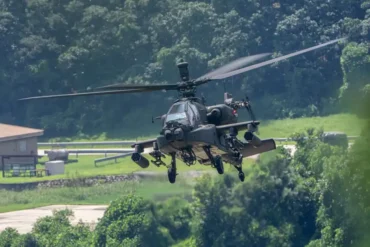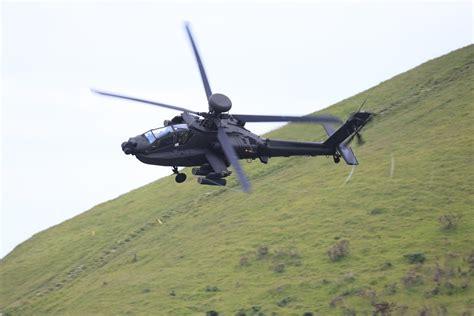
The UK’s Wildcat AH1 helicopter retirement in 2027 marks one of the most significant changes in British Army aviation doctrine in decades. Unlike previous aircraft retirements, the decision is not simply about replacing an aging platform with a newer helicopter. Instead, it reflects a fundamental shift in how modern armies view battlefield reconnaissance, survivability, and the role of human pilots in increasingly dangerous air environments.
The British Army has concluded that small numbers of expensive crewed reconnaissance helicopters face serious challenges on tomorrow’s battlefield. Lessons from the war in Ukraine have demonstrated that even highly capable rotary-wing aircraft can become vulnerable when facing large numbers of low-cost drones, advanced air defenses, and networked targeting systems. The future force will rely less on a small fleet of specialized helicopters and more on a combination of autonomous drones, artificial intelligence, and networked combat systems.
The retirement of the Wildcat AH1, however, creates a temporary capability gap. While the helicopter will leave Army service in 2027, its planned drone-based replacement ecosystem will not be fully operational until around 2030. During this transition period, the British Army will depend heavily on its upgraded Boeing AH-64E Apache attack helicopters while new unmanned systems gradually enter service.
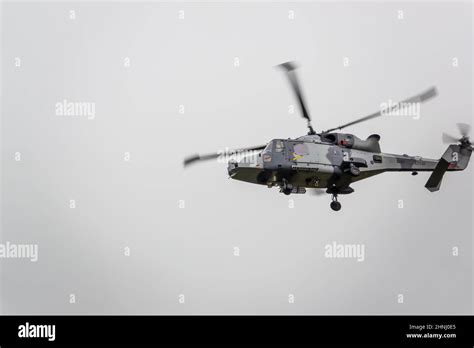
Why the UK Is Retiring the Wildcat AH1 Helicopter
The AgustaWestland Wildcat AH1 entered British Army service in 2014 as a battlefield reconnaissance and surveillance helicopter designed to support ground forces. It replaced older Lynx variants and provided commanders with a flexible platform capable of detecting enemy movements, gathering intelligence, and supporting operations close to the front line.
However, warfare has changed dramatically since the Wildcat was introduced. The rise of inexpensive unmanned aerial systems has altered the balance between cost and capability. A helicopter costing tens of millions of pounds requires trained pilots, maintenance crews, fuel infrastructure, and extensive logistical support. A small drone, by contrast, can perform many surveillance tasks at a fraction of the cost while presenting a much smaller target to enemy forces.
The conflict in Ukraine has accelerated these lessons. Both Ukrainian and Russian forces have demonstrated that drones can locate artillery, track armored vehicles, guide precision strikes, and conduct persistent surveillance. The battlefield has become increasingly transparent, meaning large crewed aircraft operating near enemy forces face greater risks than ever before.
For the British Army, maintaining a limited fleet of only 34 Wildcat AH1 helicopters became increasingly difficult to justify. A small number of high-value aircraft could potentially be overwhelmed in a large-scale conflict, particularly against an opponent equipped with layered air defenses and drone swarms.
The Ministry of Defence’s decision reflects a broader military trend: replacing vulnerable crewed reconnaissance platforms with distributed networks of cheaper, replaceable unmanned systems.
The Apache AH-64E Becomes Britain’s Battlefield “Quarterback”
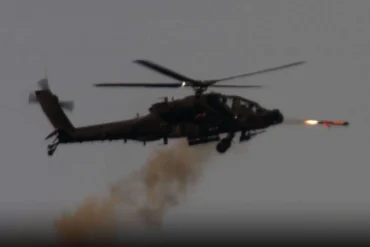
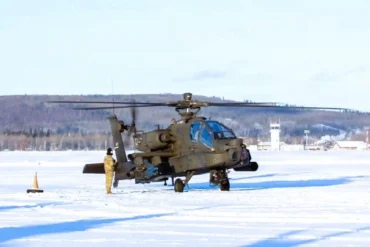
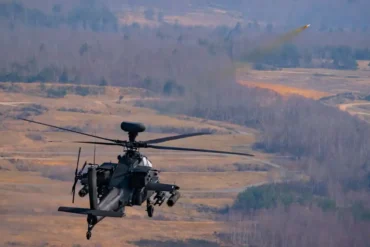
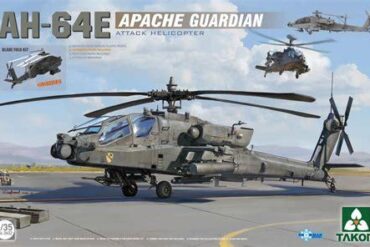
Although the Wildcat AH1 is leaving Army service, the British Army is not abandoning helicopter aviation. Instead, it is reorganizing around the upgraded AH-64E Apache Guardian, one of the world’s most advanced attack helicopters.
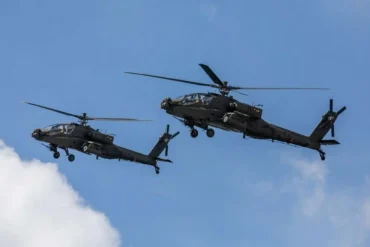
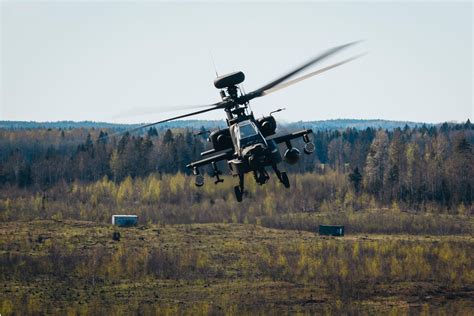
The Apache will take on a larger role as the centerpiece of future Army aviation operations. Rather than acting alone, it will operate alongside drones that can scout ahead, identify targets, and provide battlefield information. This approach mirrors developments in fighter aviation, where advanced aircraft such as the F-35 Lightning II are increasingly designed to work with autonomous systems.
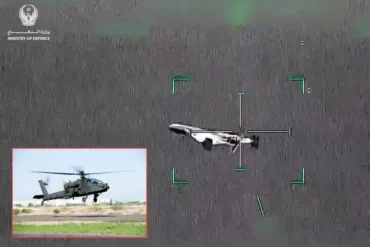
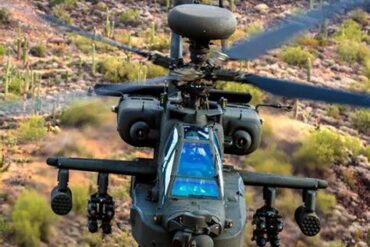
The Apache’s advanced sensors, communications equipment, and weapons make it suitable for this new role. It can receive information from unmanned aircraft, coordinate attacks, and engage enemy forces while allowing smaller drones to take greater risks in contested areas.
This creates a new relationship between crewed and uncrewed aircraft. Instead of replacing helicopters completely, drones will expand the effectiveness of the remaining helicopter fleet. The Apache becomes a command platform, while unmanned systems become the eyes, sensors, and sometimes the weapons carriers operating around it.
The concept represents a major change from traditional helicopter warfare. In previous decades, attack helicopters were expected to fly close to enemy forces and directly engage targets. Future operations will emphasize connectivity, information sharing, and coordinated strikes across multiple platforms.
Drone Warfare Has Changed the Future of Military Helicopters
The decision to retire the Wildcat AH1 is closely connected to the changing reality of modern warfare. The traditional advantage of helicopters—mobility, firepower, and the ability to operate near ground forces—is now challenged by inexpensive drone technology.
During previous conflicts, attack helicopters were considered among the most dangerous battlefield weapons. Their ability to destroy tanks and support infantry made them feared by ground forces. However, the Ukraine conflict has shown that even advanced helicopters must operate carefully when facing modern air defenses and persistent drone surveillance.
The problem is not that helicopters have become useless. Instead, their operating environment has become far more complex. Enemy forces can now detect movement faster, share targeting information instantly, and deploy low-cost weapons capable of threatening expensive aircraft.
This has encouraged militaries worldwide to rethink the balance between expensive platforms and affordable mass systems. A single helicopter may provide exceptional capability, but losing it represents a significant financial and operational loss. Losing a small drone, however, is a much smaller setback.
The UK’s future aviation strategy follows this philosophy by creating a layered system where drones perform many dangerous missions while crewed aircraft provide advanced decision-making and firepower.
Britain’s New Drone-Based Reconnaissance Network
The replacement for the Wildcat AH1 will not be one aircraft. Instead, it will be an interconnected family of unmanned systems designed to perform different battlefield roles.
One of the most important programs is Project Nyx, which aims to develop autonomous aircraft that can operate alongside Apache helicopters. These drones are expected to provide additional sensors, electronic warfare capabilities, and strike options. Their purpose is to enter dangerous areas, identify threats, and help protect human crews.
Another important initiative is Project Corvus, which focuses on tactical unmanned aircraft for intelligence, surveillance, target acquisition, and reconnaissance missions. These systems will provide commanders with continuous battlefield information using advanced radar and electro-optical sensors.
The British Army is also developing smaller drones through Project TIQUILA, which will provide frontline soldiers with portable surveillance capabilities. These systems are designed to give infantry units their own aerial intelligence without relying entirely on larger aircraft.
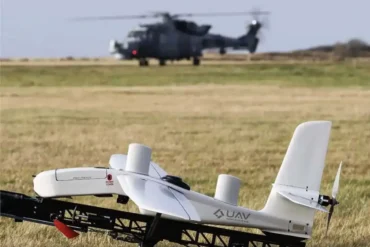
Small unmanned systems such as the Stalker VXE30 and Indago 4 demonstrate how modern armies are moving toward widespread drone adoption. Instead of a few aircraft controlled by specialist units, future soldiers may have immediate access to aerial surveillance tools directly at the tactical level.
Building a Digital Battlefield Through Artificial Intelligence
The UK’s drone strategy is not only about buying aircraft. The larger objective is creating a connected battlefield where information moves rapidly between sensors, commanders, and weapons.
Programs such as Project Asgard and Project Zodiac are designed to create a digital combat network that combines information from drones, satellites, radar systems, and other battlefield sensors.
This future “combat cloud” will allow commanders to understand battlefield conditions faster than ever before. Artificial intelligence systems will help organize large amounts of information and recommend possible responses. However, human commanders will remain responsible for critical decisions.
The advantage of this approach is speed. In modern conflicts, the side that detects threats and responds faster often gains a decisive advantage. A networked force can identify enemy positions, select appropriate weapons, and coordinate attacks much faster than traditional military structures.
The Wildcat replacement strategy therefore represents more than an aircraft change. It is part of a broader transformation toward a data-driven military force.
The Royal Navy Wildcat Fleet Will Continue Flying
The retirement decision applies only to the British Army’s Wildcat AH1 fleet. The Royal Navy’s Wildcat HMA2 helicopters will continue operating because they perform different missions that remain difficult to replace with drones.
The naval variant is equipped for maritime operations, including anti-surface warfare, reconnaissance, and support missions from ships. It features specialized equipment such as the Leonardo Seaspray 7000E radar, which allows it to detect and track targets over large ocean areas.
The Royal Navy also uses the Wildcat HMA2 to carry weapons including the Martlet missile and Sea Venom anti-ship missile. These capabilities provide naval vessels with flexible options against fast attack craft and smaller surface threats.
Unlike the Army reconnaissance mission, maritime helicopter operations involve unique challenges. Landing on moving ships, supporting naval operations, and conducting specialized missions remain areas where crewed helicopters offer advantages.
However, even the Royal Navy recognizes that unmanned systems will become increasingly important. Future naval aviation will likely combine helicopters with drones through manned-unmanned teaming, allowing aircraft crews to work alongside autonomous platforms.
A New Era for UK Military Aviation
The retirement of the Wildcat AH1 represents a major turning point for the British Army. The helicopter served effectively for more than a decade, but modern warfare has created new demands that require a different approach.
By 2030, the UK aims to have a battlefield aviation force built around Apache attack helicopters, autonomous drones, artificial intelligence networks, and distributed sensors. The goal is not simply replacing one aircraft with another, but creating a more resilient and adaptable military system.
The transition period between 2027 and 2030 will require careful management. The Apache fleet will need to provide additional support while new drone programs mature. The success of the strategy will depend on technology development, training, and the ability to integrate humans and machines effectively.
The Wildcat’s retirement shows how quickly military aviation is evolving. The future battlefield may not belong to the aircraft with the biggest weapons or the fastest speed. Instead, it may belong to forces that can collect information, adapt quickly, and combine large numbers of intelligent systems into a single fighting network.